


This narration predates the current revision and may differ from the written study.
Leviticus 26 is the covenant warning at the end of the holiness commands: life with God brings ordered communion, refusal brings escalating discipline, exile exposes the truth of rebellion, and confession opens the door to mercy. The chapter is severe because covenant love is serious. Its last word is remembrance: God remembers His covenant even when His people are in the land of their enemies.
For Christians, this passage must be read through Christ without flattening its first meaning. Christ is the obedient Son, the One who bears the curse, and the One in whom God’s covenant remembrance becomes flesh. The spiritual question is direct: will I receive correction while it is still medicine, or resist until sin has stripped away peace, worship, and rest?
Historical and Scriptural Context
At Sinai, Israel receives not only ritual instruction but a way of life ordered around God’s presence. Leviticus has taught approach through sacrifice, priesthood, purity, atonement, bodily holiness, neighbor-love, feasts, Sabbath, and Jubilee. This chapter asks whether that ordered life will become real obedience or remain a religious system that the heart can still resist. Deuteronomy 28 develops the same covenant contrast between blessing and curse.
The Lord is the God who broke Israel’s yoke in Egypt. The chapter’s center is the promise of His presence, not a bargain for agricultural success. The warning addresses persistent covenant rebellion; it gives no permission to diagnose someone else’s illness, bereavement, or poverty as proof of personal guilt.
Geographical Significance ⛰️
Rain, fields, roads, cities, sanctuaries, and exile show that covenant life reaches the whole land. The exile language later becomes concrete in the Babylonian captivity. Second Chronicles 36:21 reads Judah’s exile through the land’s neglected Sabbaths, while Daniel 9:1–19 prays with confession, shame, mercy, and a plea that God act for His own name. Exile is bodily removal from worship, land, home, and ordinary life before it becomes a spiritual image.
The Characters 👥
The Lord delivers, warns, and remembers. Israel can receive His commands or resist them. The land receives its rest when the people refuse it. Enemies witness desolation but never become sovereign over God. Jacob, Isaac, and Abraam are named in the remembered covenant, whose faithfulness outlasts Israel’s failure.
The roots of covenant faithfulness (Leviticus 26:1–2)
The study follows NKJV chapter divisions. Brenton 26:1 begins with the divine declaration that closes NKJV 25:55; the complete Brenton verse is retained here, following the preceding study’s redemption laws.
1 I am the Lord your God: ye shall not make to yourselves gods made with hands, or graven; neither shall ye rear up a pillar for yourselves, neither shall ye set up a stone for an object in your land to worship it: I am the Lord your God. 2 Ye shall keep my sabbaths, and reverence my sanctuaries: I am the Lord.
The chapter opens with worship: no idols, keep the Sabbaths, reverence the sanctuary. That order is not accidental. Before the blessings and warnings, God names the roots of covenant life: worship rightly, receive time as holy, and approach His presence with reverence.
Idolatry is the exchange of the living God for something controllable. Sabbath confesses that life is sustained by God rather than by anxiety or possession. Sanctuary reverence is the embodied acknowledgment that God dwells among His people. A graven image, a pillar, and a stone set up for worship offer the illusion that sacred power can be held in human hands. The Lord who redeemed Israel will not be reduced to an object Israel can manage.
Lesson Guide
- Key phrases: “I am the Lord your God”; “keep my sabbaths”; “reverence my sanctuaries”.
- Emphasize: Worship, time, and presence stand at the root of covenant life.
- Avoid: Do not reduce idolatry to a problem belonging only to ancient statues.
Bread and sleep without fear (Leviticus 26:3–8)
Brenton places the no-war clause in verse 5 where NKJV places it in verse 6. Verses 3–8 are read together so the full promises remain intact without dividing either source verse.
3 If ye will walk in my ordinances, and keep my commandments, and do them, 4 then will I give you the rain in its season, and the land shall produce its fruits, and the trees of the field shall yield their fruit. 5 And your threshing time shall overtake the vintage, and your vintage shall overtake your seed time; and ye shall eat your bread to the full; and ye shall dwell safely upon your land, and war shall not go through your land. 6 And I will give peace in your land, and ye shall sleep, and none shall make you afraid; and I will destroy the evil beasts out of your land, 7 and ye shall pursue your enemies, and they shall fall before you with slaughter. 8 And five of you shall chase a hundred, and a hundred of you shall chase tens of thousands; and your enemies shall fall before you by the sword.
The blessings are concrete: rain, fruit, grain, peace, security, and victory. Threshing overtakes vintage, vintage reaches seed time, and bread is eaten to the full. Scripture does not despise bodily life. Food, safe sleep, and peaceful roads are real gifts.
The protection from evil beasts and enemies belongs to Israel’s covenant life in the land. It is not a command to Christians to seek conquest, nor a promise that faithful people will never face violence. These are gifts God names for His people, not powers they can detach from Him. The small numbers overcoming great numbers make dependence on the Lord unmistakable.
The Church’s Voice in Worship ⛪
The Church’s Combined Litany for the Three Seasons prays: “Graciously accord, O Lord, the air of heaven, the fruits of the earth, the waters of the river, the seeds, the herbs, and the plants of the field this year, to bless them.” It adds, “Raise them to their measure according to Your grace. Give joy to the face of the earth. May its furrows be abundantly watered and its fruits be plentiful.”1
The Litany of Peace asks God to remember “the peace of Your one, only, holy, catholic, and apostolic Church”.2 These prayers place creation and human security before God’s mercy. They are petitions, not a mechanism guaranteeing prosperity. Their purpose reaches generosity: sufficient food should enable good deeds, especially for the poor.
Lesson Guide
- Key phrases: “rain in its season”; “eat your bread to the full”; “none shall make you afraid”.
- Emphasize: Bodily gifts are received with gratitude and responsibility for others.
- Avoid: Do not make the military promise a Christian permission for conquest.
Blessing as communion with God (Leviticus 26:9–13)
9 And I will look upon you, and increase you, and multiply you, and establish my covenant with you. 10 And ye shall eat that which is old and very old, and bring forth the old to make way for the new. 11 And I will set my tabernacle among you, and my soul shall not abhor you; 12 and I will walk among you, and be your God, and ye shall be my people. 13 I am the Lord your God, who brought you out of the land of Egypt, where ye were slaves; and I broke the band of your yoke, and brought you forth openly.
Abundance grows until the old harvest must be brought out to make room for the new. Yet the center is verse 12: “I will walk among you, and be your God, and ye shall be my people.” The blessing is communion. Grain sustains the body; God’s presence gives covenant life its heart.
The final line returns to Egypt: “I broke the band of your yoke, and brought you forth openly.” God does not command the delivered in order to enslave them again. He commands them so they may remain free. Sin promises independence and leads back into bondage.
St. Paul cites the promise of God dwelling and walking among His people in 2 Corinthians 6:16, where it grounds the Church’s calling as the temple of the living God. Ezekiel 37:26-27 likewise joins an everlasting covenant of peace to God’s sanctuary among His people. The promise is received as holiness and communion, not as entitlement to ease.
Gems from the Fathers 💎: Affliction does not mean abandonment
St. John Chrysostom, explaining Hebrews 12:5–7 in Homily 29 on Hebrews, rejects the inference that suffering proves God has forsaken His children: “You can not say that any righteous man is without affliction: even if he appear to be so, yet we know not his other afflictions. So that of necessity every righteous man must pass through affliction.”3
This protects the chapter from a cheap blame-the-sufferer reading. The righteous may suffer; the Cross itself forbids confusing divine favor with an untroubled life. God’s nearness cannot be measured by the size of a harvest or the absence of pain.
Lesson Guide
- Key phrases: “set my tabernacle among you”; “I will walk among you”; “broke the band of your yoke”.
- Emphasize: God’s dwelling, rather than comfort, is the center of the blessing.
- Avoid: Do not treat outward abundance as a reliable test of God’s favor.
Refusal begins with not listening (Leviticus 26:14–17)
14 But if ye will not hearken to me, nor obey these my ordinances, 15 but disobey them, and your soul should loathe my judgments, so that ye should not keep all my commands, so as to break my covenant, 16 then will I do thus to you: I will even bring upon you perplexity and the itch, and the fever that causes your eyes to waste away, and disease that consumes your life; and ye shall sow your seeds in vain, and your enemies shall eat them. 17 And I will set my face against you, and ye shall fall before your enemies, and they that hate you shall pursue you; and ye shall flee, no one pursuing you.
The warning starts with hearing: “if ye will not hearken to me”. Disobedience begins before the outward act, when the heart stops receiving the word of God as life. Verse 15 intensifies this: the people not only disobey; their soul loathes God’s judgments.
Many people do not begin by declaring hatred of God. They begin by becoming irritated with correction. They call the command unreasonable, then burdensome, then hateful. The soul slowly learns to loathe what once protected it.
The first consequences are fear, disease, wasted labor, and defeat. The people sow, but enemies eat; they flee when no one pursues. The inner life has become exile before the body is carried away. This is a warning about the people’s covenant refusal, not a license to infer an individual’s guilt from fever or illness. The Lord rejects that inference in John 9:1–3. Compassion, care, and honest self-examination belong here; accusation of the sick does not.
Lesson Guide
- Key phrases: “will not hearken”; “your soul should loathe”; “no one pursuing you”.
- Emphasize: Refusal deepens from disobedience into resentment of God’s judgments.
- Avoid: Do not use the illness language to blame a suffering person.
Pride and fruitless strength (Leviticus 26:18–20)
18 And if ye still refuse to hearken to me, then will I chasten you yet more even seven times for your sins. 19 And I will break down the haughtiness of your pride; and I will make your heaven iron, and your earth as it were brass. 20 And your strength shall be in vain; and your land shall not yield its seed, and the tree of your field shall not yield its fruit.
The repeated “seven times” language is severe. Its setting is repeated refusal: “if ye still refuse to hearken”. The warning has not ended with the first loss. God continues to address the people, and the question remains whether they will listen.
The chapter names pride directly: “I will break down the haughtiness of your pride”. Pride includes the will’s insistence that even consequences must not teach it. Heaven like iron and earth like brass picture rain withheld and soil unfruitful. “your strength shall be in vain” exposes the end of self-sufficiency: effort cannot force creation to sustain rebellion.
Spiritually, the dry field can expose the person who doubles his effort but refuses repentance. That application must remain self-examination, not a diagnosis imposed on someone whose work has failed. Proverbs 3:11-12 joins the Lord’s correction to love; Revelation 3:19 carries the same call into Christ’s exhortation to repent.
Lesson Guide
- Key phrases: “still refuse to hearken”; “haughtiness of your pride”; “strength shall be in vain”.
- Emphasize: Refused correction, rather than weak productivity, is the passage’s diagnosis.
- Avoid: Do not make drought or failure proof that an individual is proud.
The roads grow desolate (Leviticus 26:21–22)
21 And if after this ye should walk perversely, and not be willing to obey me, I will further bring upon you seven plagues according to your sins. 22 And I will send upon you the wild beasts of the land, and they shall devour you, and shall consume your cattle: and I will make you few in number, and your ways shall be desolate.
Again the warning begins with an unwillingness to obey. Wild beasts threaten both people and cattle; reduced numbers leave the roads desolate. The picture reaches beyond the harvest to a community’s ability to travel, trade, and live without fear.
The world Israel has received as a home becomes inhospitable. The passage names what rebellion can destroy, rather than simply repeating a threat in louder language. Mercy must be heard while the roads are still open and while ordinary life still gives opportunities to turn. A warning about loss is itself a summons to preserve life.
Lesson Guide
- Key phrases: “not be willing to obey”; “consume your cattle”; “ways shall be desolate”.
- Emphasize: The warning touches shared life and security, not only private conscience.
- Avoid: Do not make the beasts into unsourced allegorical enemies.
Correction resisted and bread weighed (Leviticus 26:23–26)
23 And if hereupon ye are not corrected, but walk perversely towards me, 24 I also will walk with you with a perverse spirit, and I also will smite you seven times for your sins. 25 And I will bring upon you a sword avenging the cause of my covenant, and ye shall flee for refuge to your cities; and I will send out death against you, and ye shall be delivered into the hands of your enemies. 26 When I afflict you with famine of bread, then ten women shall bake your loaves in one oven, and they shall render your loaves by weight; and ye shall eat, and not be satisfied.
Brenton’s language is hard: Israel walks “perversely,” and God says He will walk with them “with a perverse spirit”. This does not mean God becomes morally distorted. It describes judicial reciprocity: if the people walk contrary to God, they encounter God as contrary to their rebellion. Divine holiness has not changed; the sinner’s posture has changed.
The sword avenges the covenant, cities fail as places of refuge, and famine reduces the baking to one oven shared by ten women. Bread comes by weight, yet it cannot satisfy. The loss of abundance in verses 3–13 is exact: life together has contracted into scarcity and danger.
Gems from the Fathers 💎: Hear the early correction
St. John Chrysostom, in Homily 13, §7, on Matthew, warns against seeking ease while remaining in sin. His point is the danger of unheeded long-suffering: “For when God exacts our penalties little by little, he makes our payment for these things easy to us; but when he is long-suffering for each of our negligences, He is storing us up, if we continue in such things, unto a great punishment.”4
The repeated opportunities to hear are mercy. But their purpose is repentance, not permission to wait until the warning becomes louder. The proper response is to confess the wrong we actually know, not to search another person’s suffering for secret guilt.
Lesson Guide
- Key phrases: “not corrected”; “avenging the cause of my covenant”; “eat, and not be satisfied”.
- Emphasize: God’s opposition is to rebellion; His holiness is not corrupted.
- Avoid: Do not call God morally perverse or use Chrysostom to diagnose every affliction.
The hardest line (Leviticus 26:27–30)
27 And if hereupon ye will not obey me, but walk perversely towards me, 28 then will I walk with you with a froward mind, and I will chasten you sevenfold according to your sins. 29 And ye shall eat the flesh of your sons, and the flesh of your daughters shall ye eat. 30 And I will render your pillars desolate, and will utterly destroy your wooden images made with hands; and I will lay your carcases on the carcases of your idols, and my soul shall loathe you.
Verse 29 is terrible: “ye shall eat the flesh of your sons, and the flesh of your daughters shall ye eat.” It must be faced soberly. The warning describes the horror of famine and the unmaking of family life. Second Kings 6:28–29 and Lamentations 4:10 later record and lament such horror. Scripture names the depth of catastrophe; it does not invite fascination or delight in it.
The idols are judged as well. The people’s carcases are laid on the carcases of their idols. The image humiliates the promise of a lifeless god: it cannot rescue those who trusted it. Religious objects made by human hands cannot replace the living Lord.
This is not an instruction for parents to harm children or for the Church to reproduce Israel’s penalties. It is a warning against the destruction of life, whose full horror should sharpen mercy toward children, the hungry, and people caught in war.
Lesson Guide
- Key phrases: “froward mind”; “flesh of your sons”; “carcases of your idols”.
- Emphasize: Name the famine horror without sensational treatment.
- Avoid: Do not make God’s warning an authorization for present violence.
The savour refused (Leviticus 26:31–33)
31 And I will lay your cities waste, and I will make your sanctuaries desolate, and I will not smell the savour of your sacrifices. 32 And I will lay your land desolate, and your enemies who dwell in it shall wonder at it. 33 And I will scatter you among the nations, and the sword shall come upon you and consume you; and your land shall be desolate, and your cities shall be desolate.
“I will not smell the savour of your sacrifices” reverses the acceptance of offerings earlier in Leviticus, where the gift rises as “a smell of sweet savour” (Leviticus 1:9). The reversal is painful because the book has taught the beauty of approach. Here cities are wasted, sanctuaries desolate, and sacrifice itself refused.
Worship cannot be used as a shield against repentance. A holy altar does not excuse an unholy heart. The people cannot keep the form of sacrifice while loathing the covenant it expresses. The warning addresses worship separated from obedience, not a defect in God’s holiness.
The land becomes desolate enough to astonish enemies who inhabit it, and Israel is scattered among the nations. The gifts once received together are lost together: land, city, sanctuary, safety, and settled community. Religious performance cannot buy exemption from the truth.
Lesson Guide
- Key phrases: “not smell the savour”; “sanctuaries desolate”; “scatter you among the nations”.
- Emphasize: The rejected savour reverses the book’s earlier acceptance of sacrifice.
- Avoid: Do not suggest offerings can purchase permission to continue injustice.
Exile and the land’s Sabbath (Leviticus 26:34–39)
Brenton divides the Sabbath and exile clauses differently between verses 34–35. The combined reading keeps their full contents together rather than reconstructing either verse in NKJV form.
34 Then the land shall enjoy its sabbaths all the days of its desolation. 35 And ye shall be in the land of your enemies; then the land shall keep its sabbaths, and the land shall enjoy its sabbaths all the days of its desolation: it shall keep sabbaths which it kept not among your sabbaths, when ye dwelt in it. 36 And to those who are left of you I will bring bondage into their heart in the land of their enemies; and the sound of a shaken leaf shall chase them, and they shall flee as fleeing from war, and shall fall when none pursues them. 37 And brother shall disregard brother as in war, when none pursues; and ye shall not be able to withstand your enemies. 38 And ye shall perish among the Gentiles, and the land of your enemies shall devour you. 39 And those who are left of you shall perish, because of their sins, and because of the sins of their fathers: in the land of their enemies shall they consume away.
The land finally receives its Sabbaths during Israel’s exile. This connects directly to Leviticus 25. If the people will not let the land rest in trust, the land will rest without them. Refused Sabbath becomes exile from gift.
Second Chronicles 36:21 explicitly reads the Babylonian exile through the land enjoying its Sabbaths. Daniel 9 prays with the same covenant logic. Daniel does not blame only previous generations; he confesses sin and asks God to act according to mercy.
The remaining people hear danger in a shaken leaf, brother disregards brother, and the land of their enemies devours them. Fear corrodes the bonds on which a community depends. The inherited consequences of sin can reach later generations, but that is not permission to assign a particular sufferer the guilt of his ancestors. The chapter will turn from consuming away toward confession and remembered covenant. Exile is judgment; the final word will not be abandonment.
Lesson Guide
- Key phrases: “enjoy its sabbaths”; “sound of a shaken leaf”; “brother shall disregard brother”.
- Emphasize: The land’s rest joins the warning to the neglected Sabbath-year law.
- Avoid: Do not declare the guilt of refugees or descendants from their suffering.
Confession and the uncircumcised heart (Leviticus 26:40–41)
The study follows NKJV numbering. Verse 41 has “humbled” and acceptance of guilt in NKJV; Brenton speaks of the heart being “ashamed” and acquiescence in “the punishment of their sins.” The reading retains Brenton’s words.
40 And they shall confess their sins, and the sins of their fathers, that they have transgressed and neglected me, and that they have walked perversely before me, 41 and I walked with them with a perverse mind; and I will destroy them in the land of their enemies: then shall their uncircumcised heart be ashamed, and then shall they acquiesce in the punishment of their sins.
The turn begins with a direct act: “they shall confess their sins, and the sins of their fathers”. They name transgression and neglect of God, not merely unwelcome consequences. Confession refuses the comfortable story that the disaster came while the covenant itself had been honored.
The “uncircumcised heart” can coexist with the outward covenant sign. Leviticus already sees that the outer mark cannot substitute for inward conversion. Deuteronomy 30:6 promises inward renewal by God; Jeremiah 4:4 calls for it; Ezekiel 36:26 promises a new heart and spirit. Romans 2:29 and Colossians 2:11 bring inward renewal into Christian life.
The words “then shall they acquiesce in the punishment of their sins” mean that they cease resisting the truth of their wrongdoing and its consequences. It does not command a victim to accept abuse or silence a request for justice. Repentance stops defending the sin; it does not make cruelty righteous.
Gems from the Fathers 💎: The heart must answer
St. John Chrysostom, explaining Romans 2:29 in Homily 6 on Romans, says, “By saying this he sets aside all things bodily.”5 His argument concerns the insufficiency of external covenant marks, not contempt for the body. The heart and spirit must answer to God. That is the wound named here: a person may stand close to sacred signs while resisting the Lord they signify.
St. Cyprian speaks to the same need for honest return in On the Lapsed, addressing Christians who had fallen during persecution. He urges confession while return is possible: “Let us turn to the Lord with our whole heart, and, expressing our repentance for our sin with true grief, let us entreat God’s mercy. Let our soul lie low before Him. Let our mourning atone to Him. Let all our hope lean upon Him.”6
His words join grief to hope. Repentance comes before the Lord in truth, relying on mercy rather than despairing after failure.
The Church’s Voice in Worship ⛪
In the praises of Bright Saturday the Church voices the penitential Praise of the Prophet Baruch, confessing sin and appealing to God’s mercy from exile.7 The confession in Baruch 2:11-16 remembers the Exodus, admits unrighteousness, and asks deliverance for God’s own sake. It is a fitting response to Leviticus: the people have broken covenant, but they still turn toward the God who brought them out.
The same praises include the earlier Prayer of Azarias, the penitential prayer in the furnace. It pleads that God not abolish His covenant or withdraw mercy, and asks acceptance with a contrite soul and humble spirit.8 The prayer joins the chapter’s severe history to the hope of return.
Lesson Guide
- Key phrases: “confess their sins”; “uncircumcised heart”; “acquiesce”.
- Emphasize: Confession admits sin before God, not only distress at consequences.
- Avoid: Do not interpret acceptance of consequences as submission to abuse.
The covenant remembered (Leviticus 26:42–45)
Brenton places the remembrance of the land at the beginning of verse 43, while NKJV includes it in verse 42. The complete verses are retained together in this covenant-remembrance reading.
42 And I will remember the covenant of Jacob, and the covenant of Isaac, and the covenant of Abraam will I remember. 43 And I will remember the land, and the land shall be left of them; then the land shall enjoy her sabbaths, when it is deserted through them: and they shall accept the punishment of their iniquities, because they neglected my judgments, and in their soul loathed my ordinances. 44 And yet not even thus, while they were in the land of their enemies, did I overlook them, nor did I loathe them so as to consume them, to break my covenant made with them; for I am the Lord their God. 45 And I will remember their former covenant, when I brought them out of the land of Egypt, out of the house of bondage before the nations, to be their God; I am the Lord.
The mercy is stunning. Even in the land of their enemies, God has not overlooked them in order to consume them or break His covenant. He remembers Jacob, Isaac, Abraam, the land, and the covenant of the Exodus. Divine remembrance is faithful action, not the recovery of a forgotten fact.
The land still receives its rest, and the people still face the consequences of neglecting God’s judgments. Mercy does not declare rebellion harmless. It preserves a future that rebellion could not create. Luke 1:72-73 speaks of mercy and remembrance of the holy covenant in the coming salvation. Romans 11:1-2 refuses the claim that God has cast away His people, and Romans 11:28-29 binds the argument to the fathers and God’s irrevocable gifts and calling. Christian reading must never turn these promises into contempt for Israel.
Christ brings God’s promised presence to its fullness in John 1:14. The Word becomes flesh and dwells among us. St. Paul’s Galatians 3:13 explains that He bears the curse for us; the Gospel is more than an invitation to improve the ruined household by our own strength.
Gems from the Fathers 💎: The curse carried by the innocent One
St. John Chrysostom, in Homily 14, §4, on John, contrasts the law’s curse with Christ’s gracious invitation: “But what says grace ? Come unto Me, all you that labor and are heavy laden, and I will give you rest ; and Paul , Christ has redeemed us from the curse of the law, being made a curse for us.”9
In Homily 3 on Galatians, explaining Galatians 3:13, he distinguishes Christ’s bearing the curse of the tree from becoming a transgressor: “It was like an innocent man’s undertaking to die for another sentenced to death, and so rescuing him from punishment. For Christ took upon Him not the curse of transgression, but the other curse, in order to remove that of others.”10
The Crucified One remains innocent while rescuing those under condemnation. Grace therefore opens return without pretending there was no sin to forgive. The prodigal’s turning in Luke 15:17-20 gives repentance a personal shape: he rises and returns to his father.
Lesson Guide
- Key phrases: “I will remember”; “nor did I loathe them so as to consume them”; “I am the Lord their God”.
- Emphasize: Mercy preserves covenant faithfulness while taking sin seriously.
- Avoid: Do not teach Christ’s bearing the curse as His becoming sinful.
The Lord’s law at Sinai (Leviticus 26:46)
46 These are my judgments and my ordinances, and the law which the Lord gave between himself and the children of Israel, in the mount Sina, by the hand of Moses.
The closing formula identifies the judgments, ordinances, and law as the Lord’s gift between Himself and Israel, delivered through Moses on mount Sina. Covenant is neither a human invention nor a list detached from the God who speaks. The chapter has shown what it means to receive or reject that gift.
Leviticus 27 follows with vows, dedications, and the careful handling of what is holy. Warning does not end the book in paralysis. It prepares for truthful offering, made by people who have learned that life, land, and worship belong to the Lord.
Lesson Guide
- Key phrases: “between himself and the children of Israel”; “by the hand of Moses”.
- Emphasize: The closing formula binds the law to the covenant relationship.
- Avoid: Do not leave the chapter at fear when its closing promise gives hope.
Iconography and Visual Teaching 🖼️
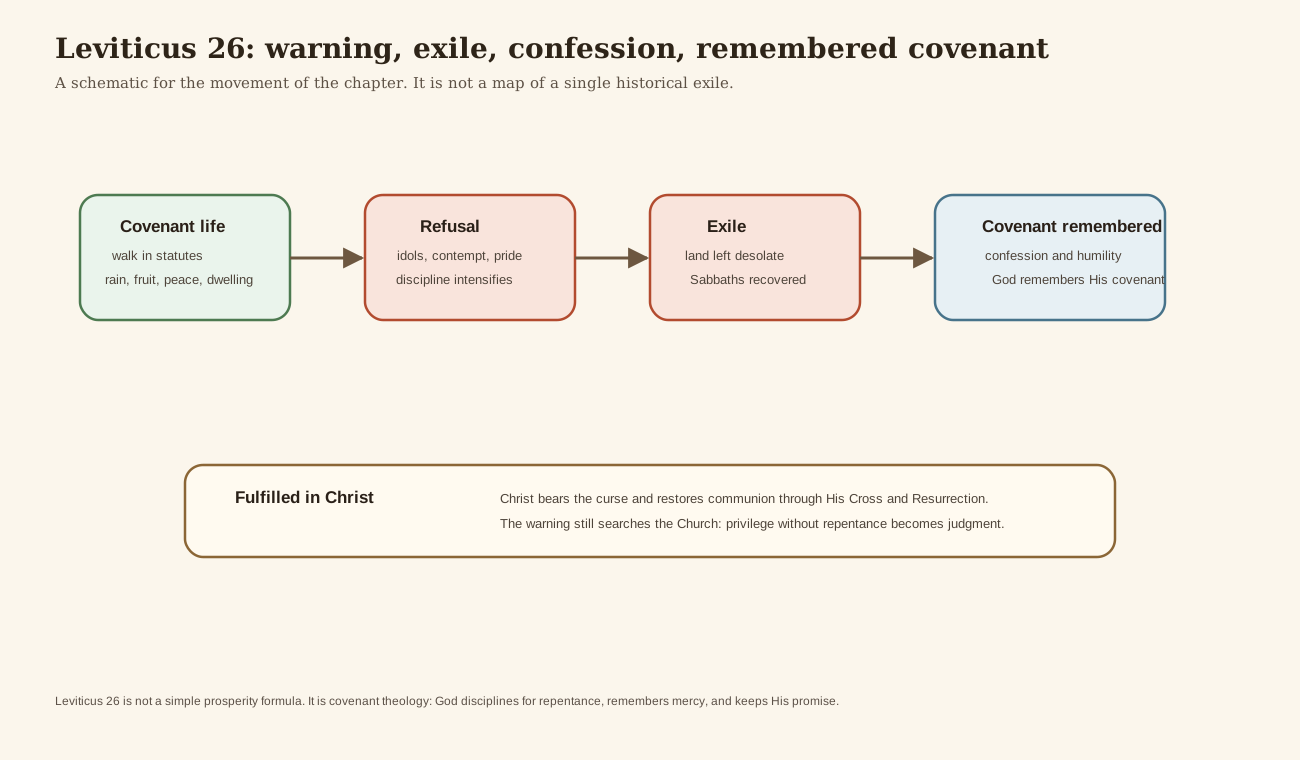 Source: Covenant warning and mercy schematic, based on Leviticus 26.
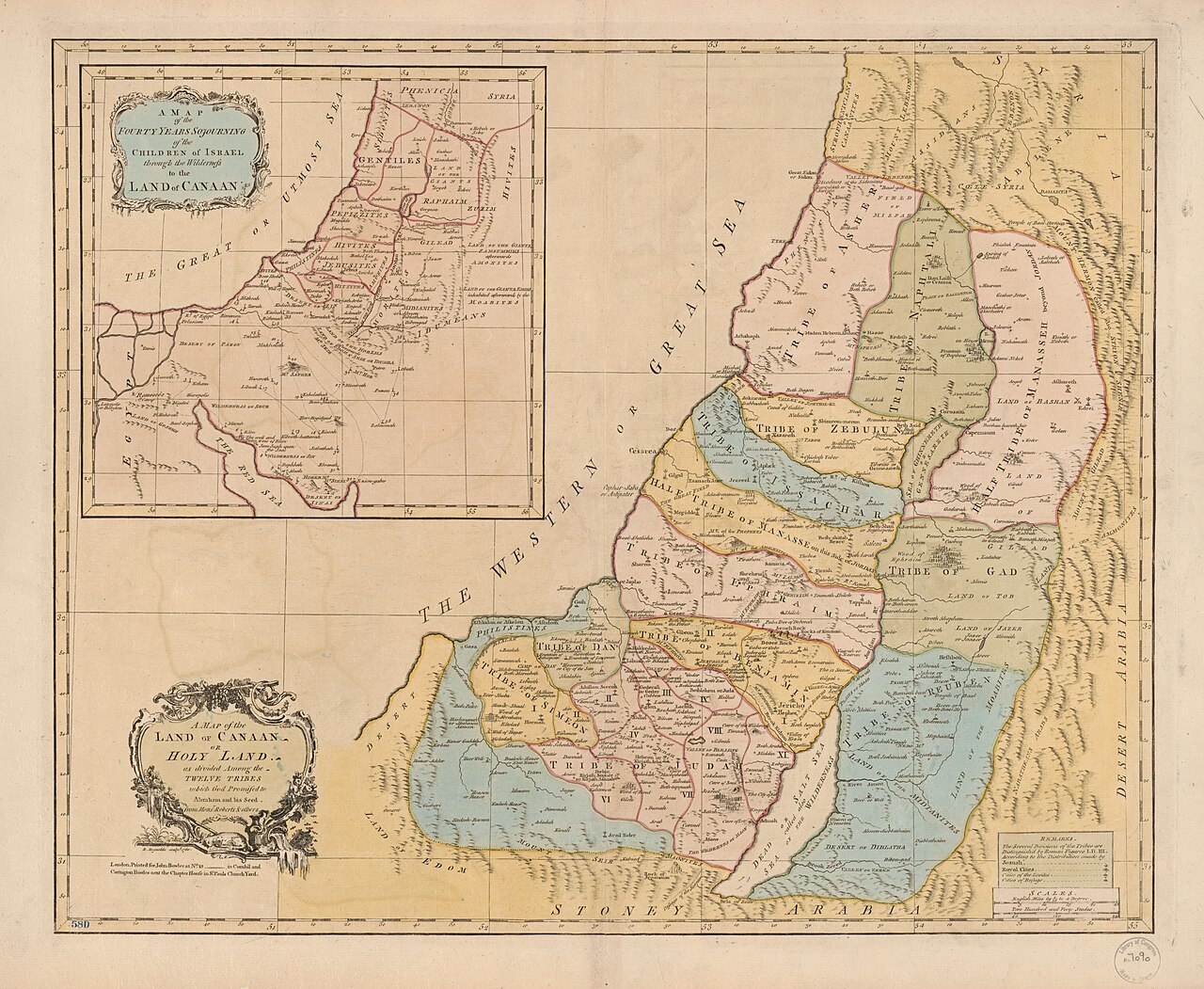 John Bowles, map of Canaan divided among the twelve tribes; Library of Congress scan via Wikimedia Commons, public domain. An early modern orientation aid, not a Sinai-period reconstruction.
Glossary
- Ordinances / judgments: The commands and determinations governing Israel’s covenant life with the Lord.
- Covenant: The binding relationship established by God, expressed in His promises and the people’s obligation to hear and obey Him.
- Covenant blessing: God’s promised life with His people, including land, peace, fruitfulness, worship, and above all His presence.
- Covenant curse: The consequences declared against persistent covenant rebellion; in Christian reading, Christ bears the curse to open return, not to make rebellion harmless.
- Tabernacle: God’s dwelling among the people; the promise of verses 11–12 is fulfilled through His presence, not merely material provision.
- Judicial reciprocity: The meaning of the warning’s “perverse” and “froward” language: God opposes rebellion without Himself becoming morally distorted.
- Savour: The smell of a sacrifice; its refusal in verse 31 reverses the earlier acceptance of offerings.
- Land Sabbath: The land’s required rest, received in exile when Israel has refused it.
- Uncircumcised heart: An inwardly resistant heart that outward covenant marks have not converted.
- Acquiesce: To cease resisting and acknowledge the justice of the consequences of confessed sins, not to accept abuse as righteous.
- Divine remembrance: God’s faithful action according to His covenant promise.
- Medicinal discipline: Correction ordered toward healing and return, never a license for humiliation or cruelty.
Spiritual Fruit 🍇
Receive correction while it is still small. The repeated calls to hear expose our talent for delay. A rebuke from someone trustworthy, a conscience disturbed by a familiar sin, or a conflict that exposes impatience can become the beginning of repentance. Attend to the wrong you actually know; do not wait for life to collapse before acknowledging it.
Do not confuse suffering with automatic guilt. The chapter speaks to covenant rebellion, not every wound in every person. Job, John 9, the martyrs, and Christ Himself forbid simplistic accusation. Pray for the sick and displaced, offer practical help, and refuse the satisfaction of explaining their suffering by blame.
Confess more than consequences. It is possible to regret a broken relationship while defending the lie that broke it. Name the transgression before God, seek appropriate confession and counsel, and make the repair that truth requires. Acknowledgment of sin can coexist with seeking protection from injustice.
Believe in mercy after exile. Some souls presume before sin and despair after sin. This chapter rejects both. Sin is serious enough to destroy peace, but God’s covenant mercy is deeper than desolation. Return is possible because He remembers.
Lord, teach me to hear Your correction before my heart becomes hard. Teach me to receive blessing as communion, not entitlement. When I have turned gift into possession, bring me home through repentance. Remember Your covenant in Christ, and make my resistant heart humble before You.
Teaching Notes
The roots of covenant faithfulness (Leviticus 26:1–2)
- Ask: Why are Sabbath and sanctuary placed beside the prohibition of idols?
- Watch for: Using a discussion of idols to accuse outsiders while avoiding the class’s own attachments.
Bread and sleep without fear (Leviticus 26:3–8)
- Ask: How does the promise of sleep without fear illuminate the meaning of peace?
- Watch for: Equating a comfortable life with holiness or calamity with failed prayer.
Blessing as communion with God (Leviticus 26:9–13)
- Ask: What would be missing if the harvest promises stood without verses 11–12?
- Watch for: Calling all suffering corrective punishment for a known personal offense.
Refusal begins with not listening (Leviticus 26:14–17)
- Ask: How can resistance to correction become dislike of the command itself?
- Watch for: Pressuring a vulnerable person to confess an imagined cause of illness.
Pride and fruitless strength (Leviticus 26:18–20)
- Ask: Why can increasing effort leave the real problem untouched?
- Watch for: Using an agricultural image to promise immediate success after repentance.
The roads grow desolate (Leviticus 26:21–22)
- Ask: What does an empty road show that a poor harvest alone does not?
- Watch for: Treating the imagery as entertainment or a prediction to apply to every disaster.
Correction resisted and bread weighed (Leviticus 26:23–26)
- Ask: What does shared baking in one oven reveal about the collapse of ordinary life?
- Watch for: Confusing a severe divine warning with permission for human humiliation or violence.
The hardest line (Leviticus 26:27–30)
- Ask: How does the judgment of the idols expose what the people had trusted?
- Watch for: Graphic elaboration that adds nothing to understanding or repentance.
The savour refused (Leviticus 26:31–33)
- Ask: Why is the loss of acceptable worship more than another material loss?
- Watch for: Teaching that a donation can compensate for refusal to repent.
Exile and the land’s Sabbath (Leviticus 26:34–39)
- Ask: How do fear and mutual disregard deepen the loss of a homeland?
- Watch for: Explaining every forced migration as a divine sentence against its victims.
Confession and the uncircumcised heart (Leviticus 26:40–41)
- Ask: What changes when a person stops defending the wrong and begins confessing it?
- Watch for: Demanding disclosure from the vulnerable or reducing inherited consequences to inherited personal guilt.
The covenant remembered (Leviticus 26:42–45)
- Ask: What hope remains when the people can no longer undo the damage themselves?
- Watch for: Using Christian fulfillment to deny God’s faithfulness to Israel.
The Lord’s law at Sinai (Leviticus 26:46)
- Ask: How does this conclusion prepare for a chapter about truthful dedication?
- Watch for: Skipping the closing verse as though it adds no claim to the reading.
Sources
Embedded Scripture is from Brenton’s English Septuagint (LXX). Passage headings follow the NKJV chapter-and-verse frame; the readings retain Brenton’s complete source verses and printed labels.
Leviticus 26, Lancelot C. L. Brenton, The Septuagint Version of the Old Testament (1851).
Patristic works quoted below, each identified by its containing passage and edition. Their application here is thematic unless direct commentary is expressly named.
Coptic Reader, Coptic Orthodox Metropolis of the Southern United States; appointment and prayer locations are given in the notes below. Related readings are distinguished from assignments of Leviticus itself.
Footnotes
-
Coptic Reader, Clergy / Litanies, Combined Litany for the Three Seasons. https://copticreader.org/app/#/document. ↩
-
Coptic Reader, Clergy / Litanies, Litany of Peace. The quoted phrase is taken from the longer petition. https://copticreader.org/app/#/document. ↩
-
St. John Chrysostom, Homilies on Hebrews, Homily 29, §2, on Hebrews 12:5–7, NPNF, First Series, vol. 14. https://www.newadvent.org/fathers/240229.htm. ↩
-
St. John Chrysostom, Homilies on Matthew, Homily 13, §7, NPNF, First Series, vol. 10. https://www.newadvent.org/fathers/200113.htm. ↩
-
St. John Chrysostom, Homilies on Romans, Homily 6, on Romans 2:29, NPNF, First Series, vol. 11. https://www.newadvent.org/fathers/210206.htm. ↩
-
St. Cyprian of Carthage, On the Lapsed (Treatise 3), §29, translated by Robert Ernest Wallis, ANF, vol. 5. https://www.newadvent.org/fathers/050703.htm. ↩
-
Coptic Reader, Special / Pascha / Saturday / Praises, Praise of the Prophet Baruch; corroborated by @andraws/lectionary-data 1.3.1. The printed heading gives Baruch 2:11–16, but the English body runs through verses 11–15 before the closing praise. The appointment statement here names the prayer without asserting a complete six-verse body. https://copticreader.org/app/#/document. ↩
-
Coptic Reader, Special / Pascha / Saturday / Praises, earlier “Prayer of Azarias (Daniel 3:25–51),” including the penitential prayer. The prayer itself corresponds to Brenton’s Greek Daniel 3:25–45, not the NKJV numbering of Daniel 3. The later heading “Prayer of Azariah,” verses 91–97, contains the deliverance narrative and is a different portion. https://copticreader.org/app/#/document. ↩
-
St. John Chrysostom, Homilies on John, Homily 14, §4, on John 1:16, NPNF, First Series, vol. 14. https://www.newadvent.org/fathers/240114.htm. ↩
-
St. John Chrysostom, Homilies on Galatians, Homily 3, on Galatians 3:13, NPNF, First Series, vol. 13. https://www.newadvent.org/fathers/23103.htm. ↩