


This narration was recorded before the latest revision of this study.
Samaria falls after long refusal of God’s warnings, while mixed worship survives the exile and exposes the danger of a divided heart.
The narrator spends more space explaining Israel’s fall than describing the siege. The nation had received deliverance, law, prophetic warning, and time to return. It loses its homeland after refusing the Lord who gave it. Yet this chapter does not license Judah’s pride or close the road of mercy: its warnings turn toward Judah, and its wounded region later hears Christ speak of true worship.
Historical and Scriptural Context
Hoshea is the last king of Israel. Assyrian tribute, an attempted Egyptian alliance, imprisonment, siege, and deportation end the northern monarchy. Deuteronomy 28:36, 64; 29:24-28 and Leviticus 26:33 supply the covenant background for this loss. The account names sin and refusal, not simply military inferiority. Its explanation of this particular judgment must not be turned into a rule that every conquered people or displaced family deserves its suffering.
Geographical Significance ⛰️
Samaria is the northern capital and the region receiving new settlers. Alae, Halah, and Abor, Habor, near the rivers of Gozan, mark forced displacement; Brenton says “the mountains of the Medes,” not the NKJV’s cities. Bæthel, Bethel, receives the returning priest. Chutha, Cuthah, and the other source regions show how Assyria rearranges conquered populations. The newcomers’ phrase “the God of the land” is their explanation, not a definition of the Lord’s limited jurisdiction.
The Characters 👥
Hoshea does evil, though the account qualifies that he is not like his predecessors. Shalmaneser makes him tributary and discovers his revolt. The king of Assyria takes Samaria and relocates populations. The prophets and seers repeatedly call Israel and Judah to turn. The returned priest teaches fear of the Lord without displacing the settlers’ gods. Judah survives the north’s fall but is explicitly warned against its own imitation of Israel.
Name key for the reading: Osee is Hoshea; Achaz is Ahaz; Salamanassar is Shalmaneser; Segor is So; Alae is Halah; Abor is Habor; Chutha is Cuthah; Æmath and Hæmath are Hamath; Bæthel is Bethel.
Hoshea, Assyria, and the fall of Samaria (2 Kings 17:1-6)
1 In the twelfth year of Achaz king of Juda began Osee the son of Ela to reign in Samaria over Israel nine years. 2 And he did evil in the eyes of the Lord, only not as the kings of Israel that were before him.
3 Against him came up Salamanassar king of the Assyrians; and Osee became his servant, and rendered him tribute. 4 And the king of the Assyrians found iniquity in Osee, in that he sent messengers to Segor king of Egypt, and brought not a tribute to the king of the Assyrians in that year: and the king of the Assyrians besieged him, and bound him in the prison-house. 5 And the king of the Assyrians went up against all the land, and went up to Samaria, and besieged it for three years.
6 In the ninth year of Osee the king of the Assyrians took Samaria, and carried Israel away to the Assyrians, and settled them in Alae, and in Abor, near the rivers of Gozan, and in the mountains of the Medes.
Hoshea’s reign receives a qualified verdict: he does evil, “only not as the kings of Israel that were before him.” A lesser degree of evil does not repair the covenant, and the political crisis does not erase this distinction. The account then follows the collapse of his attempt to escape Assyria by seeking Egypt and withholding tribute.
Three years of siege lead to forced removal. Families lose the places in which their life had taken shape. The brief report should not make their suffering invisible. The narrator will explain a national judgment, but the people being carried away are not a faceless illustration.
Tobit 1:1-22 gives the Church a faithful life within the northern deportation. Tobit 1:1-2 locates him among those carried away; his later mercy and fidelity show that exile does not make obedience impossible. This is not a denial of Kings’ indictment. It prevents the nation’s corporate failure from erasing every faithful person within it.
Why Israel fell (2 Kings 17:7-17)
7 For it came to pass that the children of Israel had transgressed against the Lord their God, who had brought them up out of the land of Egypt, from under the hand of Pharao king of Egypt, and they feared other gods, 8 and walked in the statutes of the nations which the Lord cast out before the face of the children of Israel, and of the kings of Israel as many as did such things, 9 and in those of the children of Israel as many as secretly practised customs, not as they should have done, against the Lord their God: 10 and they built for themselves high places in all their cities, from the tower of the watchmen to the fortified city. And they made for themselves pillars and groves on every high hill, and under every shady tree. 11 And burned incense there on all high places, as the nations did whom the Lord removed from before them, and dealt with familiar spirits, and they carved images to provoke the Lord to anger. 12 And they served the idols, of which the Lord said to them, Ye shall not do this thing against the Lord.
13 And the Lord testified against Israel and against Juda, even by the hand of all his prophets, and of every seer, saying, Turn ye from your evil ways, and keep my commandments and my ordinances, and all the law which I commanded your fathers, and all that I sent to them by the hand of my servants the prophets. 14 But they hearkened not, and made their neck harder than the neck of their fathers. 15 And they kept not any of his testimonies which he charged them; and they walked after vanities, and became vain, and after the nations round about them, concerning which the Lord had charged them not to do accordingly. 16 They forsook the commandments of the Lord their God, and made themselves graven images, even two heifers, and they made groves, and worshipped all the host of heaven, and served Baal. 17 And they caused their sons and their daughters to pass through the fire, and used divinations and auspices, and sold themselves to work wickedness in the sight of the Lord, to provoke him.
The indictment begins with the Exodus: the Lord brought Israel out from under Pharaoh, yet Israel feared other gods. Forgetting deliverance makes imitation appear reasonable. The people adopt the practices of nations driven out before them and of kings who normalize the same offenses. Secret customs and public shrines reinforce one another.
God’s response includes speech before removal. Verse 13 addresses both Israel and Judah through prophets and seers: turn from evil ways and keep the commandments. The hardened neck in verse 14 pictures refusal to yield. Judgment follows a long resistance to correction, not an impatient abandonment.
“They walked after vanities, and became vain” describes worship changing the worshiper. Jeremiah 2:5 uses the same pattern; Psalm 115:8 (LXX Ps 113:16) connects idols with the likeness of those trusting them; Romans 1:21 names the darkening of the ungrateful mind. An object of worship becomes a pattern for desire and action. The idols are empty, but their effect is not harmless.
The list reaches the host of heaven, Baal, divination, and the passing of sons and daughters through fire. These are not interchangeable spiritual preferences. They contradict the Lord’s commands and injure those entrusted to the people’s care. The phrase “sold themselves” names a willing surrender that makes the coming loss of freedom especially bitter.
Judah warned by Israel’s judgment (2 Kings 17:18-23)
18 And the Lord was very angry with Israel, and removed them out of his sight; and there was only left the tribe of Juda quite alone. 19 Nay even Juda kept not the commandments of the Lord their God, but they walked according to the customs of Israel which they practised, and rejected the Lord.
20 And the Lord was angry with the whole seed of Israel, and troubled them, and gave them into the hand of them that spoiled them, until he cast them out of his presence. 21 Forasmuch as Israel revolted from the house of David, and they made Jeroboam the son of Nabat king: and Jeroboam drew off Israel from following the Lord, and led them to sin a great sin. 22 And the children of Israel walked in all the sin of Jeroboam which he committed; they departed not from it, 23 until the Lord removed Israel from his presence, as the Lord spoke by all his servants the prophets; and Israel was removed from off their land to the Assyrians until this day.
The removal from God’s presence answers the earlier mercy in 2 Kings 13:23, where He had not yet cast them out. The added time was real mercy, but it could be refused. The covenant with Abraham, Isaac, and Jacob did not authorize endless disregard of the Lord.
Judah is not allowed to congratulate itself. Verse 19 says it too imitates Israel’s customs; the wider language about the whole seed of Israel prevents a comfortable separation between guilty neighbors and innocent observers. Seeing another person’s fall should lead to repentance, not relief that the exposure happened elsewhere.
The account reaches back to Jeroboam’s separation from David’s house and the worship system by which he drew Israel away. Sin becomes an inheritance when later generations keep the pattern without questioning it. The chapter’s grief lies in the long availability of a word they would not hear.
Foreign settlement and confused worship (2 Kings 17:24-33)
24 And the king of Assyria brought from Babylon the men of Chutha, and men from Aia, and from Æmath, and Seppharvaim, and they were settled in the cities of Samaria in the place of the children of Israel: and they inherited Samaria, and were settled in its cities. 25 And it was so at the beginning of their establishment there that they feared not the Lord, and the Lord sent lions among them, and they slew some of them. 26 And they spoke to the king of the Assyrians, saying, The nations whom thou hast removed and substituted in the cities of Samaria for the Israelites, know not the manner of the God of the land: and he has sent the lions against them, and, behold, they are slaying them, because they know not the manner of the God of the land. 27 And the king of the Assyrians commanded, saying, Bring some Israelites thence, and let them go and dwell there, and they shall teach them the manner of the God of the land. 28 And they brought one of the priests whom they had removed from Samaria, and he settled in Bæthel, and taught them how they should fear the Lord.
29 But the nations made each their own gods, and put them in the house of the high places which the Samaritans had made, each nation in the cities in which they dwelt. 30 And the men of Babylon made Socchoth Benith, and the men of Chuth made Ergel, and the men of Hæmath made Asimath. 31 And the Evites made Eblazer and Tharthac, and the inhabitant of Seppharvaim did evil when they burnt their sons in the fire to Adramelech and Anemelech, the gods of Seppharvaim. 32 And they feared the Lord, yet they established their abominations in the houses of the high places which they made in Samaria, each nation in the city in which they dwelt: and they feared the Lord, and they made for themselves priests of the high places, and sacrificed for themselves in the house of the high places. 33 And they feared the Lord, and served their gods according to the manner of the nations, whence their lords brought them.
Assyria brings foreign peoples into Samaria’s cities. The lions expose the inadequacy of their understanding: they think they need to learn the local deity’s customs. God is not one territorial power among many. The scene recalls lions in the judgments of 1 Kings 13:24 and 20:36, but no one should infer a general explanation for animal attacks from these particular events.
The royal command calls for Israelites to return; the next verse reports one priest established at Bethel. He teaches the fear of the Lord, while the settlers continue making their own gods and appointing priests for the high places. Their account of a religious solution preserves the very mixture the covenant forbids.
Verse 33 joins the two facts: they fear the Lord and serve their gods. Addition is not repentance. The Lord is placed alongside what the heart refuses to surrender. This describes the settlement’s worship, not an immutable moral nature of every later Samaritan. Christ’s encounter with Samaria will address its errors without withholding mercy from its people.
The final indictment of syncretism (2 Kings 17:34-41)
Translation note: Brenton 17:34 says “they fear the Lord,” where the NKJV says they do not. Brenton 17:40 is a command against following their practice, where the NKJV describes their refusal to obey.
34 Until this day they did according to their manner: they fear the Lord, and they do according to their customs, and according to their manner, and according to the law, and according to the commandment which the Lord commanded the sons of Jacob, whose name he made Israel. 35 And the Lord made a covenant with them, and charged them, saying, Ye shall not fear other gods, neither shall ye worship them, nor serve them, nor sacrifice to them: 36 but only to the Lord, who brought you up out of the land of Egypt with great strength and with a high arm: him shall ye fear, and him shall ye worship; to him shall ye sacrifice. 37 Ye shall observe continually the ordinances, and the judgments, and the law, and the commandments which he wrote for you to do; and ye shall not fear other gods. 38 Neither shall ye forget the covenant which he made with you: and ye shall not fear other gods. 39 But ye shall fear the Lord your God, and he shall deliver you from all your enemies.
40 Neither shall ye comply with their practice, which they follow. 41 So these nations feared the Lord, and served their graven images: yea, their sons and their sons’ sons do until this day even as their fathers did.
Brenton’s opening clause says “they fear the Lord,” then describes customs and the law commanded to Jacob. Its wording is not the NKJV’s negative sentence at verse 34. The tension is resolved within the paragraph’s own insistence that the Lord alone is to be feared, worshiped, served, and given sacrifice. Verse 41 repeats the mixture that remains: fear of the Lord alongside service of graven images.
The recalled covenant again begins with the Exodus. Its commandments repeatedly prohibit fear of other gods, and its promise names the Lord as deliverer. The form of religion that seeks protection from Him while retaining rival worship contradicts that promise. Brenton 17:40 is a command against compliance with their practice, rather than the NKJV’s narrative statement that they would not obey.
The final mention of children and grandchildren makes the danger durable. What parents accommodate becomes normal for those raised within it. Repentance must therefore include the habits we teach through our spending, anger, speech, and loyalties, not only the religious words we pass on.
Orthodox Theological and Christological Reading
The chapter names worship as a school of the heart. God calls for the whole person, not a religious compartment left beside unchanged masters. Christians must receive Israel’s warning humbly, for inherited language and regular attendance cannot make divided service faithful.
Hosea’s judgment and promise open the hope the exile cannot extinguish: Hosea 1:9-10 and 2:23 speak of those once called not God’s people being received again. Romans 9:25-26 and 1 Peter 2:10 use that promise in proclaiming mercy. The return reaches its fullness in Christ, who seeks the scattered and reveals worship of the Father in Spirit and truth in John 4. The Samaritan neighbor in Luke 10:33, the grateful leper in Luke 17:16, and Samaria’s reception of the Gospel in Acts 8:5-17 forbid contempt toward the people of this wounded land.
Gems from the Fathers 💎
St. John Chrysostom directly recalls the mixed worship of this chapter while explaining John 4:21-24 in Homilies on John 33. He says the settlers thought God was local and partial, then describes their service as “joining things which ought not to be joined.”1 His answer is Christ’s teaching about worship: the Creator cannot be confined to a territory or added to idols. Worship in Spirit and truth demands the soul’s self-offering, not contempt for a people. His contrast between the covenant’s teaching and the settlers’ error is a religious argument, never permission for ethnic hostility.
The Church’s Voice in Worship ⛪
No passage from 2 Kings 17 is appointed under that reference in the Coptic lectionary evidence considered here. Tobit 1:1-22 is a prophecy on Friday of the sixth week of Great Lent. John 4:1-42 is the Liturgy Gospel on the Sunday of the fourth week of Great Lent and the third Sunday of the Holy Fifty Days. John 4:15-24 also occurs as a Matins Gospel. Reading Tobit’s fidelity and Christ’s encounter with Samaria beside this chapter is an interpretive connection, not an appointment of Kings. See the lectionary.
Iconography and Visual Teaching 🖼️
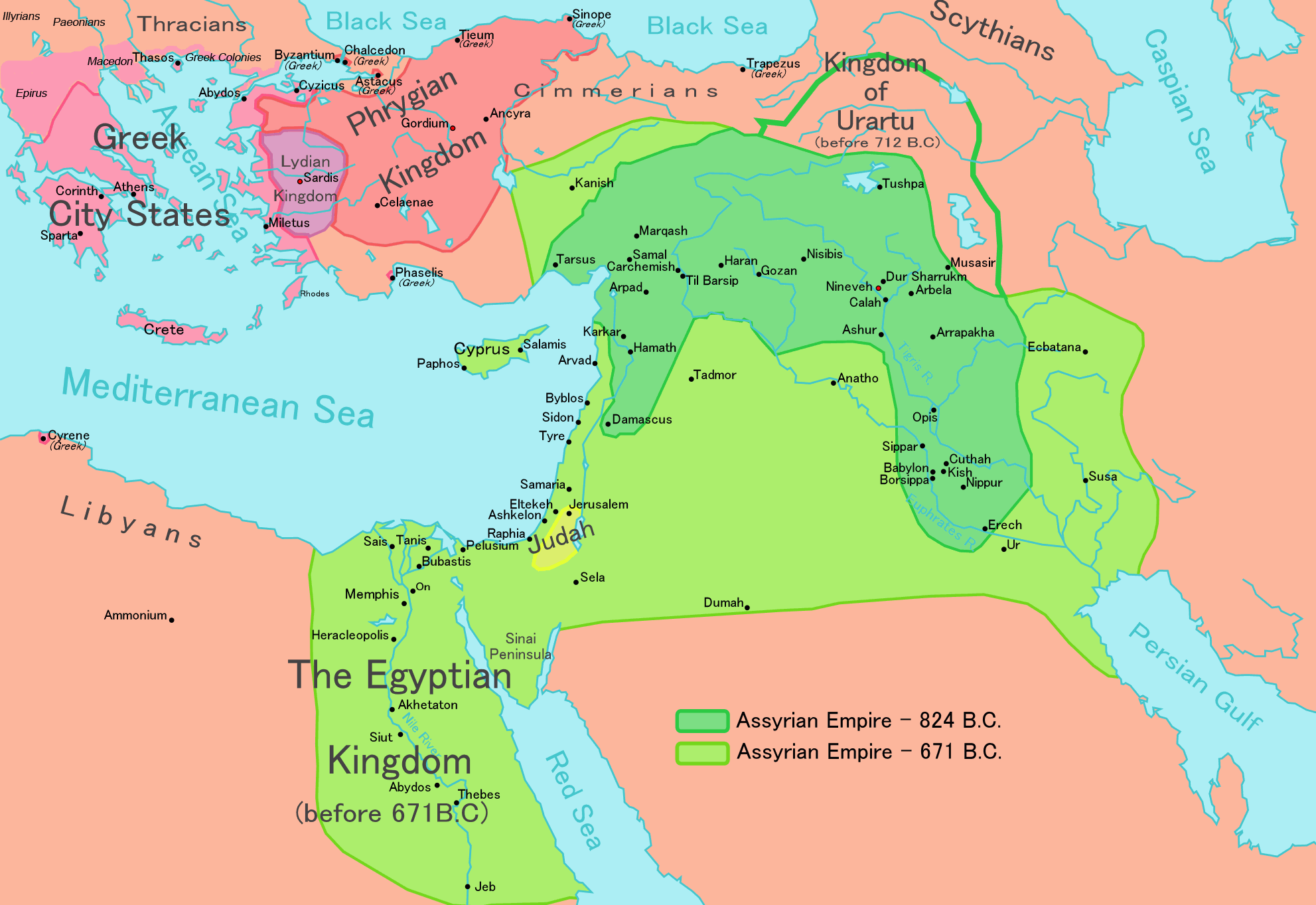 Source: Map of the Assyrian Empire, public domain via Wikimedia Commons.
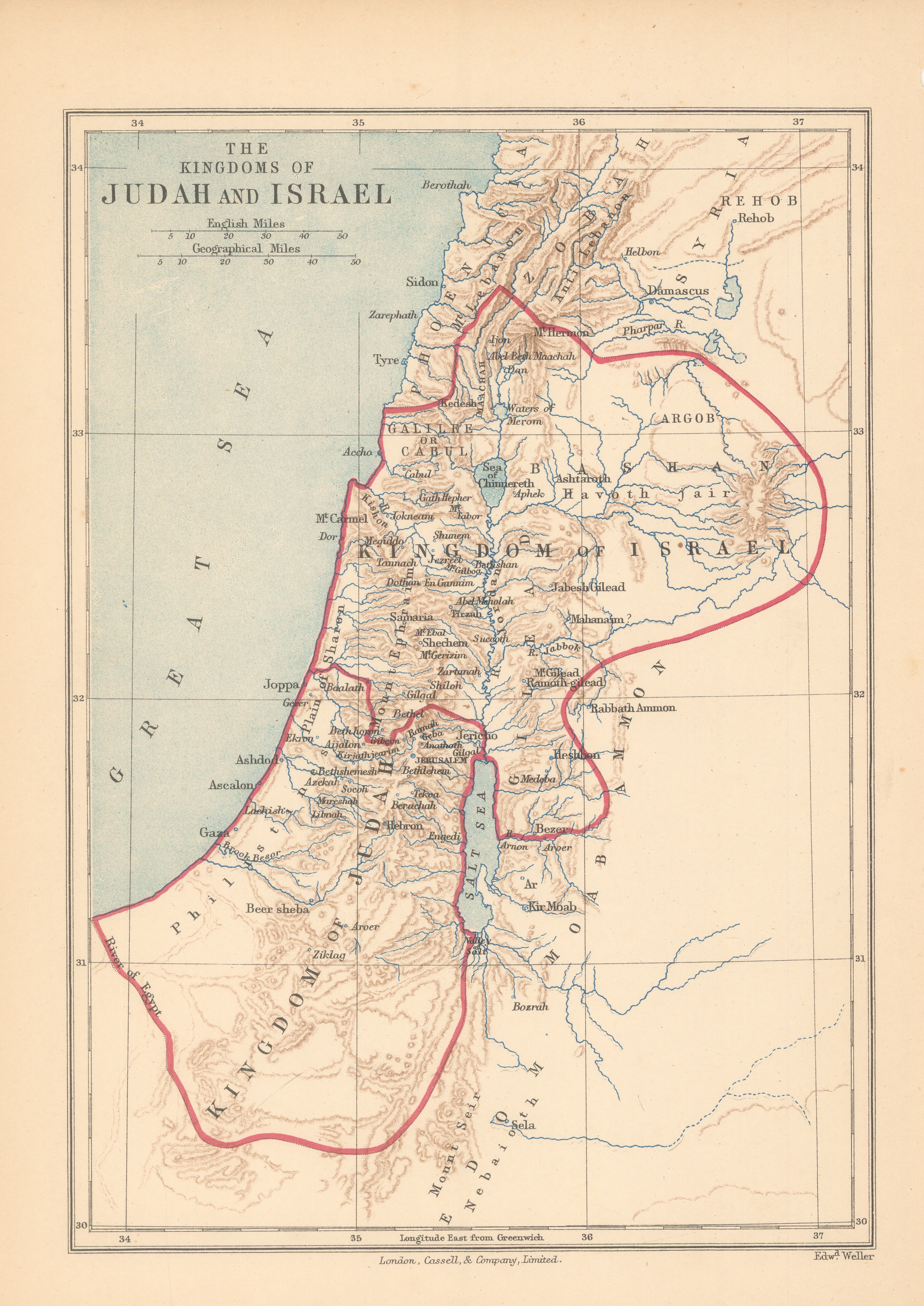 Source: Edward Weller, The Kingdoms of Judah and Israel, public domain via Wikimedia Commons.
Assyrian art provides imperial context. The maps show a homeland lost and populations displaced; they do not make a displaced person’s suffering less human.
Summary Table
| Passage | Event | Spiritual burden |
|---|---|---|
| 17:1-6 | Samaria falls | Political alternatives cannot heal disobedience |
| 17:7-17 | Reasons for judgment | Warning precedes removal |
| 17:18-23 | Judah is also warned | Another’s fall summons our repentance |
| 17:24-33 | Settlers mix worship | Addition is not conversion |
| 17:34-41 | Covenant and inherited mixture | Serve the Lord with an undivided heart |
Glossary
Syncretism: joining worship of God to incompatible service of other gods. Deportation: forced removal from homeland. Familiar spirits: practices seeking communication with spirits rather than God’s word. Auspices: divinatory signs used to seek guidance. Covenant: the bond established by God, with promises and commands.
Spiritual Fruit 🍇
-
Receive correction before crisis. Israel heard repeated calls to turn before its removal. Answer one clear correction now instead of waiting until consequences make obedience urgent.
-
Examine the habits worship forms. Walking after vanities changes the people themselves. Ask what your attention, money, and daily loyalties are training you to love.
-
Repent when another falls. Judah’s survival does not prove its innocence. Pray for the exposed person and examine your own conduct before offering a verdict.
-
Do not add God to unchanged masters. The settlers fear Him while serving their gods. Confess a concrete competing loyalty, then relinquish the action through which you serve it.
-
Keep mercy visible in exile. Tobit’s fidelity and Christ’s welcome of Samaria prevent hopelessness. Offer practical care to a displaced person without turning suffering into an accusation.
Prayer
Lord Jesus Christ, gather our scattered hearts. Forgive the worship we divide between You and our desires; make us quick to receive Your warning and faithful in mercy. Remember those driven from their homes, and teach us to worship the Father in Spirit and truth. Amen.
Teaching Notes
Hoshea, Assyria, and the fall of Samaria (2 Kings 17:1-6)
- Ask: Why does the narrator devote more space to explaining exile than to the siege?
- Watch for: Do not erase Hoshea’s qualified verdict or make every displacement a punishment.
- Connect: Tobit 1:1-22.
Why Israel fell (2 Kings 17:7-17)
- Ask: How does walking after vanities make a people vain?
- Watch for: Secret practices and public worship both belong to the indictment.
- Connect: Jeremiah 2:5; Psalm 115:8 (LXX Ps 113:16); Romans 1:21.
Judah warned by Israel’s judgment (2 Kings 17:18-23)
- Ask: What warning should Judah hear from Israel’s fall?
- Watch for: Avoid superiority toward the fallen.
- Connect: 2 Kings 13:23 and the delayed judgment.
Foreign settlement and confused worship (2 Kings 17:24-33)
- Ask: What is wrong with adding the Lord to an existing set of gods?
- Watch for: The settlers’ territorial understanding is not Scripture’s definition of God.
- Show: Use the divided-kingdom and empire maps to trace displacement.
The final indictment of syncretism (2 Kings 17:34-41)
- Ask: How does John 4 answer Samaria’s confusion, and where do Christians practice a similar mixture?
- Watch for: State the difference at Brenton 17:34 and the imperative at 17:40; do not denigrate later Samaritans.
- Connect: Hosea’s promise, Romans 9:25-26, and Acts 8:5-17.
Sources
Embedded Scripture is from Brenton’s English Septuagint (LXX). In the Septuagint tradition, 2 Kings is numbered 4 Kingdoms. Chapter and verse headings follow the NKJV framing.
Deuteronomy 28:36, 64; 29:24-28; Leviticus 26:33; 1 Kings 13:24; 20:36.
Jeremiah 2:5; Psalm 115:8 (LXX Ps 113:16); Romans 1:21; Hosea 1:9-10; 2:23; Romans 9:25-26; 1 Peter 2:10.
Coptic lectionary appointments described above.
Footnotes
-
St. John Chrysostom, Homilies on John, Homily 33, §1, on John 4:21-24 and the settlement’s mixed worship, New Advent. ↩