


This narration was recorded before the latest revision of this study.
Josiah’s reform is the last great blaze of faithfulness before Jerusalem falls. The book of the law is found in the temple, the king tears his clothes, Huldah confirms judgment, and Josiah renews the covenant. He cleanses the temple, destroys idolatrous sites, defiles Topheth, burns idolatrous priests, fulfills the old prophecy against Bethel, and keeps a Passover unlike any since the days of the judges.
Yet the chapter is bittersweet. Josiah is faithful, but accumulated judgment remains.
Historical and Scriptural Context
Josiah follows Manasseh and Amon. His reform is not superficial; it attacks the structures of false worship. The rediscovery of the book of the law shows how far Judah has drifted: the covenant document itself has become neglected within the temple.
Geographical Significance ⛰️
The Kidron carries the dust of destroyed idols away from Jerusalem’s sanctuary. Topheth, in the valley of the son of Hinnom, is the place defiled to prevent child sacrifice. Its history lies behind the Lord’s warnings using the name Gehenna; Jeremiah 7:31-32 and 19 expose its crimes.
Bethel takes the reform into the former northern kingdom and to Jeroboam’s altar. The journey joins Judah’s present repentance to a much older prophetic warning. Megiddo is the place of Josiah’s fatal encounter with Necho and later a name for great mourning in Zechariah 12:11. The reform’s geographical reach does not guarantee the king’s survival.
The Characters 👥
Josiah begins to reign at eight and later hears the Law with tears. Hilkiah, the high priest, finds the book; Shaphan, the scribe, reads it before the king. Huldah, the prophetess, declares both judgment on the city and the Lord’s regard for Josiah’s humbled heart.
Necho, king of Egypt, kills Josiah at Megiddo and then controls Judah’s succession and tribute. Jehoahaz reigns briefly before being removed. Jehoiakim, first named Eliakim, receives his royal name from Pharaoh and continues in evil. Neither son inherits Josiah’s obedience simply by inheriting his throne.
Name Key
Josias = Josiah; Chelcias = Hilkiah; Sapphan = Shaphan; Olda = Huldah; Achikam/Achicam = Ahikam; Sellem = Shallum; Kedron = Kidron; Bæthel = Bethel; Tapheth = Topheth; Ennom = Hinnom; Mageddo = Megiddo; Nechao = Necho; Joachaz = Jehoahaz; Joakim = Jehoiakim; Manasses = Manasseh; Achaz = Ahaz; Lobna = Libnah.
Josiah’s early righteousness and temple repair (2 Kings 22:1-7)
1 Josias was eight years old when he began to reign, and he reigned thirty and one years in Jerusalem: and his mother’s name was Jedia, daughter of Edeia of Basuroth. 2 And he did that which was right in the sight of the Lord, and walked in all the way of David his father; he turned not aside to the right hand or to the left.
3 And it came to pass in the eighteenth year of king Josias, in the eighth month, the king sent Sapphan the son of Ezelias the son of Mesollam, the scribe of the house of the Lord, saying, 4 Go up to Chelcias the high priest, and take account of the money that is brought into the house of the Lord, which they that keep the door have collected of the people. 5 And let them give it into the hand of the workmen that are appointed in the house of the Lord. And he gave it to the workmen in the house of the Lord, to repair the breaches of the house, 6 even to the carpenters, and builders, and masons, and also to purchase timber and hewn stones, to repair the breaches of the house. 7 Only they did not call them to account for the money that was given to them, because they dealt faithfully.
Josiah walks in David’s way without turning to right or left. Repairing the temple prepares for a deeper confrontation: the workers restore the building, but the word found within it will expose the nation’s life. Timber, stones, and faithful labor belong to renewal; they are not a substitute for hearing God.
The statement that the workers “dealt faithfully” recalls the temple repairs in 2 Kings 12. It commends trustworthy stewardship rather than financial carelessness as a religious ideal. The money given for a holy purpose must actually serve that purpose. Josiah first acts to repair the Lord’s house; he will soon discover how much the people themselves need repair.
The book of the law found (2 Kings 22:8-13)
8 And Chelcias the high priest said to Sapphan the scribe, I have found the book of the law in the house of the Lord. And Chelcias gave the book to Sapphan, and he read it. 9 And he went into the house of the Lord to the king, and reported the matter to the king, and said, Thy servants have collected the money that was found in the house of the Lord, and have given it into the hand of the workmen that are appointed in the house of the Lord. 10 And Sapphan the scribe spoke to the king, saying, Chelcias the priest has given me a book. And Sapphan read it before the king. 11 And it came to pass, when the king heard the words of the book of the law, that he rent his garments. 12 And the king commanded Chelcias the priest, and Achikam the son of Sapphan, and Achobor the son of Michaias, and Sapphan the scribe, and Asaias the king’s servant, saying, 13 Go, enquire of the Lord for me, and for all the people, and for all Juda, and concerning the words of this book that has been found: for the wrath of the Lord that has been kindled against us is great, because our fathers hearkened not to the words of this book, to do according to all the things written concerning us.
The king hears the Law and tears his garments. He does not ask whether the book will enhance his reputation; he asks what the Lord’s wrath means for himself and the people. His enquiry includes the whole community. A ruler who truly hears God’s word cannot isolate his private conscience from those entrusted to him.
An ancient Christian identification of this book with Deuteronomy appears explicitly in St. John Chrysostom. The connections within Scripture are strong: Deuteronomy 31:24-26 places the written Law beside the ark, chapter 28 gives the covenant curses, and 17:18-20 commands the king to read his own copy throughout his life. The chapter does not reproduce the whole recovered scroll, so these connections should not become a claim about its exact contents beyond what the account establishes.
Later, 23:25 describes Josiah’s turning with heart, soul, and strength, echoing Deuteronomy 6:5, which Christ cites in Matthew 22:37. The restored book reaches its intended destination when it governs a life. Hebrews 4:12 names the searching power of God’s word; a listener who allows it to judge him has begun to hear.
Huldah’s prophecy (2 Kings 22:14-20)
Translation note: Brenton calls Olda “the mother of Sellem” in 22:14; the NKJV calls Huldah the wife of Shallum. The reading below retains Brenton. In 22:19 he prints “thy heart was softened,” corresponding to the NKJV’s tender heart.
14 So Chelcias the priest went, and Achicam, and Achobor, and Sapphan, and Asaias, to Olda the prophetess, the mother of Sellem the son of Thecuan son of Aras, keeper of the robes; and she dwelt in Jerusalem in Masena; and they spoke to her.
15 And she said to them, Thus saith the Lord God of Israel, Say to the man that sent you to me, 16 Thus saith the Lord, Behold, I bring evil upon this place, and upon them that dwell in it, even all the words of the book which the king of Juda has read: 17 because they have forsaken me, and burnt incense to other gods, that they might provoke me with the works of their hands: therefore my wrath shall burn forth against this place, and shall not be quenched. 18 And to the king of Juda that sent you to enquire of the Lord,—thus shall ye say to him, Thus saith the Lord God of Israel, As for the words which thou hast heard; 19 because thy heart was softened, and thou wast humbled before me, when thou heardest all that I spoke against this place, and against the inhabitants of it, that it should be utterly destroyed and accursed, and thou didst rend thy garments, and weep before me; I also have heard, saith the Lord. 20 It shall not be so therefore: behold, I will add thee to thy fathers, and thou shalt be gathered to thy tomb in peace, and thine eyes shall not see any among all the evils which I bring upon this place.
Huldah speaks the Lord’s word, not the hopeful answer a powerful king might prefer. The city has forsaken God and burned incense to other gods. The recovered book confirms judgment; it does not provide a ritual shortcut around repentance. Yet God has heard Josiah’s tears just as He heard Hezekiah’s in chapter 20. His heart “was softened,” and his humbling matters.
The promise of a tomb in peace must be read with the rest of the sentence: his eyes will not see the evils brought on this place. Josiah does in fact die violently in 23:29. One answer to the tension is therefore in Huldah’s own words: he is spared witnessing Jerusalem’s coming catastrophe. The parallel account in 2 Chronicles 35:20-22 adds a further sober element: he does not listen to Necho’s words coming from the mouth of God. Neither answer lets us erase the battle or treat the promise as a guarantee that every subsequent royal decision is safe.
Josiah’s softened heart is not weakness. He accepts a word that wounds his hopes and then acts on it. Repentance is precious even when it cannot return a community to a past before its accumulated injuries.
Covenant renewal (2 Kings 23:1-3)
1 So they reported the word to the king: and the king sent and gathered all the elders of Juda and Jerusalem to himself. 2 And the king went up to the house of the Lord, and every man of Juda and all who dwelt in Jerusalem with him, and the priests, and the prophets, and all the people small and great; and he read in their ears all the words of the book of the covenant that was found in the house of the Lord. 3 And the king stood by a pillar, and made a covenant before the Lord, to walk after the Lord, to keep his commandments and his testimonies and his ordinances with all the heart and with all the soul, to confirm the words of this covenant; even the things written in this book. And all the people stood to the covenant.
Josiah reads the covenant in the hearing of priests, prophets, and people small and great. He stands by the pillar and binds himself to walk after the Lord with heart and soul. Public office is placed under God’s commandments rather than above them. The people stand to the covenant with him.
This public renewal gives the repentance a communal form. It is possible to admire a king’s sincerity without changing one’s own life, so the shared hearing and commitment matter. Yet a public promise is only the beginning of obedience. The cleansing that follows tests whether the people will continue to live by what they have heard.
Cleansing temple and land (2 Kings 23:4-14)
Translation note: Brenton says “he burned the idolatrous priests” in 23:5 and “ate leavened bread” in 23:9. The NKJV describes removal of the idolatrous priests and unleavened bread. These are real differences, not interchangeable wording.
4 And the king commanded Chelcias the high priest, and the priests of the second order, and them that kept the door, to bring out of the temple of the Lord all the vessels that were made for Baal, and for the grove, and all the host of heaven, and he burned them without Jerusalem in the fields of Kedron, and took the ashes of them to Bæthel. 5 And he burned the idolatrous priests, whom the kings of Juda had appointed, (and they burned incense in the high places and in the cities of Juda, and the places round about Jerusalem); and them that burned incense to Baal, and to the sun, and to the moon, and to Mazuroth, and to all the host of heaven.
6 And he carried out the grove from the house of the Lord to the brook Kedron, and burned it at the brook Kedron, and reduced it to powder, and cast its powder on the sepulchres of the sons of the people. 7 And he pulled down the house of the sodomites that were by the house of the Lord, where the women wove tents for the grove. 8 And he brought up all the priests from the cities of Juda, and defiled the high places where the priests burned incense, from Gæbal even to Bersabee; and he pulled down the house of the gates that was by the door of the gate of Joshua the ruler of the city, on a man’s left hand at the gate of the city. 9 Only the priests of the high places went not up to the altar of the Lord in Jerusalem, for they only ate leavened bread in the midst of their brethren. 10 And he defiled Tapheth which is in the valley of the son of Ennom, constructed for a man to cause his son or his daughter to pass through fire to Moloch.
11 And he burned the horses which the kings of Juda had given to the sun in the entrance of the house of the Lord, by the treasury of Nathan the king’s eunuch, in the suburbs; and he burned the chariot of the sun with fire. 12 And the altars that were on the roof of the upper chamber of Achaz, which the kings of Juda had made, and the altars which Manasses had made in the two courts of the house of the Lord, did the king pull down and forcibly remove from thence, and cast their dust into the brook of Kedron. 13 And the king defiled the house that was before Jerusalem, on the right hand of the mount of Mosthath, which Solomon king of Israel built to Astarte the abomination of the Sidonians, and to Chamos the abomination of Moab, and to Moloch the abomination of the children of Ammon. 14 And he broke in pieces the pillars, and utterly destroyed the groves, and filled their places with the bones of men.
Josiah carries the reform into the temple courts, local high places, and shrines associated with earlier kings. Vessels, groves, altars, horses, and the sun’s chariot show how thoroughly false worship had acquired physical form. The Lord’s house had become crowded with signs of allegiance to other gods. The removal is costly because the objects and offices had been established by royal authority.
Brenton’s wording is severe: he burns the idolatrous priests, and the later scene at Bethel speaks of killing priests upon the altars. We must neither soften what the reading says nor turn ancient royal judgment into authorization for Christians to assault people of another faith. Repentance now calls us to renounce our own idols and obey Christ, who commands love of enemies. The sacred violence remains a difficult feature of this covenantal history.
The priests of the high places do not ascend to the Lord’s altar. Brenton says they eat leavened bread among their brethren, though they do not resume service at the Lord’s altar in Jerusalem. The account distinguishes ending unauthorized worship from simply restoring every former priest to altar service.
Topheth is defiled so that children will no longer be passed through fire to Moloch. Jeremiah 7:31-32 and chapter 19 name the horror of that place; Matthew 5:22 and Mark 9:43-48 use Gehenna, the name associated with the valley of Hinnom, in warnings of judgment. Reverence for God and protection of children belong together here. A practice cannot become holy through custom when it consumes the vulnerable.
Bethel, graves, and fulfilled prophecy (2 Kings 23:15-20)
15 Also the high altar in Bæthel, which Jeroboam the son of Nabat, who made Israel to sin, had made, even that high altar he tore down, and broke in pieces the stones of it, and reduced it to powder, and burnt the grove. 16 And Josias turned aside, and saw the tombs that were there in the city, and sent, and took the bones out of the tombs, and burnt them on the altar, and defiled it, according to the word of the Lord which the man of God spoke, when Jeroboam stood by the altar at the feast: and he turned and raised his eyes to the tomb of the man of God that spoke these words. 17 And he said, What is that mound which I see? And the men of the city said to him, It is the grave of the man of God that came out of Juda, and uttered these imprecations which he imprecated upon the altar of Bæthel. 18 And he said, Let him alone; let no one disturb his bones. So his bones were spared, together with the bones of the prophet that came out of Samaria.
19 Moreover Josias removed all the houses of the high places that were in the cities of Samaria, which the kings of Israel made to provoke the Lord, and did to them all that he did in Bæthel. 20 And he sacrificed all the priests of the high places that were there on the altars, and burnt the bones of men upon them, and returned to Jerusalem.
Josiah fulfills the word spoken against Bethel in 1 Kings 13. Verse 2 of that earlier chapter names Josiah long before his birth. The remembered warning now becomes visible in the altar’s destruction and defilement. The long delay has not emptied the word of its force.
Yet the bones of the man of God and of the prophet from Samaria are spared. The distinction shows that destruction is not indiscriminate. Josiah recognizes the witness of the earlier prophecy even among tombs. The terrible killing of the shrine priests must remain described as royal judgment within this history, not a model for private vengeance or for the Church’s treatment of unbelievers.
Passover restored (2 Kings 23:21-25)
21 And the king commanded all the people, saying, Keep the passover to the Lord your God, as it is written in the book of this covenant. 22 For a passover such as this had not been kept from the days of the judges who judged Israel, even all the days of the kings of Israel, and of the kings of Juda. 23 But in the eighteenth year of king Josias, was the passover kept to the Lord in Jerusalem.
24 Moreover Josias removed the sorcerers, and the wizards, and the theraphin, and the idols, and all the abominations that had been set up in the land of Juda and in Jerusalem, that he might keep the words of the law that were written in the book, which Chelcias the priest found in the house of the Lord. 25 There was no king like him before him, who turned to the Lord with all his heart, and with all his soul, and with all his strength, according to all the law of Moses; and after him there rose not one like him.
The Passover becomes the liturgical heart of renewal. The king commands the people to keep what is written in the covenant book, and the narrative judges this observance unmatched since the judges. It does not mean that no Passover at all had occurred in the intervening centuries. Second Chronicles 35:1-19 gives the fuller celebration, and 1 Esdras 1 begins by recalling it.
Josiah turns with heart, soul, and strength. Destroying false worship is ordered toward serving the Lord and remembering His deliverance. Exodus 12 gives Passover its saving history; Luke 22:15 brings it into Christ’s last meal with His disciples, and 1 Corinthians 5:7 identifies Christ as our Passover. The fulfillment surpasses the royal reform: the King Himself gives the saving sacrifice.
Judgment remains and Josiah dies (2 Kings 23:26-30)
26 Nevertheless the Lord turned not from the fierceness of his great anger, wherewith he was wroth in his anger against Juda, because of the provocations, wherewith Manasses provoked him. 27 And the Lord said, I will also remove Juda from my presence, as I removed Israel, and will reject this city which I have chosen, even Jerusalem, and the house of which I said, My name shall be there. 28 And the rest of the acts of Josias, and all that he did, are not these things written in the book of the chronicles of the kings of Juda?
29 And in his days went up Pharao Nechao king of Egypt against the king of the Assyrians to the river Euphrates: and Josias went out to meet him: and Nechao slew him in Mageddo when he saw him. 30 And his servants carried him dead from Mageddo, and brought him to Jerusalem, and buried him in his sepulchre: and the people of the land took Joachaz the son of Josias, and anointed him, and made him king in the room of his father.
Josiah is faithful, yet the Lord does not turn from the anger provoked by Manasseh. The Lord names the removal of Judah as He had removed Israel, and the rejection of the chosen city and house. The promise of His name there cannot be wielded against the One whose covenant the people have betrayed.
Jeremiah begins his ministry in Josiah’s thirteenth year (Jeremiah 1:2). Jeremiah 3:6-10 describes Judah’s return as pretense rather than wholehearted conversion, while 22:15-16 honors Josiah’s justice for the poor. These witnesses let us distinguish the king’s genuine obedience from the nation’s uneven response. Kings does not say that all the people became as wholehearted as Josiah.
The king dies at Megiddo. Second Chronicles 35:24-25 remembers the mourning and Jeremiah’s lament. Zechariah 12:10-11 later sets mourning in the plain of Megiddo beside the pierced one, a text John 19:37 applies to Christ’s pierced side. The connection brings us from grief for a righteous king toward the Passion, without claiming that Zechariah merely retells Josiah’s battle. Huldah’s promise must still be heard with its qualification: he does not see the final catastrophe of Jerusalem.
The final kings before collapse (2 Kings 23:31-37)
31 Twenty and three years old was Joachaz when he began to reign, and he reigned three months in Jerusalem: and his mother’s name was Amital, daughter of Jeremias of Lobna. 32 And he did that which was evil in the sight of the Lord, according to all that his fathers did. 33 And Pharao Nechao removed him to Rablaam in the land of Emath, so that he should not reign in Jerusalem; and imposed a tribute on the land, a hundred talents of silver, and a hundred talents of gold. 34 And Pharao Nechao made Eliakim son of Josias king of Juda king over them in the place of his father Josias, and he changed his name to Joakim, and he took Joachaz and brought him to Egypt, and he died there. 35 And Joakim gave the silver and the gold to Pharao; but he assessed the land to give the money at the command of Pharao: they gave the silver and the gold each man according to his assessment together with the people of the land to give to Pharao Nechao.
36 Twenty-five years old was Joakim when he began to reign, and he reigned eleven years in Jerusalem: and his mother’s name was Jeldaph, daughter of Phadaïl of Ruma. 37 And he did that which was evil in the eyes of the Lord, according to all that his fathers had done.
The decline resumes quickly. Jehoahaz reigns three months before Pharaoh removes him; Eliakim becomes Jehoiakim by Necho’s renaming. The tribute is collected from the people, so foreign control reaches ordinary households as well as the throne. Josiah’s sons receive royal office without receiving his obedience.
Jeremiah 36:23-24 makes the father-son contrast painfully clear. Josiah hears the Law and tears his garments; Jehoiakim cuts and burns Jeremiah’s scroll, and those around him do not fear or tear their garments. The decisive difference lies in their response to the word, not merely in changing international circumstances. The next chapters show the consequences of a throne that will not listen.
Orthodox Theological Reading
Josiah’s torn garments reveal a heart willing to be judged by the word it hears. Orthodox tradition receives Scripture in the Church, in worship, in repentance, and in obedience.
His reform also shows that repentance must become embodied: idols removed, worship restored, feasts kept, covenant renewed.
Christological Reading
Josiah is among the best Davidic kings, yet even he cannot finally avert exile. Christ is the greater King who fulfills the covenant and gives Himself as the true Passover. In Luke 4:16-21 another Son of David opens a scroll and announces its fulfillment in the hearing of His people. The word that wounds and renews Josiah’s heart reaches its fullness in the living Word.
Lamentations 4:20 mourns the capture of the Lord’s anointed, the king beneath whose shadow the people expected to live. The verse should not be presented as a certain historical description of Josiah’s death; its immediate setting is the catastrophe lamented by that book. St. Cyril of Jerusalem reads it Christologically in Catechetical Lecture 13.7: “Behold he testifies of the Lord Christ seized by men.”1 The captured anointed king becomes, in Cyril’s reading, a witness to Christ’s Passion and the life offered to the nations. This received Christian reading deepens the comparison with Josiah’s mourned death without conflating the historical settings.
Gems from the Fathers 💎
St. John Chrysostom identifies the recovered book with Deuteronomy in Homilies on 1 Corinthians 7.6. Describing the neglect of sacred writings, he says that “the book of Deuteronomy could hardly be found, having been buried somewhere in a dunghill.”2 The dunghill is Chrysostom’s description, not a detail supplied by 2 Kings. His words expose the scandal of a people losing sight of the word meant to govern them.
The longer recension of the Epistle to the Magnesians, a pseudonymous expansion cited here as Pseudo-Ignatius rather than St. Ignatius, also invokes Josiah in chapter 3. Its lesson concerns devoted youth: “Wherefore youth is not to be despised when it is devoted to God.”3 It remembers the eight-year-old accession and the later overthrow of idols within one rhetorical example, not a precise chronology of reforms accomplished at eight. This witness is distinct from the authentic shorter Ignatian text.
The Church’s Voice in Worship ⛪
No reading is appointed under 2 Kings 22-23 in the Coptic lectionary evidence considered here. Zechariah 12:11-14, naming the mourning at Megiddo, is read at the Eleventh Hour of Great Thursday. Jeremiah 31:31-34, promising the new covenant, is read at the Ninth Hour of Bright Saturday.4
These are definite Holy Week connections, not a claim that Josiah’s full reform is a Pascha reading. The mourning for a king, the renewed covenant, and the restored Passover help us follow the Christian reading toward the Passion and the saving covenant fulfilled in Christ. Sirach 49:1-4 remembers Josiah through the fragrance of incense and his faithful turning to God. That scriptural remembrance keeps his obedience precious even in a history ending in exile. Explore the Coptic lectionary.
Iconography and Visual References 🖼️
- Visual source: Josiah hears the Book of the Law. Chilkia reads the law to King Josiah, Rijksmuseum print, CC0 via Wikimedia Commons. Western artwork, not an Orthodox icon.
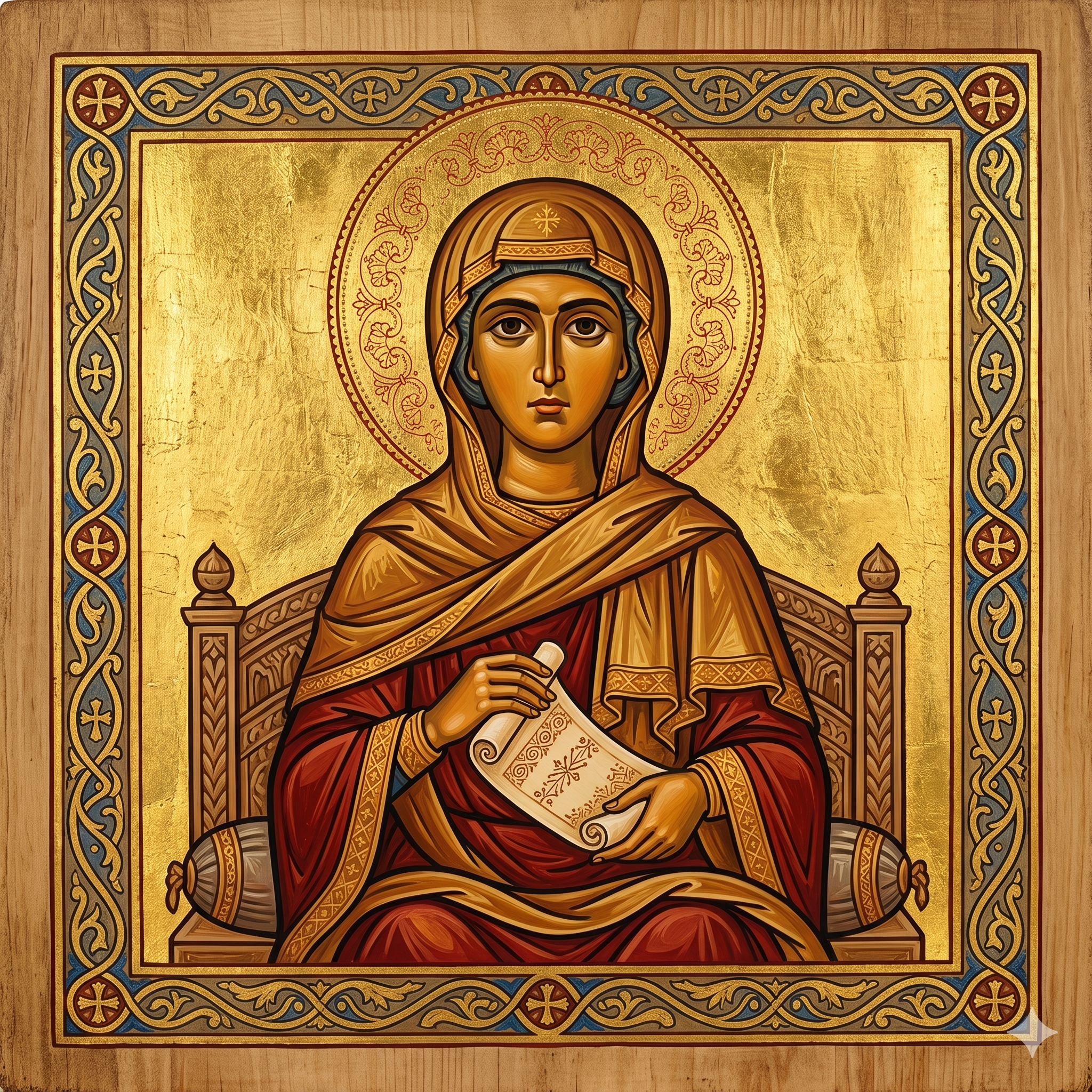
Source: Generated illustrative image already present in this project. Use as a parish teaching aid only, not as an Orthodox icon or historical witness.
Summary Table
| Passage | What happens | Spiritual bearing |
|---|---|---|
| 2 Kings 22:1-7 | Josiah’s early righteousness and temple repair | Trustworthy labor serves the repair of the Lord’s house. |
| 2 Kings 22:8-13 | The book of the law found | Hearing Scripture begins to bear fruit in humility and obedience. |
| 2 Kings 22:14-20 | Huldah’s prophecy | A softened heart is heard without gaining control over the future. |
| 2 Kings 23:1-3 | Covenant renewal | Shared commitment calls for continuing communal obedience. |
| 2 Kings 23:4-14 | Cleansing temple and land | Renunciation of false worship must protect the vulnerable. |
| 2 Kings 23:15-20 | Bethel, graves, and fulfilled prophecy | A delayed divine word has not become an empty word. |
| 2 Kings 23:21-25 | Passover restored | Renewal is ordered toward worship and remembered deliverance. |
| 2 Kings 23:26-30 | Judgment remains and Josiah dies | Faithfulness remains precious when a nation’s response falls short. |
| 2 Kings 23:31-37 | The final kings before collapse | The response to the word distinguishes father and sons. |
Glossary
Book of the covenant. The recovered Law publicly read and accepted as the rule of communal life.
Groves. Brenton’s term for cultic objects or installations associated with forbidden worship.
Topheth. The child-sacrifice site in the valley of Hinnom, defiled by Josiah.
Gehenna. The name associated with Hinnom used by Christ in warnings of judgment.
Recension. A textual form or revision of a work; the longer Ignatian text is not the authentic shorter letter.
Passover. The feast recalling deliverance from Egypt, restored by Josiah and fulfilled in Christ.
Spiritual Fruit 🍇
Let the word question you
Josiah receives the Law as judgment before using it as a program of reform. Read a short passage slowly and name one obedience it requires of you, rather than using it first to expose someone else’s faults.
Allow the heart to soften
Huldah names the king’s humbling and tears. When correction hurts, resist the quick defense of your image; acknowledge the truth in prayer and seek counsel before answering in anger.
Make repentance visible
Josiah’s response changes worship and public practice. Remove one habit or possession that repeatedly draws you into sin, while remembering that zeal against your own idols gives no right to mistreat another person.
Restore worship to its center
The cleansing leads to Passover, the remembrance of deliverance. Let confession and amendment prepare you for faithful participation in the Church’s worship and communion, rather than making reform merely a private project of self-improvement.
Remain faithful without demanding control
Josiah’s obedience does not erase the coming judgment. Do the good entrusted to you even when you cannot guarantee the response of family, parish, or nation, and entrust the fruit to Christ.
Prayer
Lord Jesus Christ, living Word and our true Passover, soften my heart when I hear Your commandments. Deliver me from the wish to admire repentance without practicing it. Cleanse my worship, protect the vulnerable, and teach me to obey faithfully even when the future is beyond my control. Amen.
Josiah hears Scripture and lets it wound him into repentance. He does not use God’s word to confirm himself; he lets it judge him. This is the beginning of renewal in every age: a tender heart before the living word.
Teaching Notes
Josiah’s early righteousness and temple repair (2 Kings 22:1-7)
- Ask: How does faithful repair of the temple prepare for the deeper renewal that follows?
- Watch for: Do not treat the absence of an audit as permission for careless stewardship.
- Connect: Compare the faithful workers in 2 Kings 12:15 and 22:7.
The book of the law found (2 Kings 22:8-13)
- Ask: Why does Josiah tear his garments rather than celebrate possession of an old book?
- Watch for: Distinguish Deuteronomy’s strong scriptural connections from certainty about every page of the recovered scroll.
- Connect: Read Deuteronomy 17:18-20; 28; 31:24-26.
Huldah’s prophecy (2 Kings 22:14-20)
- Ask: What does Huldah’s word say about a softened heart and about the limits of a king’s protection?
- Watch for: Address the death in battle honestly; do not promise freedom from suffering to the repentant.
- Connect: Read 22:20 with 23:29 and 2 Chronicles 35:20-22.
Covenant renewal (2 Kings 23:1-3)
- Ask: Why is public covenant renewal necessary but not enough?
- Watch for: A shared declaration does not establish that every participant has repented inwardly.
- Connect: Follow the king’s hearing into the people’s commitment.
Cleansing temple and land (2 Kings 23:4-14)
- Ask: What kinds of allegiance had entered the Lord’s house, and why must repentance reach them?
- Watch for: Do not authorize violence against other religions or sensationalize the killing of priests.
- Connect: Explain Topheth’s child sacrifice and the translation differences before application.
Bethel, graves, and fulfilled prophecy (2 Kings 23:15-20)
- Ask: Why does Josiah spare one grave while defiling the altar and other graves?
- Watch for: Keep the fulfilled prophecy distinct from a model of private retaliation.
- Connect: Open 1 Kings 13:2 and trace the named Josiah.
Passover restored (2 Kings 23:21-25)
- Ask: Why does true reform lead to Passover rather than end with demolition?
- Watch for: Do not claim no Passover had been observed since the judges.
- Connect: Read Exodus 12; Luke 22:15; 1 Corinthians 5:7.
Judgment remains and Josiah dies (2 Kings 23:26-30)
- Ask: Why can Josiah not finally save Judah, and what does the mourning at Megiddo contribute?
- Watch for: Do not identify Lamentations 4:20’s historical captive as Josiah with certainty.
- Connect: Compare Jeremiah 3:6-10, Zechariah 12:10-11, and John 19:37.
The final kings before collapse (2 Kings 23:31-37)
- Ask: What is the difference between Josiah hearing the book and Jehoiakim burning the scroll?
- Watch for: Do not explain the sons’ evil solely by foreign pressure or inherited guilt.
- Connect: Read Jeremiah 36:23-24 and locate Egypt’s tribute on a map.
Session pacing: If two meetings are needed, pause after 22:20; retain one combined study.
Visual teaching aids
- Show: Use the Josiah law image and treat the existing Huldah PNGs as generated illustrative art, not icons. The main visual burden is Scripture heard, repentance enacted, and Passover restored.
- Show: Put the Josiah law image before the Huldah illustration. The order matters: Scripture heard, heart humbled, prophetic word confirmed, reform enacted.
- Show: Continue labeling the existing Huldah PNG as generated illustrative art only, not an Orthodox icon or historical witness.
- Show: Use a sequence visual: Book found → garments torn → Huldah consulted → covenant renewed → Passover restored.
Sources
Embedded Scripture is from Brenton’s English Septuagint (LXX). In the Septuagint tradition, 2 Kings is numbered 4 Kingdoms.
Biblical parallels and intertexts are identified where they illuminate the passage.
Coptic reading appointments and commemorations: Katameros, Holy Pascha and Bright Saturday service texts, and the Synaxarium, as represented in @andraws/lectionary-data 1.3.1.
Primary patristic witnesses are identified in the direct footnotes below.
Footnotes
-
St. Cyril of Jerusalem, Catechetical Lectures 13.7, reading Lamentations 4:20 as a witness to Christ’s Passion. Primary text. ↩
-
St. John Chrysostom, Homilies on 1 Corinthians 7.6, on 1 Corinthians 2:6-9 and the neglect of sacred writings. Primary text. ↩
-
Pseudo-Ignatius, Epistle to the Magnesians, longer recension, chapter 3, on honoring devoted youth. Primary text, shorter and longer forms. ↩
-
Coptic Katameros, Holy Pascha and Bright Saturday service texts, and Synaxarium, reading and commemoration records represented in @andraws/lectionary-data 1.3.1. Exact appointments are distinguished from interpretive connections in the worship section. ↩