


This narration is from a previous version of the study and may include a combined recording of multiple chapters.
1 Esdras begins with a holy feast and ends the chapter with desolation. That movement is the spiritual doorway into the whole book. Before the return, before the vessels come back, before truth is praised in the Persian court, the reader must see what was lost: ordered worship, prophetic obedience, the temple, the city, and the people’s freedom before God.
Why This Passage Matters
This opening chapter teaches that restoration only matters when we understand the loss. Josiah’s Passover is beautiful, ordered, generous, and rooted in the commandment of Moses. Yet the chapter does not let the reader rest in nostalgia. Josiah dies after ignoring the warning given through Jeremiah, his successors do evil, the holy vessels are carried to Babylon, and Jerusalem burns.
The passage is therefore not simply history. It asks whether worship is joined to obedience. It asks whether a people can keep a feast while still refusing the word of the Lord. It prepares the reader for the rest of 1 Esdras, where God restores what sin has scattered.
Context in the Book
This passage covers all of 1 Esdras 1 because the chapter forms one complete opening movement: Passover, Josiah’s death, failed kings, prophetic rejection, temple destruction, exile, and the seventy years. 1 Esdras 2 will begin the reversal of exile through Cyrus, the vessels, and the first return.
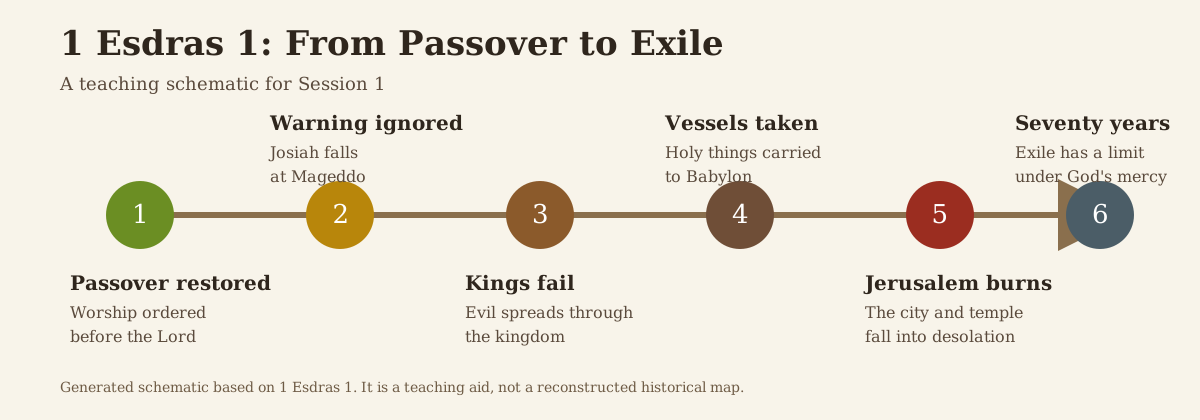
Generated schematic based on 1 Esdras 1. It is a teaching aid, not a reconstructed historical map.
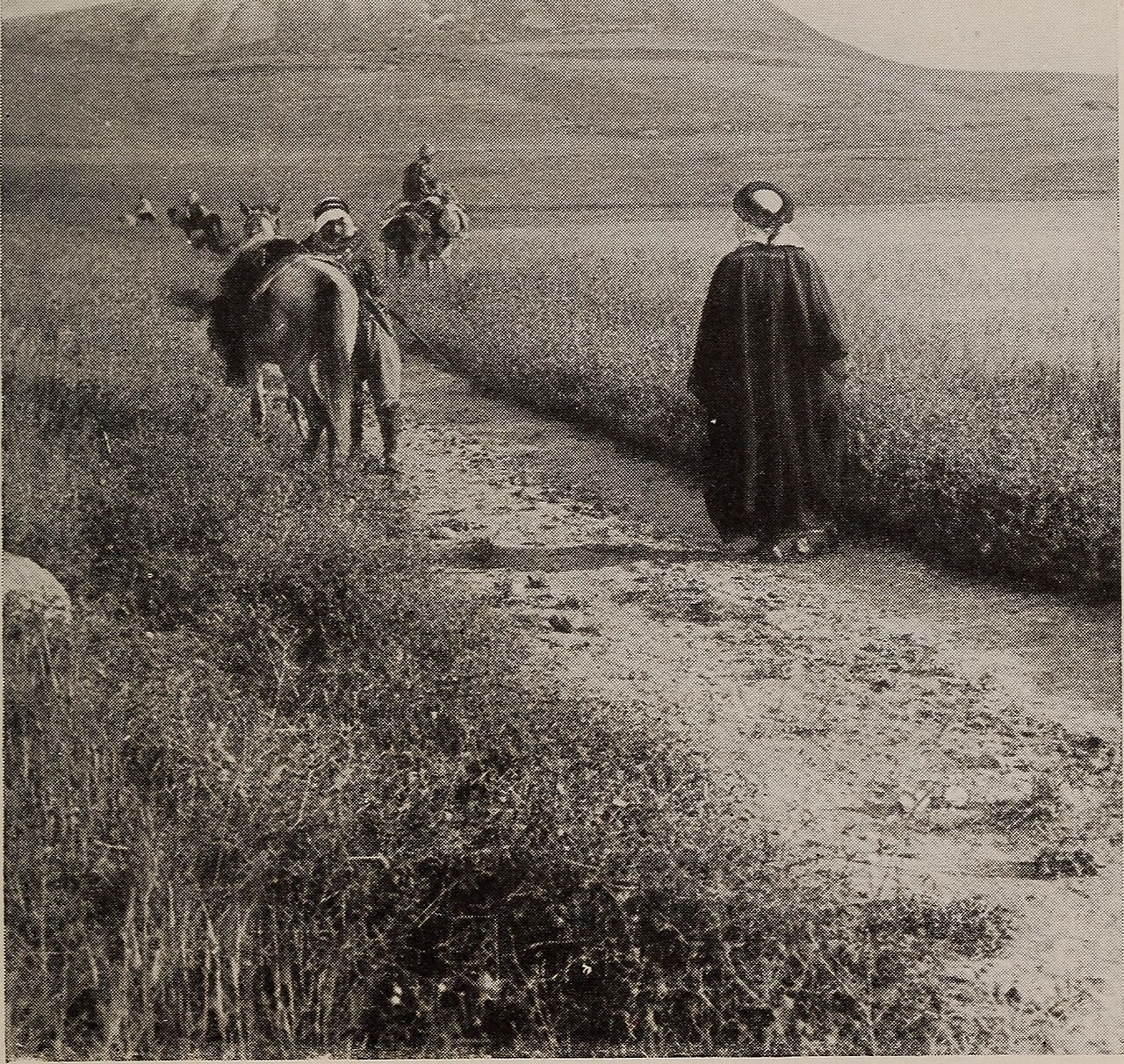
Source: Internet Archive Book Images, On Nazareth Hill (1915), no known copyright restrictions via Wikimedia Commons. Geographic cue only, not a reconstruction of Josiah’s battle.
Megiddo places the king’s fall within Judah’s exposure to Egyptian and Babylonian power. The chapter nevertheless locates the decisive danger in the refusal to hear God.
1 Esdras is not included in the NKJV. The Scripture below follows the wording and verse numbers of the Brenton edition. Other Greek editions divide the same account differently: the ignored-Jeremiah warning is 1:28 here and 1:26 in the Rahlfs-based text. Differences in verse division explain why a reference can point to a different line.1
Josiah Restores the Passover (1 Esdras 1:1-11)
1 And Josias held the feast of the passover in Jerusalem unto his Lord, and offered the passover the fourteenth day of the first month; 2 having set the priests according to their daily courses, being arrayed in long garments, in the temple of the Lord.
3 And he spake unto the Levites, the holy ministers of Israel, that they should hallow themselves unto the Lord, to set the holy ark of the Lord in the house that king Solomon the son of David had built: 4 and said, Ye shall no more bear the ark upon your shoulders: now therefore serve the Lord your God, and minister unto his people Israel, and prepare you after your families and kindreds, 5 according as David the king of Israel prescribed, and according to the magnificence of Solomon his son: and standing in the temple according to the several dignity of the families of you the Levites, who minister in the presence of your brethren the children of Israel, 6 offer the passover in order, and make ready the sacrifices for your brethren, and keep the passover according to the commandment of the Lord, which was given unto Moses.
7 And unto the people that was found there Josias gave thirty thousand lambs and kids, and three thousand calves: these things were given of the king’s allowance, according as he promised, to the people, to the priests and to the Levites. 8 And Helkias, Zacharias, and Syelus, the governors of the temple, gave to the priests for the passover two thousand and six hundred sheep, and three hundred calves. 9 And Jeconias, and Samaias, and Nathanael his brother, and Assabias, and Ochiel, and Joram, captains over thousands, gave to the Levites for the passover five thousand sheep, and seven hundred calves.
10 And when these things were done, the priests and Levites, having the unleavened bread, stood in very comely order according to the kindreds, 11 and according to the several dignities of the fathers, before the people, to offer to the Lord, as it is written in the book of Moses: and thus did they in the morning.
The book opens with worship. Josias, the Greek form of Josiah, keeps the Passover in Jerusalem and orders the priests and Levites according to their service. The holy ark, the temple built by Solomon, the prescription of David, and the commandment given through Moses all appear in one scene. The point is not ceremony for its own sake. The king is gathering the people back into covenant memory.
The Passover remembers deliverance from Egypt. Here, on the edge of another exile, Judah is being invited to remember what kind of people they are. They are not merely a small kingdom between empires. They are the Lord’s people, formed by sacrifice, worship, and obedience.
Light from the Word 🕯️
The repeated order of priests, Levites, families, and sacrifices shows that worship is not private inspiration alone. It is received, ordered, and communal. In Orthodox life, this helps us see why liturgy is not an accessory to faith. The people are healed by being placed again inside the worship God has given.
Christological Reading
The feast on the fourteenth day of the first month begins a thread completed by the returned people’s Passover in 1 Esdras 7:10. Worship lost becomes worship restored. Passover points beyond itself to Christ our Passover. Josiah can command the feast, but he cannot become the Lamb. The ordered sacrifices of this chapter prepare the reader to see why restoration needs more than a good king. It needs the true Lamb who delivers His people from sin and death.
The Feast Is Kept with Ordered Service (1 Esdras 1:12-24)
12 And they roasted the passover with fire, as appertaineth: as for the sacrifices, they sod them in brass pots and pans with a good savour, 13 and set them before all the people: and afterward they prepared for themselves, and for the priests their brethren, the sons of Aaron. 14 For the priests offered the fat until night: and the Levites prepared for themselves, and the priests their brethren, the sons of Aaron. 15 The holy singers also, the sons of Asaph, were in their order, according to the appointment of David, to wit, Asaph, Zacharias, and Jeduthun, who was of the king’s retinue. 16 Moreover the porters were at every gate; it was not lawful for any to go from his ordinary service: for their brethren the Levites prepared for them. 17 Thus were the things that belonged to the sacrifices of the Lord accomplished in that day, that they might hold the passover, 18 and offer sacrifices upon the altar of the Lord, according to the commandment of king Josias.
19 So the children of Israel which were present held the passover at that time, and the feast of sweet bread seven days. 20 And such a passover was not kept in Israel since the time of the prophet Samuel. 21 Yea, all the kings of Israel held not such a passover as Josias, and the priests, and the Levites, and the Jews, held with all Israel that were found dwelling at Jerusalem. 22 In the eighteenth year of the reign of Josias was this passover kept.
23 And the works of Josias were upright before his Lord with an heart full of godliness. 24 As for the things that came to pass in his time, they were written in former times, concerning those that sinned, and did wickedly against the Lord above all people and kingdoms, and how they grieved him exceedingly, so that the words of the Lord rose up against Israel.
The description slows down over the details of service. Priests, Levites, singers, and porters all remain in their appointed work. No one abandons his service in order to imitate another. The feast is beautiful because each person receives his place before the Lord.
Verses 23-24 add a reflection not found in the corresponding account of 2 Chronicles 35: Josiah’s godliness stands beside a record of sins that had already provoked judgment. These are not two verdicts canceling each other. The king’s faithful service is real, and the people still need conversion.
A faithful feast stands within a wider history that still needs repentance. Josiah’s personal devotion does not make the record of wrongdoing disappear, and the record does not make his devotion false.
Light from the Word 🕯️
The phrase a heart full of godliness
is important because the chapter is not cynical about Josiah. It honors real piety. But it also refuses to make one pious ruler a substitute for national repentance. The Church can learn from this balance. We should honor holiness wherever it appears without pretending that one holy season erases the need for deep conversion.
For Our Life
There is a warning here for anyone who loves the services of the Church. Beautiful order and generous service are gifts, but they must lead to repentance. Liturgy is not a shelter from obedience. It is where the heart learns obedience.
Josiah Falls at Mageddo (1 Esdras 1:25-33)
25 Now after all these acts of Josias it came to pass that Pharaoh the king of Egypt came to raise war at Carcamys upon Euphrates: and Josias went out against him. 26 But the king of Egypt sent to him, saying, What have I to do with thee, O king of Judea? 27 I am not sent out from the Lord God against thee; for my war is upon Euphrates: and now the Lord is with me, yea the Lord is with me hasting me forward: depart from me, and be not against the Lord.
28 Howbeit Josias did not turn back his chariot from him, but undertook to fight with him, not regarding the words of the prophet Jeremy spoken by the mouth of the Lord: 29 but joined battle with him in the plain of Mageddo, and the princes came against king Josias. 30 Then said the king unto his servants, Carry me away out of the battle; for I am very weak. And immediately his servants took him away out of the battle. 31 Then gat he up upon his second chariot; and being brought back to Jerusalem died, and was buried in his father’s sepulchre. 32 And in all Jewry they mourned for Josias, yea, Jeremy the prophet lamented for Josias, and the chief men with the women made lamentation for him unto this day: and this was given out for an ordinance to be done continually in all the nation of Israel.
33 These things are written in the book of the stories of the kings of Judah, and every one of the acts that Josias did, and his glory, and his understanding in the law of the Lord; and the things that he had done before, and the things now recited, are reported in the book of the kings of Israel and Judea.
The chapter turns sharply. Pharaoh goes to war at Carcamys, Carchemish, on the Euphrates, and Josiah goes out against him. Pharaoh warns him not to resist what he claims is God’s command. The displayed verse 28 names ‘the prophet Jeremy’, that is Jeremiah, as the channel of the ignored word. In 2 Chronicles 35:22, the warning is the word of Necho from God’s mouth. 1 Esdras has given the scene a specifically prophetic emphasis: the refusal to hear Jeremiah anticipates the same refusal in verses 47 and 57. The relation of the two ancient accounts is debated; a precise history of this difference cannot be recovered from their wording alone.1
This is a hard word because the same king who restored worship fails to heed the prophetic warning. The reader is not invited to despise Josiah. Jeremiah laments him, and all Judah mourns. But the passage teaches that past faithfulness does not make anyone immune to the need to listen now.
Geographical Significance ⛰️
Mageddo, often known as Megiddo, sits on a strategic route through the land. Carcamys, the familiar Carchemish, lies far to the north on the Euphrates. The geography matters because Judah is caught between empires, but the deeper issue is not geopolitics. The deeper issue is whether the king will listen to the word of the Lord when pressure rises.
Light from the Word 🕯️
‘Not regarding’ in verse 28 is the fatal contrast with the careful order of the feast. The man who knows how to keep the Passover still needs to receive a word that interrupts his chosen course. Faithfulness requires a listening heart at the moment of decision, not only a record of earlier devotion.
Christological Reading
Josiah dies and is lamented. Christ also enters death, but not because He ignored the Father’s will. He goes freely and obediently to the Cross. Josiah’s death shows the fragility of even a righteous king; Christ’s death reveals the obedience that saves.
Kings Fail and the Vessels Are Carried Away (1 Esdras 1:34-45)
34 And the people took Joachaz the son of Josias, and made him king instead of Josias his father when he was twenty and three years old. 35 And he reigned in Judea and in Jerusalem three months: and then the king of Egypt deposed him from reigning in Jerusalem. 36 And he set a tax upon the land of an hundred talents of silver and one talent of gold.
37 The king of Egypt also made king Joacim his brother king of Judea and Jerusalem. 38 And he bound Joacim and the nobles: but Zaraces his brother he apprehended, and brought him out of Egypt. 39 Five and twenty years old was Joacim when he was made king in the land of Judea and Jerusalem; and he did evil before the Lord. 40 Wherefore against him Nabuchodonosor the king of Babylon came up, and bound him with a chain of brass, and carried him into Babylon. 41 Nabuchodonosor also took of the holy vessels of the Lord, and carried them away, and set them in his own temple at Babylon. 42 But those things that are recorded of him, and of his uncleanness and impiety, are written in the chronicles of the kings.
43 And Joacim his son reigned in his stead: he was made king being eighteen years old; 44 and reigned but three months and ten days in Jerusalem; and did evil before the Lord.
45 So after a year Nabuchodonosor sent and caused him to be brought into Babylon with the holy vessels of the Lord.
After Josiah, the decline accelerates. Joachaz, Jehoahaz, reigns briefly before Egypt deposes him. The first Joacim in verses 37-42 is Jehoiakim. The second Joacim in verses 43-45 is his son Jehoiachin, also known as Jeconiah. One English spelling conceals two kings and two successive stages of Judah’s fall. Nabuchodonosor is Nebuchadnezzar, the king of Babylon.
Verse 38 is difficult: it binds Joacim and the nobles, then says that Zaraces his brother was brought ‘out of Egypt’. The parallel in 2 Chronicles 36:4 takes Jehoahaz into Egypt. Neither the unusual name nor the direction can simply be repaired by importing the parallel. The account’s clear burden remains the loss of freedom and the removal of the holy vessels.
The vessels are not incidental property. They belong to the worship of the Lord. Their removal is a visible sign that Judah’s sin has touched the heart of worship. What was consecrated is now in exile. This prepares for the later joy when the vessels are counted and returned.
Light from the Word 🕯️
The chapter teaches that sin disorders both public life and sacred life. Bad kings do not only create political trouble. Their evil wounds the worshiping life of the people. The exile of the vessels shows that idolatry and injustice eventually reach the sanctuary.
For Our Life
A person can also have holy vessels carried away. Gifts meant for God can be taken captive by pride, distraction, ambition, or fear. Restoration begins when those gifts are returned to their proper place before the Lord.
Sedecias Hardens His Heart and Jerusalem Falls (1 Esdras 1:46-58)
46 And made Sedecias king of Judea and Jerusalem, when he was one and twenty years old; and he reigned eleven years: 47 and he did evil also in the sight of the Lord, and cared not for the words that were spoken unto him by the prophet Jeremy from the mouth of the Lord. 48 And after that king Nabuchodonosor had made him to swear by the name of the Lord, he forswore himself, and rebelled; and hardening his neck, and his heart, he transgressed the laws of the Lord God of Israel. 49 The governors also of the people and of the priests did many things against the laws, and passed all the pollutions of all nations, and defiled the temple of the Lord, which was sanctified in Jerusalem.
50 Nevertheless the God of their fathers sent by his messenger to call them back, because he spared them and his tabernacle also. 51 But they had his messengers in derision; and, in the day that the Lord spake unto them, they made a sport of his prophets: 52 so far forth, that he, being wroth with his people for their great ungodliness, commanded the kings of the Chaldees to come up against them; 53 who slew their young men with the sword, yea, even within the compass of their holy temple, and spared neither young man nor maid, old man nor child, among them; for he delivered all into their hands. 54 And they took all the holy vessels of the Lord, both great and small, with the vessels of the ark of God, and the king’s treasures, and carried them away into Babylon. 55 As for the house of the Lord, they burnt it, and brake down the walls of Jerusalem, and set fire upon her towers: 56 and as for her glorious things, they never ceased till they had consumed and brought them all to nought; and the people that were not slain with the sword he carried into Babylon: 57 who became servants to him and his children, till the Persians reigned, to fulfil the word of the Lord spoken by the mouth of Jeremy: 58 until the land had enjoyed her sabbaths, the whole time of her desolation shall she rest, until the full term of seventy years.
The final account names the deeper sickness: Sedecias, Zedekiah, hardens his neck and heart. The people and priests multiply transgressions. The temple is defiled. Yet before judgment falls, God sends messengers because He spares His people and His tabernacle.
That line is crucial. Judgment is not God’s first word. Mercy calls before fire falls. But the messengers are mocked, and the prophets are treated as sport. Jerusalem burns, the walls fall, the holy vessels are carried away, and the people go to Babylon until the land enjoys its sabbaths for seventy years.
Light from the Word 🕯️
The chapter moves from Passover to sabbath. Passover remembers deliverance; sabbath rest becomes the measure of desolation. The land receives the rest the people refused to honor. Sin is not only personal failure. It disrupts worship, land, time, community, and memory.
Orthodox Theological Reading
The Lord’s mercy is visible even in the warning. He sends messengers because He spares. This matters pastorally. The prophetic word is not God’s cruelty. It is His mercy before collapse. When the Church calls us to repentance, she is not trying to shame us into despair. She is trying to bring us back before the fire reaches the walls.
The Church’s Voice in Worship ⛪
1 Esdras is not read in the Coptic lectionary. Its Passover and lamentation themes meet the Church’s worship through other Scriptures.
The printed Holy Pascha order appoints Exodus 12:1-14 at the Eleventh Hour of Good Friday. Hearing the Passover lamb amid the remembrance of Christ’s saving death gives Josiah’s feast its Christian horizon. St. Paul makes that horizon explicit in 1 Corinthians 5:7-8: Christ our Passover has been sacrificed, and keeping His feast calls for sincerity and truth, not malice. This chapter’s warning against worship without obedience belongs beside that apostolic call.2
The same printed order places Lamentations 1:1-4 at the Ninth Hour of Hosanna Sunday. Jerusalem’s grief prevents the Church’s entry into Holy Week from becoming a celebration without repentance. The Agpeya places Psalm 137 (LXX 136), the exile psalm, in the Twelfth Hour before sleep.23
The Coptic Synaxarium commemorates the Martyrdom of Jeremiah the Prophet on Bashans 5. Here he laments Josiah in verse 32; remembering the prophet joins sorrow for a fallen king to the courage of speaking God’s word.4
Christological Types and Prophecies
Josiah’s Passover points toward Christ our Passover. The holy vessels carried into Babylon point toward humanity’s gifts and worship taken captive by sin. The burning of the temple points toward the need for a restoration deeper than stone. Christ is the true Temple, the true King, the true Passover, and the One who restores what exile has scattered.
The seventy years also teach that judgment has a limit under God’s providence. Desolation is not the final word. The next chapter will begin with Cyrus and the word of the Lord being fulfilled. Christian hope rests on this deeper pattern: God permits judgment, but His purpose is restoration in Christ.
Spiritual Fruit 🍇
Receive the next correction rather than sheltering behind yesterday’s service. Josiah’s ordered feast was genuine, but it did not exempt him from listening at Megiddo. When a spouse, confessor, or fellow servant raises a truthful concern, pause before defending your record. Ask what obedience is needed now.
Keep one hidden duty faithfully. The porters remain at the gates while their brethren prepare food for them. Serving the LORD includes work that cannot leave its post to receive attention. Make provision for someone whose service keeps him out of view, and offer your own unnoticed labor without resentment.
Pray before the heart hardens. God sends messengers because He spares His people. Bring one repeated refusal into confession while you can still hear it named. The seventy years give hope to those already living with consequences: judgment does not place our future beyond God’s mercy.
Stand in the Jerusalem that has just kept its feast. Hear Jeremiah’s lament, and let love for worship become willingness to listen. Christ goes freely and obediently to the Cross where every fragile king fails. Entrust to Him both the gift you offered and the correction you resisted.
Teaching Notes
Josiah Restores the Passover (1 Esdras 1:1-11)
- Ask: What does the ordered Passover reveal about what Judah was being called back to?
- Emphasize: Worship is covenant memory, not religious decoration.
- Watch for: Do not reduce the passage to ceremony. The order points to obedience and restoration.
- Connect: Christ is our Passover and the true center of restored worship.
- Show: A simple map of Jerusalem and Judah can help locate the worshiping center of the chapter.
The Feast Is Kept with Ordered Service (1 Esdras 1:12-24)
- Ask: Why does the text spend so much space naming priests, Levites, singers, and porters?
- Emphasize: Each servant has a place. The beauty of worship includes faithful service in one’s appointed role.
- Watch for: Do not treat Josiah’s faithful Passover as if it cancels the people’s wider need for repentance.
- Connect: Orthodox liturgy forms the whole person toward obedience.
- Show: If teaching deacons or servants, connect the Levites’ care for the porters to the truth that deacons serve the LORD, including through unnoticed duties.
Josiah Falls at Mageddo (1 Esdras 1:25-33)
- Ask: How can a faithful king still fail to listen in a decisive moment?
- Emphasize: Past faithfulness does not remove the need to obey the word of the Lord today.
- Watch for: Avoid mocking Josiah. The text honors him and mourns him while still warning us.
- Connect: Christ is the obedient King whose death saves, unlike every fragile righteous ruler before Him.
- Show: Use the Megiddo geographic image as a modest location cue, and pair it with a broad period map if needed. Do not present the image as a battle reconstruction.
Kings Fail and the Vessels Are Carried Away (1 Esdras 1:34-45)
- Ask: Why does the removal of the vessels matter spiritually?
- Emphasize: The exile touches worship itself. Sin carries holy things into captivity.
- Watch for: Do not make this only political history. The sanctuary is being wounded.
- Connect: Christ restores the gifts and worship that sin has captured.
- Show: A simple visual of temple vessels can help students understand why their removal is a theological sign.
Sedecias Hardens His Heart and Jerusalem Falls (1 Esdras 1:46-58)
- Ask: What does it mean that God sent messengers because He spared His people?
- Emphasize: Warning is mercy before judgment.
- Watch for: Avoid presenting God as eager to destroy. The text shows His patience before the fall.
- Connect: The Church’s call to repentance is healing before exile hardens.
- Show: A timeline from Josiah to exile to Cyrus can help students see why this chapter prepares for the rest of the book.
Sources
Embedded Scripture is from Brenton’s English Septuagint (LXX).
Biblical parallels: 2 Chronicles 35-36 and 2 Kings 23. 1 Corinthians 5:7-8 supplies the explicit Christian Passover reading. The unusual lines in 1 Esdras are retained and explained, not replaced from the parallel.
Coptic worship references are drawn from the Agpeya, the Katameros, and the named service orders; they are related readings, not appointments of 1 Esdras.
Footnotes
-
R. Glenn Wooden, ‘1 Esdras: To the Reader’, A New English Translation of the Septuagint, overview, translation profile, and editorial policy. Introduction. For the Greek verse divisions, compare the Rahlfs-derived CATSS transcription. ↩ ↩2
-
Katameros of the Holy Pascha, St. Mary, Ottawa, Good Friday, Eleventh Hour, Exodus 12:1-14; Hosanna Sunday, Ninth Hour, Lamentations 1:1-4. ↩ ↩2
-
Agpeya, the hours specified above, St. Bishoy edition. ↩
-
Coptic Synaxarium, Bashans 5, ‘The Martyrdom of Jeremiah the Prophet’, Diocese of the Southern United States, Coptic Reader commemoration catalog. ↩