


This narration is from a previous version of the study and may include a combined recording of multiple chapters.
The commission has been given, but the journey must still be made. Esdras, Ezra in the familiar spelling, gathers families, notices what is missing, seeks Levites for the service of the house, fasts before the Lord, entrusts the holy vessels, and travels to Jerusalem by the mighty hand of God.
Why This Passage Matters
This passage teaches dependence and stewardship. Esdras has royal permission and resources, but he does not trust these as enough. He vows a fast and seeks God’s mercy for the journey.
It also teaches that holy things require holy vigilance. The vessels, silver, and gold are entrusted to priests and Levites because what belongs to the Lord must be watched and delivered faithfully.
The Place of This Passage
This passage covers the journey unit: named returnees, the missing Levites, the fast at the river, the entrusted vessels, the safe arrival, and the offerings after arrival. It belongs together because the passage moves from preparation to faithful delivery.
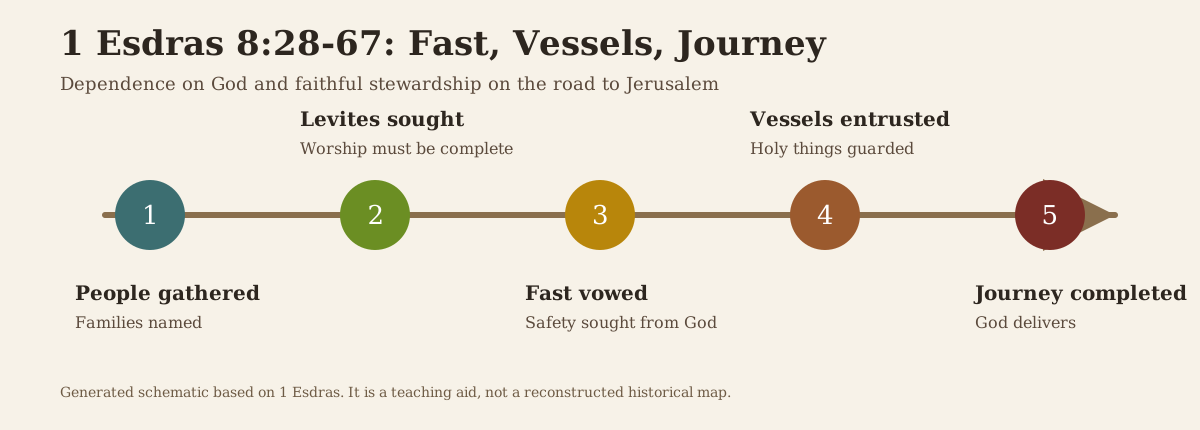
Scripture schematic of 1 Esdras 8:28-67, not a reconstructed historical map.
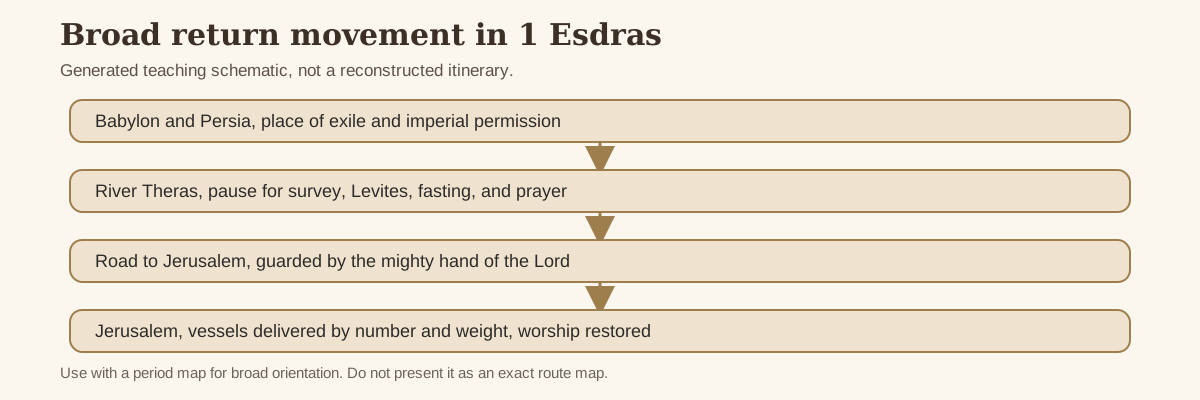
Broad journey schematic of 1 Esdras 8:28-67, not a reconstructed itinerary.
1 Esdras is not included in the NKJV. The Scripture below follows Brenton’s wording and verse numbers; other Greek editions and translations sometimes divide the verses differently.
The Chief Families Are Gathered (1 Esdras 8:28-36)
28 And these are the chief according to their families and several dignities, that went up with me from Babylon in the reign of king Artaxerxes: 29 of the sons of Phinees, Gerson: of the sons of Ithamar, Gamaliel: of the sons of David, Lettus the son of Sechenias: 30 of the sons of Pharez, Zacharias; and with him were counted an hundred and fifty men: 31 of the sons of Pahath Moab, Eliaonias, the son of Zaraias, and with him two hundred men: 32 of the sons of Zathoe, Sechenias the son of Jezelus, and with him three hundred men: of the sons of Adin, Obeth the son of Jonathan, and with him two hundred and fifty men: 33 of the sons of Elam, Josias son of Gotholias, and with him seventy men: 34 of the sons of Saphatias, Zaraias son of Michael, and with him threescore and ten men: 35 of the sons of Joab, Abadias son of Jezelus, and with him two hundred and twelve men: 36 of the sons of Bania, Salimoth son of Josaphias, and with him an hundred and threescore men:
The journey begins with names again. Families and leaders are counted as they prepare to go up from Babylon. Restoration is not carried by an unnamed mass. It is borne by persons, households, and leaders who must answer the call.
The repetition of names slows the reader down. God does not restore only institutions. He restores people with fathers, histories, and responsibilities.
Light from the Word 🕯️
“Of the sons of David” places a surviving royal family beside the descendants of Phinehas, called Phinees in Brenton, and Ithamar. The return needs more than one kind of service. These families are gathered under God’s promise, even though no Davidic king is restored to a throne in this passage. Hope can persist in a vocation without visible power.
For Our Life
A ministry journey should not treat people as interchangeable. People bring histories, wounds, gifts, and responsibilities. Wise leadership sees persons, not merely numbers.
Esdras Seeks Levites for the House (1 Esdras 8:37-48)
37 of the sons of Babi, Zacharias son of Bebai, and with him twenty and eight men: 38 of the sons of Astath, Johannes son of Acatan, and with him an hundred and ten men: 39 of the sons of Adonikam the last, and these are the names of them, Eliphalet, son of Geuel, and Samaias, and with them seventy men: 40 of the sons of Bago, Uthi the son of Istalcurus, and with him seventy men.
41 And these I gathered together to the river called Theras, where we pitched our tents three days: and then I surveyed them. 42 But when I had found there none of the priests and Levites, 43 then sent I unto Eleazar, and Iduel, and Mæa, and Masman, 44 and Alnathan, and Samaias, and Joribas, and Nathan, Ennatan, Zacharias, and Mosollamus, principal men and learned. 45 And I bade them that they should go unto Loddeus the captain, who was in the place of the treasury: 46 and commanded them that they should speak unto Loddeus, and to his brethren, and to the treasurers in that place, to send us such men as might execute the priests’ office in the house of the Lord.
47 And by the mighty hand of our Lord they brought unto us skilful men of the sons of Mooli the son of Levi, the son of Israel, Asebebia, and his sons, and his brethren, who were eighteen. 48 And Asebia, and Annuus, and Osaias his brother, of the sons of Chanuneus, and their sons, were twenty men.
Theras corresponds to the Ahava gathering-place of Ezra 8:15 and Ezra 8:21. The differing forms are preserved in the accounts; they do not establish an exact modern site. At the river, Esdras surveys the people and finds a lack among the priests and Levites. He sends learned and principal men to seek ministers for the house of the Lord.
Verse 42 says “none of the priests and Levites,” even though priestly families have already appeared in verse 29. Ezra 8:15 mentions the lack of Levites alone. The wording of this account is retained, rather than resolving its tension by silently replacing it with the parallel.
This is practical and spiritual at once. The journey cannot proceed as if worship order does not matter. Esdras sees the missing ministry and acts. Restoration requires more than movement; it requires the right service for the house of God.
Light from the Word 🕯️
“I surveyed them” turns a crowd into a community whose needs can be seen. Esdras does not answer a shortage by praising the size of the gathering. He sends named, learned people with a specific request. The answer comes “by the mighty hand of our Lord,” through people willing to travel and serve.
For Our Life
Before launching a ministry, ask what service is missing. Prayer, teaching, music, hospitality, administration, follow-up, and mercy all need real people. Gaps do not heal by pretending they are not there.
The Fast at the River Seeks God’s Protection (1 Esdras 8:49-57)
49 And of the servants of the temple whom David had ordained, and the principal men for the service of the Levites to wit, the servants of the temple, two hundred and twenty, the catalogue of whose names were shewed.
50 And there I vowed a fast unto the young men before our Lord, to desire of him a prosperous journey both for us and them that were with us, for our children, and for the cattle: 51 for I was ashamed to ask the king footmen, and horsemen, and conduct for safeguard against our adversaries. 52 For we had said unto the king, that the power of the Lord our God should be with them that seek him, to support them in all ways. 53 And again we besought our Lord as touching these things, and found him favourable unto us.
54 Then I separated twelve of the chief of the priests, Esebrias, and Samias, and ten men of their brethren with them: 55 and I weighed them the gold, and the silver, and the holy vessels of the house of our Lord, which the king, and his council, and the princes, and all Israel, had given. 56 And when I had weighed it, I delivered unto them six hundred and sixty talents of silver, and silver vessels of an hundred talents, and an hundred talents of gold, 57 and twenty golden vessels, and twelve vessels of brass, even of fine brass, glittering like gold.
Esdras vows a fast before the Lord to seek a prosperous journey for the people, their children, and their cattle. He is ashamed to ask the king for soldiers because he has testified that the power of God supports those who seek Him.
This is not a rejection of all practical help in every situation. It is a moment of integrity. Esdras has publicly trusted God’s power, so he now seeks God with fasting rather than contradicting his witness.
The unusual phrase “I vowed a fast unto the young men before our Lord” addresses the gathering and places its request before God. It does not make the young men recipients of worship. The named concern includes children and cattle; dependence is learned while carrying responsibility for vulnerable fellow travelers. Nehemiah 2:9 records a royal escort of army captains and horsemen without censuring it. Faithfulness here is integrity with Esdras’s own testimony, not a contest to discover who can take the greatest risks.
The fast is neither theatrics nor presumption. Esdras surveys the people, notices missing servants, sends for Levites, weighs the vessels, and records delivery by number and weight. Fasting does not replace faithful preparation; it purifies preparation so the journey is made before God.
Light from the Word 🕯️
“Again we besought our Lord” shows trust remaining prayerful after a public confession of faith. Esdras does not treat what he told the king as a guarantee he can now dispense with asking. Fasting joins bodily restraint to intercession for the people in his care.
Guardrail for Reading
Do not use this passage to condemn every use of protection, planning, medicine, or prudent support. The point is integrity and dependence on God, not reckless refusal of all human means.
Holy Vessels Are Entrusted to Holy Watchfulness (1 Esdras 8:58-67)
58 And I said unto them, Both ye are holy unto the Lord, and the vessels are holy, and the gold and the silver is a vow unto the Lord, the Lord of our fathers. 59 Watch ye, and keep them till ye deliver them to the chief of the priests and Levites, and to the principal men of the families of Israel, in Jerusalem, into the chambers of the house of our God. 60 So the priests and the Levites, who had received the silver and the gold and the vessels that were in Jerusalem, brought them into the temple of the Lord.
61 And from the river Theras we departed the twelfth day of the first month, and came to Jerusalem by the mighty hand of our Lord, which was with us: and from the beginning of our journey the Lord delivered us from every enemy, and so we came to Jerusalem. 62 And when we had been there three days, the gold and silver that was weighed was delivered in the house of our Lord on the fourth day unto Marmothi the priest the son of Uria. 63 And with him was Eleazar the son of Phinees, and with them were Josabad the son of Jesu and Moeth the son of Sabban, Levites: all was delivered them by number and weight. 64 And all the weight of them was written up the same hour.
65 Moreover they that were come out of the captivity offered sacrifice unto the Lord God of Israel, even twelve bullocks for all Israel, fourscore and sixteen rams, 66 threescore and twelve lambs, goats for a peace-offering, twelve; all of them a sacrifice to the Lord. 67 And they delivered the king’s commandments unto the king’s stewards, and to the governors of Celosyria and Phenice; and they honoured the people and the temple of God.
Esdras tells the priests and Levites, Both ye are holy unto the Lord, and the vessels are holy.
The people carrying the vessels must match the holiness of what they carry. They are to watch and keep them until they deliver them in Jerusalem.
In Isaiah 52:11-12, the bearers of the Lord’s vessels are called to separation from uncleanness, and the Lord goes before them and guards their rear. That promise illuminates both their consecration and Esdras’s dependence for the road. Paul takes up the call to separation in 2 Corinthians 6:17. The holiness belongs to God; the bearers answer it with a life that can carry what He entrusts.
The journey succeeds by the mighty hand of the Lord. The silver, gold, and vessels are weighed out and delivered. Sacrifices are offered, and the king’s commandments are handed over. Stewardship is completed in worship and accountability.
Departure on the twelfth day of the first month falls two days before the Passover date named in 1 Esdras 7:10. The “mighty hand” recalls the Exodus (Exodus 13:9), giving the journey the shape of a new deliverance. This correspondence does not mean the travelers reached Jerusalem for that Passover.
The arrival offerings keep all Israel in view: twelve bullocks, ninety-six rams, seventy-two lambs, and twelve goats, each a multiple of twelve. Brenton’s Ezra 8:35 instead gives seventy-seven lambs. The different totals are not reconciled by changing either account, and a precise explanation of the variant is uncertain. Nor should their patterns become a hidden numerical code: the explicit phrase “for all Israel” gives the offerings their meaning.
Light from the Word 🕯️
“By number and weight” in verse 63, followed by the written record of the weight in verse 64, makes entrusted holiness accountable. The treasure is neither reinvented on the road nor kept by the carriers. As a Christian analogy, this illuminates Holy Tradition, the apostolic faith received and handed on in the Church. Paul tells Timothy to guard the good deposit through the Holy Spirit (2 Timothy 1:14; 1 Timothy 6:20), and describes divine treasure borne in earthen vessels (2 Corinthians 4:7). The Spirit’s living work and faithful preservation belong together; the vessels are an analogy, not Paul’s own commentary on this journey.
For Our Life
Each Christian carries entrusted things: faith, body, gifts, words, children, service, money, and time. These are not private possessions only. They must be guarded and delivered to God.
The Church’s Voice in Worship ⛪
The Coptic lectionary has no verse-addressed reading from 1 Esdras. On the Second Sunday of Tout, the Pauline reading is 2 Timothy 1:12-2:10, including the charge to guard the good deposit through the Holy Spirit. On the Fourth Sunday of Babah, 1 Timothy 6:3-21 includes the same call to guard what has been entrusted. These readings make the journey’s watchfulness a fitting image of care for received faith, while preserving the distinction between apostolic teaching and temple valuables.1
Christological Types and Prophecies
Christ delivers His people from captivity and gives His Holy Spirit to dwell in them. The vessels entrusted for God’s house can therefore illuminate a consecrated life, provided their difference from persons remains clear: children and fellow Christians are people to love and protect, never goods to possess. The Lord’s mighty hand calls forth human care rather than making it unnecessary.
Spiritual Fruit 🍇
Pause long enough to notice who is missing. Before a family decision or parish undertaking, ask whose service or needs have escaped your attention. Esdras’s survey leads to a request and a response. Name a real gap and invite a real person to help, without reducing that person to a role.
Let testimony become prayer. If you have spoken of trusting God, bring the actual anxiety before Him instead of trying to look untroubled. Join fasting to intercession for those who depend on you. Use prudent help without shame when it is needed; another person’s circumstances need not reproduce Esdras’s refusal of an escort.
Keep a clear account of what is entrusted. Return a borrowed resource, make parish funds transparent, and teach received faith without making it a platform for private novelty. “By number and weight” challenges the vague assumption that good intentions make accountability unnecessary. God’s gifts deserve truthful delivery.
The travelers reach Jerusalem, but the story does not stop at relief. The treasure is weighed again and offered to the Lord. Bring Him both your safe arrivals and your responsibilities still awaiting completion. Ask for hands that can guard a gift without closing around it.
Teaching Notes
The Chief Families Are Gathered (1 Esdras 8:28-36)
- Ask: Why does the text again preserve names and family groups?
- Emphasize: Restoration is carried by real people.
- Watch for: Do not reduce the list to filler.
- Connect: The Church is gathered person by person into one body.
- Show: Ask students what named responsibilities they carry in their own return to God.
Esdras Seeks Levites for the House (1 Esdras 8:37-48)
- Ask: What does Esdras notice before the journey continues?
- Emphasize: Worship requires the right servants and ordered ministry.
- Watch for: Avoid launching work while ignoring obvious ministry gaps.
- Connect: The Body of Christ needs many members and gifts.
- Show: Make a simple list of what a church ministry needs before it begins.
The Fast at the River Seeks God’s Protection (1 Esdras 8:49-57)
- Ask: Why does Esdras fast instead of asking for soldiers?
- Emphasize: Fasting makes dependence on God visible.
- Watch for: Do not turn the passage into reckless rejection of prudent help.
- Connect: Orthodox fasting joins humility, prayer, and trust.
- Show: Use the broad return schematic to compare public witness with private dependence. The schematic is not an exact route map.
Holy Vessels Are Entrusted to Holy Watchfulness (1 Esdras 8:58-67)
- Ask: What does it mean that both the servants and the vessels are holy?
- Emphasize: Consecrated gifts require consecrated stewardship.
- Watch for: Avoid making holiness only about objects, or only about feelings.
- Connect: In Christ, baptized persons become vessels of the Holy Spirit.
- Show: Invite students to name what God has entrusted to them, then connect the entrusted vessels to concrete accountability by number and weight.
Sources
Embedded Scripture is from Brenton’s English Septuagint (LXX).
Biblical parallels: Ezra 8, Nehemiah 2:9, Isaiah 52:11-12, Exodus 13:9, 2 Timothy 1:14, 1 Timothy 6:20, 2 Corinthians 4:7, and 2 Corinthians 6:17.
Footnotes
-
Coptic Orthodox lectionary, Second Sunday of Tout, Pauline Epistle, 2 Timothy 1:12-2:10; Fourth Sunday of Babah, Pauline Epistle, 1 Timothy 6:3-21. ↩