


This narration is from a previous version of the study and may include a combined recording of multiple chapters.
The contest about wine, the king, women, and truth does not end with applause. Zerubbabel, called Zorobabel in the displayed text, uses the moment to ask for Jerusalem. Truth is not a private idea or a clever argument. When truth is honored, the city of God, the temple, the vessels, and the people must be remembered.
Why This Passage Matters
This passage shows what wisdom does when it receives favor. Zerubbabel does not ask first for comfort, prestige, or revenge. He asks the king to remember his vow and restore Jerusalem. In this way, the triumph of truth becomes intercession, and intercession becomes practical help for worship.
It also shows that restoration is not vague. Letters are written. Tribute is lifted. Vessels are sent back. Priests and Levites receive support. Families prepare to go up. The passage turns theological victory into embodied obedience.
Context in the Book
This passage begins immediately after the truth speech and ends with the first named return under Darius. It belongs together because Zerubbabel’s victory, prayer, royal letters, public praise, and the going up of the families are one movement: truth remembered becomes Jerusalem restored.
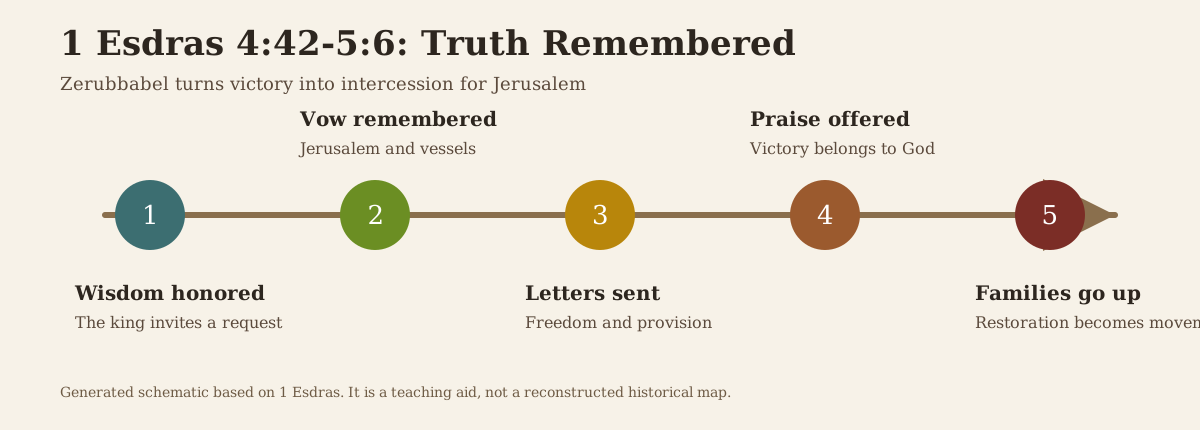
Generated schematic based on 1 Esdras 4:42-5:6. It is a teaching aid, not a reconstructed historical map.
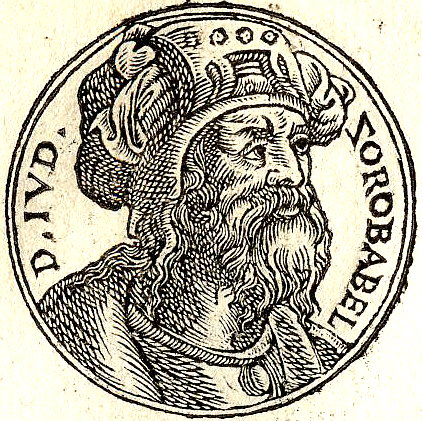
Source: Guillaume Rouille, Promptuarii Iconum Insigniorum, public domain via Wikimedia Commons. Western biblical portrait tradition, not a historical likeness and not Orthodox iconography.
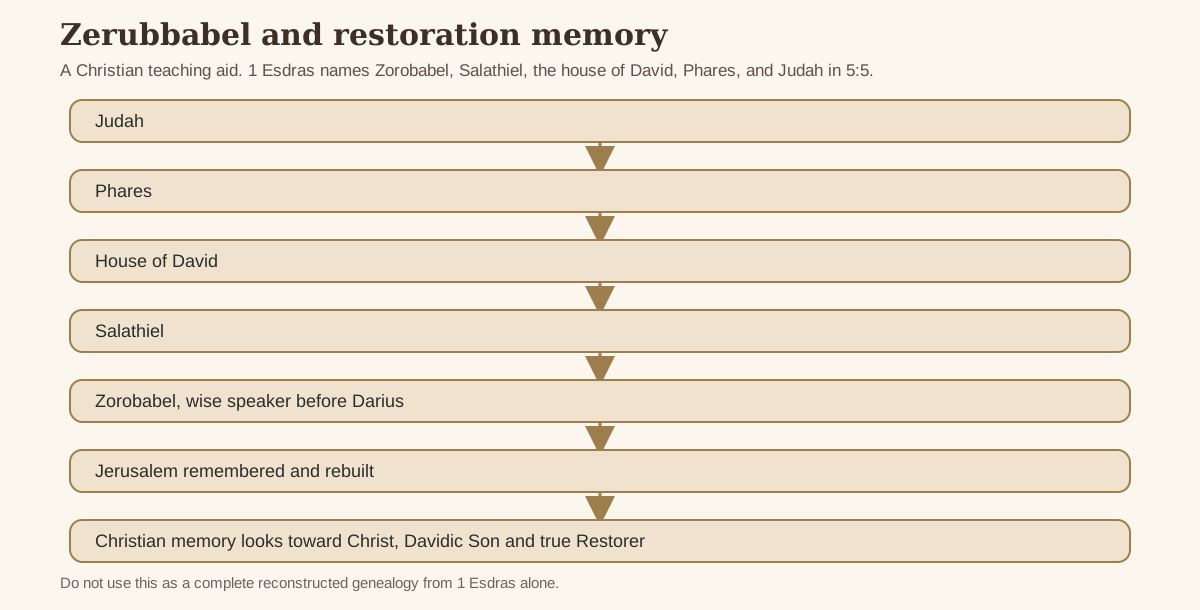
Davidic-restoration schematic. Its arrows summarize the theological connection to Christ; they are not an exhaustive genealogy. The difficult Joacim line in 5:5 is explained below.
1 Esdras is not included in the NKJV. The Scripture below follows the wording and verse numbers of the Brenton edition.
Zerubbabel Asks for Jerusalem (1 Esdras 4:42-49)
42 Then said the king unto him, Ask what thou wilt more than is appointed in the writings, and we will give it thee, because thou art found wisest; and thou shalt sit next me, and shalt be called my cousin. 43 Then said he unto the king, Remember thy vow, which thou hast vowed to build Jerusalem, in the day when thou camest to thy kingdom, 44 and to send away all the vessels that were taken away out of Jerusalem, which Cyrus set apart, when he vowed to destroy Babylon, and to send them again thither. 45 Thou also hast vowed to build up the temple, which the Edomites burned when Judea was made desolate by the Chaldees. 46 And now, O lord the king, this is that which I require, and which I desire of thee, and this is the princely liberality proceeding from thyself: I desire therefore that thou make good the vow, the performance whereof with thine own mouth thou hast vowed to the King of heaven.
47 Then Darius the king stood up, and kissed him, and wrote letters for him unto all the treasurers and lieutenants and captains and governors, that they should safely convey on their way both him, and all those that go up with him to build Jerusalem. 48 He wrote letters also unto the lieutenants that were in Celosyria and Phenice, and unto them in Libanus, that they should bring cedar wood from Libanus unto Jerusalem, and that they should build the city with him.
49 Moreover he wrote for all the Jews that went out of his realm up into Jewry, concerning their freedom, that no officer, no ruler, no lieutenant, nor treasurer, should forcibly enter into their doors;
The king invites Zerubbabel to ask for more because he has been found wisest. This is the spiritual test after success. The temptation after public honor is self-advancement. Zerubbabel instead remembers Jerusalem.
He calls Darius to remember his vow, to build Jerusalem, to restore the vessels, and to honor the King of heaven. His request is bold, but it is not self-serving. He speaks for the temple, the city, and the worship of God.
Verse 45 specifically names ‘the temple, which the Edomites burned’. This detail is distinctive to 1 Esdras; the parallel account of Jerusalem’s destruction names the Babylonian forces. Psalm 137:7 (LXX 136:7) remembers Edom’s cry to destroy Jerusalem, and Obadiah 11-14 condemns standing with the invaders and exploiting a brother’s ruin. Those passages illuminate the remembered complicity without proving every detail of who set the fire.1
This is why truth becomes more than victory in argument. Truth becomes intercession. Zerubbabel does not use wisdom to secure a private place beside the king; he uses it to plead for the wounded city. A servant who has received truth should become a voice for restoration.
Light from the Word 🕯️
The wise servant uses favor for intercession. Zerubbabel’s wisdom is not proven only by winning the debate; it is proven by what he asks for after he wins. True wisdom seeks the restoration of God’s people.
For Our Life
When God gives influence, access, or a moment of favor, the question is what we ask for. Do we spend it on ourselves, or do we use it to serve worship, repentance, and the healing of others?
The King’s Favor Becomes Concrete Provision (1 Esdras 4:50-57)
50 and that all the country which they hold should be free without tribute; and that the Edomites should give over the villages of the Jews which then they held: 51 yea, that there should be yearly given twenty talents to the building of the temple, until the time that it were built; 52 and other ten talents yearly, to maintain the burnt offerings upon the altar every day, as they had a commandment to offer seventeen: 53 and that all they that went from Babylon to build the city should have free liberty, as well they as their posterity, and all the priests that went away. 54 He wrote also concerning the charges, and the priests’ vestments wherein they minister; 55 and likewise for the charges of the Levites, to be given them until the day that the house were finished, and Jerusalem builded up. 56 And he commanded to give to all that kept the city pensions and wages. 57 He sent away also all the vessels from Babylon, that Cyrus had set apart; and all that Cyrus had given in commandment, the same charged he also to be done, and sent unto Jerusalem.
The king’s response becomes concrete. Freedom from tribute, yearly support for the temple, provision for offerings, priestly vestments, Levite support, wages for those who keep the city, and the return of the vessels are all named.
The details matter. Worship needs more than enthusiasm. It needs provision, people, order, sacrifice, vestments, labor, and perseverance. Restoration is spiritual, but it is not disembodied.
Light from the Word 🕯️
The vessels appear again because worship is the center of return. God is not merely bringing people out of Babylon; He is restoring them to sacrificial and covenant life. What was taken away for profane use is brought back for holy service.
Guardrail for Reading
Do not read imperial favor as the kingdom of God itself. Darius helps, but he is not the savior. The same book has already shown imperial permission and imperial opposition. The Lord uses rulers, but His people must never confuse state favor with holiness.
Zerubbabel Gives Glory to the King of Heaven (1 Esdras 4:58-63)
58 Now when this young man was gone forth, he lifted up his face to heaven toward Jerusalem, and praised the King of heaven, 59 and said, From thee cometh victory, from thee cometh wisdom, and thine is the glory, and I am thy servant. 60 Blessed art thou, who hast given me wisdom: and to thee I give thanks, O Lord of our fathers. 61 And so he took the letters, and went out, and came unto Babylon, and told it all his brethren. 62 And they praised the God of their fathers, because he had given them freedom and liberty 63 to go up, and to build Jerusalem, and the temple which is called by his name: and they feasted with instruments of musick and gladness seven days.
Zerubbabel’s first response is prayer. He lifts his face toward Jerusalem and praises the King of heaven. The victory is not attributed to court intelligence, political skill, or personal charm. He says, From thee cometh victory, from thee cometh wisdom, and thine is the glory.
His posture toward Jerusalem recalls Solomon’s prayer for those who turn toward the chosen city and house while in exile (1 Kings 8:44-48). Daniel likewise prays with his windows toward Jerusalem, in Daniel 6:10 in familiar numbering, 6:11 in Brenton. Direction gives visible form to covenant hope, not a claim that God is confined to a place.
‘Thine is the glory’ recalls David’s blessing in 1 Chronicles 29:11, which returns greatness, power, glory, and victory to God. Zerubbabel stands in David’s family line and prays in the register of David’s thanksgiving. The people then praise the God of their fathers because freedom has been given for building Jerusalem and the temple.
Light from the Word 🕯️
Thanksgiving keeps success from becoming idolatry. The servant who knows that victory and wisdom come from God can receive honor without being possessed by it.
The Church’s Voice in Worship ⛪
1 Esdras is not read in the Coptic lectionary. The Agpeya prays Psalm 126 (LXX 125), the song of return and joy, in the Eleventh Hour each evening and in the Second Watch of Midnight Prayer. Psalm 137 (LXX 136), which remembers Edom in Jerusalem’s ruin, belongs to the Twelfth Hour. The Church carries both the wound of exile and the hope of return into daily prayer.2
The Bright Saturday Praises list Solomon’s prayer, 1 Kings 8:22-30; the church-consecration order lists the larger passage, 1 Kings 8:22-61. The house is received as a place of prayer because God’s glory and mercy are sought there. Zerubbabel’s thanksgiving gives the restoration the same direction.3
The Families Go Up Together (1 Esdras 5:1-6)
1 After this were the principal men of the families chosen according to their tribes, to go up with their wives and sons and daughters, with their menservants and maidservants, and their cattle. 2 And Darius sent with them a thousand horsemen, till they had brought them back to Jerusalem safely, and with musical instruments, tabrets and flutes. 3 And all their brethren played, and he made them go up together with them.
4 And these are the names of the men which went up, according to their families, among their tribes, after their several heads. 5 The priests, the sons of Phinees, the sons of Aaron: Jesus the son of Josedec, the son of Saraias, and Joacim the son of Zorobabel, the son of Salathiel, of the house of David, out of the kindred of Phares, of the tribe of Judah; 6 who spake wise sentences before Darius the king of Persia in the second year of his reign, in the month Nisan, which is the first month.
The prayer and letters now become movement. Families are chosen by tribe to go up with wives, sons, daughters, servants, cattle, and royal protection. The return is not only an administrative event. It is a household event. Restoration gathers whole lives.
Jesus the son of Josedec is Joshua, also called Jeshua, the high priest named beside Zerubbabel in Haggai 1:1. The Greek name is the same name rendered Jesus for our Lord; this historical priest is a distinct person. Phinees is Phinehas, Salathiel is Shealtiel, and Phares is Perez.
The displayed line ‘Joacim the son of Zorobabel’ in 5:5 is difficult. The priestly succession in Nehemiah 12:10 instead makes Joiakim the son of Jeshua. The sentence here joins priestly and Davidic material awkwardly; it does not give us grounds to declare the persons or relationships interchangeable. Verse 6’s wise speaker before Darius is Zerubbabel, identified in 4:13. The Davidic schematic follows that restored-city theme without asserting Joacim’s disputed parentage.
The royal escort and this return are placed under Darius, whereas Ezra 1-2 sets the initial return under Cyrus. The following list in 1 Esdras 5:7-73 returns to Cyrus-era events. This is a thematic arrangement around the wisdom contest, not a simple chronological sequence; the precise literary history remains uncertain.1
Light from the Word 🕯️
God restores people as families and communities, not only as isolated individuals. The return includes households, servants, possessions, leaders, priests, and the memory of David. The whole life is called to go up.
For Our Life
Repentance is not merely a private feeling. It reshapes household rhythms, worship commitments, resources, travel, music, and joy. A person returning to God eventually asks, What in my whole life must now go up to Jerusalem?
Christological Types and Prophecies
Zerubbabel son of Shealtiel appears in Christ’s genealogy in Matthew 1:12-13 and Luke 3:27. In Haggai 2:23, God chooses him as a seal, the signet that signifies royal authorization. The man who wins the truth contest stands in the Davidic line from which Christ the Truth is born. His service matters without making every detail of his story a prediction. He is a wise servant who intercedes for Jerusalem after truth has been vindicated. Christ is Truth Himself, and His intercession does not merely obtain letters from a king. He restores His people through His death, resurrection, and priestly intercession.
The return of the vessels points to consecrated humanity. In Christ, the human person is not merely forgiven from a distance; he is restored for worship. The Church becomes a living temple, and each faithful life becomes a vessel set apart for God.
The movement of families toward Jerusalem points toward the gathering of the Church. Christ does not save disembodied souls only. He gathers persons, families, communities, and nations into one worshipping body.
Spiritual Fruit 🍇
Spend influence on someone beyond yourself. Zerubbabel is offered more honor and asks for Jerusalem. If you have access to a decision-maker, a resource, or a platform, name one person or good work that could benefit from it. Make a request for that need rather than saving every advantage for yourself.
Return thanks before moving to the next task. The wise speaker leaves the court and lifts his face to heaven. After a success, pause to give God the glory and thank those whose labor made it possible. This small refusal to absorb praise guards the heart from turning ministry into self-importance.
Let a household return include its habits. The people bring sons, daughters, servants, and possessions, not only an inward wish. Choose one shared practice, such as evening prayer or preparing together for the Liturgy, that gives the whole home’s life a direction toward God.
Stand with Zerubbabel outside the court. Let the letters wait while he gives thanks. Christ, the Son of David and Truth Himself, receives our hopes without the bargaining of an earthly court. Ask Him to make your opportunities serve His people and your success become praise.
Teaching Notes
Zerubbabel Asks for Jerusalem (1 Esdras 4:42-49)
- Ask: What does Zerubbabel request when he is given favor?
- Emphasize: True wisdom uses access to intercede for God’s people.
- Watch for: Do not turn the scene into mere political cleverness.
- Connect: Christ is Truth and the true Intercessor for His people.
- Show: Use the 1 Esdras 4:42-5:6 schematic with the Zerubbabel portrait and restoration-line chart. Label the portrait as Western biblical art, not an icon or historical likeness.
The King’s Favor Becomes Concrete Provision (1 Esdras 4:50-57)
- Ask: What practical needs are named for rebuilding worship?
- Emphasize: Restoration needs material obedience, not only good intentions.
- Watch for: Avoid equating royal favor with holiness.
- Connect: The Church offers bodies, resources, vestments, order, and time to God.
- Show: Point to the concrete provisions, then ask how truth becomes practical mercy rather than private correctness.
Zerubbabel Gives Glory to the King of Heaven (1 Esdras 4:58-63)
- Ask: Why does Zerubbabel praise before he organizes?
- Emphasize: Victory and wisdom come from God.
- Watch for: Do not let students admire Zerubbabel without seeing his humility.
- Connect: Thanksgiving protects ministry from pride.
- Show: Compare the earthly king’s honor with Zerubbabel’s praise of the King of heaven.
The Families Go Up Together (1 Esdras 5:1-6)
- Ask: Who is included in the return?
- Emphasize: Restoration gathers households and communities.
- Watch for: Avoid reducing repentance to private feeling only.
- Connect: Baptism and Church life restore the whole person into worship.
- Show: Draw the sequence from court, to prayer, to letters, to families going up. Explain the disputed Joacim line before using the Davidic schematic; it is not a verified complete genealogy.
Sources
Embedded Scripture is from Brenton’s English Septuagint (LXX).
Compare Ezra 1-2, Haggai 2, Zechariah 4, and Nehemiah 12. The Davidic reading is grounded in Matthew 1:12-13, Luke 3:27, and Haggai 2:23.
Footnotes
-
R. Glenn Wooden, ‘1 Esdras: To the Reader’, A New English Translation of the Septuagint, overview, translation profile, and editorial policy. Introduction. For the Greek verse divisions, compare the Rahlfs-derived CATSS transcription. ↩ ↩2
-
Agpeya, the hours specified above, St. Bishoy edition. ↩
-
Bright Saturday service order, Praises of the Prophets, Prayer of Solomon, 1 Kings 8:22-30; Church consecration service order, main readings, 1 Kings 8:22-61. ↩