


This narration is from a previous version of the study and may include a combined recording of multiple chapters.
1 Esdras 1 ended with the temple burned, the vessels carried to Babylon, and the land resting in desolation. 1 Esdras 2 begins the reversal. The word spoken through Jeremiah is not forgotten. God raises the spirit of Cyrus, stirs the minds of the people, brings the holy vessels out from captivity, and begins the return to Jerusalem. The chapter places this permission beside the later record of political opposition, so restoration and resistance are heard together.
Why This Passage Matters
1 Esdras 2 teaches that God can work through rulers without making rulers the saviors of His people. Cyrus speaks, commands, and writes, but the text says the Lord raised his spirit. The return begins because God keeps His word.
The chapter also teaches that restoration is worship-centered. The people are not simply allowed to go home. They are sent to build the house of the Lord. The holy vessels are not just historical artifacts; they are consecrated signs of worship restored from exile. The chapter then places accusation and force beside the permission to rebuild, although the hostile letter belongs to a later reign. This prepares the reader for the rest of the book, where truth, prophecy, decree, and perseverance will all be needed.
Context in the Book
The chapter places Cyrus’s permission beside Artaxerxes’s prohibition. These are different reigns, not consecutive acts of one king. Darius ruled before Artaxerxes, although verse 30 takes the reader back to the temple stoppage before Darius. The book arranges the opposition thematically, so the reader encounters both permission and resistance before the court contest. Its sequence cannot be used as a straight chronology.1
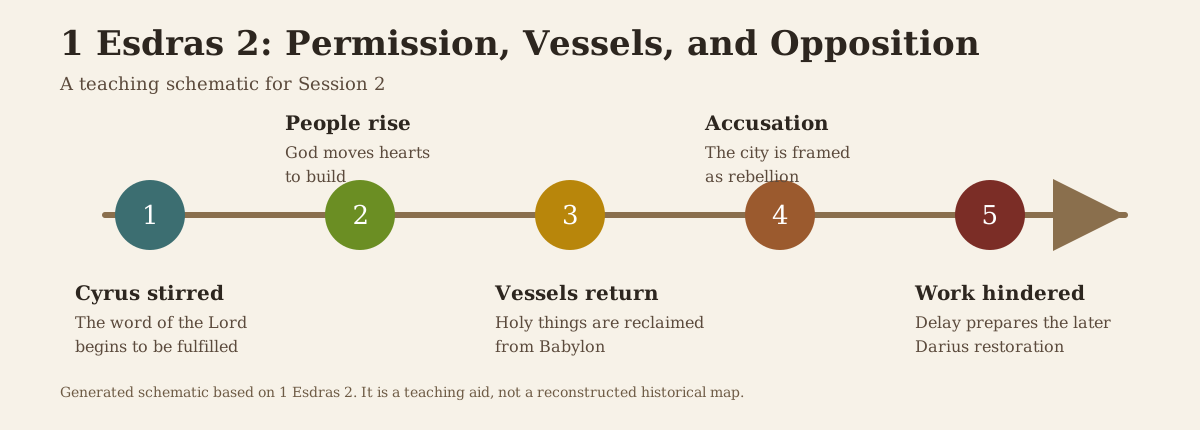
Generated schematic based on 1 Esdras 2. It is a teaching aid, not a reconstructed historical map.
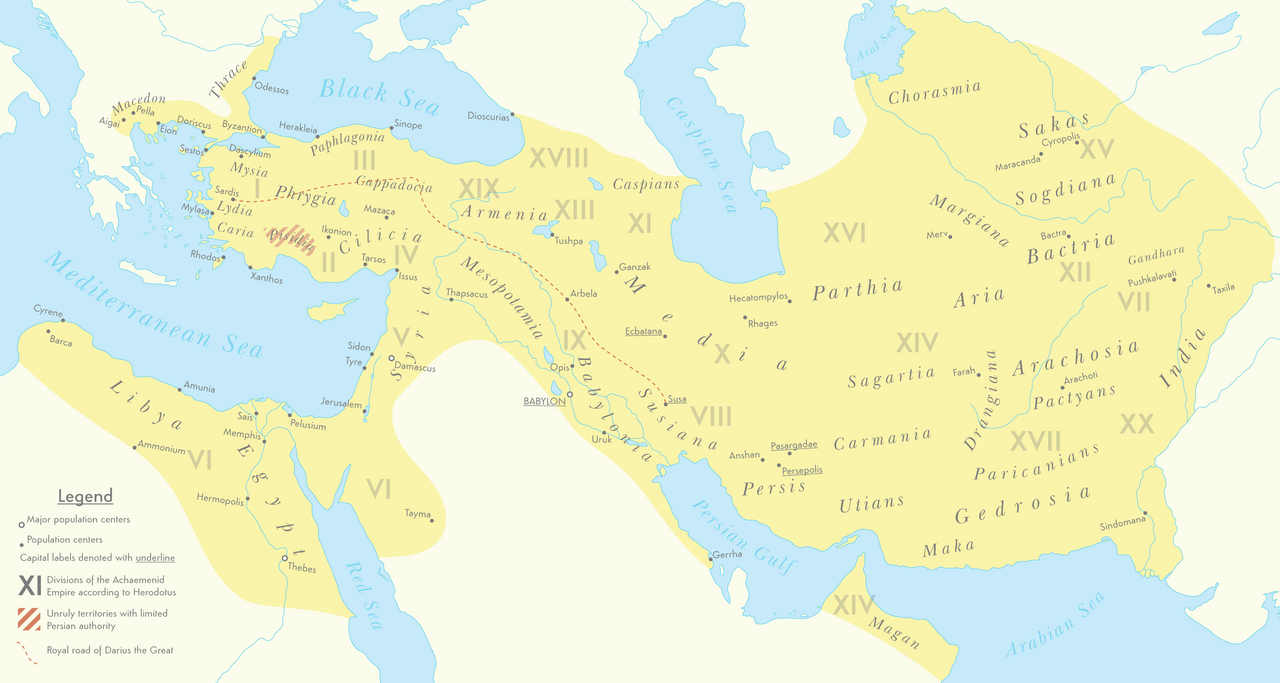
Source: Cattette, Achaemenid Empire 500 BC, CC BY 4.0 via Wikimedia Commons. Broad imperial frame, not a reconstructed route map.
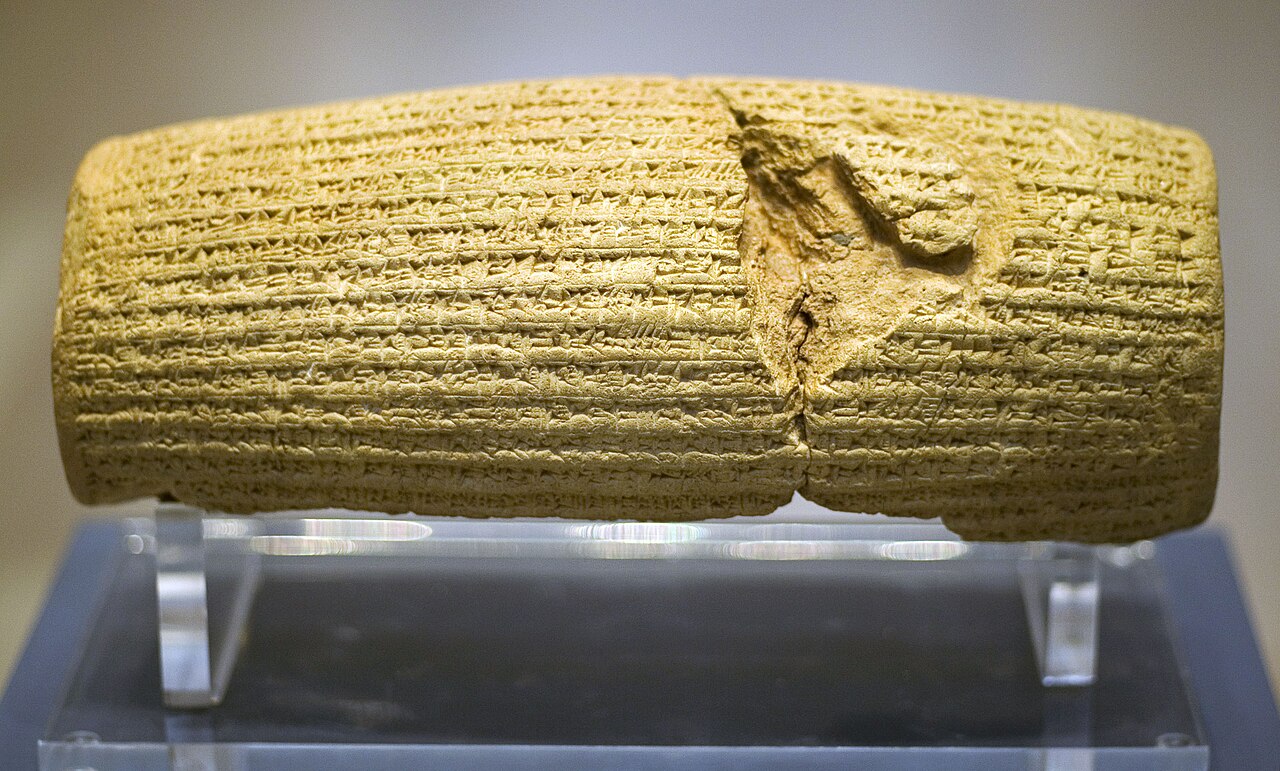
Source: Prioryman, Cyrus Cylinder front, CC BY-SA 3.0 via Wikimedia Commons. Museum object context for Persian royal restoration language, not direct proof of the 1 Esdras decree.
The empire spans the world in which the captives must return. The Cyrus Cylinder belongs to Persian royal restoration language; it does not authenticate the particular decree preserved in Scripture.
1 Esdras is not included in the NKJV. The Scripture below follows the wording and verse numbers of the Brenton edition. Other Greek editions combine some of these verses: the Artaxerxes letter begins at 2:16 here and 2:12 in the Rahlfs-based text. Verse numbers differ because the account is divided differently, so comparisons must follow its words.1
The Lord Raises Cyrus to Announce the Return (1 Esdras 2:1-7)
1 In the first year of Cyrus king of the Persians, that the word of the Lord might be accomplished, that he had promised by the mouth of Jeremy; 2 the Lord raised up the spirit of Cyrus the king of the Persians, and he made proclamation through all his kingdom, and also by writing, 3 saying, Thus saith Cyrus king of the Persians; The Lord of Israel, the most high Lord, hath made me king of the whole world, 4 and commanded me to build him an house at Jerusalem in Jewry.
5 If therefore there be any of you that are of his people, let his Lord be with him, and let him go up to Jerusalem that is in Judea, and build the house of the Lord of Israel: for he is the Lord that dwelleth in Jerusalem. 6 Whosoever then dwell in the places about, let them help him, those, I say, that are his neighbours, with gold, and with silver, 7 with gifts, with horses, and with cattle, and other things, which have been set forth by vow, for the temple of the Lord at Jerusalem.
The chapter begins with fulfillment. The seventy years from the end of chapter 1 are not endless. The word promised through Jeremiah now moves history. The promise of return after seventy years is Jeremiah 29:10, corresponding to 36:10 in Brenton. Cyrus is king of Persia, but the text does not treat him as the source of salvation. The Lord raises his spirit.
Cyrus’s proclamation names the Lord of Israel as the most high Lord and commands the building of the house in Jerusalem. This does not require us to imagine Cyrus as a fully catechized Israelite or a covenant king. The point is more precise: God can bend imperial permission toward His own mercy. The Lord’s providence is larger than the empire that thinks it is ruling the world.
Light from the Word 🕯️
The key movement is from divine promise to human proclamation. God’s word through Jeremiah becomes a royal decree through Cyrus. That does not make the empire holy. It shows that no empire is outside God’s reach.
The Stirred People Rise to Build (1 Esdras 2:8-9)
8 Then the chief of the families of Judea and of the tribe of Benjamin stood up; the priests also, and the Levites, and all they whose mind the Lord had moved to go up, and to build an house for the Lord at Jerusalem, 9 and they that dwelt round about them, and helped them in all things with silver and gold, with horses and cattle, and with very many free gifts of a great number whose minds were stirred up thereto.
Cyrus is not the only one moved. The chiefs of Judea and Benjamin, the priests, the Levites, and all whose minds the Lord moved rise to go up. Restoration is not only a decree from above. It also requires hearts stirred from within.
The neighbors help with silver, gold, horses, cattle, and free gifts. Some are called to go. Others are called to strengthen those who go. Both belong to the work of restoration. The passage does not let us reduce service to one visible form.
Light from the Word 🕯️
Verse 8 speaks of minds the Lord moved, and verse 9 of freely given gifts. A decree opens the road, but it cannot make a people desire God’s house. Grace awakens that desire, and neighbors answer it with practical generosity.
For Our Life
A ministry of restoration needs both movement and support. Some people go to rebuild. Others give resources, encouragement, shelter, or practical help. In the Church, the hidden supporter is not less necessary than the visible worker.
The Holy Vessels Are Returned and Counted (1 Esdras 2:10-15)
10 King Cyrus also brought forth the holy vessels which Nabuchodonosor had carried away from Jerusalem, and had set up in his temple of idols.
11 Now when Cyrus king of the Persians had brought them forth, he delivered them to Mithridates his treasurer: 12 and by him they were delivered to Sanabassar the governor of Judea. 13 And this was the number of them; A thousand golden cups, and a thousand of silver, censers of silver twenty-nine, vials of gold thirty, and of silver two thousand four hundred and ten, and a thousand other vessels. 14 So all the vessels of gold and of silver, which were carried away, were five thousand four hundred threescore and nine. 15 These were brought back by Sanabassar, together with them of the captivity, from Babylon to Jerusalem.
The vessels from chapter 1 now return. Nabuchodonosor, Nebuchadnezzar, had placed them in a temple of idols. Cyrus delivers them through Mithridates his treasurer to Sanabassar, the Sheshbazzar of the parallel account. The same name Mithridates occurs among opponents in verse 16, but this narrative does not establish that the two bearers are the same person.
The six quantities in verse 13 add to 5,469, matching verse 14: 1,000 + 1,000 + 29 + 30 + 2,410 + 1,000. The parallel Ezra 1:9-11 gives different itemized figures, totaling 2,499, while its stated total is 5,400. These are ancient textual differences, not a reason to conceal the arithmetic. The accounts do not explain how the discrepancies arose; the theological importance of returning the vessels does not depend on making the inventories identical.1
The counting is spiritually important. The text slows down over cups, censers, vials, and other vessels because holy things matter. These are not trophies from a defeated kingdom. They belong to the worship of the Lord. Their restoration says that what was profaned in exile is being returned to holy use.
Light from the Word 🕯️
‘By him they were delivered’ sets the holy things within a chain of responsibility. A king releases them, a treasurer hands them over, and a governor carries them home. The count makes the trust visible. In the Church, reverence for what is entrusted includes honest accounts and careful handover, not only strong feelings about sacred things.
Christological Reading
In Christ, the deeper return from exile is fulfilled. Humanity itself, made for communion with God, had become captive to sin and death. Christ does not merely announce return; He brings the human vessel back to its true consecration. In Him, what was defiled is cleansed, what was scattered is gathered, and what was meant for worship is restored.
The Adversaries Accuse Jerusalem Before Artaxerxes (1 Esdras 2:16-24)
16 But in the time of Artaxerxes king of the Persians Belemus, and Mithridates, and Tabellius, and Rathumus, and Beeltethmus, and Samellius the secretary, with the rest that were in commission with them, dwelling in Samaria and other places, wrote unto him against them that dwelt in Judea and Jerusalem this letter following; 17 To king Artaxerxes our lord, Thy servants, Rathumus the storywriter, and Samellius the scribe, and the rest of their council, and the judges that are in Celosyria and Phenice. 18 Be it now known to the lord the king, that the Jews that are come up from you to us, being come into Jerusalem, that rebellious and wicked city, do build the marketplaces, and repair the walls of it, and do lay the foundation of the temple. 19 Now if this city and the walls thereof be made up again, they will not only refuse to give tribute, but also rebel against kings.
20 And forasmuch as the things pertaining to the temple are now in hand, we think it meet not to neglect such a matter, 21 but to speak unto our lord the king, to the intent that, if it be thy pleasure, it may be sought out in the books of thy fathers: 22 and thou shalt find in the chronicles what is written concerning these things, and shalt understand that that city was rebellious, troubling both kings and cities: 23 and that the Jews were rebellious, and raised always wars therein; for the which cause even this city was made desolate. 24 Wherefore now we do declare unto thee, O lord the king, that if this city be built again, and the walls thereof set up anew, thou shalt from henceforth have no passage into Celosyria and Phenice.
The chapter now shifts to opposition. In Ezra 4:7-23, the letter concerns the city’s rebuilding and walls; Ezra 4:24 resumes the earlier temple stoppage under Darius. Here verse 18 explicitly includes laying ‘the foundation of the temple’, verse 20 names temple business, and verse 30 makes the letter stop the temple. 1 Esdras connects the correspondence more closely to its governing subject, the house of God. The two tellings preserve the history with different emphases; their precise literary relationship remains disputed.1
Officials from Samaria and surrounding regions frame Jerusalem as rebellious and wicked, warn about tribute loss, and use imperial fear to stop the work. Celosyria is Coele-Syria, the Syrian region, and Phenice is Phoenicia.
The accusation is not the narrator’s final theological verdict on Jerusalem. It is the language of opponents trying to persuade the king. The city had indeed been judged for sin, but the hostile letter twists memory into a weapon against restoration.
Light from the Word 🕯️
Opposition often speaks in half-truths. Jerusalem had sinned. Kings had rebelled. The city had a history that enemies could cite. But repentance and restoration are precisely God’s answer to that history. The accusers use the past to deny the future God is giving.
Guardrail for Reading
Do not use this passage to despise Jews, Samaritans, neighboring peoples, or outsiders as groups. The text names a specific political and spiritual opposition to the rebuilding. It does not give permission for ethnic contempt. Christian reading must be truthful about opposition without turning Scripture into hostility against people.
The Work Is Hindered Until Darius (1 Esdras 2:25-30)
25 Then the king wrote back again to Rathumus the storywriter, to Beeltethmus, to Semellius the scribe, and to the rest that were in commission, and dwellers in Samaria and Syria and Phenice, after this manner; 26 I have read the epistle which ye have sent unto me: therefore I commanded to make diligent search, and it hath been found that that city was from the beginning practising against kings; 27 and the men therein were given to rebellion and war: and that mighty kings and fierce were in Jerusalem, who reigned and exacted tributes in Celosyria and Phenice. 28 Now therefore I have commanded to hinder those men from building the city, and heed to be taken that there be no more done in it; 29 and that those wicked workers proceed no further to the annoyance of kings.
30 Then king Artaxerxes his letters being read, Rathumus, and Semellius the scribe, and the rest that were in commission with them, removing in haste toward Jerusalem with a troop of horsemen and a multitude of people in battle array, began to hinder the builders; and the building of the temple in Jerusalem ceased until the second year of the reign of Darius king of the Persians.
Artaxerxes answers after the hostile letter is read. The city is again described through the lens of rebellion, and an order is given to stop the building. The opponents move quickly, with horsemen and a multitude in battle array. The work ceases until the second year of Darius.
This ending is sobering. The decree of Cyrus did not remove every obstacle. Permission can be followed by resistance. A holy beginning can still meet delay. Yet the phrase until the second year of the reign of Darius
keeps hope alive. The halt is real, but it is not the final chapter.
Light from the Word 🕯️
Delay is not the same as defeat. The chapter ends with the work hindered, but the book has already taught us to watch for God’s word across time. Jeremiah’s word was fulfilled after seventy years. The reader should now expect that God can also work beyond this temporary stoppage.
For Our Life
When a holy work is hindered, the temptation is either despair or anger. This passage trains patience. Not every closed door means God has withdrawn. Sometimes the work must wait until another season, another ruler, another prophetic word, or another act of courage.
The Church’s Voice in Worship ⛪
1 Esdras is not read in the Coptic lectionary. The Katameros Great Lent cycle lists Isaiah 44:21-28 in the sixth week and Isaiah 45:1-10 on the following day.2
These prophecies give the decree a theological setting. In the displayed Brenton Isaiah, 44:28 bids Cyrus be wise and promises Jerusalem’s rebuilding; 45:1 names Cyrus as the Lord’s anointed. The Lord then says that Cyrus had not known Him. God’s action reaches beyond the ruler’s understanding. The related Isaiah 45-46 study explains why an unexpected instrument never becomes a rival savior.
Isaiah 45:15-20 is also listed at the Ninth Hour of Bright Saturday. The God who works beyond human expectation is received in the Church’s vigil of resurrection hope. This is a related prophecy, not a reading of this chapter.3
Christological Types and Prophecies
Cyrus is an instrument, not the savior. He points by contrast to Christ, the true King who does not merely permit restoration but accomplishes it. Cyrus commands the house to be built; Christ is Himself the true Temple and builds His Church as a living house.
The holy vessels point toward consecrated humanity. In sin, the gifts of God are carried into captivity and used for lesser ends. In Christ, the vessel is reclaimed, cleansed, and restored to worship. The return from Babylon becomes a sign of the deeper return from death to life.
The opposition also points forward. The rebuilding of God’s house is resisted by accusation, fear, and force. Christ’s own work is opposed by false accusation, political calculation, and violence. Yet the opposition does not defeat the purpose of God.
Spiritual Fruit 🍇
Answer a holy desire with one practical gift. The Lord stirs both those who go and those who support them. If you cannot undertake the visible task, provide a meal, a needed resource, or a regular hour of prayer for someone who can. Freedom from comparison makes hidden generosity possible.
Return one entrusted gift to its proper use. The vessels are counted before they are carried home. Name precisely what has been diverted: time meant for prayer, speech meant to bless, money meant for mercy, or a skill meant for service. Choose one modest act that restores its use this week.
Refuse to make a person’s past the whole of his identity. The hostile letter weaponizes Jerusalem’s history to forbid rebuilding. Tell the truth about harm while making room for repentance. When your own work is delayed, seek wise counsel and continue the duties still open to you rather than treating every obstacle as persecution.
See the vessels leave the temple of idols. What seemed permanently lost is entrusted again to human hands. Christ restores us for communion, and His mercy asks for a real response. Offer Him the gift you have been using elsewhere, and let the return begin.
Teaching Notes
The Lord Raises Cyrus to Announce the Return (1 Esdras 2:1-7)
- Ask: Who is the true actor in the decree, Cyrus or the Lord?
- Emphasize: God can work through rulers without making empire the savior.
- Watch for: Do not present Cyrus as a converted covenant king unless the text proves it.
- Connect: Christ is the true King who accomplishes restoration, not merely permits it.
- Show: Use the 1 Esdras 2 schematic with the Achaemenid Empire map and Cyrus Cylinder image. Name the map as broad imperial context and the cylinder as an imperial artifact, not as proof of the decree.
The Stirred People Rise to Build (1 Esdras 2:8-9)
- Ask: What different kinds of participation appear in the restoration?
- Emphasize: Some go up to build; others strengthen the work with gifts.
- Watch for: Avoid treating visible service as the only real service.
- Connect: The Church’s ministries need both workers and faithful supporters.
- Show: A simple ministry board can divide needs into go, give, pray, encourage, and sustain.
The Holy Vessels Are Returned and Counted (1 Esdras 2:10-15)
- Ask: Why does the text spend time counting the vessels?
- Emphasize: Holy things matter because worship matters.
- Watch for: Do not make the vessels only an allegory. Teach their liturgical role first.
- Connect: Christ restores humanity to its true consecration before God.
- Show: Use the returned-vessels line in the schematic and the Cyrus Cylinder image to keep the discussion concrete. The vessels are liturgical signs, not inventory filler.
The Adversaries Accuse Jerusalem Before Artaxerxes (1 Esdras 2:16-24)
- Ask: How does the hostile letter use Jerusalem’s past against her restoration?
- Emphasize: Accusation can use half-truths to block repentance and rebuilding.
- Watch for: Do not repeat the hostile label as the guide’s own verdict, and do not turn this into ethnic contempt.
- Connect: The accuser wants sin to become identity; Christ gives repentance and a future.
- Show: Compare the language of accusation with the language of God’s promise at the start of the chapter.
The Work Is Hindered Until Darius (1 Esdras 2:25-30)
- Ask: What is the difference between delay and defeat?
- Emphasize: The work is genuinely hindered, but the phrase
until Dariuskeeps hope open.- Watch for: Avoid telling people that every obstacle is persecution or that every delay means failure.
- Connect: Christ’s work also passes through false accusation and violence before resurrection.
- Show: Distinguish the historical royal order, Cyrus, Darius, Artaxerxes, from 1 Esdras’s literary order. Place the temple halt before Darius and the Artaxerxes letter later; do not use the schematic as a strict chronology.
Sources
Embedded Scripture is from Brenton’s English Septuagint (LXX).
The parallels are Ezra 1-2 and Ezra 4. Isaiah 44:21-28 and Isaiah 45:1-13 interpret Cyrus’s role without making him the source of salvation.
Footnotes
-
R. Glenn Wooden, ‘1 Esdras: To the Reader’, A New English Translation of the Septuagint, overview, translation profile, and editorial policy. Introduction. For the Greek verse divisions, compare the Rahlfs-derived CATSS transcription. ↩ ↩2 ↩3 ↩4
-
Coptic Katameros, Great Lent cycle, sixth-week prophecy sequence, Isaiah 44:21-28 and Isaiah 45:1-10. ↩
-
Bright Saturday service order, Ninth Hour, Isaiah 45:15-20. ↩