


This narration is from a previous version of the study and may include a combined recording of multiple chapters.
Ezra 9 is the chapter of a servant collapsing before God under the weight of the people’s sin. The report is not about ethnic contempt or fear of outsiders. It is about covenant apostasy, assimilation into idolatry, and the failure of leaders who should have guarded worship. Ezra does not answer the crisis first with policy. He tears his garments, sits in silence, trembles, rises at the evening sacrifice, and prays as one who belongs to the guilty people.
Ezra does not pray as a spectator. He says “our iniquities” and “our trespass” even though the report has just come to him. This is not false guilt. It is priestly and communal intercession.
The parallel crisis and prayer appear in 1 Esdras 8:68-9:36. Nehemiah 1 likewise turns grief for Jerusalem into confession and prayer before action. Here the Christian reader encounters a shadow of the true Intercessor, Christ, who willingly bears the sins of His people without sharing their sin and opens the way for mercy.
Ezra 10 will face the hard question of covenant correction. Here the account stays with intercession, grief, shame, mercy after exile, and confession without self-excuse. The chapter teaches every priest, parent, deacon, servant, and ministry leader how to stand before God with a wounded community: do not excuse sin, do not despise sinners, and do not speak as if you are untouched by the people’s fall.
Historical and Scriptural Context
Ezra 8 ended with safe arrival in Jerusalem, the re-weighing of the holy vessels, burnt offerings, sin offerings, and the delivery of the king’s mandates. The restored mission looked orderly and successful. Ezra 9 interrupts that appearance. The problem is not danger on the road, but danger inside the covenant community. The people have returned from exile, the temple has been raised, and the Law has a teacher, yet hidden compromise threatens the holiness of the restored people.
The report links marriages with Israel’s failure to separate from the abominations of the surrounding peoples. Deuteronomy 7:3-4 names the danger behind the marriage prohibition: being turned away from the Lord to serve other gods. The narrative does not give an individual spiritual biography of each wife. Its covenant boundary must be heard without contempt for a people or assumptions about every woman named by implication. Scripture itself honors outsiders who join the Lord in faith, such as Rahab and Ruth. The danger named in Ezra 9 is different: the holy people are adopting the practices of the nations whose idolatry and uncleanness had defiled the land. Deuteronomy 7 stands behind the warning, not as ethnic superiority, but as protection against being turned away from the Lord.
Ezra’s prayer belongs to a biblical family of intercessory confession. Moses intercedes after the golden calf in Exodus 32-34, even offering himself before God for the people. Daniel confesses the sins of Israel in Daniel 9:4-19, saying “we have sinned” though he personally is shown as righteous. Nehemiah 1 likewise confesses the sins of Israel while preparing to act for Jerusalem. In the New Testament, James 5:16 commands confession and prayer, 1 John 1:9 promises forgiveness when we confess our sins, and Luke 18:9-14 shows that the publican who cannot lift his eyes but asks for mercy goes down justified.
Geographical Significance ⛰️
The geography is Jerusalem after the return from Babylonian exile. The community is no longer praying from far away by the rivers of Babylon. They are in Judah and Jerusalem, near the restored house of God, with the sanctuary standing as a sign of mercy. That makes the sin more severe. They have received return, temple, altar, vessels, and favor, yet they are again risking the covenant identity that exile had already judged.
The land also matters because Ezra’s prayer speaks of the land as defiled by abominations and uncleannesses. This language should not be flattened into contempt for neighboring peoples. In the Old Testament, the land is the place where worship, justice, purity, and covenant life are meant to be lived before God. Assimilation into idolatry is therefore not only private failure. It wounds the community’s life in the very place God restored to them.
The people have travelled from the imperial world back to Jerusalem. The tragedy is that the habits which led to exile can remain within them even after their return.
The Characters 👥
- Ezra or Esdras: Priest, scribe, and servant of the Law. In this chapter he becomes an intercessor whose body, silence, and prayer carry the grief of the community before God.
- The princes who report the matter: Leaders who draw near to Ezra and name the covenant breach. They are not gossiping for spectacle. They bring a wound to the servant who must carry it before God.
- The people of Israel, priests, and Levites: The restored community as a whole, including those closest to worship. The text refuses to make sin only a problem among the uninstructed.
- The rulers and leaders: The hand of the rulers is named as first in the transgression. Leadership failure is central to the chapter. Those who should have guarded the people helped lead the compromise.
- The peoples of the lands: The surrounding nations and communities whose abominations are named. The text warns against assimilation into idolatry and uncleanness, not against human beings as racially inferior.
- Those who tremble at the word of God: The faithful who gather around Ezra in grief. They show that a remnant can still respond to the word with fear, attention, and hope.
- The Lord God of Israel: The righteous God before whom Ezra confesses shame, mercy, deliverance, and the impossibility of self-defense.
The report of covenant unfaithfulness and leaders’ responsibility (Ezra 9:1-2)
1 And when these things were finished, the princes drew near to me, saying, The people of Israel, and the priests, and the Levites, have not separated themselves from the people of the lands in their abominations, even the Chananite, the Ethite, the Pherezite, the Jebusite, the Ammonite, the Moabite, and the Moserite and the Amorite. 2 For they have taken of their daughters for themselves and their sons; and the holy seed has passed among the nations of the lands, and the hand of the rulers has been first in this transgression.
Light from the Word 🕯️
The crisis comes after “these things were finished.” Ezra has arrived, the vessels have been delivered, the offerings have been made, and the royal mandates have been given. Outwardly, the restoration seems to be moving forward. Then the princes bring the hidden wound to Ezra: the people have not separated themselves from the abominations of the peoples of the lands.
The text names Israel, priests, and Levites together. This is not a failure only among those far from worship. The breach reaches into the groups who know the Law and serve near the house of God. Most strikingly, “the hand of the rulers has been first in this transgression.” The leaders and rulers are implicated first. Ezra 9 therefore does not permit a servant to blame only the crowd, the youth, the weak, or the uninstructed. Those with authority helped open the door.
The phrase “holy seed” names a vocation before God. It does not mean that God values one ethnicity over another. The Old Testament already knows foreigners who join themselves to the Lord and become honored within the people of God. The issue here is covenant identity being mixed with idolatrous abominations. The report treats the marriages as a breach of Israel’s covenant holiness, under the warning against foreign worship. Its collective charge cannot authorize us to assign the same personal motives to every household. The restoration has been endangered from within, and the leaders are implicated first.
The “holy seed” is read in the New Covenant through Galatians 3:16 and Galatians 3:29: the promise centers on Christ, and those who belong to Him are Abraham’s offspring. Ruth the Moabitess and Rahab are named in His genealogy (Matthew 1:5). Ezra 6:21 already receives at Passover those who separate themselves from uncleanness to seek Israel’s God. Holy belonging is directed toward the Lord, not a claim of biological superiority.
“Moserite” is Brenton’s form for Egyptian. The list therefore names a people dear to Coptic readers, but it cannot be turned into a verdict that Egyptians are rejected by God. Deuteronomy 23:7 (LXX Deuteronomy 23:8) forbids abhorring an Egyptian, and Isaiah 19:19-25 promises God’s blessing upon Egypt as His people. Matthew 2:13-15 remembers the Holy Family’s refuge there. The same Scripture that warns against idolatry opens hope to Egypt.
Apostolic reading
Luke 18:9-14 distinguishes the Pharisee’s comparison with others from the publican’s plea for mercy. Ezra’s response belongs with the second posture: he grieves a real breach without praising himself for being untouched by it. In 1 Corinthians 7:12-14, St. Paul commands believers to remain with an unbelieving spouse willing to share their life; the children are called holy. This guards Christian readers from carrying Ezra’s covenant crisis into a command to abandon their families. Holiness in Christ can bless a household without requiring participation in its unbelief.
Spiritual application
A servant must learn how to receive a report of sin without becoming either defensive or superior. Defensive leaders minimize the wound because it threatens the image of the community. Superior leaders magnify the wound so they can stand above it. Ezra does neither. He allows the truth to pierce him.
This movement also warns leaders that their first task is not reputation management. The rulers were first in the transgression. When leaders compromise, they teach by permission even before they teach by words. A parish, family, or ministry may suffer deeply because those trusted with discernment normalize what should have been resisted.
Torn garments, silence, trembling, and the evening sacrifice (Ezra 9:3-5)
3 And when I heard this thing, I rent my garments, and trembled, and plucked some of the hairs of my head and of my beard, and sat down mourning. 4 Then there assembled to me all that followed the word of the God of Israel, on account of the transgression of the captivity; and I remained mourning until the evening sacrifice.
5 And at the evening sacrifice I rose up from my humiliation; and when I had rent my garments, then I trembled, and I bow myself on my knees, and spread out my hands to the Lord God,
Light from the Word 🕯️
Ezra’s first answer is bodily grief. He tears his garments, trembles, plucks hair from his head and beard, and sits mourning. The reaction is severe because the sin is severe. He does not rush to a speech. He lets the report become lament before it becomes instruction.
Those who follow the word of the God of Israel gather around him. Brenton describes them by obedience to the word in verse 4, while verse 3 explicitly describes Ezra trembling. The familiar Hebrew-based rendering of verse 4 calls them those who tremble at God’s words; both forms place the gathering under divine authority. Ezra’s grief draws those obedient to the word into shared mourning. They understand that the matter is not merely administrative. It is “the transgression of the captivity,” the sin of those who had been delivered from exile and should have learned from judgment.
The timing of Ezra’s prayer matters. He remains mourning until the evening sacrifice. The restored altar and daily offering become the setting for confession. Ezra rises from humiliation, bows on his knees, and spreads out his hands to the Lord. He stands before God not as a commentator on the community, but as an intercessor whose body has become part of the prayer.
Daniel 9:21 likewise places an answer to prayer at the evening offering. Acts 3:1 names the ninth hour as an hour of prayer; it supplies a New Testament point of comparison, not the precise hour of Ezra’s action. The Church reads the evening sacrifice in the light of Christ’s willing self-offering, while preserving Ezra’s historical setting.
Gems from the Fathers 💎
St. John Chrysostom opens his homily Concerning Lowliness of Mind by returning to the Pharisee and the publican. The publican’s honest confession defeats the pride that ruins prayer. Chrysostom explains the purpose of the comparison: “These things I say, not in order that we should be careless of righteousness, but that we should avoid pride; not that we should sin, but that we should be sober-minded.”1 Ezra is not named as an offender in the reported marriages, but he still kneels with the people. His relative innocence does not become a platform from which to accuse everyone else. The connection is thematic: Chrysostom is explaining Christian humility, not commenting on Ezra 9.
Spiritual application
There are moments when the most truthful thing a servant can do is stop speaking. Silence before God can be more honest than immediate advice. Ezra’s mourning teaches servants not to become technicians of repentance, giving solutions before they have wept.
This movement also gives a pattern for communal grief. We need people who tremble at the word of God, not because they enjoy severity, but because they still believe God is holy. A community becomes spiritually numb when sin can be reported, discussed, explained, joked about, or managed without anyone trembling.
Shame, mercy after exile, and a little reviving in bondage (Ezra 9:6-9)
6 and I said, O Lord, I am ashamed and confounded, O my God, to lift up my face to thee: for our transgressions have abounded over our head, and our trespasses have increased even to heaven. 7 From the days of our fathers we have been in a great trespass until this day: and because of our iniquities we, and our kings, and our children, have been delivered into the hand of the kings of the Gentiles by the sword, and by captivity, and by spoil, and with shame of our face, as at this day. 8 And now our God has dealt mercifully with us, so as to leave us to escape, and to give us an establishment in the place of his sanctuary, to enlighten our eyes, and to give a little quickening in our servitude. 9 For we are slaves, yet in our servitude the Lord our God has not deserted us; and he has extended favour to us in the sight of the kings of the Persians, to give us a quickening, that they should raise up the house of our God, and restore the desolate places of it, and to give us a fence in Juda and Jerusalem.
Light from the Word 🕯️
Ezra begins with shame. He is ashamed and confounded to lift his face to God because the people’s transgressions have risen over their head and their trespasses have increased to heaven. He does not isolate himself from the guilty. The repeated word is “our”: our transgressions, our trespasses, our fathers, our iniquities, our kings, our children. This is corporate confession.
Ezra also reads the present sin in light of the whole history of exile. From the days of the fathers until now, the people have lived under great trespass. Sword, captivity, spoil, and shame were not random misfortunes. They were the bitter fruit of iniquity. Yet Ezra does not speak only of judgment. He names mercy: God has left an escape, given an establishment in the place of His sanctuary, enlightened their eyes, and granted a little quickening in servitude.
The phrase “a little quickening” is tender and sober. The people are alive again, but not triumphant. They are still under Persian rule, still servants in an imperial world, still dependent on mercy. God has not deserted them. He has extended favor, raised up His house, restored desolate places, and given a fence in Judah and Jerusalem. The tragedy is that this mercy has been answered with renewed unfaithfulness.
Apostolic reading
Galatians 4:7 promises that in Christ the believer is no longer a slave but a son; John 8:36 promises the freedom given by the Son. Ezra’s little reviving under Persian rule is precious mercy, but his confession still says “we are slaves.” The Gospel leads this longing toward a freedom deeper than political independence. The “fence in Juda and Jerusalem” also recalls Zechariah 2:5, where the Lord promises to be a wall of fire around Jerusalem. The people live by divine protection before they live by a finished wall.
Spiritual application
This is one of the most important servant lessons in Ezra. A servant can identify with the people’s sin without excusing it. Ezra does not say, “their transgressions have abounded.” He says, “our transgressions.” But he also does not soften the sin. He holds identification and truth together.
Many communities fail at one side or the other. Some excuse sin in the name of compassion. Others condemn sinners in the name of truth. Ezra shows a third way: stand before God with the people, confess the sin plainly, remember the mercy already received, and ask God for life. This posture is essential for priests, parents, confession fathers, servants, ministry leaders, and anyone who carries another person’s wound in prayer.
Confession without self-excuse before the righteous God (Ezra 9:10-15)
10 What shall we say, our God, after this? for we have forsaken thy commandments, 11 which thou hast given us by the hand of thy servants the prophets, saying, The land, into which ye go to inherit it, is a land subject to disturbance by the removal of the people of the nations for their abominations, wherewith they have filled it from one end to the other by their uncleannesses.
12 And now give not your daughters to their sons, and take not of their daughters for your sons, neither shall ye seek their peace or their good for ever: that ye may be strong, and eat the good of the land, and transmit it as an inheritance to your children for ever. 13 And after all that is come upon us because of our evil deeds, and our great trespass, it is clear that there is none such as our God, for thou hast lightly visited our iniquities, and given us deliverance; 14 whereas we have repeatedly broken thy commandments, and intermarried with the people of the lands: be not very angry with us to our utter destruction, so that there should be no remnant or escaping one. 15 O Lord God of Israel, thou art righteous; for we remain yet escaped, as at this day: behold, we are before thee in our trespasses: for we cannot stand before thee on this account.
Light from the Word 🕯️
Ezra asks, “What shall we say, our God, after this?” The question is the heart of confession. He does not search for a defense. He does not say the circumstances were difficult, the leaders were pressured, the foreign families were numerous, or the people were tired after exile. Those details may exist, but they are not used to evade responsibility. The people have forsaken God’s commandments.
Verses 11-12 recall the prophetic warning about the land and the danger of intermarriage with peoples whose abominations fill it. Again, the issue is not ethnic contamination. The issue is covenant obedience and worship. If marriage becomes the doorway into idolatry, then the holy people lose the life they were restored to live. The very mercy that gave them an inheritance is endangered by their refusal to remain faithful.
Verse 12 includes the hard instruction not to seek the peace or good of the peoples named. It must not become a Christian rule of hostility toward neighbors. Jeremiah 29:7 (LXX Jeremiah 36:7) tells exiles to seek their city’s peace and pray for it. Christ commands love and prayer for enemies in Matthew 5:44. Christians resist idolatry while actively seeking the good of persons, including those who oppose them.
Ezra’s confession becomes even more severe because God has been merciful. He says God has “lightly visited” their iniquities and given deliverance. The people have received less than their sins deserved. They remain an escaped remnant. That mercy makes renewed disobedience more grievous, not less. The prayer ends without self-defense: “thou art righteous,” “we are before thee in our trespasses,” and “we cannot stand before thee on this account.”
The chapter ends before the correction of Ezra 10. The people remain exposed before the righteous God, without a quick resolution. Daniel 9:7 likewise places righteousness with God and shame with the people. Confession acknowledges both: the Lord is faithful, and His people cannot turn received mercy into an excuse.
Apostolic reading
Orthodox confession is never self-hatred and never self-justification. It is truth before mercy. Ezra’s last line, “we cannot stand before thee,” is not despair. It is the end of illusion. Only when the sinner stops standing on excuses can he be raised by grace.
Spiritual application
There is a kind of apology that is not confession. It explains, qualifies, shifts blame, narrates hardship, and asks others to understand why the sin was almost inevitable. Ezra teaches a cleaner prayer: “What shall we say?” The answer is nothing by way of defense. Tell the truth. Let God be righteous.
This movement is especially important in parish life. Confession without self-excuse does not mean cruelty. It means the wound is finally uncovered so God can heal it. A servant who helps people confess must protect them from both despair and evasion. The goal is not public humiliation. The goal is to stand before God truthfully enough to receive mercy.
The Church’s Voice in Worship ⛪
Ezra has no verse-addressed appointment in the Coptic lectionary collections cited here. The Bright Saturday Praises include Daniel 9:4-19 as the Prayer of Daniel. His confession, like Ezra’s, says “we” and places the people’s shame before the mercy of God. Such prayer belongs on the threshold of Paschal hope: repentance asks the Lord to give life where self-defense has failed.2
Psalm 141:2 (LXX Psalm 140:2) joins prayer with incense and raised hands with the evening sacrifice. It is prayed in the Agpeya’s Twelfth Hour and the Third Watch of Midnight Prayer. The posture of Ezra’s outstretched hands thus finds a companion in the Church’s nightly prayer.3
In the Liturgy of St. Basil, the priest’s Absolution to the Son includes himself with the people: “Dispense unto us Your mercy, and loose every bond of our sins”.4 This shared petition does not erase individual responsibility. It prevents the intercessor from pretending that he stands outside the need for Christ’s forgiveness.
Iconography and Visual Teaching 🖼️
The ancient image below recalls Ezra’s wider identity as reader of the Law. It does not depict his mourning in this chapter.
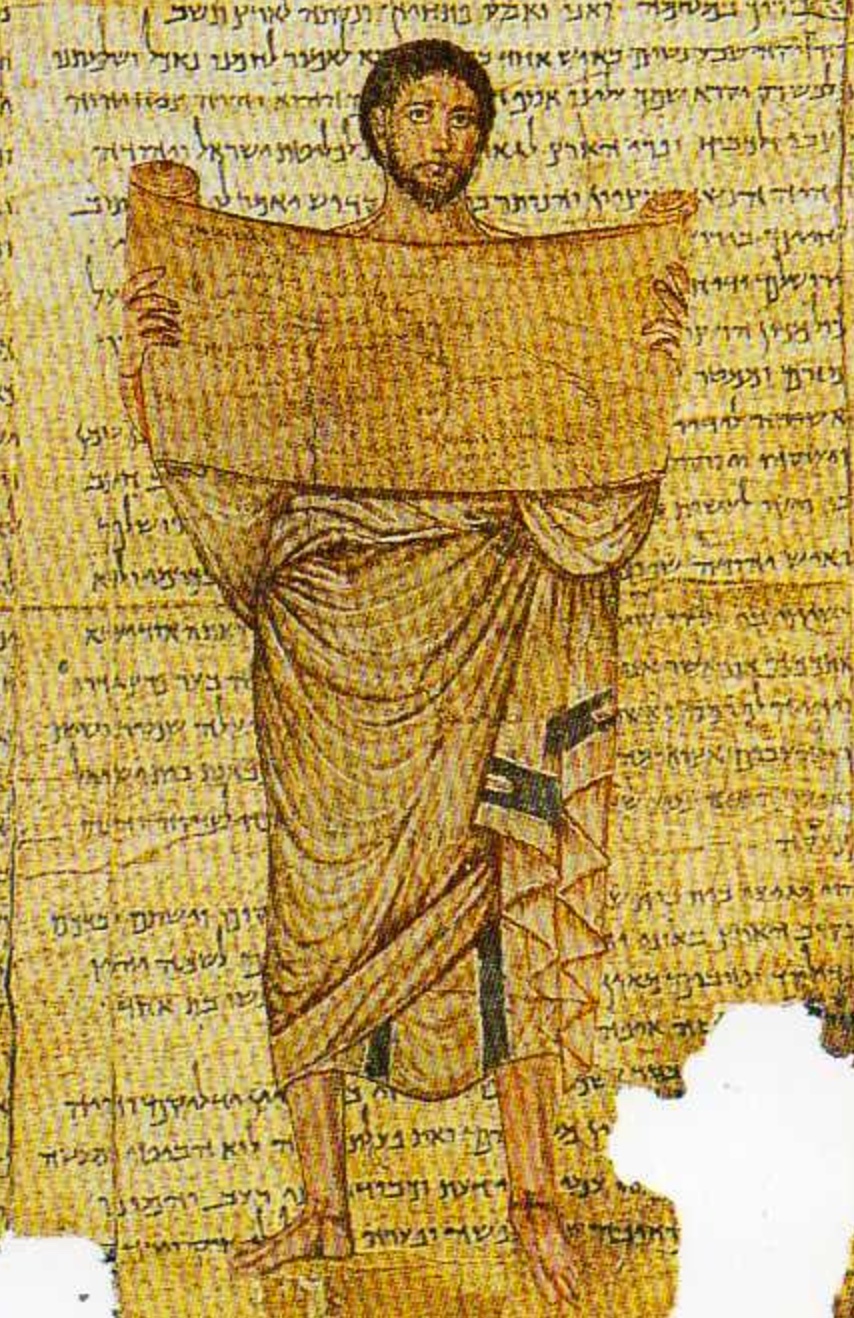 Source: Dura-Europos synagogue fresco fragment, Ezra reading the Law, public domain via Wikimedia Commons. Ancient Jewish visual witness, not an Orthodox icon.
This ancient Jewish image does not depict Ezra 9. It recalls that the one who reads the Law must also let it judge his own life. The main visual force of the chapter remains verbal and bodily: torn garments, silence, kneeling, spread hands, and confession before mercy.
Spiritual Fruit 🍇
- Carry communal sin without contempt. When a parish, family, or ministry is wounded, do not stand above the people as if their failure proves your superiority. Stand before God with them. Say “we” without lying, and confess the wound without softening it.
- Let mercy make sin more serious, not less. Ezra remembers that God gave a little reviving after exile. Grace received should deepen repentance. It should not become permission to repeat the patterns that once brought ruin.
- Examine the compromise closest to you. Ezra hears that the rulers were first in the breach. Before blaming the wider culture for a parish or family wound, examine what your example has permitted: dishonesty in money, contempt in speech, or prayer continually displaced by convenience. Begin repentance where you have responsibility.
- Practice confession without self-excuse. In prayer, try beginning with Ezra’s question: “What shall we say, our God, after this?” Then stop explaining long enough to tell the truth plainly.
- Pray before correcting. Ezra 9 comes before Ezra 10. Servants who rush to correction without grief can become harsh. Servants who grieve without truth can become sentimental. Ask God for the union of tears, truth, and mercy.
Ezra kneels with open hands and no defense to offer. Let the names of those you carry in prayer come before Christ without an accusation rehearsed against them. Confess your own part plainly, and ask His mercy for the whole wounded body. The righteous Lord is also the One who can give life where shame has emptied your words.
Teaching Notes
- Suggested timing: 8 minutes for context and pastoral guardrails, 12 minutes for Movement 1, 12 minutes for Movement 2, 16 minutes for Movement 3, 14 minutes for Movement 4, and 10 minutes for discussion and prayer.
- Where to linger: Linger over Ezra 9:6-9. This is the heart of the session: shame, corporate confession, mercy after exile, and a little quickening in servitude.
- Where to compress: The list of nations in verse 1 can be read carefully but not turned into a lesson against ethnic groups. Keep the focus on abominations, idolatry, and covenant loss.
- Key phrases to say slowly: “The hand of the rulers has been first in this transgression.” “I am ashamed and confounded.” “Our transgressions have abounded over our head.” “Our God has dealt mercifully with us.” “We cannot stand before thee on this account.”
- Pastoral cautions: Do not teach this chapter as contempt for outsiders, racial purity, or a generic culture-war warning. Do not let leaders hide from the fact that rulers are implicated first. Do not jump into Ezra 10’s correction before allowing Ezra 9’s intercession to do its work.
- Teaching aim: By the end, the class should understand Ezra’s prayer as a model for servants who identify with the people’s sin without excusing it or despising the people.
The report of covenant unfaithfulness and leaders’ responsibility (Ezra 9:1-2)
- Ask: Why does the report name priests, Levites, and rulers instead of blaming only the general people?
- Emphasize: The issue is covenant apostasy and assimilation into idolatry, not race, ethnicity, or contempt for outsiders.
- Watch for: Turning Ezra 9 into a culture-war point or a warning against people outside the Church rather than a confession of holiness lost by God’s own people.
- Connect: Christ gathers all nations into one holy people, so holiness in the Church means faithfulness to Him, not ethnic separation.
Torn garments, silence, trembling, and the evening sacrifice (Ezra 9:3-5)
- Ask: Why does Ezra sit mourning until the evening sacrifice before he begins his prayer?
- Emphasize: Ezra’s grief is intercessory, not theatrical. His silence lets the sin become prayer before God.
- Watch for: Reading Ezra’s bodily grief as emotional excess or, on the other side, imitating the outward signs without the inward humility.
- Connect: In Christ, confession is made before the One who offered Himself for us, so grief is held together with mercy.
Shame, mercy after exile, and a little reviving in bondage (Ezra 9:6-9)
- Ask: Why does Ezra use “our” language when he is not named as one of those who committed the transgression?
- Emphasize: Corporate confession is not blame-shifting. It is servantly identification with the wounded people before God.
- Watch for: Using communal confession to hide personal responsibility, or using personal innocence to avoid carrying the community in prayer.
- Connect: Christ, the sinless One, fully identifies with sinners without becoming sinful, and His Cross is the deepest answer to Ezra’s intercession.
Confession without self-excuse before the righteous God (Ezra 9:10-15)
- Ask: What does Ezra refuse to say in his prayer, and why is that refusal spiritually important?
- Emphasize: True confession stands before God’s righteousness without self-excuse and without despair.
- Watch for: Resolving the chapter too quickly by jumping into Ezra 10 before the class has felt the weight of confession.
- Connect: The publican in Luke 18 and the promise of 1 John 1:9 show that confession without excuse becomes the doorway to mercy in Christ.
Glossary
Abominations: Practices associated with idolatry and ritual or moral uncleanness that draw the people away from the Lord. In Ezra 9, the term explains the covenant danger behind the marriages.
Corporate confession: Prayer that says “we” before God, not to erase individual responsibility, but to carry the community’s sin truthfully before Him.
Covenant apostasy: Turning away from the Lord and His commandments after receiving His covenant mercy.
Evening sacrifice: The daily offering at which Ezra rises to pray. It places confession in the setting of sacrifice and mercy.
Holy seed: The covenant people set apart for God’s worship and promise. In this guide it is not read as racial superiority, but as holy vocation and covenant identity.
Intercession: Prayer offered on behalf of others. Ezra intercedes by identifying with the people’s guilt and pleading before God.
Little quickening: Brenton’s phrase for the small reviving God grants the returned remnant even while they remain servants under Persian rule.
Remnant or escaping one: The survivors preserved by God’s mercy after judgment and exile.
Servitude: The people’s continued subjection under Persian imperial rule, even after return to Jerusalem.
Shame of face: Biblical language for public and spiritual disgrace before God because of sin, used also in Daniel 9.
Sources
Embedded Scripture is from Brenton’s English Septuagint (LXX).
Primary sources
- Brenton, The Septuagint Version of the Old Testament, Ezra 9:1-15, used for the embedded Scripture quotations.
- Exodus 32-34; Deuteronomy 7; Daniel 9:4-19; Nehemiah 1; James 5:16; 1 John 1:9; Luke 18:9-14.
Patristic source
- St. John Chrysostom, Concerning Lowliness of Mind, homily on Philippians 1:18, sections 1-2.1
Coptic Orthodox and liturgical sources
- Bright Saturday Praises, Prayer of Daniel.2
- Agpeya, Psalm 141 (LXX Psalm 140).3
- Liturgy of St. Basil, Absolution to the Son.4
Maps, images, and historical aids
- Jews Return from Exile, Bible Mapper Atlas: https://biblemapper.com/blog/index.php/2022/09/26/jews-return-from-exile/
- Bible maps, Exile and Return, FreeBibleimages: https://www.freebibleimages.org/illustrations/bm-maps-exile-return/
- Model of Jerusalem in the Second Temple Period, Israel Museum: https://www.imj.org.il/en/wings/shrine-book/model-jerusalem-second-temple-period
Secondary academic sources and reference aids
H. G. M. Williamson, Ezra, Nehemiah, Word Biblical Commentary 16. Standard further reading for historical and textual questions, not directly quoted in this guide.
Jacob M. Myers, Ezra, Nehemiah, Anchor Bible 14. Standard further reading for historical background, not directly quoted in this guide.
Footnotes
-
St. John Chrysostom, Concerning Lowliness of Mind, “Homily against those who improperly use the apostolic declaration which says, ‘Whether in pretence, or in sincerity, Christ is preached’,” sections 1-2; quotation from section 2, https://www.clerus.org/bibliaclerusonline/en/dff.htm. ↩ ↩2
-
Bright Saturday service order, Midnight Praises, Prayer of Daniel, Daniel 9:4-19. ↩ ↩2
-
Agpeya, Twelfth Hour and Midnight Prayer, Third Watch, Psalm 141 (LXX Psalm 140). ↩ ↩2
-
Liturgy of St. Basil Reference Book, preparatory edition, edited by Fr. Abraam D. Sleman, Part II, “The Absolutions,” “The Absolution to the Son,” https://www.copticchurch.net/pdf/liturgy/liturgy_of_st_basil.pdf. ↩ ↩2