


This narration is from a previous version of the study and may include a combined recording of multiple chapters.
Ezra 10 is one of the hardest chapters in Ezra. The returned community has come home, restored worship, received the Law, fasted on the road, and arrived safely, yet covenant unfaithfulness remains inside the people. Ezra’s grief becomes public grief, public grief becomes a covenant proposal, and the proposal becomes an ordered inquiry with real human pain.
Christians receive this painful old-covenant account through Christ’s teaching on marriage and St. Paul’s instruction about existing mixed marriages. It gives no permission for ethnic contempt, coerced family separation, or the abandonment of wives and children. The men’s covenant failure is named; the vulnerable must not be made to carry it as if they had no dignity. Where there is danger or abuse, protection and competent pastoral and legal care take priority over pressure to preserve appearances.
The parallel crisis appears in 1 Esdras 8:68-9:36. The differing accounts are best heard together without making either erase the words of the other.
Historical and Scriptural Context
Ezra 9 ended with Ezra on his knees before God. He confessed that the people had returned from exile by mercy, yet had again broken the commandments by joining themselves to the peoples of the land in the very patterns of uncleanness and abomination that had ruined Israel before. Ezra 10 begins while that prayer is still happening. The movement is therefore not from calm administration to reform. It is from tears before the house of God to a severe communal response.
The old-covenant background is Deuteronomy 7, which warns Israel not to intermarry with the nations of Canaan because they would turn sons and daughters away from the Lord to serve other gods. The stated danger is idolatrous apostasy, not ethnic mixture as such. Scripture itself protects this distinction through figures such as Rahab and Ruth, who are received into the people of God by faith and covenant loyalty. Malachi 2 also stands nearby, warning against treachery in marriage and covenant unfaithfulness. Ezra 10 must therefore hold two truths at once: the old-covenant community faced a real danger of religious assimilation, and God judges treacherous treatment of spouses and the vulnerable.
The New Testament prevents a flat transfer of Ezra 10 into Christian marriage discipline. In Matthew 19:3-9, Christ returns marriage to God’s creation purpose and exposes divorce as bound to hardness of heart. In 1 Corinthians 7:12-16, St Paul tells a believer not to abandon an unbelieving spouse who is willing to live with him or her. Second Corinthians 6:14-18 warns against idolatrous yoking and calls the Church to holiness, but it must be used with caution and cannot cancel Paul’s pastoral instruction about existing mixed marriages. Acts 10, Ephesians 2:11-22, and Revelation 7:9-10 show the fulfillment: in Christ, the dividing wall is broken, the nations are cleansed by God, and the worshipping multitude comes from every people and tongue.
Geographical Significance ⛰️
The geography is concentrated in Jerusalem, before the house of God. The people gather in the street or open place of the temple in the ninth month, during stormy weather. This location matters. The crisis is not treated as a private household preference or a political slogan. It is faced in relation to worship, covenant, sacrifice, and the presence of God among the returned community.
The chapter also reaches beyond Jerusalem because the implicated households live in many cities. Ezra 10:14 wisely refuses to force every case into one public moment in the rain. The elders and judges from each city are to come at appointed times. The geography of the returned community matters pastorally: sin is public enough to wound the whole people, but correction still requires local knowledge, witnesses, judges, households, and time.
The scene centers on a people alarmed before the house of God. The Jerusalem model below gives broad urban context; it does not portray the families affected by the inquiry.
The Characters 👥
- Ezra or Esdras: Priest, scribe, intercessor, and covenant leader. In this chapter he does not act from personal irritation, but from grief, fasting, public confession, and responsibility before God.
- Sechenias son of Jeel: Brenton’s form of Shecaniah son of Jehiel. He names the covenant breach and proposes action. His words begin with confession, but the proposed correction must still be interpreted through the full canon.
- The great assembly: Men, women, and youths gather weeping. Their presence shows that the wound is communal and that the pain reaches beyond male leaders.
- The rulers, priests, and Levites: Those with authority are made to swear and later participate in the inquiry. Leadership is accountable first, not exempt.
- The children of the captivity: The returned exiles. Their identity is fragile because they have received mercy after exile and are now in danger of repeating the sins that led to judgment.
- Jonathan, Jazias, Mesollam, and Sabbathai: Named figures in the procedural tension of Ezra 10:15. Brenton names their participation and help; other English versions describe opposition. Their role must be read according to the actual wording before us.
- The wives and children: The text names them at the beginning and end. They must not be erased. The old-covenant emergency involved real women and real children who bore the pain of the community’s sin and its correction.
- The named men in Ezra 10:18-44: Priests, Levites, singers, porters, and laymen whose names are recorded. The list shows accountability by office and household, not anonymous blame.
Grief, assembly, and covenant proposal (Ezra 10:1-5)
1 So when Esdras had prayed, and when he had confessed, weeping and praying before the house of God, a very great assembly of Israel came together to him, men and women and youths; for the people wept, and wept aloud. 2 And Sechenias the son of Jeel, of the sons of Elam, answered and said to Esdras, We have broken covenant with our God, and have taken strange wives of the nations of the land: yet now there is patience of hope to Israel concerning this thing. 3 Now then let us make a covenant with our God to put away all the wives, and their offspring, as thou shalt advise: 4 arise, and alarm them with the commands of our God; and let it be done according to the law. Rise up, for the matter is upon thee; and we are with thee: be strong and do.
5 Then Esdras arose, and caused the rulers, the priests, and Levites, and all Israel, to swear that they would do according to this word: and they swore.
Light from the Word 🕯️
The chapter begins while Ezra is still praying and confessing. His grief is not theatrical. It gathers the people into truth. Men, women, and youths come together, and the text says they wept aloud. This matters because the correction that follows must not be read as cold administration. The wound is communal, visible, and spiritually terrifying.
Sechenias names the sin as covenant breach: “We have broken covenant with our God.” That line governs the passage. The issue is not that some people have different ancestry or biology. The proposal treats these marriages as a breach of the restored community’s covenant boundaries. The report associates them with the abominations named in Ezra 9, without giving a separate history of each household’s beliefs. Deuteronomy 7 gives the reason: such unions could turn the children away from the Lord to serve other gods. Ezra 10 is therefore about covenant apostasy and idolatrous assimilation under the old covenant, not racial purity.
Rahab and Ruth already bear witness to the reception of outsiders who come to Israel’s God; both appear in Matthew 1:5. Ezra 6:21 admits to Passover those who separate from uncleanness to seek the Lord. That earlier welcome keeps the present severity within the larger biblical story of holy belonging.
The proposal to put away wives and offspring is painful. Sechenias nevertheless speaks of “patience of hope”: repentance remains possible. The Greek text here has ὑπομονή, “endurance” or “patient perseverance,” without a separate word for hope. Brenton renders the endurance as hopeful waiting. First Thessalonians 1:3 joins this same word explicitly to hope in the Lord Jesus Christ; Romans 5:3-5 joins endurance, proven character, and hope. Shared vocabulary illuminates repentance that persists under trial; it does not make Sechenias’s proposal a Christian command.1
Gems from the Fathers 💎: One moral measure for women and men
St. Gregory the Theologian, considering marriage in Oration 37, section 6, rejects customs that punish women while indulging men: “I do not accept this legislation; I do not approve this custom.”2 He grounds that judgment in God’s equal honor for father and mother and in the one Creator of women and men. His exposition of Matthew 19 is a Christian safeguard for this difficult chapter. The list will name male offenders, beginning with priestly families; their responsibility must not be shifted onto the wives and children.
Spiritual application
When sin becomes visible in a family, parish, or ministry, the first movement should be grief before God, not accusation before people. Ezra’s tears gather the community because they are tears of confession. He is not entertained by the exposure of sin. He is wounded by it.
The movement also asks the servant to name sin accurately. If the problem is idolatry, call it idolatry. If the problem is covenant breach, call it covenant breach. Do not replace hard truth with softer language, but also do not add false guilt. Calling this chapter racial or ethnic is adding false guilt to Scripture. Calling it a license for harsh divorce is adding false permission to Scripture.
Fasting, separation, summons, and urgency (Ezra 10:6-8)
6 And Esdras rose up from before the house of God, and went to the treasury of Joanan the son of Elisub; he even went thither: he ate no bread, and drank no water; for he mourned over the unfaithfulness of them of the captivity. 7 And they made proclamation throughout Juda and Jerusalem to all the children of the captivity, that they should assemble at Jerusalem, saying, 8 Every one who shall not arrive within three days, as is the counsel of the rulers and the elders, all his substance shall be forfeited, and he shall be separated from the congregation of the captivity.
Light from the Word 🕯️
Ezra rises from the public place of prayer and enters a more hidden place, the treasury of Joanan. There he neither eats bread nor drinks water. The leader who must address the people first lets the wound pass through his own body. His fasting is tied to mourning over “the unfaithfulness of them of the captivity.” The returned exiles have received mercy, but they have become unfaithful inside that mercy.
The proclamation is urgent. The people must assemble in Jerusalem within three days, with severe consequences for refusal. In the old-covenant community, the congregation had public covenant boundaries, property responsibilities, and a concrete relation to the land and temple. Separation from the congregation was not a casual pastoral preference. It signaled that refusing to face the covenant wound was itself a rupture.
The threat in verse 8 concerns property and membership in the returned congregation. It belongs to this community’s civil and covenant setting. Its severity explains the urgency of the assembly; it does not give a Christian servant power to confiscate property or force family decisions.
Apostolic reading
Matthew 6:16-18 directs fasting toward the Father who sees in secret. Ezra’s hidden mourning after the public tears is heard beside that command: the leader goes before God rather than relying on the force of his own public appeal. This is a prayerful connection, not a justification of the summons’s civil penalties.
Spiritual application
There are moments when delay becomes another form of sin. A hidden addiction, an abusive pattern, false teaching, financial dishonesty, or a compromised ministry cannot be left untreated because the conversation will be hard. Ezra teaches that some wounds require a summons.
Yet urgency must be purified by fasting. If you feel an urgent need to correct someone, first ask whether you have mourned, prayed, fasted as appropriate, sought counsel, and submitted yourself to God. Urgency without humility becomes coercion. Humility without courage becomes avoidance. Ezra 10 warns against both.
Trembling assembly, public confession, ordered investigation, and named participation (Ezra 10:9-15)
9 So all the men of Juda and Benjamin assembled at Jerusalem within the three days. This was the ninth month: on the twentieth day of the month all the people sat down in the street of the house of the Lord, because of their alarm concerning the word, and because of the storm. 10 And Esdras the priest arose, and said to them, Ye have broken covenant, and have taken strange wives, to add to the trespass of Israel. 11 Now therefore give praise to the Lord God of our fathers, and do that which is pleasing in his sight: and separate yourselves from the peoples of the land, and from the strange wives.
12 Then all the congregation answered and said, This thy word is powerful upon us to do it. 13 But the people is numerous, and the season is stormy, and there is no power to stand without, and the work is more than enough for one day or for two; for we have greatly sinned in this matter. 14 Let now our rulers stand, and for all those in our cities who have taken strange wives, let them come at appointed times, and with them elders from every several city, and judges, to turn away the fierce wrath of our God from us concerning this matter. 15 Only Jonathan the son of Asael, and Jazias the son of Thecoe were with me concerning this; and Mesollam, and Sabbathai the Levite helped them.
Light from the Word 🕯️
The people gather in the ninth month, in the rain and cold, trembling because of the word and because of the storm. The physical weather strengthens the scene. The community is exposed before God. Ezra’s charge is direct: “Ye have broken covenant.” He does not begin with ancestry. He begins with covenant. The marriages in question are named as adding to Israel’s trespass because they embody a religious breach in the restored community.
Ezra then says, “give praise to the Lord God of our fathers, and do that which is pleasing in his sight.” Confession in Scripture is not only admitting facts. It is giving God glory by agreeing with His truth.
The Greek phrase is δότε αἴνεσιν, “give praise.” Joshua 7:19 similarly joins giving glory to God with telling the truth about sin. Here doxology, the giving of glory, must become obedience: praise is joined immediately to doing what pleases God.1 Yet the people’s answer is not treated as enough by itself. They admit the word is powerful, but they also say the work cannot be done in one or two days. The storm, the number of people, the seriousness of the sin, the cities involved, and the need for elders and judges all require an ordered process.
This is one of the chapter’s most important safeguards. Even in an old-covenant emergency, the text does not present a mob rushing through household cases in a single emotional assembly. The people ask for appointed times, rulers, elders, and judges. That does not erase the severity of the proposed correction, but it does show that public repentance must become careful inquiry. Pastoral correction is not impulsive coercion.
Brenton’s verse 15 says Jonathan and Jazias were “with me concerning this,” and that Mesollam and Sabbathai helped them. The Greek witness likewise has “with me” and “helping them.” The NKJV instead describes two men opposing the action, supported by the others. These are different readings of participation in the inquiry. The precise translation or textual history remains uncertain; the displayed Brenton text cannot be made to narrate resistance that it does not express.1
Apostolic reading
Galatians 6:1 asks those who restore the fallen to watch themselves. The spiritual person is not exempt from temptation. Ezra’s public assembly still needs local knowledge and appointed times; Christian correction must likewise submit strong feelings to truth, counsel, and the protection of persons. Repentance is serious enough to require more than an immediate public verdict.
Spiritual application
A trembling assembly is not the same as repentance completed. The people are alarmed, wet, cold, and afraid, but the work still needs truth, elders, judges, and time. In our life, strong emotion may begin repentance, but it cannot replace discernment. Tears can open the door. They cannot do the whole work.
This movement also teaches careful speech. Say exactly what sin is present and exactly what kind of correction is needed. Do not use broad labels to create fear. Do not use family pain as a public spectacle. Do not make vulnerable people carry the shame that belongs to those with responsibility. Ezra’s public word leads to ordered inquiry, not crowd vengeance.
Careful inquiry completed over time (Ezra 10:16-17)
16 And the children of the captivity did thus: and Esdras the priest, and heads of families according to their house were separated, and all by their names, for they returned in the first day of the tenth month to search out the matter. 17 And they made an end with all the men who had taken strange wives by the first day of the first month.
Light from the Word 🕯️
The children of the captivity follow the ordered plan. Ezra the priest and the heads of families are separated for the work, all by their names. They begin on the first day of the tenth month and finish by the first day of the first month. The inquiry takes time, roughly three months in the narrative’s calendar markers.
The key phrase is “to search out the matter.” The chapter does not commend vague accusation. It requires examination. Who is involved? What household? What city? What facts? What covenant consequences? What offering? What public accountability? The inquiry is painful, but it is not careless.
The inquiry is entrusted to named people and carried through to completion. The calendar markers make haste and indefinite avoidance equally inadequate. A matter that touches worship and households requires a truthful beginning, responsible attention, and a faithful ending.
Apostolic reading
Romans 15:1-2 commands the strong to bear the weaknesses of others and seek the neighbor’s good. Galatians 6:1 commands restoration in gentleness and self-watchfulness. These instructions give Christian correction its purpose: the person’s salvation rather than the leader’s vindication. Time and careful inquiry can be forms of care when they uncover the truth and protect those easily harmed.
Spiritual application
When a matter is grave, search it out. Do not rush to conclusions because the group is anxious. Do not delay because the truth is uncomfortable. Both haste and avoidance can become forms of self-protection. Ezra 10:16-17 teaches a harder path: begin the work, name responsible people, examine the matter, and finish it.
This is especially important in family and parish wounds. The people most easily harmed are often those with the least voice: children, spouses, the poor, converts, the young, and those dependent on leaders. A merciful process does not erase sin. It protects people while truth is brought into the light.
Names of those implicated and the pain involving wives and children (Ezra 10:18-44)
18 And there were found some of the sons of the priests who had taken strange wives: of the sons of Jesus the son of Josedec, and his brethren; Maasia, and Eliezer, and Jarib, and Gadalia. 19 And they pledged themselves to put away their wives, and offered a ram of the flock for a trespass-offering because of their trespass. 20 And of the sons of Emmer; Anani, and Zabdia. 21 And of the sons of Eram; Masael, and Elia, and Samaia, and Jeel, and Ozia. 22 And of the sons of Phasur; Elionai, Maasia, and Ismael, and Nathanael, and Jozabad, and Elasa. 23 And of the Levites; Jozabad, and Samu, and Colia (he is Colitas,) and Phetheia, and Judas, and Eliezer. 24 And of the singers; Elisab: and of the porters; Solmen, and Telmen, and Oduth. 25 Also of Israel: of the sons of Phoros; Ramia, and Azia, and Melchia, and Meamin, and Eleazar, and Asabia, and Banaia. 26 And of the sons of Helam; Matthania, and Zacharia, and Jaïel, and Abdia, and Jarimoth, and Elia. 27 And of the sons of Zathua; Elionai, Elisub, Matthanai, and Armoth, and Zabad, and Oziza. 28 And of the sons of Babei; Joanan, Anania, and Zabu, and Thali. 29 And of the sons of Banui; Mosollam, Maluch, Adaias, Jasub, and Saluia, and Remoth. 30 And of the sons of Phaath Moab; Edne, and Chalel, and Banaia, Maasia, Matthania, Beseleel, and Banui, and Manasse. 31 And of the sons of Eram; Eliezer, Jesia, Melchia, Samaias, Semeon, 32 Benjamin, Baluch, Samaria. 33 And of the sons of Asem; Metthania, Matthatha, Zadab, Eliphalet, Jerami, Manasse, Semei. 34 And of the sons of Bani; Moodia, Amram, Uel, 35 Banaia, Badaia, Chelkia, 36 Uvania, Marimoth, Eliasiph, 37 Matthania, Matthanai: 38 and so did the children of Banui, and the children of Semei, 39 and Selemia, and Nathan, and Adaia, 40 Machadnabu, Sesei, Sariu, 41 Ezriel, and Selemia, and Samaria, 42 and Sellum, Amaria, Joseph. 43 Of the sons of Nabu; Jael, Matthanias, Zabad, Zebennas, Jadai, and Joel, and Banaia.
44 All these had taken strange wives, and had begotten sons of them.
Light from the Word 🕯️
The list begins with priests. This is spiritually important. Those nearest the altar are not protected from accountability. The sons of Jesus son of Josedec, Brenton’s form of Jeshua or Joshua son of Jehozadak, stand at the head of the list. Then come other priestly houses, Levites, singers, porters, and lay families. The sin has reached the structures of worship.
Verse 19 says the implicated priests pledged themselves to put away their wives and offered a ram for a trespass-offering. The offering matters because the text names their action as trespass. The men are not heroes for creating pain. They are sinners seeking to address a covenant breach. The list that follows should be read with sobriety, not curiosity. Scripture records names because sin and accountability are concrete.
The final verse is the wound that must not be erased: “All these had taken strange wives, and had begotten sons of them.” Women and children are involved. They are not props in a morality tale. They are real persons caught in the consequences of covenant-breaking decisions made by men, families, and leaders. The proposal included their removal, but the closing verse itself states that sons had been born. It gives no account of how every family was separated or how those affected were subsequently cared for. Its silence leaves the reader sober, not satisfied that every human consequence has been resolved.
This is also where the Christian guardrail must be strongest. Ezra 10 is not a simple Christian divorce rule. Matthew 19:3-9 teaches that Christ restores marriage to God’s creation purpose and exposes divorce as tied to hardness of heart. Malachi 2 warns against treachery in marriage. First Corinthians 7:12-16 directly instructs believers not to abandon an unbelieving spouse who is willing to remain. Therefore Ezra 10 cannot be weaponized as a divorce command for Christians in difficult or mixed marriages. Nor can 2 Corinthians 6:14-18 be used carelessly to overthrow Paul’s pastoral instruction. It warns against idolatrous yoking and communion with unbelief, but it does not authorize contempt, abandonment, or spiritual abuse.
The fulfillment is Christ and His Church gathered from all nations. Acts 10 shows God cleansing Gentiles and commanding Peter not to call common what God has cleansed. Ephesians 2:11-22 announces that Christ has broken down the dividing wall and made one new man. Revelation 7:9-10 shows a multitude from every nation, tribe, people, and tongue before the throne and the Lamb. The Church’s boundary is not bloodline. It is communion with Christ, faith, baptism, repentance, and life in the Holy Spirit.
The book ends with a list and this painful family fact, not with a promise that the crisis is permanently healed. Nehemiah 13:23-27 shows the marriage problem recurring later. Reform can expose a breach without supplying the renewed heart that will sustain obedience. Ezekiel 36:26-27 promises a new heart and the Spirit who enables God’s people to walk in His commandments; Jeremiah 31:33 (LXX Jeremiah 38:33) promises the Law written within. Ezra’s unfinished ending leaves the reader longing for that divine renewal.
Gems from the Fathers 💎: Cleansing and the hope of a household
Jesus son of Josedec is Joshua, or Jeshua, the high priest of the return, whose Greek name is the same as our Lord’s. The priestly families at the head of this list bear his name. In Zechariah 3:3-4, Joshua’s filthy garments are removed by the Lord. St. Justin Martyr reads that vision in relation to Christ our High Priest and those cleansed through Him: “we have by the grace of our Jesus, according to His Father’s will, stripped ourselves of all those filthy wickednesses with which we were imbued.”3 The cleansing is God’s gift, calling the redeemed to obey His commandments. It is not a warrant to shame another people. See the fuller connection in Ezra 3 and Zechariah 3.
St. John Chrysostom’s direct exposition of 1 Corinthians 7:12-14 governs the Christian reading of mixed marriage. He explains that “the cleanness of the wife overcomes the uncleanness of the husband” and adds, “Because here there is hope that the lost member may be saved through the marriage”.4 He distinguishes married life from participation in the spouse’s impiety. The believer is not made unclean simply by remaining married to an unbeliever willing to share that life. Nor does “sanctified” mean that the unbeliever is automatically converted. The household is placed under a real hope of salvation, and the children are called holy.
Christ’s command in Matthew 19:6 honors what God has joined. St. Paul applies care to the existing mixed household rather than ordering its dissolution. These apostolic words govern the Church’s response more directly than Sechenias’s proposed correction.
Spiritual application
The list teaches that positions of service do not erase accountability. Priests, Levites, singers, porters, and laymen are all named. A servant should fear hidden compromise more than public exposure. The wound that reaches worship must be brought before God, not managed for reputation.
The final verse teaches another fear: our sins can create suffering for people who did not make the original decision. Children, spouses, students, parishioners, and friends can be pulled into consequences they did not choose. Repentance must therefore include responsibility for the harmed, not only relief for the guilty.
For Christians, this means hard marriage and family questions belong under pastoral care, prayer, truth, canon, safety, and mercy. Do not use Ezra 10 to pressure a spouse, shame a convert, reject a family member, attack another ethnicity, or dignify xenophobia. If correction is needed, it must be handled in the Church, under proper spiritual guidance, with attention to Christ’s commandments and the protection of the vulnerable.
The Church’s Voice in Worship ⛪
Ezra has no verse-addressed appointment in the Coptic lectionary collections cited here. The Coptic crowning order cited here includes Matthew 19:1-6: Christ brings marriage back to what God joins together. The baptismal order for the mother’s absolution after the birth of a female child includes 1 Corinthians 7:12-14, which names the children of a mixed household holy. These precise service contexts let the New Covenant word speak where Ezra’s final verse leaves family pain exposed.5
Galatians 5:16-6:2 is the Pauline reading on Saturday of the fifth week of Great Lent. Life in the Spirit leads into restoration with gentleness and the bearing of one another’s burdens. Repentance grows into care for the wounded, rather than satisfaction at their exclusion.6
The blessing-of-water orders for Covenant Thursday and Theophany include Ezekiel’s promise of cleansing, a new heart, and the Spirit. The Covenant Thursday range is Ezekiel 36:25-29; Theophany begins one verse earlier, at Ezekiel 36:24. The promise which Ezra’s ending makes us desire is received in worship as the work of God who cleanses and renews His people.7
Iconography and Visual Teaching 🖼️
The Jerusalem model below shows a much later phase of the Second Temple. It supplies a broad sense of the city and temple, not an exact reconstruction of Ezra’s setting.
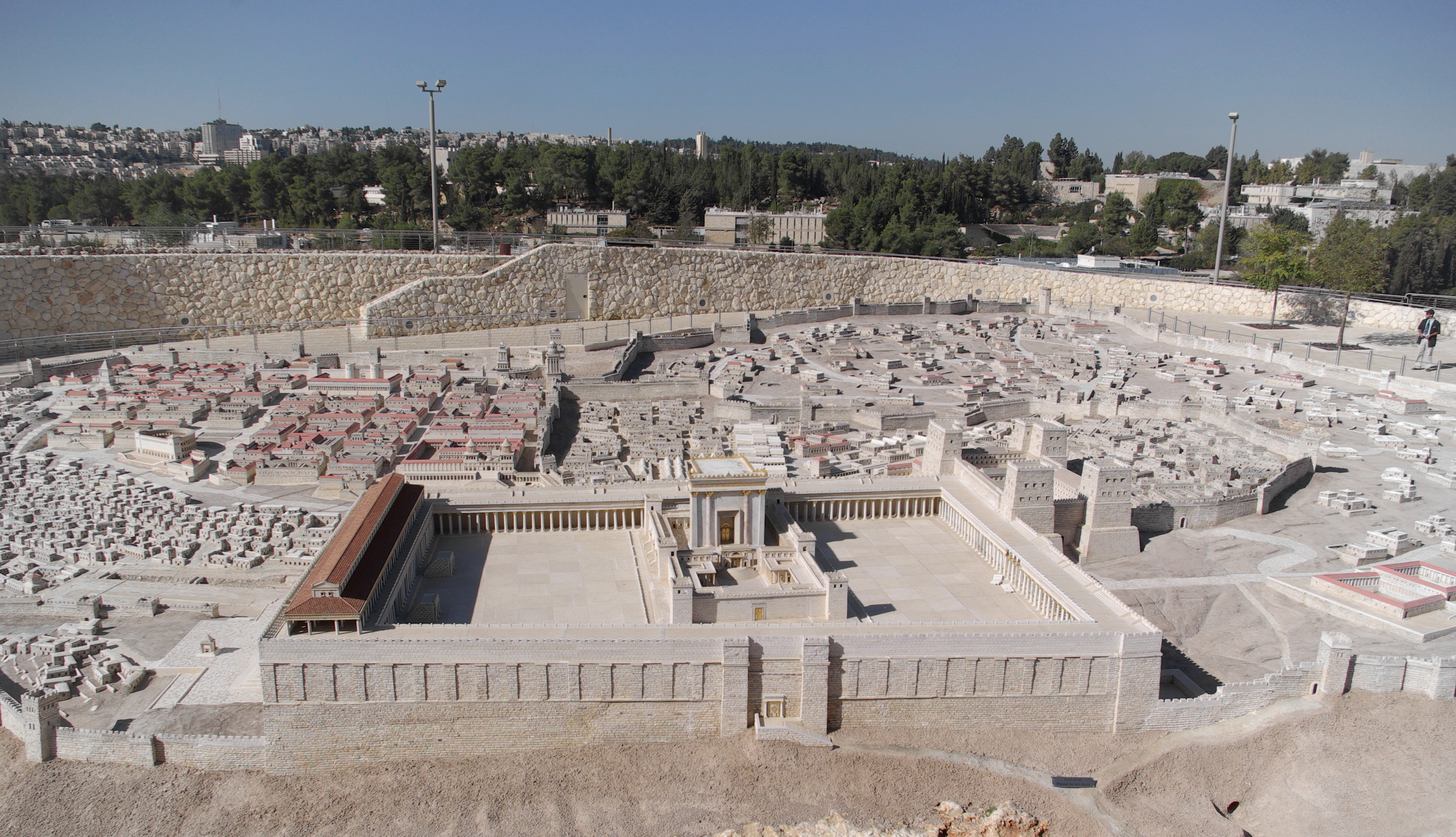 Source: Berthold Werner, Holyland Model of Jerusalem, public domain via Wikimedia Commons. Later Second Temple context, not an exact reconstruction of Zerubbabel’s temple.
Spiritual Fruit 🍇
- Let confession become patient obedience. Sechenias speaks of endurance where the community has sinned. Take one concrete promise of repentance, such as truthful financial records or faithful prayer, and keep it after the first emotion has faded. Hope needs a practiced response.
- Let grief precede correction. If another person’s sin makes you eager to act but not willing to pray, fast, mourn, or examine yourself, your zeal is unsafe.
- Refuse coercive holiness. Holy correction is ordered, truthful, repentant, ecclesial, and merciful. It does not use fear to force quick decisions.
- Protect the vulnerable during repentance. The wives and children in Ezra 10 warn us that the consequences of sin often fall on those with less power. Christian correction must attend to those harmed.
- Read every boundary through Christ. The Church is holy, but she is not ethnic. Christ gathers all nations into one Body and calls every people to repentance, baptism, Eucharistic communion, and life in the Spirit.
The account ends with sons born to the households it has named. Remain before Christ with those human lives in view, rather than hurrying to a verdict that settles your discomfort. Ask for a renewed heart, and for the courage to care for anyone harmed by your own decisions. Receive repentance as responsibility joined to the mercy of the true High Priest.
Teaching Notes
- Suggested timing: 8 minutes for opening guardrails, 8 minutes for context, 10 minutes for Movement 1, 8 minutes for Movement 2, 12 minutes for Movement 3, 8 minutes for Movement 4, 16 minutes for Movement 5, and 10 minutes for discussion and prayer.
- Where to linger: Linger over Ezra 10:2, Ezra 10:13-14, and Ezra 10:44. These verses hold the central interpretive issues: covenant breach, careful inquiry, and pain involving wives and children.
- Where to compress: The long list of names can be read in representative portions if time is short, but do not skip the fact that priests, Levites, singers, porters, and laymen are all implicated.
- Key phrases to say slowly: “We have broken covenant with our God.” “Yet now there is patience of hope.” “The work is more than enough for one day or for two.” “To search out the matter.” “And had begotten sons of them.”
- Pastoral warnings: Do not racialize the passage. Do not use it to support ethnic superiority, xenophobia, coercive ministry, public shaming, or weaponized divorce. Do not counsel modern marriage action from this chapter alone. Matthew 19:3-9 and 1 Corinthians 7:12-16 must be brought into the Christian application.
- Teaching aim: The class should leave with a sober understanding of old-covenant holiness, a clear rejection of abusive readings, and a deeper sense that Christ gathers a holy Church from all nations.
Grief, assembly, and covenant proposal (Ezra 10:1-5)
- Ask: What phrase in Sechenias’s confession defines the actual sin of the chapter?
- Emphasize: “We have broken covenant with our God” means covenant apostasy, not ethnic inferiority or biological impurity.
- Watch for: Any reading that turns Ezra 10 into racialized suspicion, ethnic superiority, xenophobia, or a simple Christian divorce rule.
- Connect: Christ gathers all nations into one Church, and in Him repentance means truthful return to God without contempt for persons.
Fasting, separation, summons, and urgency (Ezra 10:6-8)
- Ask: What does Ezra do between the public confession and the public summons?
- Emphasize: Fasting and mourning protect urgent correction from becoming mere control.
- Watch for: Using the three-day summons as permission for coercive, rushed, or fear-driven pastoral action.
- Connect: In the Church, correction must arise from repentance before God and be carried through proper ecclesial care.
Trembling assembly, public confession, ordered investigation, and named participation (Ezra 10:9-15)
- Ask: Why does the assembly say the work cannot be done in one or two days?
- Emphasize: Public confession must become ordered investigation with elders, judges, and appointed times.
- Watch for: Treating fear, public pressure, or a dramatic gathering as proof that pastoral correction has been completed.
- Connect: Galatians 6:1 teaches the Church to restore the fallen with truth, gentleness, self-watchfulness, and proper care.
Careful inquiry completed over time (Ezra 10:16-17)
- Ask: What does the phrase “to search out the matter” add to the chapter’s severity?
- Emphasize: Serious correction requires truthful inquiry over time, not rumor, panic, or instant judgment.
- Watch for: Calling impulsive action “zeal” when it has not been tested by prayer, counsel, facts, and mercy.
- Connect: Christ heals persons, not abstractions, and His Church must correct in ways that seek salvation rather than display power.
Names of those implicated and the pain involving wives and children (Ezra 10:18-44)
- Ask: Why does the list begin with priests and end by naming children?
- Emphasize: The chapter records male trespass, leadership accountability, and real pain involving women and children.
- Watch for: Weaponized-divorce readings, contempt for foreigners, erasure of the wives and children, or treating the list as cold data.
- Connect: Christ honors marriage, heals the nations, breaks down the dividing wall, and calls His Church to holy repentance with mercy.
Glossary
Children of the captivity: The returned exiles who had come back from Babylonian captivity and were rebuilding life around Jerusalem and the temple.
Covenant apostasy: Breaking faith with God in a way that leads away from worship, obedience, and exclusive loyalty to the Lord.
Esdras: Brenton’s form of Ezra.
Idolatrous assimilation: Joining the practices and loyalties of surrounding peoples in a way that turns the heart away from the Lord.
Jesus son of Josedec: Brenton’s form of Jeshua or Joshua son of Jehozadak, the high-priestly figure associated with the return.
Sechenias: Brenton’s form of Shecaniah, the son of Jehiel, who speaks the covenant proposal in Ezra 10:2-4.
Strange wives: Brenton’s phrase for wives from the peoples of the land in this old-covenant crisis. In context, the concern is covenant and worship, not racial biology.
Trespass-offering: A sacrifice connected with guilt or breach. Ezra 10:19 uses it to mark the men’s action as trespass.
Weaponized-divorce reading: A harmful misuse of Ezra 10 as if it directly commanded Christians to dissolve marriages apart from Christ’s teaching, apostolic instruction, pastoral care, and canonical discernment.
Sources
Embedded Scripture is from Brenton’s English Septuagint (LXX).
Primary sources
- Brenton, The Septuagint Version of the Old Testament, Ezra 10:1-44, used for the embedded Scripture quotations.
- Deuteronomy 7:1-6, especially the warning that covenant intermarriage would turn children away to serve other gods.
- Malachi 2:10-16, for covenant treachery and marriage seriousness.
- Matthew 19:3-9, for Christ’s teaching on marriage, divorce, creation, and hardness of heart.
- 1 Corinthians 7:12-16, for apostolic instruction about believers and unbelieving spouses.
- Galatians 6:1, for restoring the overtaken person in gentleness.
- 2 Corinthians 6:14-18, used with caution as a holiness and idolatry warning, not as a command to abandon existing marriages.
- Acts 10; Ephesians 2:11-22; Revelation 7:9-10, for the Church gathered from all nations in Christ.
Patristic sources
- St. Gregory the Theologian, Oration 37, section 6, on unequal laws for women and men.2
- St. Justin Martyr, Dialogue with Trypho, chapters 115-116, on Joshua’s vision and cleansing in Christ.3
- St. John Chrysostom, Homilies on First Corinthians, Homily 19, section 4, on existing mixed marriages.4
Coptic Orthodox and liturgical sources
- Coptic crowning and baptismal orders.5
- Coptic Katameros, Saturday of the fifth week of Great Lent.6
- Covenant Thursday and Theophany blessing-of-water orders, Ezekiel 36.7
Maps, images, and historical aids
- Bible Mapper Atlas, Jews Return from Exile: https://biblemapper.com/blog/index.php/2022/09/26/jews-return-from-exile/
- FreeBibleimages, Bible maps - Exile and Return: https://www.freebibleimages.org/illustrations/bm-maps-exile-return/
- Israel Museum, Model of Jerusalem in the Second Temple Period: https://www.imj.org.il/en/wings/shrine-book/model-jerusalem-second-temple-period
Secondary academic sources and reference aids
H. G. M. Williamson, Ezra, Nehemiah, Word Biblical Commentary 16. Standard further reading for historical and textual questions, not directly quoted in this guide.
Jacob M. Myers, Ezra, Nehemiah, Anchor Bible 14. Standard further reading for historical background, not directly quoted in this guide.
Footnotes
-
Septuagint, Esdras B 10:2, 10:11, and 10:15, https://sacred-texts.com/bib/sep/es2010.htm; 1 Thessalonians 1:3, https://biblehub.com/text/1_thessalonians/1-3.htm; Thayer, “ὑπομονή,” sense 1, https://biblehub.com/greek/5281.htm; comparative English readings of Ezra 10:15, https://biblehub.com/ezra/10-15.htm. ↩ ↩2 ↩3
-
St. Gregory the Theologian (Gregory of Nazianzus), Oration 37, section 6, https://www.newadvent.org/fathers/310237.htm. ↩ ↩2
-
St. Justin Martyr, Dialogue with Trypho, chapters 115-116; quotation from chapter 116, https://www.newadvent.org/fathers/01288.htm. ↩ ↩2
-
St. John Chrysostom, Homilies on First Corinthians, Homily 19, section 4, on 1 Corinthians 7:12-14, https://www.newadvent.org/fathers/220119.htm. ↩ ↩2
-
Coptic Holy Matrimony, crowning Gospel, Matthew 19:1-6; Holy Baptism, mother’s absolution after a female child’s birth, Pauline reading, 1 Corinthians 7:12-14. ↩ ↩2
-
Coptic Katameros, Saturday of the fifth week of Great Lent, Pauline reading, Galatians 5:16-6:2. Date-resolved readings from CopticChurch.net. ↩ ↩2
-
Coptic blessing-of-water orders, Covenant Thursday, Ezekiel 36:25-29, and Theophany, Ezekiel 36:24-29. The Covenant Thursday appointment is also witnessed in the St. Mary Ottawa Holy Pascha service book. ↩ ↩2