


This narration is from a previous version of the study and may include a combined recording of multiple chapters.
Ezra is a book about return, but not return as nostalgia. The people come back from Babylon to Judah, but the deeper question is whether they will come back to God. The book moves from Cyrus’s decree to the restored altar, from temple rebuilding to Ezra’s mission as priest and scribe, and finally to communal confession and painful correction. A standing temple is an immense gift, but the book’s unresolved ending reveals the repentance still needed within its people.
For Orthodox readers, Ezra is especially important because it refuses to separate liturgy from life. The altar is restored before the temple is complete. The temple is completed through prophetic encouragement. The Law is not merely studied, but sought, practiced, and taught. The final chapters are severe because the book knows that worship without repentance becomes fragile.
Why This Book Matters
Ezra teaches servants how God rebuilds a wounded people. He does not only change their circumstances. He stirs rulers, remembers promises, gathers names, restores holy vessels, renews sacrifice, sends prophets, raises a teacher, calls for fasting, and exposes hidden compromise. The book is therefore not simply ancient post-exilic history. It is a spiritual map for any parish, family, or servant who wants visible renewal without losing the hard work of inner return.
Return in Ezra reaches beyond geography. The people come back to Jerusalem, then learn again to worship, hear the Law, confess, and obey. The Church receives this hope through Christ, the true Temple and High Priest, who gathers the scattered children of God into one.
Historical and Scriptural Context
Ezra follows the destruction of Jerusalem and the exile in Babylon. The prophets had warned that covenant unfaithfulness would end in judgment, yet they also promised mercy after exile. Jeremiah spoke of exile and return, and Isaiah named Cyrus as the Lord’s instrument. Second Chronicles closes by pointing forward to the decree that opens Ezra. The book therefore begins with God keeping His word after judgment.
Historically, the return happens under Persian rule. Cyrus conquers Babylon and permits captive peoples to return and restore local cults and temples. The Cyrus Cylinder, preserved by the British Museum, gives a wider ancient Near Eastern witness to Cyrus’s policy of temple restoration, though it is not a biblical text and should not be made to say more than it says. Ezra reads the event theologically: the Lord stirred the spirit of Cyrus because the word spoken by Jeremiah had to be fulfilled.
Ezra also belongs with Nehemiah. In many traditions Ezra-Nehemiah was transmitted as one connected work. Ezra centers the first return, temple rebuilding, and Ezra’s priestly-scribal mission. Nehemiah will center the rebuilding of Jerusalem’s walls and further covenant renewal. Read together, they show that the people need temple, city, Scripture, worship, and ordered communal life. None of these can replace the others.
Textual and Canonical Notes
The Greek naming requires a simple distinction. “Esdras A” is the book studied here as 1 Esdras. “Esdras B,” also called 2 Esdras in the Greek tradition, comprises Ezra and Nehemiah together: chapters 1-10 correspond to Ezra and chapters 11-23 to Nehemiah. Brenton translates this Greek Ezra-Nehemiah text. The two accounts tell much of the same restoration history, but 1 Esdras includes the court contest about truth, arranges some episodes differently, and ends with Ezra’s public reading of the Law. Different traditions reuse the Esdras numbers, so the name alone is not enough to identify a book.
Brenton’s names often retain Greek forms: Esdras is Ezra; Zorobabel is Zerubbabel; Jesus son of Josedec is Joshua, also called Jeshua, the high priest; Aggæus is Haggai; Zacharias is Zechariah; and Arthasastha is Artaxerxes. Jesus here is the historical high priest, not our Lord. The shared Greek name helps explain later Christian typology without confusing the two persons.
The underlying Hebrew-Aramaic Ezra preserves imperial correspondence in Aramaic at 4:8-6:18 and 7:12-26. The empire’s decisions are recorded in the empire’s administrative language. Brenton’s displayed text is their Greek translation, not a page that suddenly switches into Aramaic. This distinction helps us hear the letters as historical acts while remaining attentive to the Greek wording before us.
The Book’s Course
The eight studies follow the book from the first return to a still-unresolved covenant crisis.
First, Ezra 1-2 shows the Lord stirring Cyrus and gathering the first return. The decree matters, but the register matters too. God restores a people by name. The vessels return to Jerusalem because worship is not being reinvented. Holy things are being restored to holy use.
Second, Ezra 3 shows the altar rebuilt before the temple is complete. The returned people begin with worship amid ruins. This is one of the book’s strongest spiritual lessons. A community does not wait for everything to be settled before it offers sacrifice, prayer, and thanksgiving.
Third, Ezra 4 shows opposition. The work is resisted by false partnership, accusation, political letters, and delay. Restoration does not mean an easy path. The people must learn discernment without bitterness and perseverance without panic.
Fourth, Ezra 5-6 brings Haggai and Zechariah to the center. Prophecy awakens the builders, the eye of God is upon the elders, Darius confirms the former decree, and the temple is completed. The chapter ends with dedication and Passover, so the book ties building to worship and worship to joy.
Fifth, Ezra 7 introduces Ezra himself. He is a priest and scribe who set his heart to seek the Law of the Lord, do it, and teach statutes and judgments in Israel. This order is a servant’s rule of life: seek, do, teach.
Sixth, Ezra 8 shows the journey under fasting and trust. Ezra refuses to ask for a military escort after confessing that God’s hand is upon those who seek Him. The holy vessels are weighed, guarded, carried, and weighed again. Restoration includes accountable stewardship.
Seventh, Ezra 9 shows intercession and corporate confession. Ezra tears his garments, falls in shame, and prays as if the people’s sin were his own. The chapter teaches servants how to stand before God with the sins of the community without excusing the sin or despising the people.
Eighth, Ezra 10 records a painful old-covenant correction, involving wives and children, and closes without a settled account of the community’s healing. It is not a Christian divorce rule or permission for ethnic contempt. The recurrence of the marriage crisis in Nehemiah 13:23-27 prevents a triumphant reading of its ending. God’s promise of a new heart in Ezekiel 36:26-27 and of His Law written within in Jeremiah 31:33 (LXX 38:33) reaches toward the inward restoration the book leaves us needing.
Major Theological Themes
God keeps His word after judgment
Ezra begins by tying Cyrus’s decree to Jeremiah’s prophecy. Judgment and mercy both stand under God’s word. The repeated witness to God’s hand, at 7:6, 7:9, 7:28, 8:18, 8:22, and 8:31, follows the teacher’s commission, the journey, the gathering of helpers, and deliverance on the road. Ezra acts, chooses, fasts, and guards gifts within that providence. God’s care strengthens responsible obedience rather than replacing it.
Worship is the first work of restoration
The people rebuild the altar before the temple structure is complete. They keep the feasts while the ruins still surround them. This is not liturgical romanticism. It is the biblical conviction that life is rebuilt from worship outward. The Church does not wait for perfect circumstances before offering the Eucharist, praying the hours, fasting, singing, and returning to God.
The temple points beyond itself
Ezra rejoices in the second temple, but Christians read temple restoration in light of Christ. In John 2, the Lord speaks of the temple of His Body. In Ephesians 2, the Church is built as a holy temple in the Lord. In 1 Peter 2, the faithful are living stones and a holy priesthood. Ezra therefore points forward without being erased. The stone temple matters in its place, and its deepest fulfillment is found in Christ and His Body.
Scripture forms servants before servants teach others
Ezra 7:10 is the book’s clearest servant-formation verse: Ezra prepared his heart to seek the Law of the Lord, to do it, and to teach it. The order matters. A servant who teaches without seeking becomes shallow. A servant who seeks without doing becomes theatrical. A servant who does but never teaches may hide the gift God gave for the Church. Ezra holds the three together.
Repentance is communal as well as personal
Ezra 9 does not allow a purely private view of sin. Ezra identifies with the people in confession. He does not stand above them as a superior man. This matters for priests, servants, parents, ministry leaders, and deacons. The sins of the community are not solved by contempt. They are carried before God in grief, truth, prayer, and correction.
Holy boundaries must be taught through Christ
The final chapters involve covenant boundaries around marriage and worship. They must be interpreted with care. In the old covenant, Israel’s boundary protected worship, lineage, and covenant identity before the fullness of Christ. In the Church, the boundary is not ethnicity. The Church is gathered from all nations into Christ. The pastoral question becomes faithfulness, repentance, sacramental life, and holiness, never racial suspicion or contempt for outsiders.
Gems from the Fathers 💎: Scripture Preserved and the True Temple
St. Irenaeus gives a strong ancient witness to Ezra as restorer of Scripture. In Against Heresies III.21.2, while defending God’s care for the scriptural testimony and its Greek translation, he remembers God inspiring Esdras under Artaxerxes “to recast all the words of the former prophets, and to re-establish with the people the Mosaic legislation.”1 This is Irenaeus’s account of divine preservation, not a modern reconstruction of each step in the formation of the biblical books. For the Christian reader, its force is practical: the Scriptures we receive call for attention and obedience, not merely possession.
St. John Chrysostom presses that demand in Homily 8 on Hebrews, section 9. Recounting God’s care for Scripture through Moses, the prophets, Ezra, the Greek translators, Christ, and the apostles, he says, “Again, He inspired another admirable man to publish them, Ezra I mean, and caused them to be put together from the remains.”2 He remembers Ezra while rebuking indifference to the word. The restoration of books reaches its purpose when they form a listening and faithful people.
In Homily 23 on John, section 2, Chrysostom discusses the rebuilt temple and cites Ezra 6:15 beside the dialogue about its construction. In section 3 he makes the greater question explicit: Christ speaks of His own flesh, and His Resurrection reveals His power over death.3 The house completed in Ezra is real and precious. Its Christian fulfillment is the Lord who freely lays down His life and raises the temple of His Body.
The Church’s Voice in Worship ⛪
Ezra is not read in the Coptic lectionary. Related readings place its hope within the Church’s life. Daniel 9:4-19 belongs to the Prayers of the Prophets in Bright Saturday’s Midnight Praises; its shared confession helps us receive Ezra’s prayer as repentance with the people, not accusation from above.4
John 2:12-25 is read on Jonah’s Feast and on Wednesday of the first week of the Holy Fifty Days. The temple’s cleansing and Christ’s Resurrection stand together, turning our eyes from repaired stones toward communion with the risen Lord. Hebrews 13:7-16, read on Friday of the fourth week of Great Lent, joins remembered teachers, sacrificial praise, and doing good. Ephesians 2:1-22, read at the Entrance of the Holy Family into Egypt, proclaims a household reconciled in Christ from those once far off.5 Holy worship bears fruit in mercy and a people built together in Him.
Iconography and Visual Teaching 🖼️
The map locates Judah within the Persian Empire. The cylinder supplies ancient royal context; the reading scene and priestly chart recall Scripture heard publicly and a teacher rooted in inherited service. These are distinct kinds of visual evidence, not interchangeable authorities.
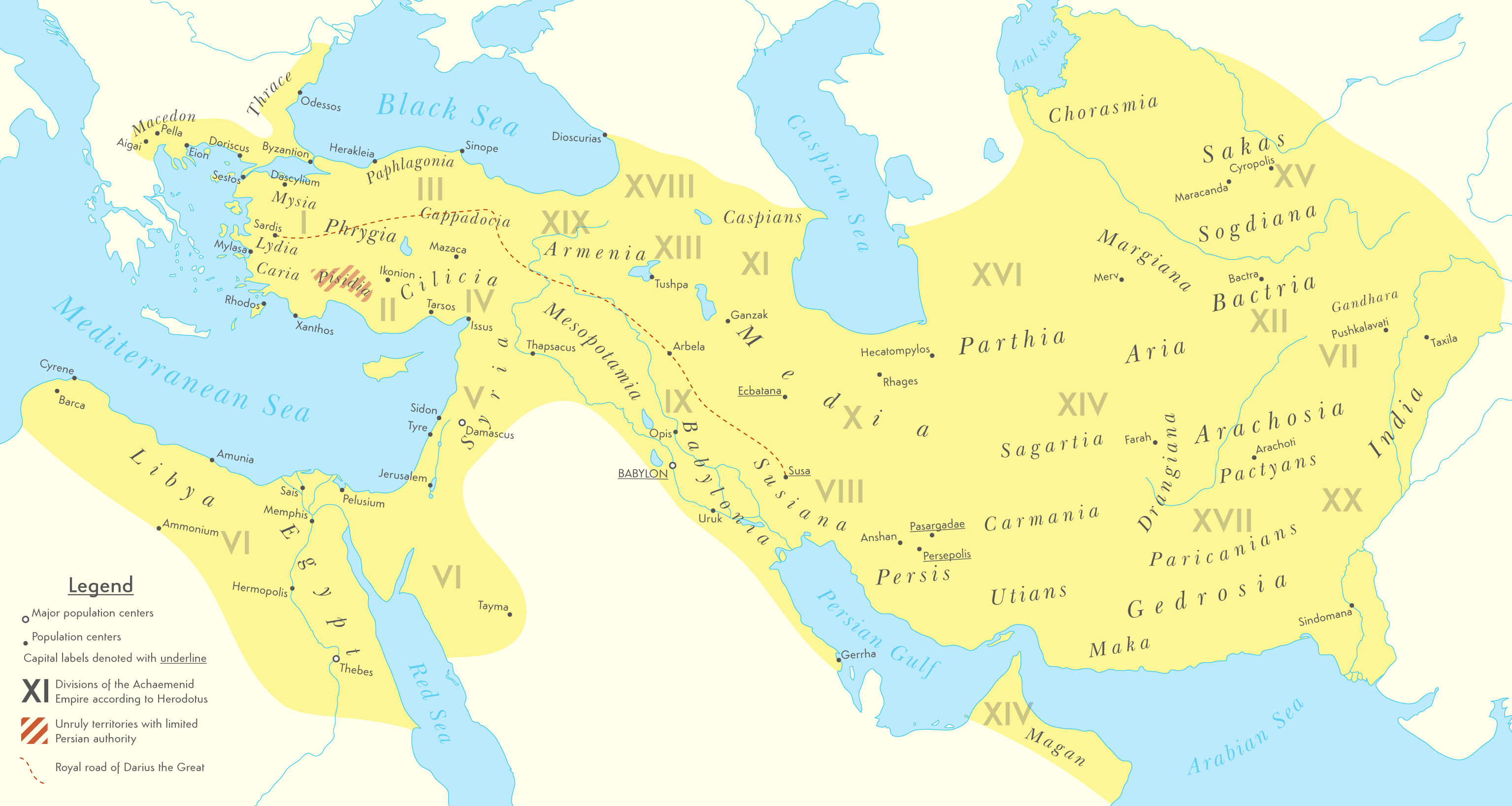 Source: Cattette, Achaemenid Empire 500 BCE, CC BY 4.0 via Wikimedia Commons.
This map gives broad Persian-period context. It helps readers see that Judah’s restoration happened inside a vast imperial world, while the book insists that the Lord, not empire, governs the return.
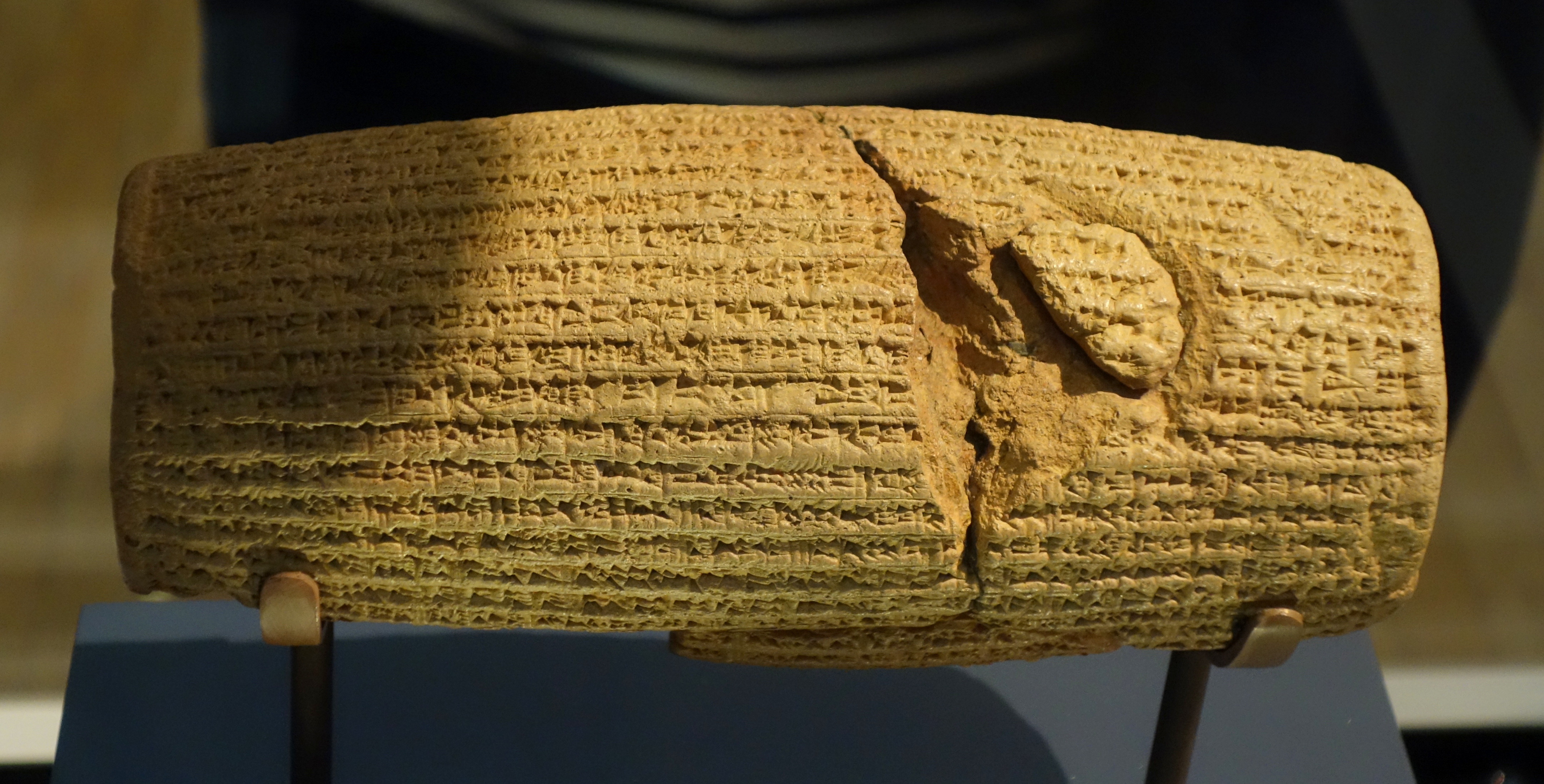 Source: Daderot photograph of the Cyrus Cylinder, British Museum, CC0 via Wikimedia Commons.
The Cyrus Cylinder records Persian royal restoration language. It does not reproduce or independently authenticate the detailed decree in Ezra 1.
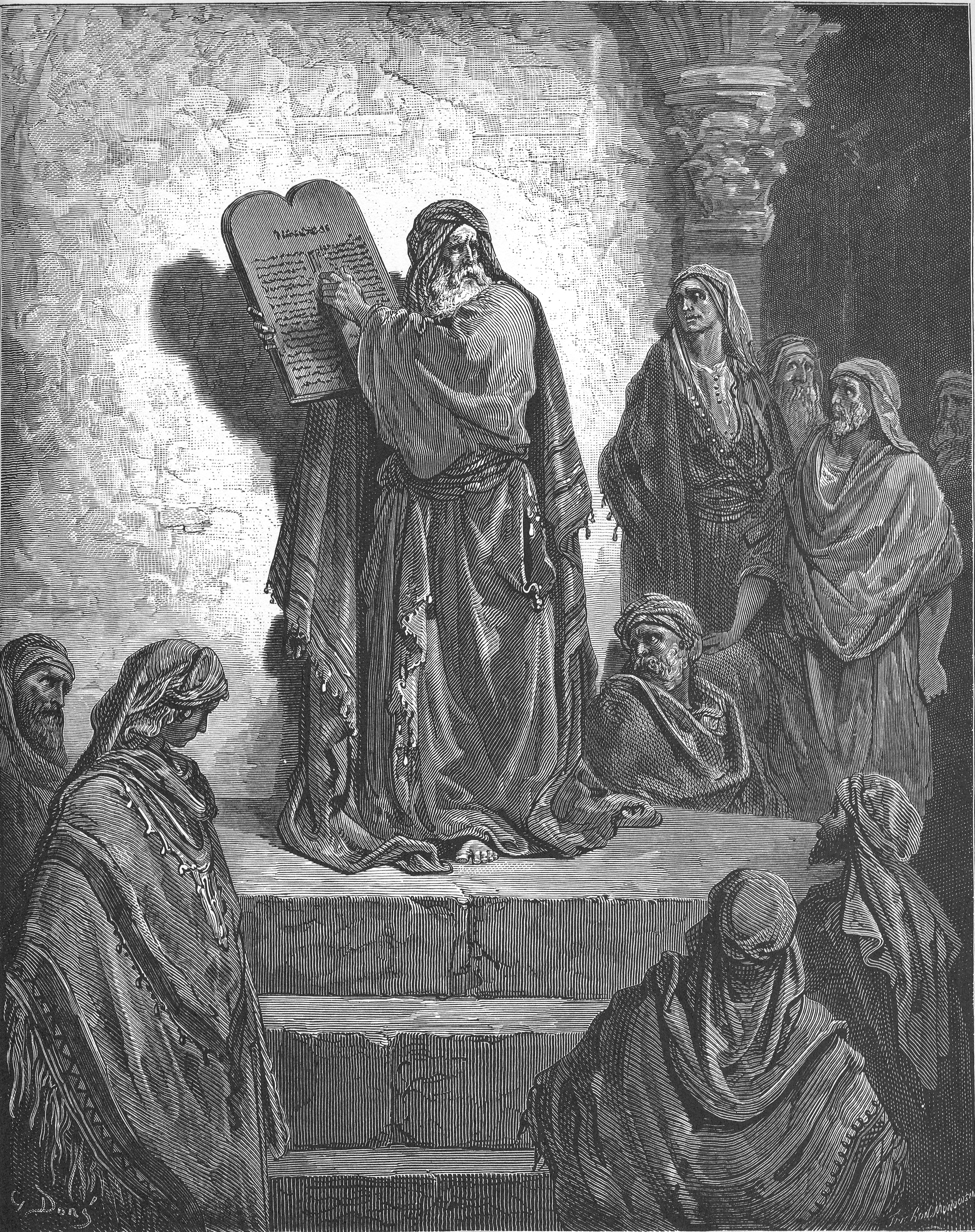 Source: Gustave Doré, Ezra Reads the Law to the People, public domain via Wikimedia Commons. This depicts Nehemiah 8:1-12, not Ezra 7 itself.
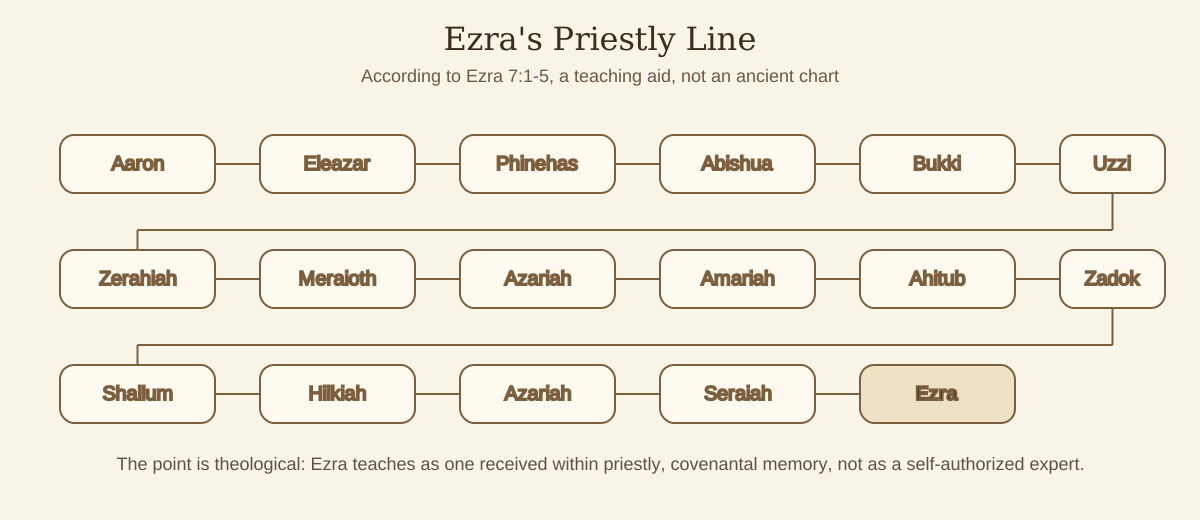 Source: Modern generated schematic of the priestly genealogy in Ezra 7:1-5, not an ancient artifact.
The visual thread for the series is therefore: the Lord moves history, restores worship, remembers names, sends Scripture-formed servants, exposes covenant compromise, receives confession, and prepares His people for the fuller restoration in Christ.
Spiritual Fruit 🍇
First, begin restoration with worship. Do not wait until the whole life is organized before you pray, repent, return to the liturgy, and stand before God. Ezra 3 teaches that the altar comes before the completed building.
Second, let Scripture form you before you teach it. Ezra 7:10 is a rule for every servant: seek, do, teach. If any one of those is missing, the ministry becomes distorted.
Third, carry communal sin without contempt. Ezra 9 teaches intercession that identifies with the people. The servant neither excuses sin nor despises sinners. He grieves before God and asks for mercy.
Fourth, seek the new heart rather than a victory over someone else. Ezra’s severe ending exposes how little an outward correction can guarantee. Bring your own repeated sin to confession, ask for the grace to obey, and refuse to use another family’s wound to display your righteousness. Christ’s holiness heals people rather than feeding our contempt.
Fifth, remember that God restores by name. The registers in Ezra can feel dry, but they witness to divine memory. God does not restore abstractions. He restores people, families, priests, singers, gatekeepers, servants, and vessels set apart for holy use.
Teaching Notes
Why This Book Matters
- Ask: What kind of return is easy for us, and what kind of return do we resist?
- Emphasize: Ezra is about restored worship and restored obedience, not only a rebuilt institution.
- Watch for: Treating the book as a political restoration story instead of a spiritual restoration story.
- Connect: The parish is renewed when altar, Scripture, repentance, and communal holiness belong together.
Historical and Scriptural Context
Ask: Why does it matter that Scripture remembers names, vessels, decrees, and dates?
Emphasize: Textual complexity should lead to careful teaching, not anxiety or speculation.
Watch for: Overloading the class with Esdras technicalities before they understand the book’s spiritual movement.
Connect: The Church preserves Scripture because God restores people through memory, not amnesia.
Best use: Adult Bible study, servant preparation, or a parish post-exilic series paired with Nehemiah and Esther.
Tone: Hopeful but sober. Ezra is not triumphalist. It is a book of mercy after judgment, worship amid ruins, and repentance after return.
Where to linger: Ezra 3, Ezra 7:10, Ezra 9, and Ezra 10. Follow the connection between worship, lived Scripture, confession, and the need for a new heart.
Show: Use the map and cylinder as historical context, not as proof of every detail of the decree. The Doré image depicts Nehemiah 8, not Ezra 7; the priestly chart is a modern schematic, not an Orthodox icon.
Where to be careful: Do not turn Ezra 10 into a simplistic contemporary marriage rule. Do not racialize the foreign-marriage issue. Do not use the book to praise political power uncritically because Cyrus is God’s instrument.
Discussion sequence: Ask what God restores first, what opposition looks like, what kind of teacher Ezra is, and why return still requires repentance.
Glossary
- Achaemenid Empire: The Persian imperial dynasty under which Cyrus and later Persian kings ruled. Ezra’s return happens inside this political world.
- Cyrus: The Persian king whose decree permits the return and temple rebuilding. Ezra presents him as an instrument stirred by the Lord.
- Esdras: Greek form of Ezra used in Septuagintal traditions and Brenton’s translation.
- Exile: The displacement of Judah after Babylon destroyed Jerusalem. In Ezra, exile is both historical judgment and spiritual wound.
- Return: The movement back to Judah and Jerusalem, but also the deeper return to worship, Scripture, repentance, and covenant faithfulness.
- Second Temple: The rebuilt temple completed in Ezra 6. It stands as the restored center of worship and points forward to Christ the true Temple.
- Scribe: In Ezra’s case, not a mere copyist, but a servant formed by Scripture who seeks, practices, and teaches the Law.
- Zorobabel: Brenton’s form of Zerubbabel, the Davidic-line leader associated with the first return and temple rebuilding.
Translation and Source Notes
Embedded Scripture is from Brenton’s English Septuagint (LXX). The Greek Ezra-Nehemiah text and the distinct 1 Esdras witness differ in some names, numbers, wording, and arrangement. The passage studies describe the displayed wording and name relevant differences beside it. Psalm references give the familiar NKJV number with the LXX number in parentheses.
Sources
Primary sources
- Brenton, The Septuagint Version of the Old Testament, Ezra, used for embedded Scripture.
- 2 Chronicles 36:22-23; Jeremiah 25:11-12; Jeremiah 29:10-14; Isaiah 44:24-45:13; Daniel 9; John 2:19-21; Ephesians 2:19-22; 1 Peter 2:4-5.
- St. Irenaeus, Against Heresies III.21.2, text.
- St. John Chrysostom, Homily 8 on Hebrews, section 9, text; Homily 23 on John, sections 2-3, text.
Coptic Orthodox and liturgical sources
- Bright Saturday, Prayers of the Prophets: the Prayer of Daniel, Daniel 9:4-19.
- Coptic Church readings for Jonah’s Feast, Wednesday of the first week of the Holy Fifty Days, Friday of the fourth week of Great Lent, and the Entrance of the Holy Family into Egypt, cited below.
Maps, images, and historical aids
Footnotes
-
St. Irenaeus, Against Heresies, Book III, chapter 21, section 2, https://www.newadvent.org/fathers/0103321.htm. ↩
-
St. John Chrysostom, Homily 8 on Hebrews, section 9, https://www.newadvent.org/fathers/240208.htm. ↩
-
St. John Chrysostom, Homily 23 on John, sections 2-3, https://www.newadvent.org/fathers/240123.htm. ↩
-
Bright Saturday service order, Midnight Praises, Prayers of the Prophets, Prayer of Daniel, Daniel 9:4-19. ↩