


This narration is from a previous version of the study and may include a combined recording of multiple chapters.
Ezra 7 is the hinge of the book. The temple has been completed, but the people still need the living ministry of Scripture. Ezra arrives not merely as an educated man, but as a priest and scribe whose heart has been ordered before God: he seeks the Law, does it, and teaches it.
The chapter holds together two truths that servants often separate. God’s good hand is upon Ezra, and Ezra has prepared his heart. Grace does not cancel discipline. Discipline does not replace grace. The faithful teacher is formed by both.
The parallel 1 Esdras 8:1-27 tells the same commission with different details. Here Ezra 7:22 specifies oil and salt; 1 Esdras 8:20 speaks more generally of other abundant supplies. Each text retains its own form of the royal provision.
The Persian decree gives Ezra permission, provision, authority, and responsibility. Yet Ezra’s final word is not admiration for imperial favor. It is doxology. He blesses the Lord God of the fathers, receives courage under mercy, and gathers leaders for the next stage of return.
Historical and Scriptural Context
Ezra 7 takes place after the completion of the second temple in Ezra 6. The altar has been restored, the temple has been rebuilt, the dedication has been celebrated, and Passover has been kept. Yet the book does not end there. A restored building without restored teaching would leave the people vulnerable. The second half of Ezra introduces Ezra himself, whose ministry prepares for the public reading and interpretation of the Law in Nehemiah 8.
Historically, the scene is under Persian authority in the reign of Arthasastha, the Brenton form of Artaxerxes. The decree recognizes the Jewish people, priests, Levites, temple service, offerings, vessels, treasuries beyond the river, and civil administration according to the Law. The Persian king speaks in imperial categories, but Ezra reads the chapter theologically: the good hand of God is at work, and the Lord has put it into the king’s heart to glorify His house.
Scripturally, Ezra 7 gathers several biblical threads. Malachi 2:7 says that the priest’s lips should guard knowledge and that people should seek the Law from his mouth. Deuteronomy 6 commands Israel to love the Lord and teach His words diligently. Deuteronomy 17:18-20 even commands the king to write and read the Law so his heart will not be lifted up. Psalm 119 (LXX Psalm 118) sings of delight in the commandments. In the New Testament, Christ opens the Scriptures in Luke 24:27 and 24:45, and the trained scribe of Matthew 13:52 brings out treasures new and old. Ezra’s ministry prepares the Church to see Scripture as instruction, worship, obedience, and encounter with God.
Geographical Significance ⛰️
The movement is from Babylon to Jerusalem. Ezra begins the going up on the first day of the first month and arrives on the first day of the fifth month. The journey itself is treated briefly here, because Ezra 8 will unfold the road, fasting, entrusted vessels, and safe arrival in detail. Still, Ezra 7 already frames the geography spiritually: the hand of God is upon the one who goes up from exile to the city of worship.
The phrase “beyond the river” reflects Persian administrative geography west of the Euphrates. Judah and Jerusalem are small within the empire, but the decree reaches imperial treasuries and provincial officials. This contrast matters. Ezra is not protected by the size of Jerusalem. He is strengthened by the good hand of God.
The distance from Babylon to Jerusalem gives weight to Ezra’s return. Reaching the city is only part of it; the people must also return to the Law, worship, and obedience of God.
The Characters 👥
- The Lord God of Israel, the God of heaven: The true giver of the Law, the one whose good hand is upon Ezra, and the one who puts glory for the temple into the king’s heart.
- Esdras, or Ezra: A priest descended from Aaron and a ready scribe in the Law of Moses. His heart is determined to seek, do, and teach the ordinances and judgments in Israel.
- Arthasastha, or Artaxerxes: The Persian king who issues the decree. He grants permission, provision, tax protection, and administrative authority, while Ezra interprets the favor as God’s mercy.
- The seven councillors and the rulers of the king: Imperial authorities who support the decree and appear in Ezra’s closing thanksgiving as those before whom God has given him favor.
- The priests, Levites, singers, door-keepers, Nathinim, and ministers of the house of God: The worshipping order attached to the temple. Their freedom from tribute protects temple service.
- The people beyond the river: Those under Ezra’s appointed judges and scribes. Some know the Law and must be judged by it; others do not know and must be taught.
Ezra’s lineage, skill, the good hand of God, and seek, do, teach (Ezra 7:1-10)
1 Now after these things, in the reign of Arthasastha king of the Persians, came up Esdras the son of Saraias, the son of Azarias, the son of Chelcias, 2 the son of Selum, the son of Sadduc, the son of Achitob, 3 the son of Samarias, the son of Esria, the son of Mareoth, 4 the son of Zaraia, the son of Ozias, the son of Bokki, 5 the son of Abisue, the son of Phinees, the son of Eleazar, the son of Aaron the first priest. 6 This Esdras went up out of Babylon; and he was a ready scribe in the law of Moses, which the Lord God of Israel gave: and the king gave him leave, for the hand of the Lord his God was upon him in all things which he sought. 7 And some of the children of Israel went up, and some of the priests, and of the Levites, and the singers, and the door-keepers, and the Nathinim, to Jerusalem, in the seventh year of Arthasastha the king. 8 And they came to Jerusalem in the fifth month, this was the seventh year of the king. 9 For in the first day of the first month he began the going up from Babylon, and in the first day of the fifth month they came to Jerusalem, for the good hand of his God was upon him. 10 For Esdras had determined in his heart to seek the law, and to do and teach the ordinances and judgments in Israel.
Light from the Word 🕯️
The chapter begins with genealogy because Ezra’s ministry is not self-invented. He is traced through priestly fathers to Aaron the first priest. The line matters because the teacher who now appears is not merely a literate administrator. He belongs to the priestly service of Israel, and his teaching is tied to worship.
The line includes Phinees, the familiar Phinehas, who received the promise of an enduring priesthood in Numbers 25:10-13. Ezra’s inherited priestly zeal is exercised through studying, obeying, and teaching, and later through the tears of Ezra 9.
Ezra is called a ready scribe in the Law of Moses, which the Lord God of Israel gave. The text does not treat the Law as Ezra’s possession or achievement. It is God’s gift. Ezra’s skill is real, but it is skill before a received word. This is why he can teach without becoming the center.
The phrase “ready scribe” recalls the ready writer of Psalm 45:1 (LXX Psalm 44:1). Christ’s trained scribe brings out treasures new and old in Matthew 13:52; preparation becomes fruitful when it helps others receive God’s gifts rather than admire the teacher.
The repeated phrase is the good hand of God. The king gives Ezra leave because God’s hand is upon him. The journey succeeds because God’s good hand is upon him. Ezra’s preparation and God’s mercy are not rivals. The servant studies, travels, gathers, and teaches, yet he confesses that the decisive strength comes from God.
The first day of the fifth month is Ezra’s arrival date. The temple had been burned in that same month, though on a different day (2 Kings 25:8-9). The calendar now holds return where it once held destruction. Zechariah 8:19 promises that the fast of the fifth month will become joy and gladness; Ezra’s arrival can be heard beside that promise without claiming that this date alone fulfills it.
Verse 10 gives one of the clearest rules of servant formation in the Old Testament. Ezra determined in his heart to seek the Law, to do it, and to teach it. The order must not be rearranged. Seeking without doing becomes religious curiosity. Doing without seeking becomes fragile activism. Teaching without seeking and doing becomes performance. Ezra’s heart is prepared in the order of communion, obedience, and instruction.
Christ joins doing and teaching in Matthew 5:19. Acts 1:1 likewise describes what Jesus began to do and teach. The Lord speaks with an obedience that is perfectly His own; His servants must learn to let the commandment judge their conduct before they explain it to others. A teacher who apologizes for his impatience before teaching forgiveness has already begun to restore the right order.
Apostolic reading
Ezra 7:10 is therefore not only a personal discipline. It is the pattern by which Scripture itself is guarded and handed on. The servant who seeks, does, and teaches becomes, in the Church’s memory, a living vessel through whom the word survives judgment and exile.
The apostolic pattern confirms Ezra’s order. St James commands believers to be doers of the word and not hearers only. St Paul tells Timothy to continue in the Scriptures, which are able to make one wise for salvation and equip the man of God for every good work. Christ Himself opens the Scriptures to the disciples in Luke 24. Ezra seeks, does, and teaches because the word of God is not information outside the life. It is light for repentance, obedience, and communion.
Gems from the Fathers 💎: Scripture restored for a living people
St. Irenaeus remembers Ezra within his defense of the faithful transmission of Scripture. He speaks of God who “inspired Esdras the priest, of the tribe of Levi, to recast all the words of the former prophets, and to re-establish with the people the Mosaic legislation.”1 This ancient witness connects the recovery of the written word with the recovery of a people able to live by it. It is a reception of Ezra’s vocation, not a verse-by-verse explanation of this genealogy.
Spiritual application
Every servant should sit under Ezra 7:10 as under judgment and mercy. Do I seek before I speak? Do I do what I explain? Do I teach as one who has been wounded and healed by the word, or as one who has merely gathered material?
This movement also comforts the servant who feels inadequate. Ezra is skilled, but the text does not say skill saved the mission. It says the good hand of God was upon him. A servant should study seriously, prepare carefully, and live obediently, but should never confuse preparation with self-sufficiency.
A concrete practice: before teaching, read the passage once for understanding, once for repentance, and once for the people you will serve. Then ask what must be obeyed before it is explained. This is Ezra’s order in a practical form.
Artaxerxes’ decree and support for temple service (Ezra 7:11-20)
11 And this is the copy of the order which Arthasastha gave to Esdras the priest, the scribe of the book of the words of the commandments of the Lord, and of his ordinances to Israel.
12 Arthasastha, king of kings, to Esdras, the scribe of the law of the Lord God of heaven, Let the order and the answer be accomplished. 13 A decree is made by me, that every one who is willing in my kingdom of the people of Israel, and of the priests and Levites, to go to Jerusalem, be permitted to go with thee. 14 One has been sent from the king and the seven councillors, to visit Judea and Jerusalem, according to the law of their God that is in thine hand. 15 And for the house of the Lord there have been sent silver and gold, which the king and the councillors have freely given to the God of Israel, who dwells in Jerusalem. 16 And all the silver and gold, whatsoever thou shalt find in all the land of Babylon, with the freewill-offering of the people, and the priests that offer freely for the house of God which is in Jerusalem. 17 And as for every one that arrives there, speedily order him by this letter to bring calves, rams, lambs, and their meat-offerings, and their drink-offerings; and thou shalt offer them on the altar of the house of your God which is in Jerusalem. 18 And whatever it shall seem good to thee and to thy brethren to do with the rest of the silver and the gold, do as it is pleasing to your God. 19 And deliver the vessels that are given thee for the service of the house of God, before God in Jerusalem. 20 And as to the rest of the need of the house of thy God, thou shalt give from the king’s treasure-houses,
Light from the Word 🕯️
The decree names Ezra twice in priestly and scriptural terms: priest, scribe, and scribe of the Law of the Lord God of heaven. Even the royal order recognizes that Ezra’s authority is tied to the word and the worship of God. He is not sent as a free-standing reformer. He is sent with the Law in his hand.
The decree permits willing Israelites, priests, and Levites to go to Jerusalem. The return is not coerced. It is opened. This matters because Ezra’s ministry is tied to the stirring of willing hearts, not only to administrative force.
The heart of this section is temple service. Silver and gold are given for the house of the Lord. Freewill offerings are gathered. Sacrificial animals, meat-offerings, and drink-offerings are provided for the altar. Vessels are delivered before God in Jerusalem. Even the king’s treasure-houses are placed at the service of the house of God.
This support should not be romanticized as pure Persian piety. The decree serves imperial interests too. Yet Ezra’s final thanksgiving will reveal the deeper meaning: God can put into a king’s heart what serves the glory of His house. The visible channel is royal. The hidden mercy is divine.
The decree at Ezra 7:12-26 preserves an Aramaic document, now presented here through Brenton’s Greek-based English. Aramaic was a language of imperial administration, so the king’s own order is carried inside Israel’s Scripture. Artaxerxes calls himself “king of kings,” a claim of earthly supremacy. Revelation 19:16 and 1 Timothy 6:15 reserve ultimate sovereignty to the Lord. The king can furnish worship; he cannot become its object.
Apostolic reading
The decree also anticipates the Church’s reading of all authority under God. The apostolic witness teaches reverence for order without confusing earthly rulers with the Kingdom. Deuteronomy 17 commands even Israel’s king to be under the Law, reading it all the days of his life so his heart will not be lifted above his brethren. Ezra 7 is not that law fulfilled by Artaxerxes, but it shows the same principle from another angle: authority is healthiest when it serves what God has commanded.
Spiritual application
This movement asks whether our resources serve worship. Silver, gold, offerings, animals, vessels, and treasuries are not treated as neutral. They are directed toward the altar and the house of God. The Christian does not bring calves and rams to the Eucharist, but the question remains: what do I place at the service of God?
The passage also teaches a servant to receive help without becoming owned by the helper. Ezra accepts royal provision, but he blesses God. He works with the decree, but his courage comes from the Lord. In parish life, support, donations, permission, buildings, and institutional help can be real gifts. They become dangerous only when gratitude shifts from God to the instrument.
A concrete practice: list the resources you actually steward, time, money, skill, access, education, relationships, attention, and ask how each one can serve worship and the teaching of the word.
Authority, provision, judges, and the seriousness of the Law (Ezra 7:21-26)
21 and from me, whatever it shall seem good to thee to give. I king Arthasastha have made a decree for all the treasuries that are in the country beyond the river, that whatever Esdras the priest and scribe of the God of heaven may ask you, it shall be done speedily,
22 to the amount of a hundred talents of silver, and a hundred measures of wheat, and a hundred baths of wine, and a hundred baths of oil, and salt without reckoning. 23 Let whatever is in the decree of the God of heaven, be done: take heed lest any one make an attack on the house of the God of heaven, lest at any time there should be wrath against the realm of the king and his sons. 24 Also this has been declared to you, with respect to all the priests, and Levites, the singers, porters, Nathinim and ministers of the house of God, let no tribute be paid to thee; thou shalt not have power to oppress them. 25 And thou, Esdras, as the wisdom of God is in thy hand, appoint scribes and judges, that they may judge for all the people beyond the river, all that know the law of the Lord thy God; and ye shall make it known to him that knows not.
26 And whosoever shall not do the law of God, and the law of the king readily, judgment shall be taken upon him, whether for death or for chastisement, or for a fine of his property, or casting into prison.
Light from the Word 🕯️
The decree becomes more concrete. Treasuries beyond the river must respond to Ezra’s requests up to defined limits, while salt is given without reckoning. Wheat, wine, oil, and salt are practical provisions for temple service. The altar is not sustained by vague goodwill. Worship requires ordered supply.
The priests, Levites, singers, porters, Nathinim, and ministers of the house of God are protected from tribute and oppression. This does not make temple servants socially superior. It recognizes that their service must not be crushed by the machinery of taxation and exploitation. A community that wants worship must guard the conditions that allow worship to continue.
Ezra is then given authority to appoint scribes and judges. The Law is not only to be admired, copied, or sung. It must shape judgment, teaching, and communal life. The decree distinguishes those who know the Law and those who do not know it. The ignorant are not simply condemned. They must be taught.
“The wisdom of God is in thy hand” binds Ezra’s authority to the instruction entrusted to him. Deuteronomy 4:6 calls Israel’s obedient life wisdom before the nations. In 1 Corinthians 1:24, the Church meets the wisdom of God personally in Christ, whose authority restores those He teaches.
Verse 26 is severe. Death, chastisement, fines, and prison are civil penalties within the Persian decree. They are not a mandate for the Church to force belief or punish ignorance by violence. Ezra is first told to teach the person who does not know. Christian correction proceeds through teaching, repentance, sacramental healing, and proper ecclesial discipline. God’s word remains weighty without making the parish an imperial court.
Gems from the Fathers 💎: The preserved word must be heard
St. John Chrysostom places Ezra within a long account of God’s care for Scripture. He says, “Again, He inspired another admirable man to publish them, Ezra I mean, and caused them to be put together from the remains.”2 His concern is that, after such divine care, Christians still neglect to read. Ezra’s restored books therefore challenge our unused Bibles as much as they console us about God’s faithfulness.
Spiritual application
This movement corrects two opposite errors. One error is harshness without teaching. The other is teaching without seriousness. Ezra is told to appoint judges and to make the Law known to the one who does not know. Ignorance needs instruction. Disobedience needs correction. Both are acts of care when governed by truth and mercy.
In the Church, this becomes pastoral and ascetical. Priests, parents, servants, and teachers must not humiliate the ignorant. They must teach. They also must not pretend that God’s commandments are optional. Love does not make the word weightless.
A concrete practice: when correcting someone, ask whether you have first taught clearly, prayed sincerely, and examined your own obedience. When receiving correction, ask whether your resistance comes from conscience or from pride.
Doxology and courage under God’s mercy (Ezra 7:27-28)
27 Blessed be the Lord God of our fathers, who has put it thus into the heart of the king, to glorify the house of the Lord which is in Jerusalem; 28 and has given me favour in the eyes of the king, and of his councillors, and all the rulers of the king, the exalted ones. And I was strengthened according to the good hand of God upon me, and I gathered chief men of Israel to go up with me.
Light from the Word 🕯️
Ezra’s first-person memoir begins here with blessing. The movement from the king’s “I” to Ezra’s “me” changes the voice and the object of thanksgiving. His opening recalls the Prayer of Azariah, whose Brenton opening is “Blessed art thou, O Lord God of our fathers” (Daniel 3:26 LXX). The blessing at the furnace and the blessing under royal favor turn to the same faithful God. After a long royal decree, he does not end by praising political power. He blesses the Lord God of the fathers. The king acted, the councillors supported, the rulers gave favor, but Ezra sees God as the giver.
The Lord put it into the king’s heart to glorify the house in Jerusalem. This is the theological key to the decree. Human favor becomes mercy when it serves God’s worship and is received with thanksgiving.
Ezra also says he was strengthened according to the good hand of God upon him. The chapter begins and ends with God’s hand. Ezra does not confuse favor with ease. Favor gives courage for the next obedience. He gathers chief men of Israel to go up with him, which leads directly into the journey and fasting of Ezra 8.
Apostolic reading
The New Testament gives the fulfillment of this courage. In Luke 24, the risen Christ opens the Scriptures and opens the disciples’ understanding. In 2 Timothy 3, Scripture equips the man of God for every good work. Ezra’s courage under the good hand of God becomes, for the Church, the courage to teach, repent, serve, and gather in the light of the risen Christ.
Spiritual application
The final movement teaches thanksgiving after provision. Many people pray intensely before a door opens and forget God after it opens. Ezra does the opposite. He sees favor, names it as mercy, blesses God, and then moves into responsibility.
The good hand of God should make a servant humble and brave at the same time. Humble, because the favor did not originate in him. Brave, because mercy is not given for paralysis. Ezra gathers leaders and prepares to go up.
A concrete practice: after receiving help, permission, encouragement, money, access, or a successful opening, stop and bless God before planning the next step. Then ask what responsibility that mercy now requires.
The Church’s Voice in Worship ⛪
Ezra has no verse-addressed appointment in the Coptic lectionary collections cited here. His order of seeking, doing, and teaching stands beside Matthew 5:17-24, the Matins Gospel on Wednesday of the second week of Great Lent. The Lord’s word about doing and teaching is heard within a season in which the whole person learns obedience.3
At Nayrouz, the Coptic New Year, Matthew 13:44-52 is the Vespers Gospel and Luke 4:14-30 the Liturgy Gospel. The trained scribe and Christ reading in the synagogue join Scripture to a new beginning. These are companion readings, not appointments of Ezra 7.3
The Bright Saturday Praises include the Prayer of Azariah. The Third Hoos, the third canticle of the Midnight Praise, opens with a related blessing: “Blessed are You O Lord God of our fathers, and exceedingly to be blessed and exalted above all forever.”4 It is the opening of the Song of the Three, not the identical opening verse of Azariah’s prayer. Ezra’s blessing belongs to this shared language of praise: the God worshipped in distress is also blessed when He opens the road.5
Iconography and Visual Teaching 🖼️
Ezra’s priestly ancestry and later ministry of public reading appear in the following chart and artworks. The reading scenes concern his wider vocation, rather than the arrival described in this chapter.
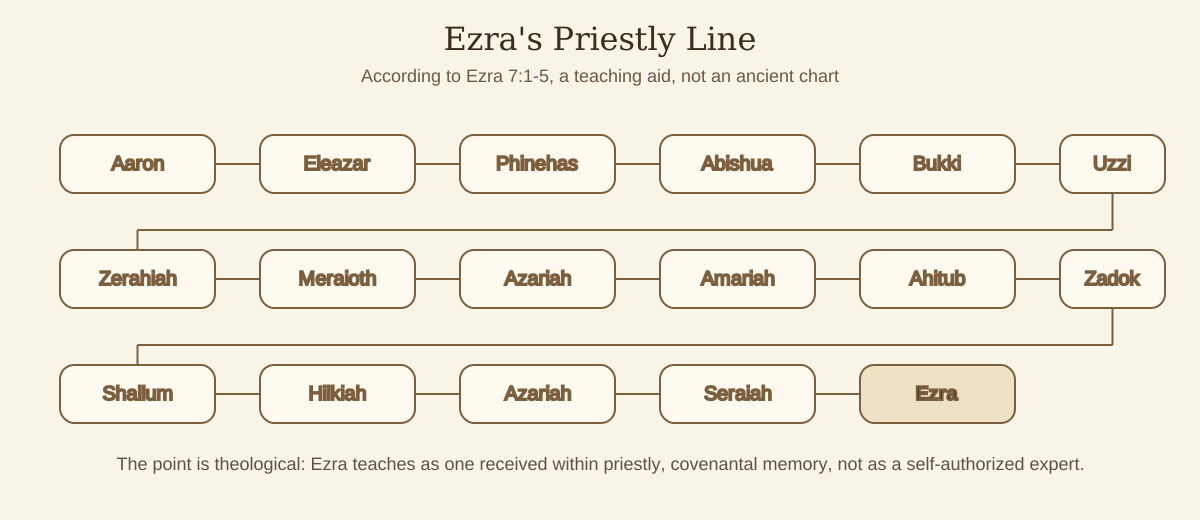 Source: Modern schematic of the priestly ancestry in Ezra 7:1-5; not an ancient chart.
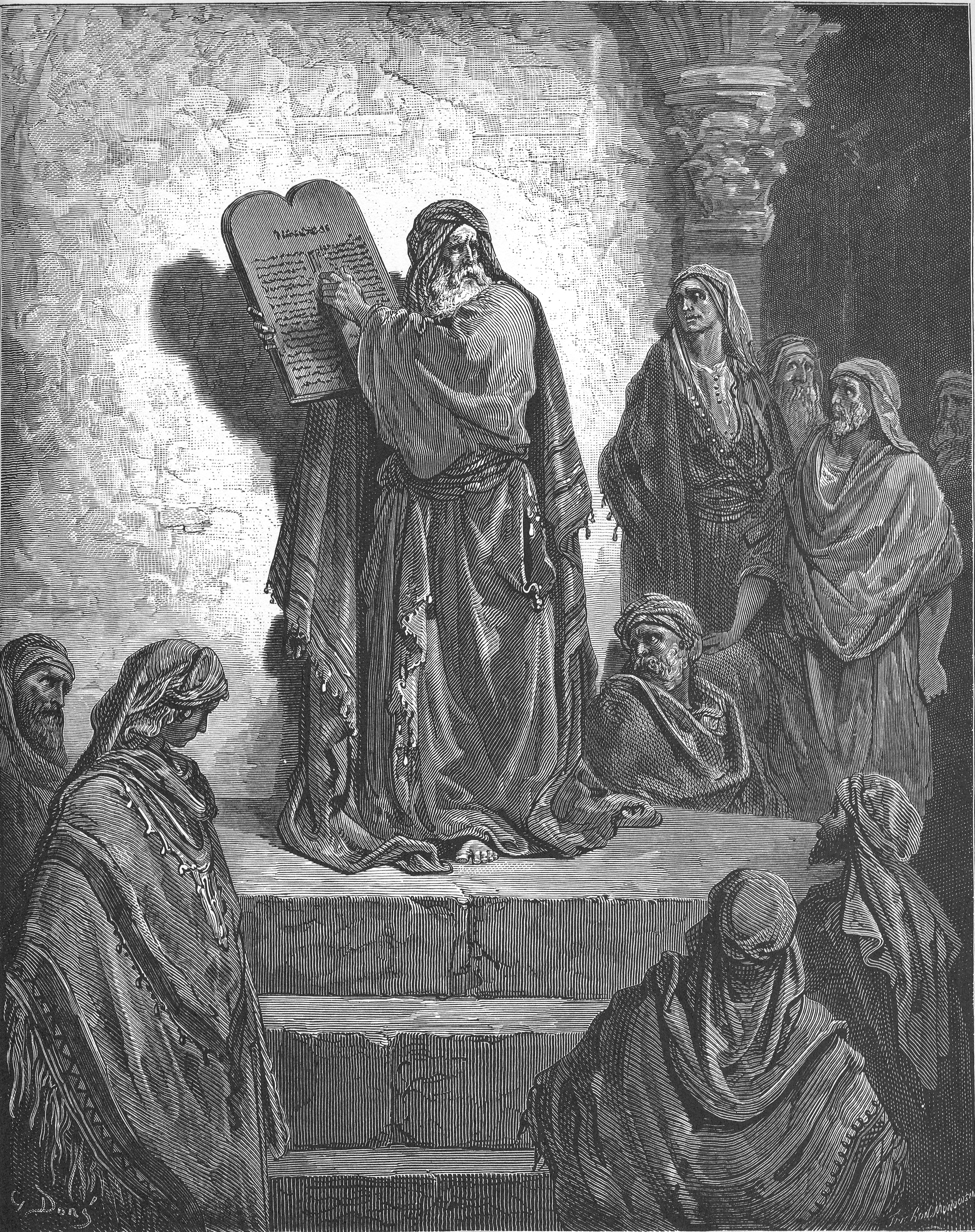 Source: Gustave Doré, Ezra Reads the Law to the People, public domain via Wikimedia Commons. This depicts Nehemiah 8:1-12, not Ezra 7 itself.
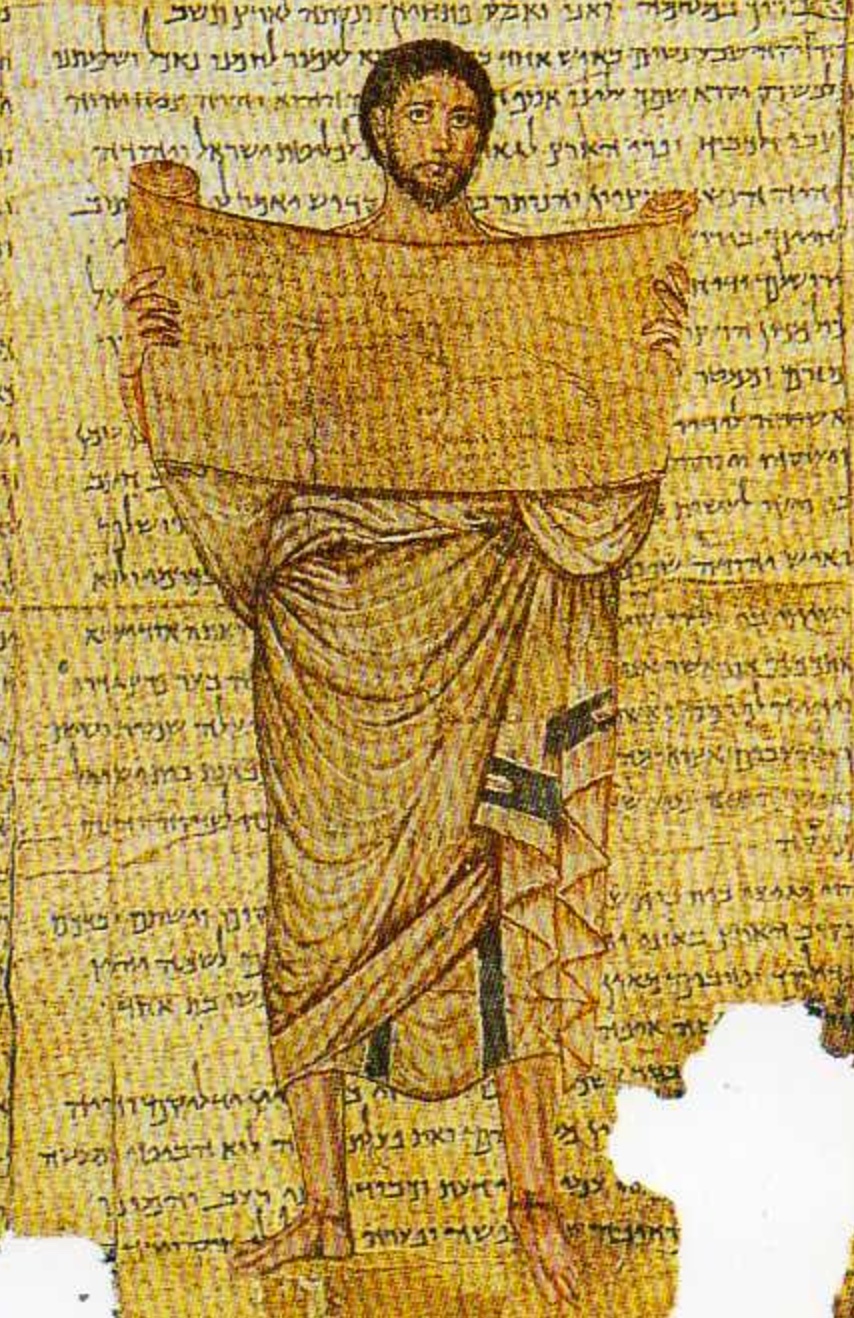 Source: Dura-Europos synagogue fresco fragment, Ezra reading the Law, public domain via Wikimedia Commons. Ancient Jewish visual witness, not an Orthodox icon.
The Doré and Dura-Europos images belong to Ezra’s wider public-reading tradition, not Ezra 7 itself. They portray the scribe’s vocation reaching its proper end in a people hearing the word together.
Spiritual Fruit 🍇
- Let Scripture form you before you explain it. Ezra’s order is seek, do, teach. Before correcting, posting, preaching, or leading, ask what the word is calling you to obey.
- Trust the good hand of God without becoming passive. Ezra studies, travels, gathers leaders, and accepts responsibility. Grace strengthens action. It does not replace it.
- Receive provision as stewardship. Money, access, education, permission, and influence become holy only when offered back to God. Ask whether your resources serve worship and obedience.
- Teach the ignorant without contempt. Ezra is told to make the Law known to those who do not know. A servant must correct clearly, but never with disdain.
- Answer favor with blessing. When a door opens, bless the Lord before you congratulate yourself. Thanksgiving keeps courage clean.
The letter has finished speaking, and Ezra begins to bless God. Before taking up the next responsibility, pause with him before the Giver of the word and the opened road. Ask Christ to join what you teach to what you do. Then let gratitude send you back to the obedience already placed in your hands.
Teaching Notes
- Suggested timing: 8 minutes for opening context, 18 minutes for Movement 1, 12 minutes for Movement 2, 14 minutes for Movement 3, 8 minutes for Movement 4, and 10 minutes for worship resonance, spiritual fruit, and discussion.
- Where to linger: Linger on Ezra 7:10. This is the heart of the lesson for servants: seek, do, teach.
- Where to compress: The details of the royal decree can be summarized if the class is short on time. Keep the focus on how the decree supports worship and Scripture-shaped communal life.
- Key phrases to say slowly: “The good hand of his God was upon him.” “Ezra had determined in his heart.” “Seek the Law, do it, and teach it.” “Blessed be the Lord God of our fathers.”
- Pastoral cautions: Do not turn the Persian decree into admiration for state power. Do not use verse 26 as a Christian model for coercive discipline. Do not praise knowledge that is detached from obedience.
- Teaching aim: By the end, the class should see that restored worship needs Scripture-formed servants, and that the servant’s authority begins with a heart under the word of God.
Ezra’s lineage, skill, the good hand of God, and seek, do, teach (Ezra 7:1-10)
- Ask: Why does Ezra 7:10 put seeking, doing, and teaching in that order?
- Emphasize: The teacher of Scripture must be formed by Scripture before instructing others.
- Watch for: Admiring Ezra’s knowledge while ignoring his obedience and dependence on God’s good hand.
- Connect: Christ opens the Scriptures and forms His servants to become doers of the word, not hearers only.
Artaxerxes’ decree and support for temple service (Ezra 7:11-20)
- Ask: What parts of the decree support worship rather than merely Ezra’s personal mission?
- Emphasize: God can use public authority and material provision, but worship remains the goal.
- Watch for: Treating royal favor as the source of restoration rather than a tool in God’s hand.
- Connect: In Christ, the Church offers not animal sacrifice, but praise, thanksgiving, almsgiving, and the whole life brought to God.
Authority, provision, judges, and the seriousness of the Law (Ezra 7:21-26)
- Ask: Why does the decree include both judges and instruction for those who do not know the Law?
- Emphasize: God’s word forms worship, judgment, teaching, and accountability.
- Watch for: Turning the severe penalties of verse 26 into a Christian model for coercive discipline, or erasing the seriousness of obedience altogether.
- Connect: Christ fulfills the Law and opens the Scriptures so that the Church may live obedience as healing, not legal performance.
Doxology and courage under God’s mercy (Ezra 7:27-28)
- Ask: What does Ezra’s blessing reveal about how he interprets royal favor?
- Emphasize: Doxology protects the servant from giving ultimate credit to human power.
- Watch for: Receiving God’s help and then becoming self-confident instead of thankful and obedient.
- Connect: The risen Christ opens the Scriptures and strengthens His servants to gather, teach, and go up in obedience.
Glossary
Arthasastha: Brenton’s form of Artaxerxes, the Persian king who issues the decree in Ezra 7.
Beyond the river: Persian administrative language for the region west of the Euphrates, including Judah.
Esdras: Brenton’s form of Ezra.
Good hand of God: Ezra’s way of confessing divine favor, protection, and strengthening in the mission.
Law of Moses: The Torah given by the Lord God of Israel, received by Ezra as divine instruction for worship, obedience, and communal life.
Nathinim: Temple servants associated with the service of the house of God.
Ready scribe: A skilled and prepared scribe, not merely literate, but formed for handling and teaching the Law.
Seek, do, teach: The servant-formation order of Ezra 7:10. Study, obedience, and instruction belong together.
Talents, measures, baths: Ancient measures for precious metals and provisions. The exact modern equivalents are less important for the lesson than the scale and concreteness of temple support.
Sources
Embedded Scripture is from Brenton’s English Septuagint (LXX).
Primary sources
- Brenton, The Septuagint Version of the Old Testament, Ezra 7:1-28, used for the embedded Scripture quotations.
- Malachi 2:7; Deuteronomy 6; Deuteronomy 17:18-20; Nehemiah 8; Psalm 119 (LXX Psalm 118); Matthew 13:52; Luke 24:27; Luke 24:45; 2 Timothy 3:14-17; James 1:22.
Patristic sources
- St. Irenaeus, Against Heresies 3.21.2, on Ezra and the preservation of Scripture.1
- St. John Chrysostom, Homilies on Hebrews, Homily 8, section 9, on Ezra restoring the books and the duty to read them.2
Coptic Orthodox and liturgical sources
- Coptic Katameros, Matthew 5:17-24 and Nayrouz Gospels.3
- Bright Saturday Praises, Prayer of Azariah.5
- Annual Psalmody, Third Hoos, opening stanza.4
Maps, images, and historical aids
- Cyrus Cylinder photograph, Wikimedia Commons. Artifact held by the British Museum: https://commons.wikimedia.org/wiki/File:Cyrus_Cylinder.jpg
- Jews Return from Exile, Bible Mapper Atlas: https://biblemapper.com/blog/index.php/2022/09/26/jews-return-from-exile/
- Bible maps, Exile and Return, FreeBibleimages: https://www.freebibleimages.org/illustrations/bm-maps-exile-return/
- Model of Jerusalem in the Second Temple Period, Israel Museum: https://www.imj.org.il/en/wings/shrine-book/model-jerusalem-second-temple-period
- Achaemenid Empire map, Wikimedia Commons: https://commons.wikimedia.org/wiki/File:Map_of_the_Achaemenid_Empire.jpg
Secondary academic sources and reference aids
H. G. M. Williamson, Ezra, Nehemiah, Word Biblical Commentary 16. Standard further reading for historical and textual questions, not directly quoted in this guide.
Jacob M. Myers, Ezra, Nehemiah, Anchor Bible 14. Standard further reading for historical background, not directly quoted in this guide.
Footnotes
-
St. Irenaeus, Against Heresies, Book 3, chapter 21, section 2, https://www.newadvent.org/fathers/0103321.htm. ↩ ↩2
-
St. John Chrysostom, Homilies on Hebrews, Homily 8 on Hebrews 5:1-3, section 9, https://www.newadvent.org/fathers/240208.htm. ↩ ↩2
-
Coptic Katameros, Wednesday of the second week of Great Lent, Matins Gospel, Matthew 5:17-24; Nayrouz (Tout 1), Vespers Gospel, Matthew 13:44-52, and Liturgy Gospel, Luke 4:14-30. Date-resolved readings from CopticChurch.net. ↩ ↩2 ↩3
-
Annual Psalmody, Third Hoos, opening stanza, https://st-takla.org/Lyrics-Spiritual-Songs/Words-of-Coptic-Alhan-Tasbeha-Kodas/Arabic-Coptic-04-Epsalmodia-Tasbeha/Tasbe7a-Coptic-Transliteration-Annual-Psalmody/Praise-Epsalmodya-Tasbeha-008-Hus-3.html. ↩ ↩2
-
Bright Saturday service order, Midnight Praises, Prayer of Azariah, Daniel 3:25-51 in the service’s reference system. ↩ ↩2