


Judah has three thousand men ready to bind its deliverer, but none ready to resist its masters. Samson has strength enough to carry away Gaza’s gates, but no settled resolve to leave the danger that is consuming him. Judges 15-16 brings these two forms of captivity together: a people accustomed to foreign rule and a consecrated man accustomed to indulging desire. Before Samson is bound in bronze, he has surrendered the heart that should have guarded his calling.
The story also contains two prayers. After victory Samson thirsts and admits that God has given the deliverance. After defeat he asks to be remembered and strengthened. Between these prayers stands his fatal confidence: he expects to rise and escape as before, unaware that the Lord has departed. The difference between asking and assuming runs through these chapters. Grace is received from the living God; it cannot be stored as a reserve that makes obedience unnecessary.
Hebrews 11:32 names Samson among the witnesses of faith. That testimony belongs beside the painful details of Judges, not in place of them. We can honor the faith by which he called upon God while grieving the harm of his anger and desire. His story directs us toward Christ, in whom deliverance is joined to perfect obedience and saving love. Christian typology, the reading of earlier persons and deeds as signs fulfilled in Christ, can recognize a genuine image in a particular deed without making every action of the person exemplary.
Historical and Scriptural Context
Samson was set apart from the womb to begin Israel’s deliverance from the Philistines (Judges 13:5). The word “begin” keeps the expectation modest. These chapters show neither a national repentance nor a complete end to Philistine rule. Samson acts largely alone, and the twenty-year notice in 15:20 explicitly places his judging “in the days of the Philistines.” The same twenty years appear at his burial in 16:31. Chapter 16 thus follows an initial closing notice with the final account of his downfall and death; the repeated formula does not give him forty years of office.
The preceding chapters help us see what is being lost. Samson’s birth was promised before he could achieve anything; his strength was a gift before it was a reputation. In Judges 14 he wanted the woman who pleased his eyes. At Gaza he again sees and goes in. Later the Philistines destroy those eyes. This sequence exposes the danger of allowing desire to direct a consecrated life. It does not authorize us to treat blindness or any other disability as evidence of personal sin.
Geographical Significance ⛰️
Etam is Samson’s rocky refuge after the reprisals at Timnah. Lechi is the place where Judah delivers him to the Philistines and where victory gives way to thirst. Gaza, a Philistine city, becomes the setting of both an escape and a captivity: the man who once carries its gates away is brought back there in fetters. The mountain before Hebron places the captured gates toward Judah, the people who had handed Samson over. The narrative specifies the mountain before the city, not that he carries them into Hebron itself.
Sorek, called Alsorech in the embedded Scripture, is the setting of Delilah’s prolonged pressure. Zorah and Eshtaol, called Saraa and Esthaol at the end, return the account to Samson’s home region. His family carries him back to the tomb of Manoah, called Manoë here. Familiar English names are used in the commentary while the Scripture retains Brenton’s forms.
The Characters 👥
Samson is a judge of Israel whose genuine calling coexists with unhealed anger and desire. His Timnite wife and her father become victims of Philistine reprisal. Judah’s men fear retaliation so deeply that they bind their own deliverer. Delilah acts in concert with the Philistine rulers, who pay her to discover how to make him helpless. The text names her betrayal without making her representative of all women or identifying her ethnicity.
The young attendant in the final scene leads the blinded Samson by the hand. His brothers and father’s household retrieve his body. Over every human calculation stands the Lord, who gives strength, hears the thirsty servant, and answers the final plea. The Philistines praise Dagon as the source of their success, but their feast ends with the collapse of his house.
Iconography and Visual Teaching 🖼️
The schematic identifies the main places in Samson’s story. Doré’s engraving depicts the escape from Gaza; it is Western biblical illustration, not an Orthodox icon. The heavy gates show the scale of Samson’s outward strength, while the verses beneath them ask what that strength has failed to heal.
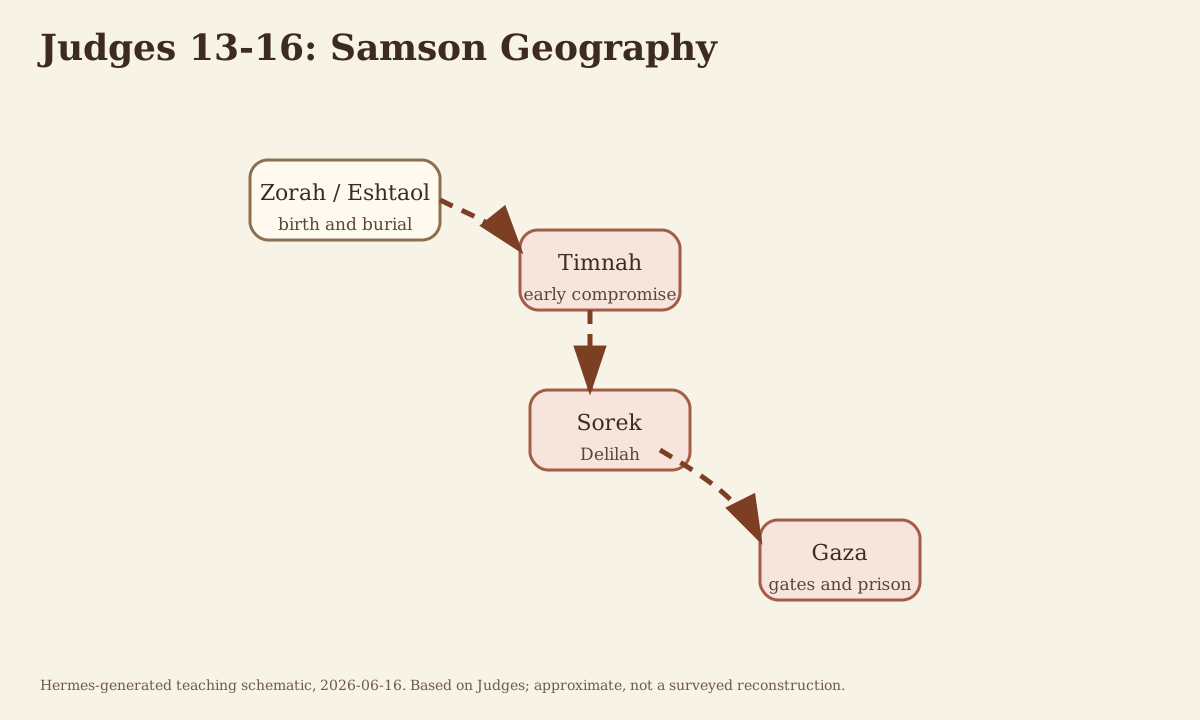 Source: Hermes-generated teaching schematic, 2026-06-16; approximate, not a surveyed reconstruction.
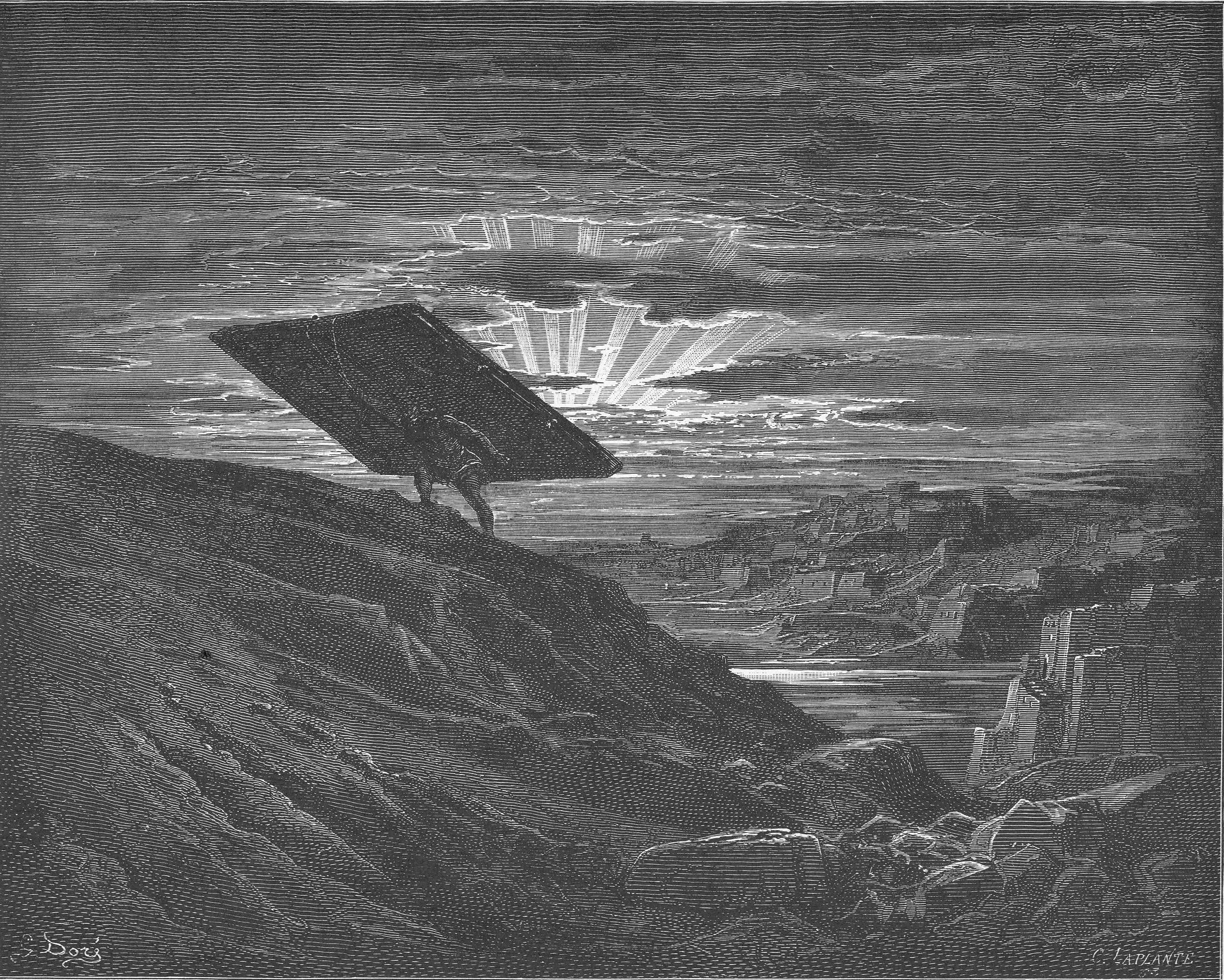 Source: Gustave Doré, Samson Carries Away the Gates of Gaza, Public domain, via Wikimedia Commons. Illustrative artwork, not Orthodox iconography; avoid heroic or sensational framing.
Judges 15:1-8 - Retaliation spreads like fire
1 And it came to pass after a time, in the days of wheat harvest, that Sampson visited his wife with a kid, and said, I will go in to my wife even into the chamber: but her father did not suffer him to go in. 2 And her father spoke, saying, I said that thou didst surely hate her, and I gave her to one of thy friends: is not her younger sister better than she? let her be to thee instead of her.
3 And Sampson said to them, Even for once am I guiltless with regard to the Philistines, in that I do mischief among them. 4 And Sampson went and caught three hundred foxes, and took torches, and turned tail to tail, and put a torch between two tails, and fastened it. 5 And he set fire to the torches, and sent the foxes into the corn of the Philistines; and every thing was burnt from the threshing floor to the standing corn, and even to the vineyard and olives. 6 And the Philistines said, Who has done these things? and they said, Sampson the son-in-law of the Thamnite, because he has taken his wife, and given her to one of his friends; and the Philistines went up, and burnt her and her father’s house with fire.
7 And Sampson said to them, Though ye may have dealt thus with her, verily I will be avenged of you, and afterwards I will cease. 8 And he smote them leg on thigh with a great overthrow; and went down and dwelt in a cave of the rock Etam.
Samson arrives with a young goat at wheat harvest and finds the marriage he expected to resume has been given to his companion. The father’s offer of a younger daughter treats people as substitutes in a damaged arrangement. Samson’s hurt is real, but his declaration that he is now “guiltless” in doing mischief exposes the way grievance begins to excuse whatever anger proposes.
The torches strike grain, vineyards, and olives: food and the means of future livelihood. Three hundred animals carry the flames, a troubling contrast with Gideon’s three hundred men carrying torches in Judges 7:16. Gideon’s company follows a shared plan under God’s promise; Samson sends animals through the crops in a solitary reprisal. The common number and fire make the contrast memorable, but the narrative supplies no command to infer a hidden numerical meaning.
The Philistines burn Samson’s wife and her father’s house. Their cruelty repeats the threat made during the wedding feast in 14:15, the very disaster her disclosure had sought to avert. Samson then promises that after one more vengeance he will cease. Retaliation has that recurring promise: this last blow will settle everything. Yet each side’s account of what it has suffered becomes a reason to inflict another injury, and more lives enter the quarrel.
God’s purpose against Philistine oppression does not require us to approve each motive or method in Samson’s conduct. Neither does an enemy’s cruelty make revenge a cure for our own wounds. When we rehearse a slight until every harsh response seems deserved, the fire has already reached beyond the original wrong. A first act of repentance may be to stop repeating the story in a way that makes our resentment sound righteous. Justice may require truthful reporting, protection, and accountability; it need not require cultivating hatred. Christ’s freedom under injustice shows how different strength becomes when love, rather than grievance, governs it.
Judges 15:9-17 - Judah binds the deliverer, and the Spirit breaks the bonds
9 And the Philistines went up, and encamped in Juda, and spread themselves abroad in Lechi. 10 And the men of Juda said, Why are ye come up against us? and the Philistines said, We are come up to bind Sampson, and to do to him as he has done to us. 11 And the three thousand men of Juda went down to the hole of the rock Etam, and they said to Sampson, Knowest thou not that the Philistines rule over us? and what is this that thou hast done to us? and Sampson said to them, As they did to me, so have I done to them. 12 And they said to him, We are come down to bind thee to deliver thee into the hand of the Philistines: and Sampson said to them, Swear to me that ye will not fall upon me yourselves. 13 And they spoke to him, saying, Nay, but we will only bind thee fast, and deliver thee into their hand, and will by no means slay thee: and they bound him with two new ropes, and brought him from that rock.
14 And they came to Lechi: and the Philistines shouted, and ran to meet him: and the Spirit of the Lord came mightily upon him, and the ropes that were upon his arms became as tow which is burnt with fire; and his bonds were consumed from off his hands. 15 And he found the jaw-bone of an ass that had been cast away, and he put forth his hand and took it, and smote with it a thousand men. 16 And Sampson said, With the jaw-bone of an ass I have utterly destroyed them, for with the jaw-bone of an ass I have smitten a thousand men. 17 And it came to pass when he ceased speaking, that he cast the jaw-bone out of his hand; and he called that place the Lifting of the jaw-bone.
The Philistines spread through Judah and demand Samson. Judah can gather three thousand men, yet uses that strength to bind him rather than oppose the foreign rulers. “Knowest thou not that the Philistines rule over us?” is their settled explanation of reality. They blame Samson for making their servitude unsafe. Oppression has become so familiar that the possibility of resistance feels like the real threat.
This is a searching picture of tolerated bondage. A person can arrange work, friendships, and prayer around a ruling habit until any attempt to change it seems unreasonable. A parish can similarly protect a harmful custom because confronting it would be disruptive. The text exposes that accommodation without requiring Samson’s conduct to become blameless. Judah’s fear and Samson’s retaliatory anger are both present; one man’s faults do not make another people’s captivity good.
Samson asks his countrymen to swear that they will not attack him themselves. He accepts the ropes and leaves the rock. His agreement avoids a battle with Judah, though it does not resolve the quarrel with the Philistines. At Lechi the Spirit of the Lord comes mightily upon him. The ropes become like burnt flax and the jaw-bone becomes a weapon. The source of this deliverance is named before Samson speaks of what he has done. His victory-song must be heard beside that prior gift.
There is a biblical resemblance in the deliverer handed over by his own people. The resemblance belongs to the action, not to an assertion that Samson shares Christ’s moral perfection. Christ also is handed over, but His willingness goes further than escape: He endures the Passion for the salvation of those who betray Him. Reading the earlier scene toward Christ enlarges our understanding of deliverance while leaving the human tensions of Judges visible.
Language insight: “Lechi” and “jaw-bone”
The Hebrew word leḥî (לְחִי) means “jaw” or “cheek,” and the place-name Lechi, often written Lehi, shares that form. Brenton’s “Lifting of the jaw-bone” in verse 17 makes the association explicit. The wordplay binds the place to the improvised weapon and prepares for the thirsty judge’s dependence on God there. It is a remembered deliverance, not an invitation to admire violence for its own sake.1
Judges 15:18-20 - Thirst after victory, and water from God
18 And he was very thirsty, and wept before the Lord, and said, Thou hast been well pleased to grant this great deliverance by the hand of thy servant, and now shall I die for thirst, and fall into the hand of the uncircumcised? 19 And God broke open a hollow place in the jaw, and there came thence water, and he drank; and his spirit returned and he revived: therefore the name of the fountain was called ‘The well of the invoker,’ which is in Lechi, until this day.
20 And he judged Israel in the days of the Philistines twenty years.
The song of victory gives way to a cry for water. Samson can strike a thousand men and still perish from thirst. He now addresses God as the giver of the “great deliverance” and calls himself God’s servant. His concern about falling into enemy hands has not vanished, but his prayer places his need and his victory before their true source.
God opens the hollow place, water flows, and Samson’s spirit returns. Brenton speaks of the hollow “in the jaw”; readers of translations that name Lehi here will recognize the association between the place and the jaw-bone. The emphasis of this scene is clear in either reading: the exhausted servant lives by what God gives. “The well of the invoker” preserves a prayer and an answer alongside the memory of battle.
Exodus 17:1-7 offers a wider biblical companion: water comes from the rock for a thirsty people who cannot sustain themselves in the wilderness. In 1 Corinthians 10:4 Paul identifies the spiritual rock with Christ. Paul is interpreting Israel’s wilderness provision, not directly identifying Samson’s jaw-bone as Christ. The connection helps us recognize the same dependence on divine life without pretending that the two scenes are identical. At the Cross Christ Himself thirsts (John 19:28), willingly entering our bodily weakness even as He accomplishes salvation. Samson receives water to remain alive; the incarnate Lord gives Himself so that the thirsty may receive life from Him.
After difficult service, a demanding family crisis, or a victory over temptation, we often expect the accomplishment to sustain us. It will not. Exhaustion makes continued prayer, rest, and honest dependence more necessary, not less. Samson’s cry makes room for a servant who can say both “You have helped me” and “I still need help.” The twenty-year notice then closes the chapter with a deliverance that is real but limited: Israel is still living in the days of Philistine power.
Gems from the Fathers 💎: prayer after victory
Saint Ambrose reads Samson’s thirst as the humbling of confidence after victory. In Letter 19, §§23-24, he contrasts the claim of achievement with the later acknowledgment that God gave the deliverance. His direct commentary connects the changed prayer to reconciliation: “by his suppliant prayers he made amends for his boast of victory.” This is Ambrose’s interpretation of Samson’s inner change, not an additional statement made by the narrator. It gives the exhausted servant a truthful way to return from boasting to thanksgiving.2
Judges 16:1-3 - Gaza, the harlot, and the gates carried away
1 And Sampson went to Gaza, and saw there a harlot, and went in to her. 2 And it was reported to the Gazites, saying, Sampson is come hither: and they compassed him and laid wait for him all night in the gate of the city, and they were quiet all the night, saying, Let us wait till the dawn appear, and we will slay him. 3 And Sampson slept till midnight, and rose up at midnight, and took hold of the doors of the gate of the city with the two posts, and lifted them up with the bar, and laid them on his shoulders, and he went up to the top of the mountain that is before Chebron, and laid them there.
Samson sees a harlot and goes in to her. The blunt opening belongs to the story even when the gate-carrying dominates our memory. The Gazites surround him and wait for dawn, expecting the city itself to hold their enemy. At midnight he removes the doors, posts, and bar and carries them to the mountain before Hebron. Their instrument of confinement becomes the burden he carries away.
The direction is worth noticing. Hebron lies in Judah, the people who recently handed him over. Samson brings a sign of Philistine vulnerability toward the region that has treated Philistine supremacy as inevitable. Yet the deed brings no recorded reform of his own desires. Escape from an ambush is not the same thing as repentance. Someone can win an argument, complete a ministry project, or emerge from a crisis with reputation intact while continuing to evade the private obedience that is most needed.
A later Latin witness: the gates and Resurrection
Gregory the Great, in Homilies on the Gospels 21, §7, gives this deed a positive Christological reading. Samson’s departure with the gates figures the risen Lord leaving the realm of death and breaking its power; his ascent figures Christ’s Ascension. Gregory writes that Christ “not alone went forth free from hell, but also destroyed the very gates of hell.”3 This later Latin witness interprets a particular victory as a sign of Christ’s Resurrection. The image can be received without blessing Samson’s visit to the harlot or attributing a sweeping verdict about his whole life to an unnamed tradition.
The spiritual gain is larger than a warning against misconduct. Death’s enclosure, unlike Gaza’s, once held the human race beyond its own power to escape. Christ opens what no human strength could open. We turn toward Him both for deliverance from death and for the healing of desires that Samson’s strength could not master. The gates are a sign of victory; the opening verse remains a call to repentance.
Judges 16:4-17 - Delilah, repeated pressure, and the heart surrendered
4 And it came to pass after this that he loved a woman in Alsorech, and her name was Dalida. 5 And the princes of the Philistines came up to her, and said to her, Beguile him, and see wherein his great strength is, and wherewith we shall prevail against him, and bind him to humble him; and we will give thee each eleven hundred pieces of silver.
6 And Dalida said to Sampson, Tell me, I pray thee, wherein is thy great strength, and wherewith thou shalt be bound that thou mayest be humbled. 7 And Sampson said to her, If they bind me with seven moist cords that have not been spoiled, then shall I be weak and be as one of ordinary men. 8 And the princes of the Philistines brought to her seven moist cords that had not been spoiled, and she bound him with them. 9 And the liers in wait remained with her in the chamber; and she said to him, The Philistines are upon thee, Sampson: and he broke the cords as if any one should break a thread of tow when it has touched the fire, and his strength was not known.
10 And Dalida said to Sampson, Behold, thou hast cheated me, and told me lies; now then tell me wherewith thou shalt be bound. 11 And he said to her, If they should bind me fast with new ropes with which work has not been done, then shall I be weak, and shall be as another man. 12 And Dalida took new ropes, and bound him with them, and the liers in wait came out of the chamber, and she said, The Philistines are upon thee, Sampson: and he broke them off his arms like a thread.
13 And Dalida said to Sampson, Behold, thou hast deceived me, and told me lies; tell me, I intreat thee, wherewith thou mayest be bound: and he said to her, If thou shouldest weave the seven locks of my head with the web, and shouldest fasten them with the pin into the wall, then shall I be weak as another man. 14 And it came to pass when he was asleep, that Dalida took the seven locks of his head, and wove them with the web, and fastened them with the pin into the wall, and she said, The Philistines are upon thee, Sampson: and he awoke out of his sleep, and carried away the pin of the web out of the wall.
15 And Dalida said to Sampson, How sayest thou, I love thee, when thy heart is not with me? this third time thou hast deceived me, and hast not told me wherein is thy great strength. 16 And it came to pass as she pressed him sore with her words continually, and straitened him, that his spirit failed almost to death. 17 Then he told her all his heart, and said to her, A razor has not come upon my head, because I have been a holy one of God from my mother’s womb; if then I should be shaven, my strength will depart from me, and I shall be weak, and I shall be as all other men.
Samson loves Delilah, while the Philistine rulers offer money for the secret of his strength. The asymmetry is painful: his heart is involved, but her agreement is with his enemies. Each ruler promises eleven hundred pieces of silver. That amount reappears in Judges 17:2, where stolen silver enters the story of Micah’s idol. The repeated sum links two accounts in which money accompanies the misuse of what belongs to God; it does not establish that the coins are the same or that one episode causes the other.
Delilah’s purpose is scarcely hidden. She asks how he can be bound and humbled, tests each answer, and calls out that the Philistines are upon him. Samson breaks the first cords, then the new ropes. The second escape repeats what happened when Judah bound him. Familiar success makes the danger feel controllable. On the third attempt he allows the conversation to approach his consecrated head. He is revealing the territory of the secret before he reveals the secret itself.
Language insight: the fuller account in “16:13-14”
The Septuagint’s two principal forms, commonly labeled A and B, both give a fuller account here than the Masoretic Hebrew text. Samson includes fastening the woven hair with a peg into the wall and the consequence that he will become weak. Delilah then puts the weaving into effect while he sleeps. The shorter Hebrew account moves from the proposal to weave the hair into the web to her fastening it. Brenton follows the fuller Greek telling.4 This detail sharpens the progression: Samson lets the sign of his calling enter her experiment before finally disclosing why it matters. The difference does not require changing the Scripture printed above or asserting which form first stood in the original text.
Delilah then turns the language of love against him: how can he love her if his heart is not with her? The continual pressure exhausts him until he tells her “all his heart.” Holy intimacy requires truth and trust, but a demand that we surrender conscience to prove affection is a corruption of love. His repeated escapes have not made this relationship safe. A boundary needs action, not one more clever answer.
Proverbs 7:21-27 describes persuasive speech leading a man toward a trap, and Genesis 3 shows how conversation can become consent to disobedience. These are scriptural companions to the slow surrender here, not a claim that every temptation follows a fixed psychological sequence. Samson’s story calls for leaving a proven danger, seeking counsel, and refusing the secrecy that lets it continue. Delilah’s betrayal is her responsibility; Samson’s neglect of his consecration is his. No one should use this account to blame a victim for another person’s coercion or to teach suspicion of women as a class.
In verse 17 Samson calls himself a “holy one of God” from the womb. The Greek B text here uses hagios, “holy” or “set apart,” for his consecrated status. That language makes his surrender more grievous: he knows whose life he is giving away. Christ is named “the Holy One of God” in Mark 1:24, yet His holiness is not merely a calling that His conduct can contradict. He gives Himself freely in perfect obedience. Samson’s hair is the visible sign of belonging to God; the Lord, not the hair by itself, is the source of strength.
Judges 16:18-22 - The Lord departed from him: blindness, grinding, and the first sign of mercy
18 And Dalida saw that he told her all his heart, and she sent and called the princes of the Philistines, saying, Come up yet this once; for he has told me all his heart. And the chiefs of the Philistines went up to her, and brought the money in their hands. 19 And Dalida made Sampson sleep upon her knees; and she called a man, and he shaved the seven locks of his head, and she began to humble him, and his strength departed from him. 20 And Dalida said, The Philistines are upon thee, Sampson: and he awoke out of his sleep and said, I will go out as at former times, and shake myself; and he knew not that the Lord was departed from him. 21 And the Philistines took him, and put out his eyes, and brought him down to Gaza, and bound him with fetters of brass; and he ground in the prison-house. 22 And the hair of his head began to grow as before it was shaven.
The money comes into the rulers’ hands, the razor comes to Samson’s head, and the strength departs. Delilah has recognized that this time he has given her his heart. The act completes a surrender already rehearsed in the preceding encounters. Samson wakes to the old alarm with an old expectation: “I will go out as at former times.” He remembers his successes but fails to perceive his present condition.
Verse 20 names the disaster beneath the military defeat: “he knew not that the Lord was departed from him.” It is possible to preserve familiar gestures of service after losing their inner truth. We can rely on a remembered season of prayer while refusing today’s repentance, or assume that a useful gift proves our present obedience. The warning concerns presumption upon God’s empowering presence, not a claim that God has ceased to know Samson or can never hear him again.
The eyes motif now reaches its dreadful conclusion. Samson, who selected by sight and trusted what pleased him, is blinded by his enemies. They take him back to Gaza, where he had escaped so spectacularly, and bind him with bronze rather than ropes. He grinds in prison: the man whose strength once broke confinement now spends that strength within it. The reversal exposes the cost of his choices without making disability shameful. A blind person’s dignity and capacity for holiness are undiminished, and this narrative cannot diagnose the sins of anyone who suffers.
Verse 22 quietly interrupts the account of humiliation. His hair begins to grow. The narrator has not yet described a restored victory or stated that the growing hair proves complete repentance. Its regrowth prepares us to wait for what God may still give. The sign can return; grace cannot be operated as a mechanism. For someone after a grave failure, hope may begin just as quietly: accepting truthful counsel, making a confession without excuses, and keeping a small obedience when no one applauds.
Gems from the Fathers 💎: strength is God’s gift
Saint Ambrose directly challenges the magical reading of Samson’s hair in On the Holy Spirit, II, introduction, §14: “It is not so, nor may we think that the hair of his head has such power.” He reads the consecration in relation to faith and the grace of the Spirit. In II.1, §§17-18, he uses the account of the Lord’s coming and departing to affirm the divine lordship of the Holy Spirit. Samson’s fall therefore teaches reverence toward a divine Person, not anxiety about a physical charm.5
The Church’s Voice in Worship ⛪
Saul’s loss of the Spirit’s empowering presence in 1 Kingdoms 16:14 (1 Samuel 16:14) is another sobering companion. In the Agpeya, the Coptic Book of Hours, Psalm 51 (LXX Psalm 50) turns that fear into penitential prayer. Prime, Terce, Sext, None, Vespers, Compline, Midnight, and the Veil office all include its plea: “Do not cast me away from Your face; and do not remove Your Holy Spirit from me.”6 The daily repetition counters Samson’s assumption that he can rise as before. We ask for a clean heart and continued communion with God instead of trusting yesterday’s strength.
Judges 16:23-31 - Remember me: Samson’s final prayer, Dagon’s house, and death
23 And the chiefs of the Philistines met to offer a great sacrifice to their god Dagon, and to make merry; and they said, God has given into our hand our enemy Sampson. 24 And the people saw him, and sang praises to their god; for our god, said they, has delivered into our hand our enemy, who wasted our land, and who multiplied our slain. 25 And when their heart was merry, then they said, Call Sampson out of the prison-house, and let him play before us: and they called Sampson out of the prison-house, and he played before them; and they smote him with the palms of their hands, and set him between the pillars. 26 And Sampson said to the young man that held his hand, Suffer me to feel the pillars on which the house rests, and I will stay myself upon them. 27 And the house was full of men and women, and there were all the chiefs of the Philistines, and on the roof were about three thousand men and women looking at the sports of Sampson.
28 And Sampson wept before the Lord, and said, O Lord, my Lord, remember me, I pray thee, and strengthen me, O God, yet this once, and I will requite one recompense to the Philistines for my two eyes. 29 And Sampson took hold of the two pillars of the house on which the house stood, and leaned on them, and laid hold of one with his right hand, and the other with his left. 30 And Sampson said, Let my life perish with the Philistines: and he bowed himself mightily; and the house fell upon the princes, and upon all the people that were in it: and the dead whom Sampson slew in his death were more than those whom he slew in his life.
31 And his brethren and his father’s house went down, and they took him; and they went up and buried him between Saraa and Esthaol in the sepulchre of his father Manoë; and he judged Israel twenty years.
The Philistine rulers gather to sacrifice to Dagon and celebrate their enemy’s capture. They turn a prisoner’s humiliation into praise of their god. Samson is brought out to amuse the crowd and placed between the pillars. The man who had once made enemies run now needs an attendant to lead him by the hand. This public weakness is the setting of his prayer.
Language insight: “smote him with the palms”
Brenton’s verse 25 includes the striking of Samson with the palms of their hands. Rahlfs’ Greek B text has errapizon auton, “they were striking him,” while Greek A and the Masoretic Hebrew account do not include that clause.7 The detail belongs to this Greek form, not to every version of Judges. It adds bodily abuse to the mockery. Isaiah 50:6 speaks of the servant offering his back and cheeks, and Matthew 26:67 records Christ being struck and mocked. The resemblance can deepen contemplation of the Passion, provided we remember Christ’s sovereign willingness: He endures abuse to save, not because desire has betrayed His consecration.
Samson asks the attendant to bring him to the supporting pillars. Then he calls upon the Lord to remember and strengthen him. His appeal has changed from “I will go out” to “strengthen me.” Yet it still includes recompense for his two eyes. The text gives us a real turning toward God without a complete account of the state of his soul. We should neither pronounce his prayer worthless nor call every motive in it purified.
Dagon’s apparent victory ends beneath the ruins of his own house. In 1 Kingdoms 5:1-5 (1 Samuel 5:1-5), the captured ark is also placed in Dagon’s temple, only for the idol to fall before the Lord. Neither narrative allows captivity to mean that Israel’s God has been defeated. Here the judgment costs Samson his life. The crowd and rulers die with him, and the narrator says that he kills more in his death than in his life. Christian hope reaches beyond that victory over enemies to Christ’s victory over death itself and His prayer for those who crucify Him.
A sober reading of verse 30. Samson’s final words are not permission to end one’s life, injure oneself, or harm others. Augustine, in The City of God I.21, considers this act justified only on the ground of a particular instruction from the Spirit; he is interpreting an exceptional biblical event, not giving distressed readers a rule to imitate. I.20 rejects taking one’s own life, and I.26 warns against turning exceptional examples into a personal pattern.8 A feeling of divine prompting does not authorize self-harm. When despair or shame makes life feel unbearable, the faithful response is to seek protection and help: tell a trusted person, contact a priest and a qualified clinician, and obtain emergency assistance if there is immediate danger. Stay with others rather than facing that danger alone. Mercy means that the wounded person is worth caring for now, not that death must prove repentance.
His family comes for his body and buries him beside his father between Zorah and Eshtaol. The account ends with the same twenty years of judging named in 15:20. His calling, failures, prayers, and burial belong to one life. Scripture keeps that life whole, allowing gratitude for grace and grief over sin to stand together.
Gems from the Fathers 💎: faith remembered without erasing failure
Saint John Chrysostom, explaining Hebrews 11:32-33 in Homilies on Hebrews 27, §4, answers objections to the mention of Samson and other imperfect judges. “For do not tell me of the rest of their life, but only whether they did not believe and shine in Faith.” He immediately explains that the apostle’s subject is their faith, not a declaration that their whole life was illustrious.9 This witness helps us honor what Hebrews honors without concealing what Judges exposes. Hebrews 11:34 also speaks of being made strong out of weakness. It gives fitting language for divine help here, though Chrysostom himself applies that phrase to the return from Babylon rather than specifically to Samson’s last prayer.
The Church’s Voice in Worship ⛪: remembered by the Deliverer
The Coptic Synaxarium commemorates Samson, one of the judges of Israel, on 30 Baramhat. Its account remembers his consecration, the deliverance, the water, and his final victory.10 That remembrance keeps his life from being reduced to a cautionary failure. It stands beside Hebrews’ testimony to faith while Judges supplies the details needed for sober discernment. A commemoration is not the same thing as an assigned reading of Judges 15-16.
“Remember me” also turns our hearing toward the thief beside Christ in Luke 23:42. The Good Friday burial hymn Golgotha gives the thief’s plea: “Remember me, O my Lord; remember me, O my Savior; remember me, O my King, when You come into Your Kingdom.”11 This is a connection in prayer, not an assertion that the hymn is about Samson. Samson asks for strength against his enemies; the thief entrusts himself to the King whose mercy opens paradise. Our final hope is that living mercy.
Summary Table
| Passage | What happens | What the text asks us to see |
|---|---|---|
| Judges 15:1-8 | Broken marriage, burning crops, murder, and reprisal | Real injury can become an excuse for spreading revenge |
| Judges 15:9-17 | Judah binds Samson; the Spirit gives deliverance | Bondage can become normal, while strength remains God’s gift |
| Judges 15:18-20 | Samson thirsts, prays, and receives water | Victory leaves the servant dependent on God |
| Judges 16:1-3 | Samson removes Gaza’s gates | A deed may signify Christ’s victory without making its doer’s conduct holy |
| Judges 16:4-17 | Delilah presses him until he yields his heart | Repeated escape is no proof that a known danger is safe |
| Judges 16:18-22 | Presumption, blindness, prison, and regrowing hair | Consecration requires watchfulness; shame need not end hope |
| Judges 16:23-31 | Prayer, judgment on Dagon, death, and burial | Faith can be remembered without offering violence or self-harm as a model |
Spiritual Fruit 🍇
Refuse a false peace with bondage. Judah’s question makes a familiar sin sound like an unavoidable ruler. Name the habit you have begun to organize life around, and take one truthful step against it. That may mean ending a secret conversation, changing an occasion of temptation, or admitting to your confessor that repeated promises have become an excuse to delay action. Freedom can initially disturb the routines built around captivity.
Leave the conversation that keeps undoing your resolve. Samson could escape each trap and still return to the place where he was being betrayed. A clever reply is weaker than a necessary boundary. When a relationship or practice repeatedly asks you to surrender conscience, seek help and act before exhaustion begins to feel like consent. Watchfulness means guarding concrete entrances to the heart, not merely feeling alarmed afterward.
Receive care after service. The thirsty victor had to ask for water. After demanding work or ministry, give thanks, pray simply, and accept the bodily limits that remain. Rest, nourishment, and counsel are not evidence that your service was false. Refusing them can become another way of pretending that a gift has made you self-sufficient.
Turn presumption into penitential prayer. Pray the Agpeya’s plea for a clean heart with today’s actions in view. Bring the actual contradiction between your public usefulness and private obedience into confession. The words “as at former times” lose their hold when we ask God for present mercy rather than insist upon a past reputation.
Protect hope after failure. The regrowing hair does not erase the prison, but it prevents us from treating the prison as the last word. Begin with a small obedience and accept help without demanding an immediate return to prominence. Repentance can include repairing harm and accepting consequences. It never requires self-destruction.
The blinded Samson is led by the hand into the place where his enemies celebrate. He has no audience to persuade of his strength now; he has a prayer to offer. Beneath the humiliation, the hair has begun to grow, and the Lord can still hear him. Let the story’s plea become our own without taking its violence as our path: Lord Jesus Christ, remember me, heal what I have surrendered, and teach me to receive life from You.
Teaching Notes
Whole-study guidance. Read Hebrews 11:32 beside Judges, neither mocking Samson nor making his gifts a proof of holiness. Keep Judah’s normalized servitude, Samson’s repeated consent, the non-magical meaning of the hair, and God’s hearing of prayer in view. Use the map for the return to Gaza and the final return home. Use Doré’s gates only beside the whole passage, including verse 1. If time is short, focus on 15:11, 15:14, 15:18-19, 16:16-17, 16:20-22, and 16:28-30.
Judges 15:1-8 - Retaliation spreads like fire
- Ask: What changes when Samson calls himself “guiltless,” and who suffers as each side insists on a further revenge?
- Watch for: Do not turn the suffering of Samson’s wife or the burning crops into entertainment. Distinguish accountability for wrong from feeding hatred.
Judges 15:9-17 - Judah binds the deliverer, and the Spirit breaks the bonds
- Ask: Why do three thousand men use their strength to bind Samson, and what familiar bondage might we defend in the same way?
- Watch for: Do not make Judah’s fear proof that Samson’s anger is righteous. The Spirit gives the deliverance; Samson does not own that power.
Judges 15:18-20 - Thirst after victory, and water from God
- Ask: How does the thirsty Samson speak differently from the victor holding the jaw-bone?
- Watch for: God’s provision is not a promise that every successful servant will avoid exhaustion. Paul’s rock interpretation concerns Exodus, not a direct identification of Samson’s weapon.
Judges 16:1-3 - Gaza, the harlot, and the gates carried away
- Ask: What does carrying away the gates reveal about Philistine power, and what has it failed to heal in Samson?
- Watch for: Keep the harlot in verse 1 visible. Label Gregory as a later Latin witness, and distinguish a typological deed from a moral endorsement of the whole life.
Judges 16:4-17 - Delilah, repeated pressure, and the heart surrendered
- Ask: At which point should Samson have stopped answering Delilah, and why does repeated escape make the later surrender easier?
- Watch for: Do not make Delilah a stereotype of women or blame victims for coercion. Hair signifies consecration; it is not a charm. The weaving detail follows the fuller Greek text.
Judges 16:18-22 - The Lord departed from him: blindness, grinding, and the first sign of mercy
- Ask: What is missing from Samson’s confidence that he will rise “as at former times,” and how does verse 22 keep hope alive?
- Watch for: Do not interpret blindness or disability as evidence of sin. Regrowing hair is neither proof of complete repentance nor an automatic restoration of grace.
Judges 16:23-31 - Remember me: Samson’s final prayer, Dagon’s house, and death
- Ask: How do “remember me” and the request concerning his eyes belong together, and how does the thief’s prayer direct us beyond revenge?
- Watch for: State the protection against self-harm plainly. Augustine’s exceptional interpretation is not a personal authorization. The Synaxarium commemoration is distinct from a Judges reading, and Golgotha speaks of the thief, not Samson.
Sources
Embedded Scripture is from Brenton’s English Septuagint (LXX).
The language comparisons use the two forms of Judges printed in Rahlfs’ Septuagint, A and B, and the Masoretic Hebrew wording. These forms differ at 16:25; the striking clause in Brenton belongs to Greek B. The Coptic lectionary sources checked for this study did not establish a reading of Judges 15-16. The Synaxarium commemoration and the worship connections described above are distinct from a passage assignment.
Biblical companions: Judges 7:16 and 17:2; Exodus 17:1-7; Genesis 3; Proverbs 7:21-27; 1 Kingdoms 5:1-5 and 16:14 (1 Samuel); Isaiah 50:6; Mark 1:24; John 19:28; Matthew 26:67; Luke 23:42-43; 1 Corinthians 10:4; Hebrews 11:32-34.
Saint Ambrose, Letter 19 to Vigilius, §§23-24; On the Holy Spirit, II, introduction, §14, and II.1, §§17-18.
Saint John Chrysostom, Homilies on Hebrews, Homily 27, §4, on Hebrews 11:32-34.
Augustine of Hippo, The City of God, I.20-21 and I.26, on the distinction between an exceptional biblical act and personal imitation.
Gregory the Great, Homilies on the Gospels 21, §7, a later Latin witness on the gates of Gaza and the Resurrection.
Coptic Synaxarium, 30 Baramhat, commemoration of Samson; Agpeya, Psalm 51 (LXX Psalm 50); Southern United States Coptic Orthodox Diocese, seventh-grade hymns curriculum, “Golgotha.”
Footnotes
-
“Lechi” and “jaw”: Hebrew lexical entry and the place-name. ↩
-
Saint Ambrose, Letter 19 to Vigilius, §§23-24, English text. The mirror prints the paragraph following §23 as “21”; it is the paragraph beginning “And now he began to burn with thirst.” ↩
-
Gregory the Great, Homilies on the Gospels 21, §7, English sermon text. Cited here as a later Latin witness, not as a statement of Coptic consensus. ↩
-
Rahlfs, Judges A and B, 16:13-14; Masoretic Hebrew 16:13 and 16:14. The Greek includes the fastening instruction and its result, and the account of Delilah weaving the locks during sleep. ↩
-
Saint Ambrose, On the Holy Spirit, II, introduction, §14, and II.1, §§17-18, trans. H. de Romestin, E. de Romestin, and H. T. F. Duckworth, NPNF, second series, vol. 10, text. ↩
-
Agpeya, Psalm 51 (LXX Psalm 50): Prime, Terce, Sext, None, Vespers, Compline, Midnight, and Veil. The Agpeya prints the Septuagint numbering. ↩
-
Rahlfs, Judges B 16:25, ἐρράπιζον αὐτόν; compare Judges A and Masoretic Hebrew 16:25. ↩
-
Augustine, The City of God, I.20-21 and I.26, trans. Marcus Dods, NPNF, first series, vol. 2, Book I. I.21 says Samson is justified only on the ground of particular instructions from the Spirit; this is Augustine’s interpretation, not an explicit command recorded in Judges 16. ↩
-
Saint John Chrysostom, Homilies on Hebrews, Homily 27, §4, text on Hebrews 11:32-34. ↩
-
Coptic Synaxarium, 30 Baramhat, entry 3, “The Commemoration of Samson, One of the Judges of Israel.” ↩
-
Southern United States Coptic Orthodox Diocese, seventh-grade hymns curriculum, printed pp. 13-14, “Golgoya (Hymn of Christ’ Burial on Good Friday),” conventionally rendered “Golgotha.” ↩