


Judges brings us before a people who have received an inheritance but struggle to live from the gift. God hears their groaning and raises deliverers; after relief, they repeatedly return to the worship that enslaves them. The book holds courage and ruin together. Its faithful acts deserve thanksgiving, its victims deserve lament, and its repeated failures expose a heart that needs more than a change of circumstances. Read in the light of Christ, it teaches us to receive mercy without making peace with the desires from which we have been rescued.
Historical and Scriptural Context
Judges belongs to Israel’s life in the land after Joshua and before the monarchy. Its crises often concern particular regions and tribes rather than a single campaign embracing the whole people. The periods of oppression and rest should therefore not be added mechanically into an exact continuous chronology. The closing accounts in chapters 17-21 uncover the depth of the people’s disorder; their position at the end serves that disclosure and need not place every event after Samson.
In the Christian arrangement of the Old Testament, Judges follows Joshua and precedes Ruth. It also belongs to the Octateuch, the collection of eight books from Genesis through Ruth, treated together in early Christian commentary and Byzantine manuscript tradition. This place matters spiritually. The Lord who created, called Abraham, brought Israel out of Egypt, and gave the land remains the Lord who hears Israel’s cry when the gift has been despised.
The book does not name its author. Jewish tradition attributes it to Samuel, but the narrative includes perspectives on earlier events without identifying the final compiler. Neither a precise date of composition nor a settled formation history is needed for a truthful account of what the received book teaches. Its governing concern is the life of God’s people under His rule.
A judge in this setting is a leader and deliverer, sometimes also a prophet or one who settles disputes. The term has a wider sense than a modern courtroom office. Leadership is often regional, and even an extraordinary gift does not make its bearer morally complete.
Deliverance remembered by the rest of Scripture
Calling Judges only a book of failed heroes would miss Scripture’s own thanksgiving. Sirach 46:11-12 blesses the judges collectively for their faithfulness and lasting memory; it does not individually name each of them in those verses. In 1 Samuel 12:9-11, Samuel recalls forgetfulness, oppression, the people’s cry, and the deliverers sent by the Lord. Acts 13:20 places the judges within the history that leads toward Samuel and, eventually, the proclamation of Jesus. Hebrews 11:32 remembers Gideon, Barak, Samson, and Jephthah in its witness to faith. The Church can honor genuine faith without blessing every act of the person who exercised it.1
Psalm 106:34-46 (LXX Ps 105:34-46) gives a searching scriptural reflection on this history: nations left in place, their works learned, idols becoming a snare, repeated rescue, and a cry still heard by God. Nehemiah 9:27-28 remembers the same painful return to evil after relief. These passages teach us to read both sides of Judges at once: human infidelity is real, and divine compassion is not exhausted by it.2
Geographical Significance ⛰️
The hill country of Judah and Ephraim, the valleys, the Jordan crossings, Gilead east of the river, and the Philistine coastal region shape different local pressures. Their separation helps explain why one tribe’s victory does not secure the whole people. The geography makes Israel’s shared calling and fragmented practice visible.
The valleys also bring military obstacles into view. Hebrew Judges 1:19 names iron chariots; the Greek underlying Brenton has the difficult form “Rechab.” The chapter study explains that difference. Judges 4:3 explicitly names Sisera’s nine hundred iron chariots. Military difficulty is part of the setting, but the book’s judgment of Israel reaches beyond equipment to worship and allegiance.
Gilgal recalls the memorial stones, circumcision, and first Passover in the land under Joshua. Bochim names Israel’s weeping at the rebuke. Jerusalem and Gibeah will expose a more terrible reversal: a traveler avoids foreign Jebusite Jerusalem, only to encounter devastating violence among Israelites. Sacred ancestry cannot make an unmerciful community safe.
The Characters 👥
The Lord gives, rebukes, hears, and raises help. Israel is both the people He loves and the people who repeatedly refuse His way. The named judges disclose a range of gifts and responsibilities, rather than one model of successful leadership.
The conventional count of twelve judges groups Othniel, Ehud, Shamgar, Deborah, Gideon, Jephthah, and Samson with Tola, Jair, Ibzan, Elon, and Abdon. Deborah’s account also gives Barak a central place in deliverance. The five briefly described judges appear in Judges 10:1-5 and 12:8-15; “minor” describes the length of their notices, not the worth of their service. The count is a received way of grouping the narratives, not a claim that the book prints a formal numbered roster or treats every leader identically.3
Abimelech’s grasping kingship in chapter 9 presents a contrasting form of power. Jael, Manoah’s wife, and the women who suffer in the final narratives also require attention in their own right. Jephthah’s daughter, the abused concubine, and the daughters of Shiloh must never disappear behind a discussion of the men’s leadership. The harm done to them belongs to the book’s testimony against Israel’s disorder.
Iconography and Visual Teaching 🖼️
The historical map locates the tribes and neighboring powers. The cycle diagram summarizes repeated rescue and relapse; it cannot show every complication or replace the individual stories. Both are teaching aids, not Orthodox icons.
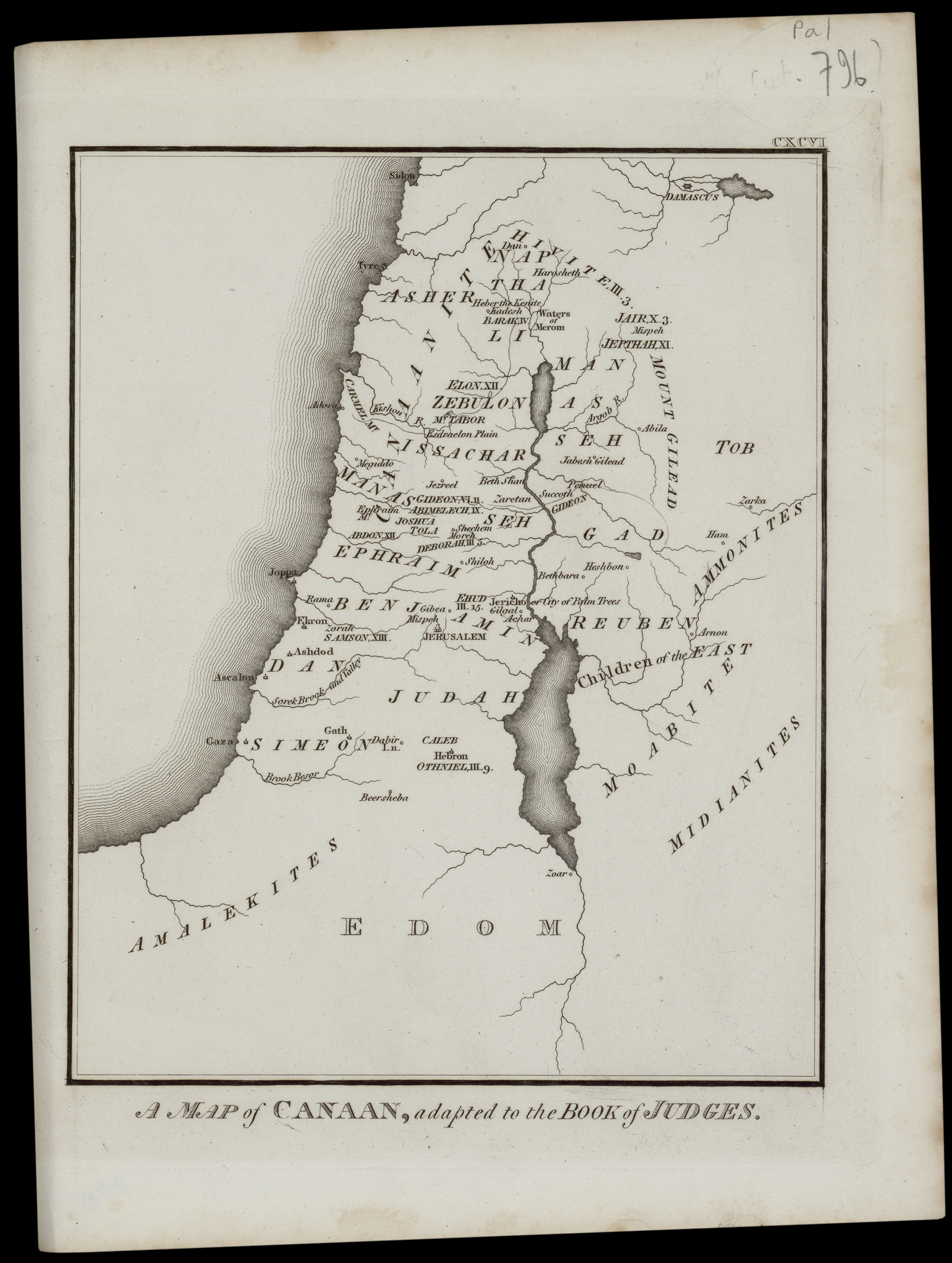 Source: A map of Canaan, adapted to the book of Judges 🔗, Public domain, Eran Laor Cartographic Collection / National Library of Israel via Wikimedia Commons.
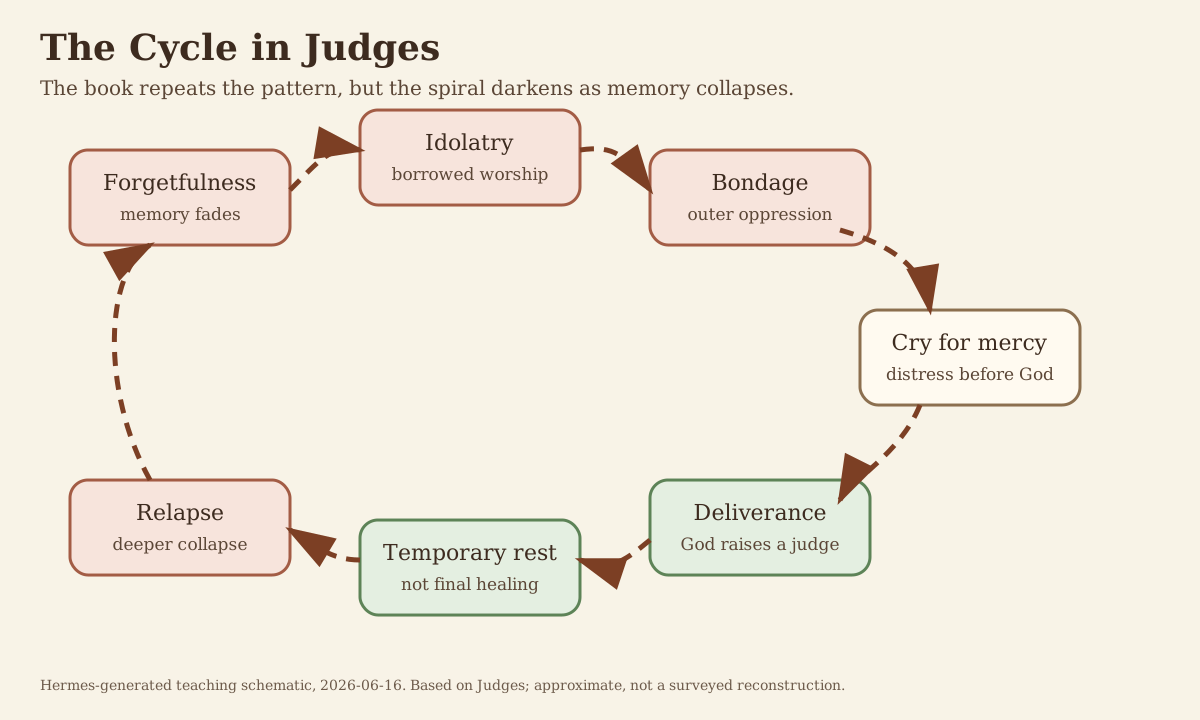 Source: Hermes-generated teaching schematic, 2026-06-16; approximate, based on the narrative pattern of Judges.
Light from the Word 🕯️
Mercy and relapse (Judges 2:18-19)
- And because the Lord raised them up judges, so the Lord was with the judge, and saved them out of the hand of their enemies all the days of the judge; for the Lord was moved at their groaning by reason of them that besieged them and afflicted them.
- And it came to pass when the judge died, that they went back, and again corrupted themselves worse than their fathers to go after other gods to serve them and to worship them: they abandoned not their devices nor their stubborn ways.
The Lord hears groaning before the people have become a stable, faithful community. His compassion is the beginning of rescue. Yet the return to corruption after the judge’s death shows that relief can leave the defended desire intact. Someone can be grateful to God for an answered prayer while still protecting the habit that made the prayer desperate. The book directs repentance toward that protected allegiance.
The book’s widening fracture
| Text | What happens | The spiritual pressure |
|---|---|---|
| Judges 1:1-2:5 | Victories coexist with unfinished obedience; Israel is rebuked at Bochim | Tears must reach the agreements and altars still defended |
| Judges 2:6-3:6 | Forgetfulness and idolatry shape a pattern of oppression and rescue | Remembrance must become a life handed on |
| Judges 3:7-5:31 | Othniel, Ehud, Shamgar, Deborah, and Barak bring real help | Give thanks for God’s gifts without idolizing His instruments |
| Judges 6-8 | Gideon is called in weakness; victory is followed by the ephod snare | Success can preserve the gift while deforming its purpose |
| Judges 9 | Abimelech seeks power through murder | Ambition can put religious and communal language at its service |
| Judges 10-12 | Brief judges, Jephthah, a tragic vow, and tribal strife | Deliverance does not excuse destructive speech or contempt |
| Judges 13-16 | Samson’s calling, compromises, captivity, and death | Strength and consecration require a faithful heart |
| Judges 17-18 | Private idols and hired priesthood become tribal worship | Religious activity can survive while obedience is lost |
| Judges 19-21 | Abuse, civil war, grief, and further coercion | A people can claim unity while sacrificing the vulnerable |
Two recurrences sharpen this descent. In Judges 1:1-2 Judah goes first against the Canaanites; in 20:18 Judah goes first against Benjamin. The calling to act together has become civil war. In 1:21 Jebusites remain in Jerusalem; in 19:10-12 the Levite refuses that foreign city and chooses Israelite Gibeah, where the ensuing outrage recalls Genesis 19. The most terrible threat is now inside the people who assume that shared identity should make them trustworthy.4
The Lord’s rule and “right in his own sight”
- And in those days there was no king in Israel; every man did that which was right in his own sight.
Deuteronomy 12:8 had already warned against each person doing what was right in his own eyes. In its context, that warning concerns the ordering of worship under the Lord’s command. Judges gives the phrase a devastating reach into common life. Self-authorized worship, vows, power, and vengeance can all feel righteous to those practicing them.5
The book itself provides a necessary answer to the refrain about no king. Gideon says in Judges 8:23 that neither he nor his son will rule over the people: the Lord will rule over them. That affirmation does not excuse his later ephod, and it prevents the reader from treating any monarchy as the cure. The opening toward kingship must be held beside the danger of grasping power shown by Abimelech.
For the Christian, Christ’s kingship gives judgment its healing center. He bears the Cross, rises from death, and gives the Spirit. His rule calls the person out of self-justification and into truthful communion with God and neighbor. A judge can free a region from an oppressor; Christ’s saving work reaches the sin and death that hold the human person captive. This fulfillment neither belittles Israel’s real rescues nor makes the Christian exempt from the need to repent.
Gems from the Fathers 💎: Light in earthen vessels
St. Ambrose reads Gideon’s pitchers and torches in On the Holy Spirit I.14.167. He identifies the vessels with our mortal bodies, burning with the Spirit’s grace and bearing witness to Christ’s Passion: “the pitchers are our bodies, fashioned of clay”. The point is the grace given and borne through human weakness, rather than the glory of the vessel itself.6
Ambrose’s reading joins the clay vessel to fearless confession of Christ’s Passion. The weakness of the body need not silence the witness when the Spirit’s grace burns within it. This documented reading of Judges 7 helps the Church receive the historical rescue as an image opening toward life in Christ. A servant can ask for courage to confess the Crucified Lord in word and deed, giving glory to the Spirit who makes that witness possible.6
Ascetical reading and pastoral guardrails
The history remains the history of Israel, even when the Church draws a spiritual application from it. St. John Cassian’s Conferences 4.6 directly reads the nations left in Judges 3 as a conflict through which dependence on God’s help is learned. His Conferences 5.16-19 and 5.23, principally expounding Deuteronomy 7, treat the nations as spiritual faults and describe virtues taking their place. This second witness is a related ascetical reading, not a commentary on every verse of Judges.7
Such interpretation turns the Christian’s struggle toward sin and the passions, the disordered habits that enslave the heart. Ephesians 6:10-18 names spiritual evil, not flesh and blood, as the adversary. An ethnic group, a political opponent, or a difficult family member must never be made into a Canaanite whom we are entitled to destroy.
Description is not endorsement. Treachery, mutilation, sexual violence, rash vows, and coercion must be read without spectacle or excuses. Where the vulnerable are harmed, the Christian response begins with truthful lament and protection. The presence of God’s providence in the history never releases a perpetrator from responsibility or requires a victim to remain in danger.
St. Basil’s Letter 188, Canon 13 gives a sober witness beside the wartime narratives. He records a distinction between wartime killing and ordinary homicide in the earlier Fathers’ reckoning, yet counsels three years’ abstention from communion for those whose hands are not clean. The canon refuses an easy identification of killing with spiritual innocence. It is pastoral counsel to be received within the Church, not a penance for a reader to impose.8
The Church’s Voice in Worship ⛪
The Coptic Synaxarium remembers Gideon on Kiahk 16 and Samson on Baramhat 30. These commemorations place gratitude for God’s deliverance inside the Church’s prayer. Their biblical biographies remain open before us, with both the gifts and the failures they record. Commemoration does not turn every decision of a remembered person into a model.9
The funeral-service book of Fr. Jacob Nadian appoints Judges 11:30-40 for female children during Passion Week. The account’s daughter and the lament associated with her belong at the center of a compassionate reading in that setting. The Church’s prayer accompanies grief; the child is not reduced to an illustration of someone else’s rashness. The father’s vow remains a grave matter in the chapter, but warning against it should not displace mourning for the daughter.10
This grief-centered reading is a pastoral interpretation of the service context, not an exclusive explanation supplied by the rubric. The printed appointment is specific to Passion Week and should not be generalized to every girl’s funeral. The book’s larger gift to the Church is a truthful vocabulary for rescue, failure, lament, and the cry that God hears.
Spiritual Fruit 🍇
Give mercy a memory. After an answer to prayer, carry thanksgiving into the Agpeya, the Coptic book of the Hours. Keep one fitting Hour according to your rule of prayer rather than waiting until another crisis makes prayer urgent. At home, relate an experience of God’s help to one scriptural event and the coming feast. Children need to hear what the Church celebrates and to see adults living gratefully from it.
Name the arrangement that keeps a passion useful. Bring one recurring excuse to your father of confession, the priest who guides your repentance: a resentment defended as justice, a vanity defended as service, a dishonest practice defended as necessity. Alongside confession, choose the virtue that has to take its place. A renounced resentment needs a practice of mercy; a renounced vanity needs service that can remain unnoticed.
Make power safe for the vulnerable. Judges’ final chapters call for more than private self-examination. Refuse speech that trivializes abuse or sacrifices a weaker person to the reputation of a household or ministry. Hear the person harmed, seek protection and appropriate help, and resist the impulse to demand silence in the name of communal peace.
Receive the gift without claiming the light. Ambrose’s earthen pitchers give a servant a fitting prayer: let Christ be visible through the work, even when the worker is ordinary. Accept needed correction without making the whole task a judgment on your worth. The Lord’s gift can survive the loss of our importance.
The book’s last wound does not erase the groaning that God has heard throughout it. We can bring Him a true confession without pretending that the damage is small. The same Lord who names the idol receives the cry. In Christ, repentance is a return to the One who seeks the healing of His people.
Teaching Notes
- Ask: How can Scripture honor the judges’ faith while narrating their failures? Place Sirach 46:11-12 and Hebrews 11:32 beside one difficult narrative rather than choosing either praise or condemnation alone.
- Emphasize: The Lord’s mercy initiates rescue; a changed circumstance still requires a changed allegiance. Keep the repeated pattern visible without forcing every story into an identical diagram.
- Ask: What is revealed when “Judah first” returns in the war against Benjamin? Distinguish the book’s literary descent from an exact chronology of every regional episode.
- Watch for: The refrain about no king is not a blessing on any strong ruler. Read it beside Judges 8:23 and Abimelech’s rise.
- Emphasize: The five briefly narrated judges have a place in the received count of twelve. Short notice is not evidence of insignificant service.
- Watch for: Spiritual warfare concerns the passions and spiritual evil, never ethnic hatred or religious violence. Read the hard chapters with lament and attend to the people harmed.
- Ask: What changes when the daughter and her mourners are heard in the funeral context of Judges 11? Preserve the Passion Week limitation and avoid asserting an exclusive institutional explanation of the reading.
- Show: Use the Canaan map for regional orientation and the cycle diagram for the pattern. Neither establishes disputed locations, motives, or a precise chronology.
Glossary
- “Octateuch”: the eight-book collection from Genesis through Ruth.
- “Judge”: a leader or deliverer in this setting, with responsibilities wider than a modern judicial office.
- “Apostasy”: a turning away from the Lord into false worship and disobedience.
- “Passions”: disordered desires and habits that enslave the person and require healing in Christ.
- “Typology”: a Christian reading in which real scriptural persons, events, or images open toward fulfillment in Christ and His people’s life, without erasing their historical sense.
- “Nazirite”: a person specially dedicated to God, important in Samson’s calling.
- “Ephod”: a priestly object that becomes a snare in Gideon’s story when fashioned and used wrongly.
- “Agpeya”: the Coptic prayer book of the Hours, joining Psalms, Gospel, and petitions across the day.
Translation and Source Notes
Embedded Scripture is from Brenton’s English Septuagint (LXX).
Greek Judges is transmitted in two major textual forms, printed as A and B in Rahlfs and translated separately in NETS. Brenton generally follows the Vaticanus-based tradition represented by B; he is not an exact translation of the later Rahlfs B edition. Neither A nor B consistently represents the oldest recoverable Greek text. Where a difference affects an interpretation, the chapter study identifies it.11
The familiar English names used in the explanations may differ from Brenton’s Greek-based forms. Psalm references give the familiar Hebrew-based number first and the LXX number where different. Canonical cross-references are generally paraphrased, with translation differences named when material.
Patristic witnesses are distinguished from modern Coptic commentary and from the guide’s own spiritual applications. The cited Coptic funeral book establishes the stated appointment, not a broader claim about the regular lectionary or every parish’s current practice.
Sources
Brenton, The Septuagint with Apocrypha, Judges; the embedded selections are Judges 2:18-19 and 21:25. 🔗 🔗
NETS, “Judges: To the Reader” and A/B translations; NETS general introduction for Brenton’s textual basis. 🔗 🔗
St. Ambrose, On the Holy Spirit I.14.167, on Gideon’s pitchers. 🔗
St. Basil the Great, Letter 188, Canon 13, a canonical witness on bloodshed, not direct Judges exegesis. 🔗
Fr. Tadros Y. Malaty, A Patristic Commentary: The Book of Judges, translated by Dr. George Botros, introduction and chapters 1-3. A modern Coptic Orthodox commentary. 🔗
Fr. Jacob Nadian, Funeral Services, First Book: Laity, St. Bishoy Coptic Orthodox Church, printed pp. 231-232, “Funeral Services for Female Children during Passion Week.” 🔗
Footnotes
-
Sirach 46:11-12 🔗; 1 Samuel 12:9-11 🔗; Acts 13:20 🔗; Hebrews 11:32. ↩
-
Psalm 106:34-46 (LXX Ps 105:34-46) 🔗, LXX Psalm 105 🔗; Nehemiah 9:27-28 🔗. ↩
-
Judges 10:1-5 🔗; Judges 12:8-15 🔗. The count groups the seven more developed notices with the five brief notices; Deborah and Barak share an account. ↩
-
Judges 1:1-2; 1:21; 19:10-12 🔗; 20:18 🔗; compare Genesis 19. ↩
-
St. Ambrose, On the Holy Spirit I.14.167, trans. H. de Romestin, E. de Romestin, and H. T. F. Duckworth, NPNF second series, vol. 10. 🔗 ↩ ↩2
-
St. John Cassian, Conferences 4.6; 5.16-19,23, trans. C. S. Gibson, NPNF second series, vol. 11. 🔗 🔗 ↩
-
St. Basil the Great, Letter 188 to Amphilochius, Canon 13, trans. Blomfield Jackson, NPNF second series, vol. 8. 🔗 ↩
-
Coptic Synaxarium, Kiahk 16, first commemoration 🔗; Baramhat 30, third commemoration 🔗. ↩
-
Fr. Jacob Nadian, Funeral Services, First Book: Laity, printed pp. 231-232. 🔗 The appointment was checked in a saved copy of this edition. ↩
-
NETS, Judges introduction, printed p. 195 🔗; NETS general introduction 🔗. ↩