


This narration is from a previous version of the study and may include a combined recording of multiple chapters.
Isaiah 52:13-53:12 is the climactic Suffering Servant prophecy. The Servant is exalted and glorified, yet His face is without glory before men. He is rejected, dishonored, wounded for sins, silent in affliction, and led to death. The Lord promises to remove His stroke, show Him light, and vindicate the just One who serves many well. The Song ends with sin-bearing, deliverance to death, and victory.
The Church reads this passage as a prophecy of the Lord Jesus Christ: His Incarnation, Passion, voluntary obedience, Cross, and Resurrection. Its sin-bearing and healing are central witnesses to His saving love. The wider apostolic teaching of Christ’s sacrifice, justification of sinners, and intercession must be distinguished from the particular wording printed here.
2. Why This Passage Matters
This passage matters because it shows the hidden shape of divine victory. The Servant does not save by spectacle, domination, or political triumph. He saves by obedience, humility, suffering, self-offering, and victorious love.
Isaiah also refuses shallow explanations of sin. Humanity is not merely confused. “All we as sheep have gone astray.” The Servant does not merely sympathize from a distance. He bears sins, is wounded for iniquities, and heals by His bruises. Yet this must be read in the Orthodox way: not as a cruel Father punishing an unwilling Son, but as the one saving will of the Holy Trinity, with the incarnate Son voluntarily entering death to heal, forgive, ransom, and recreate humanity.
For teaching and prayer, this guide must be treated with special reverence. It belongs to Holy Week. It belongs at the foot of the Cross. It belongs in the heart of every Christian who asks, “What has Christ done for us?“
3. Placement in the Book and Grouping/Split Rationale
Continuation from Isaiah 51:1-52:12
Isaiah 51:1-52:12 awakens Zion, removes the cup of calamity, announces beautiful feet bringing good news, and commands a holy departure from uncleanness. It ends with the Lord going before His people and gathering them from behind. Isaiah 52:13 then reveals the heart of that salvation: the Servant whose exaltation comes through humiliation and whose suffering heals the many.
Why Isaiah 52:13-53:12 belongs together
This guide treats Isaiah 52:13-53:12 as one unit because these verses form the complete Fourth Servant Song. The movement is coherent and indivisible:
- 52:13-15: the Servant is introduced as wise, exalted, marred, and astonishing to nations and kings.
- 53:1-3: the report is unbelieved because the Servant appears weak, unattractive, and dishonored.
- 53:4-6: He bears sins, wounds, bruises, chastisement, and the straying of the sheep.
- 53:7-9: He suffers silently, is unjustly judged, dies, and is buried despite innocence.
- 53:10-12: the Lord removes the stroke, addresses those who can give an offering, promises seed, shows the Servant light, vindicates the just One, and grants Him victory as He bears the sins of many.
The literary boundary begins at the end of chapter 52, not at a modern chapter break. The Great Thursday service witness discussed below also preserves the whole Song as one reading.
Continuation to Isaiah 54 and Isaiah 55
Isaiah 54 follows with barren Zion singing, everlasting mercy, covenant peace, and children taught by God. Isaiah 55 then opens the invitation to the waters, the everlasting Davidic covenant, repentance while the Lord is near, and the effective word of God. This is not accidental. The mercy, covenant peace, and invitation of Isaiah 54-55 flow from the Servant’s suffering and vindication. The children of the barren one, the covenant of peace, and the water of life are fruits of the Cross.
4. Historical and Scriptural Context
In Isaiah’s historical setting, Servant language speaks into the hope of restoration after judgment and exile. The passage reaches beyond return from Babylon: a faithful Servant bears sins and brings healing. The Church recognizes Israel’s vocation fulfilled in Christ, not an excuse to make an entire people a contemptible foil.
Scripturally, this passage stands in the Servant sequence after Isaiah 42, 49, and 50:
- Isaiah 42 introduced the Spirit-bearing Servant who brings justice and light.
- Isaiah 49 revealed the Servant called from the womb and given as light to the Gentiles.
- Isaiah 50 revealed the obedient Servant who gives His back to scourges and His face to spitting.
- Isaiah 52:13-53:12 reveals the mystery of the Servant who suffers for sins, is led to death, is vindicated by the Lord, and bears the sins of many.
The New Testament receives this text explicitly. John cites Isaiah 53:1 when explaining unbelief before Christ. Acts 8 shows Philip preaching Jesus from Isaiah 53 to the Ethiopian eunuch. First Peter echoes Isaiah 53 when speaking of Christ bearing sins and healing by His stripes. The Church does not impose Christ on Isaiah from outside; the apostolic witness reads Isaiah as fulfilled in Him.
5. Scripture Text
Isaiah 52:13-15
13 Behold, my servant shall understand, and be exalted, and glorified exceedingly. 14 As many shall be amazed at thee, so shall thy face be without glory from men, and thy glory shall not be honoured by the sons of men. 15 Thus shall many nations wonder at him; and kings shall keep their mouths shut: for they to whom no report was brought concerning him, shall see; and they who have not heard, shall consider.
Isaiah 53
1 O Lord, who has believed our report? and to whom has the arm of the Lord been revealed? 2 We brought a report as of a child before him; he is as a root in a thirsty land: he has no form nor comeliness; and we saw him, but he had no form nor beauty. 3 But his form was ignoble, and inferior to that of the children of men; he was a man in suffering, and acquainted with the bearing of sickness, for his face is turned from us: he was dishonoured, and not esteemed. 4 He bears our sins, and is pained for us: yet we accounted him to be in trouble, and in suffering, and in affliction. 5 But he was wounded on account of our sins, and was bruised because of our iniquities: the chastisement of our peace was upon him; and by his bruises we were healed. 6 All we as sheep have gone astray; every one has gone astray in his way; and the Lord gave him up for our sins.
7 And he, because of his affliction, opens not his mouth: he was led as a sheep to the slaughter, and as a lamb before the shearer is dumb, so he opens not his mouth. 8 In his humiliation his judgment was taken away: who shall declare his generation? for his life is taken away from the earth: because of the iniquities of my people he was led to death. 9 And I will give the wicked for his burial, and the rich for his death; for he practised no iniquity, nor craft with his mouth. 10 The Lord also is pleased to purge him from his stroke. If ye can give an offering for sin, your soul shall see a long-lived seed: 11 the Lord also is pleased to take away from the travail of his soul, to shew him light, and to form him with understanding; to justify the just one who serves many well; and he shall bear their sins. 12 Therefore he shall inherit many, and he shall divide the spoils of the mighty; because his soul was delivered to death: and he was numbered among the transgressors; and he bore the sins of many, and was delivered because of their iniquities.
6. The Text Broken Open
Isaiah 52:13-15 - Exalted, glorified, and marred
The Servant is introduced with glory: “my servant shall understand, and be exalted, and glorified exceedingly.” But the next line shocks the reader: His face is “without glory from men.” His glory is not the beauty of worldly power. It is the glory of obedient love revealed through humiliation.
The nations wonder and kings shut their mouths. The Servant’s suffering silences worldly wisdom. Those who had not heard now see. Those who had no report now consider. The Cross becomes revelation.
The opening exaltation governs the whole Song. Humiliation is not the last word, nor is it an unfortunate interruption of a merely worldly triumph. Reading from 52:13 keeps both the suffering and promised glory in view. Verse 15 says the nations wonder and the kings fall silent; it does not say in this Brenton text that He sprinkles the nations.
Isaiah 53:1-3 - The unbelieved report and the hidden Servant
“O Lord, who has believed our report?” Revelation arrives without the splendor people expect. Verse 2 begins, “We brought a report as of a child before him,” then compares Him to a root in thirsty land. The report has the lowliness of a child, and the root grows where life seems unlikely. We should not silently substitute another translation’s “He grew up” for this printed first-person report. The following lack of comeliness exposes the failure of judgment that dismisses the lowly.
Augustine, preaching on John 12’s reception of Isaiah 53:1, identifies the Son as the Lord’s arm because all things were made through Him, not because the Father has a bodily limb.1
This is a major Christological insight: the arm of the Lord is not merely force. The arm is the Son, the Word, revealed in humility.
Isaiah 53:4-6 - He bears our sins and heals by His bruises
The Servant bears sins and is pained for us. He is wounded for sins and bruised for iniquities. The chastisement of peace is upon Him; by His bruises we are healed. The Lord Himself gives Him up for our sins in verse 6. That divine agency must not be diluted into an accident or merely a moving example. Yet the speakers’ earlier estimate of Him as simply afflicted is corrected by the confession that His suffering is for us.
Orthodox reading must be precise here. Christ bears our sins because He assumes our mortal, wounded condition without sin and enters death to destroy it from within. He heals by union, sacrifice, forgiveness, victory, and love. The Cross is not divine cruelty. It is divine self-offering.
Athanasius, after quoting this passage in On the Incarnation, marvels at the exchange of dishonor and honor: “O marvel at the loving-kindness of the Word, that for our sakes He is dishonoured, that we may be brought to honour.”2 Christ takes our dishonor to restore our honor. He bears our wounds to heal us.
Isaiah 53:7-9 - The silent Lamb, unjust judgment, and innocent burial
The Servant opens not His mouth. He is led as a sheep to slaughter and as a lamb before the shearer is silent. This is not helplessness. It is voluntary obedience. Isaiah 50 already showed the Servant giving His back and face; Isaiah 53 now shows the same obedience brought to death.
Acts 8 places this text before the Ethiopian eunuch. Chrysostom notices the providence of his reading the very passage about the Passion, Resurrection, and gift, before Philip preaches Jesus to him.3 The narrative leads to baptism and joy. The Lamb’s suffering opens a life to receive, not merely an event to admire.
The Servant is innocent: “he practised no iniquity, nor craft with his mouth.” Verse 9 nevertheless gives a difficult divine first-person action: “I will give the wicked for his burial, and the rich for his death.” God is the giver; the wicked and rich are given in relation to the innocent Servant’s burial and death. The exact relation is terse and difficult. It is not a straightforward statement that His grave is located among wicked and rich people. Christians may associate the Passion with crucifixion among transgressors and Joseph’s tomb, but the Gospel association must not replace this wording or erase its divine agency.
Isaiah 53:10-12 - Offering, light, seed, justification, and victory
The Lord is pleased to purge the Servant from His stroke. The next clause turns to its hearers: “If ye can give an offering for sin, your soul shall see a long-lived seed.” The condition addresses “ye” and promises sight to “your soul”; it does not simply say that the Servant offers Himself and sees His own seed. Christian doctrine confesses Christ’s voluntary self-offering through the Gospel and apostolic witness. Here we first receive the printed invitation and promise: those addressed are drawn into the enduring fruit of God’s saving work.
Verse 11 keeps the Lord as the acting subject: He removes the travail, shows the Servant light, forms Him with understanding, and justifies the just One who serves many well. In this wording, justification is the righteous Servant’s vindication, not the familiar clause “my righteous servant shall justify many.” The Servant then bears their sins. After death come light and victory: He inherits many and divides the spoils. Verse 12 repeats that He was delivered because of their iniquities. Sin-bearing and deliverance, not an imported intercession clause, close Brenton’s Song.
The wider apostolic witness gives the Church more to confess: Christ offers Himself without blemish (Hebrews 9:14), sinners are justified through Him (Romans 5:18-19), and He intercedes for those who come through Him (Hebrews 7:25). These truths belong beside Isaiah, not in place of its pronouns, conditions, and verbs. The one Savior acts freely for us; no rival wills divide Father and Son.
7. Orthodox Theological Reading
Isaiah 52:13-53:12 teaches sin-bearing, healing, deliverance, and victory. Read with the Gospel, these open the Church’s confession of atonement, the restoration of communion through Christ’s saving work.
- Healing: “By his bruises we were healed.” Sin wounds; this image does not mean every bodily sickness proves a personal sin.
- Substitution: He bears what is ours. He is wounded for our sins and bruised for our iniquities.
- Sacrifice: Christ’s self-offering is confessed in Hebrews 9:14; the conditional offering clause in Isaiah 53:10 addresses the hearers.
- Victory: He divides the spoils of the mighty, conquering death and the devil.
- Recapitulation: Christ gathers human life into faithful obedience where humanity has wandered. This term means a renewed human life brought together in Him.
- Intercession: Hebrews 7:25 teaches Christ’s continuing intercession. Brenton 53:12 itself ends with His being delivered because of their iniquities.
The apostolic witness speaks through many images because salvation is not exhausted by one formula. Christ is Lamb, Priest, Offering, Victor, Physician, Righteous One, and Servant. We need not suppress sacrifice or His bearing what is ours in order to refuse an unwilling Son opposed to a cruel Father. His saving Passion is voluntary and belongs to the one incarnate Son. It never grants another person permission to abuse a sufferer.
The Church also reads this passage liturgically. It is heard in Holy Week because the text does not merely predict an event. It teaches the faithful how to stand before the Crucified Lord with repentance, gratitude, silence, and hope.
8. Christological Reading
This is one of the strongest Christological prophecies in the Old Testament.
- Incarnation: Christians recognize the humble incarnate Son in the lowly report and root in thirsty land, without changing the report “as of a child” into a different clause.
- Passion: His face is dishonored; He bears suffering, wounds, bruises, chastisement, and rejection.
- Voluntary silence: He opens not His mouth, fulfilling the meekness of the Lamb.
- Cross: He is numbered among transgressors and bears the sins of many.
- Burial: The Gospel’s criminals and Joseph’s tomb can be contemplated beside verse 9, whose difficult divine-giving clause remains distinct.
- Resurrection: The Lord shows the Servant light and removes His travail after the Song has spoken of death.
- Ascension and exaltation: He is exalted and glorified exceedingly.
- Church: The enduring people born of Christ’s saving work receive the promise of seed; verse 10 addresses those who can give an offering.
- Priesthood and intercession: The wider apostolic witness of Hebrews 9:14 and Hebrews 7:25 illuminates His saving self-offering and continuing ministry.
The paradox is the point: the Servant is most glorious where worldly eyes see no glory. The Cross reveals the glory of divine humility.
9. Christological Types and Prophecies
- The wise Servant: Christ is the obedient Son who understands and accomplishes the Father’s will.
- The marred face: The buffeting, spitting, scourging, crown of thorns, and crucifixion reveal Isaiah’s prophecy in the Passion.
- The silenced kings: The Cross silences earthly power and reveals a wisdom rulers did not know.
- The arm of the Lord: The Son is the Father’s saving power revealed in humility.
- The root in thirsty land: Christ’s Incarnation appears lowly, hidden, and unexpected.
- The rejected one: His lack of worldly beauty exposes fallen human judgment.
- The sin-bearer: Christ carries sins and heals by His wounds.
- The straying sheep: Humanity’s wandering is gathered by the true Shepherd who becomes Lamb.
- The silent lamb: Christ fulfills sacrificial, Passover, and meekness imagery.
- The innocent Servant’s burial: A difficult divine-giving clause, received beside the Gospel burial without pretending it is a simple location statement.
- The offering for sin: The hearers are addressed conditionally in verse 10; Christ as Priest and Offering is confessed in the wider apostolic witness.
- The long-lived seed: The hearers’ promised sight of enduring fruit belongs to the Christian hope of a people made alive in Christ.
- The light after suffering: Resurrection is hidden in the prophecy.
- The divided spoils: Christ plunders death and rescues captives.
10. Coptic Lectionary Connections
Service witnesses
The local Pascha service witness used here records:
- Isaiah 52:13-53:12: Great Thursday, Eleventh Hour, first Old Testament reading, with John 13:21-30.
- Isaiah 53:7-12: Good Friday, Sixth Hour, second Old Testament reading, with Numbers 21:1-9, Isaiah 12:2-13:10, Amos 8:9-12, Galatians 6:14-18, and the Passion accounts.
These are bounded service-order witnesses rather than a claim about every edition.
Spiritual significance
The Great Thursday Gospel places the whole Song beside the betrayal at the table. We may hear a call to vigilance and grateful fidelity, not permission to make every sufferer a Judas or assign collective guilt to Jewish people. Christ, His apostles, and the first believers are Jewish; His saving work gathers Jews and Gentiles.
At Good Friday Sixth Hour, the bronze serpent and Paul’s glorying in the Cross direct wounded people toward God’s healing act. The Passion accounts keep the Servant’s suffering concrete. Pain itself is not saving medicine, and no one may inflict it to imitate the Cross. The saving act belongs to Christ, who freely gives Himself for the life of the world.
11. Patristic Commentary Highlights
- Athanasius on the Word’s loving-kindness: On the Incarnation 34.2 interrupts the prophetic citation with wonder at Christ’s accepting dishonor to bring us to honor.2
- Augustine on the arm of the Lord: The Son is called the arm because the Father creates through His Word, not because God has a human body.1
- Chrysostom on Acts 8: The eunuch’s reading, Philip’s preaching of Jesus, and baptism belong together in the providence Chrysostom notices.3
12. Spiritual Lessons
- Do not judge glory by appearance. The Servant’s glory is hidden under dishonor.
- Confess that we have gone astray. Isaiah gives no room for self-justifying spirituality.
- Behold Christ as the willing healer. He bears sins to heal, not to condemn the repentant.
- Receive silence as strength. The silent Lamb is not weak; He is obedient unto death.
- Stand before the Cross without explanation-making. Some mysteries must first be worshiped before they are analyzed.
- Let His wounds expose your wounds. The bruises of Christ reveal both the seriousness of sin and the greater seriousness of mercy.
- Hope in light after death. The Lord shows the Servant light after the Song has named His death; grief is not commanded to become cheerful on demand.
- Remember that the Church is His seed. Christian life exists because the Crucified One lives.
- Do not separate Passion from victory. The Servant is marred and exalted, slain and triumphant.
- Let the prophecy become prayer. “By His bruises we were healed” is not merely doctrine; it is thanksgiving.
14. Closing Meditation
O Christ our God, Suffering Servant and victorious Lord, You were dishonored to bring us to honor. You were wounded to heal our wounds. You were silent before accusers to speak mercy over the guilty. You were numbered among transgressors to gather wandering sheep. Teach us to stand before Your Cross with repentance, gratitude, and love. By Your bruises, heal us. By Your death, raise us. By Your light, make us Your living seed. Amen.
15. Translation, Version, and Source Notes
The Old Testament Scripture text embedded in this guide is from Brenton’s English Septuagint, public domain. Brenton uses the title Esaias; this project uses the standard English title Isaiah.
Brief New Testament references are cited for study context. When quoted directly in this project, brief New Testament references use the New King James Version for limited personal study use.
Athanasius supplies a received doctrinal anchor for the Word’s loving-kindness. Chrysostom explains the apostolic reception in Acts. Augustine is a wider Christian witness to the arm imagery. Each retained passage is cited in its footnote.
The manuscript image below shows Isaiah 53 in the Great Isaiah Scroll. It should deepen the reader’s sense that the Church’s Passion reading of this chapter rests on an ancient prophetic witness, not on a late devotional association.
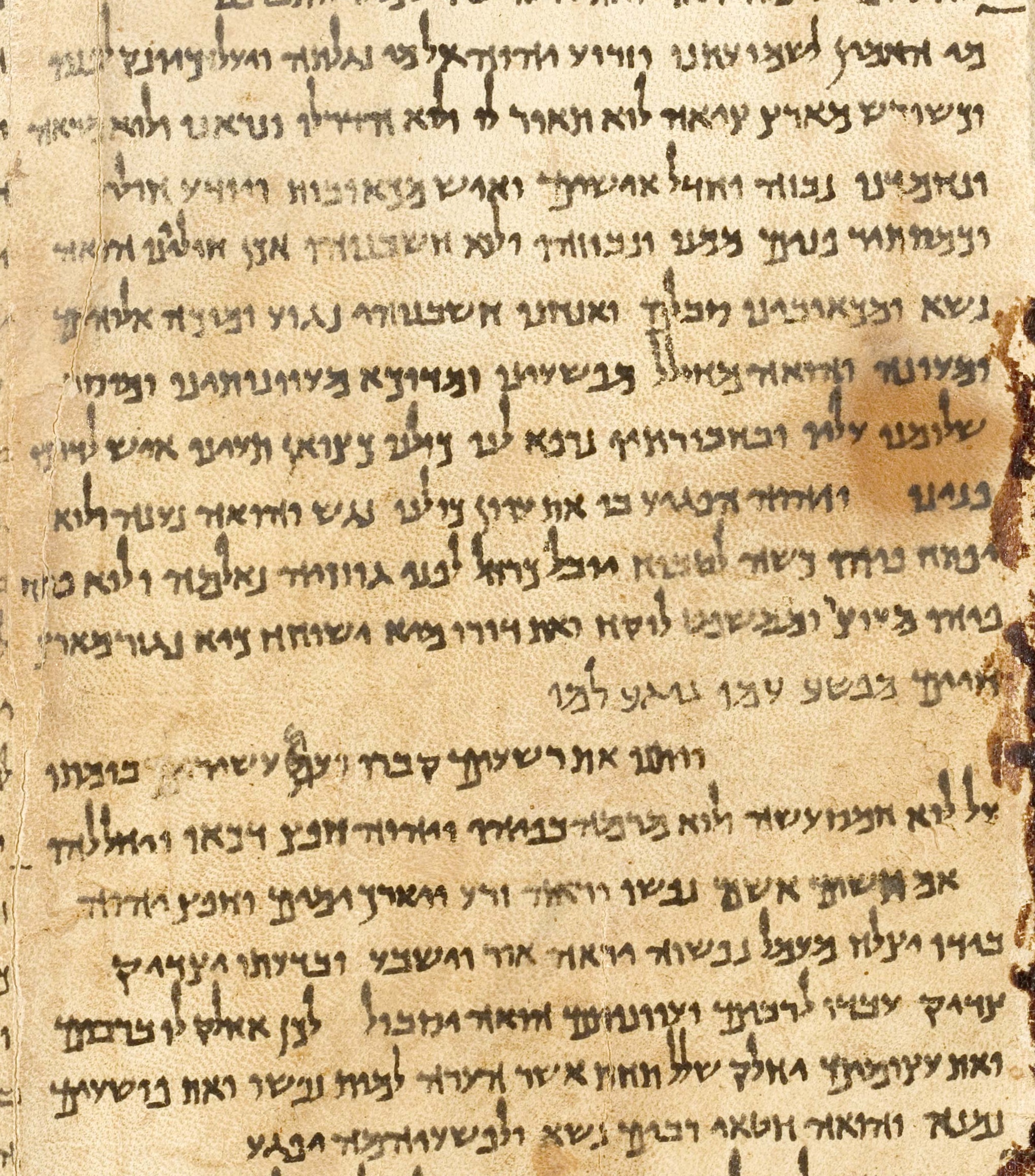 Source: Great Isaiah Scroll, Isaiah 53, Israel Museum / Ardon Bar Hama photograph via Wikimedia Commons, Public Domain Mark, https://commons.wikimedia.org/wiki/File:Great_Isaiah_Scroll_Ch53.jpg
Direct Source Pages and Verification Links
Scripture text
- Brenton Septuagint, Isaiah 52: https://biblehub.com/sep/isaiah/52.htm
- Brenton Septuagint, Isaiah 53: https://biblehub.com/sep/isaiah/53.htm
Patristic source pages
- Augustine, Tractates on John LIII.2-3: https://www.newadvent.org/fathers/1701053.htm
- Athanasius, On the Incarnation 34.1-2: https://www.newadvent.org/fathers/2802.htm
- Chrysostom, Homily XIX on Acts, on Acts 8:26-40: https://www.newadvent.org/fathers/210119.htm
Geography and visual context
- OpenBible.info, all places mentioned in Isaiah, interactive map and KML: https://www.openbible.info/geo/preview/isa
- Project Gutenberg, Hurlbut Bible Atlas, public-domain biblical geography background: https://www.gutenberg.org/cache/epub/41140/pg41140-images.html
- Wikimedia Commons, Great Isaiah Scroll image of Isaiah 53, Public Domain Mark: https://commons.wikimedia.org/wiki/File:Great_Isaiah_Scroll_Ch53.jpg
Coptic lectionary provenance
- The service connections above follow the named Lenten cycle or local Pascha and Bright Saturday witnesses; no universal agreement of editions is asserted.
Teaching Notes
Overall teaching emphases
- Main teaching aim: Help the class read Isaiah 53 - The Suffering Servant as part of Isaiah’s movement from judgment to hope, with Christ and the Church in view.
- Where to linger: Slow down at the guide’s stated turning points, verified lectionary anchors, patristic witnesses, and difficult pastoral guardrails rather than racing through every verse.
- Teacher preparation: Read the cited containing passages before quoting a Father; preserve each service witness’s scope and the distinction between direct exposition and Christian contemplation.
Class-use guardrails
- Keep the grouping rationale visible so the guide does not become a loose collection of devotional points.
- Distinguish verified lectionary evidence from broader liturgical resonance.
- Do not quote secondary access points as if they were direct patristic authority.
Discussion questions
Why does Isaiah begin the Servant Song with exaltation before describing humiliation?
What does Isaiah 53 reveal about human inability to recognize divine glory?
How can we explain Christ bearing our sins without reducing the Cross to a crude punishment model?
Why is the Servant’s silence spiritually powerful?
How does Acts 8 guide the Church’s reading of Isaiah 53?
What is the relationship between healing, forgiveness, sacrifice, and victory in this passage?
How does the Holy Week lectionary placement deepen the meaning of Isaiah 52:13-53:12?
How do the hearers’ promise of seed in verse 10 and the Servant’s promised light in verse 11 deepen hope without becoming the same grammatical clause?
Footnotes
-
Augustine, Tractates on John LIII.2-3. https://www.newadvent.org/fathers/1701053.htm. ↩ ↩2
-
Athanasius, On the Incarnation 34.1-2. https://www.newadvent.org/fathers/2802.htm. ↩ ↩2
-
Chrysostom, Homily XIX on Acts, on Acts 8:26-40. https://www.newadvent.org/fathers/210119.htm. ↩ ↩2