


Zechariah is a book of consolation after judgment, but its consolation is never cheap. The Lord calls His people to return, cleanses the priesthood, strengthens the rebuilding of the temple, exposes false fasting and false shepherding, and then opens the later chapters toward the Passion, the pierced One, the struck Shepherd, living waters, and universal worship of the King.
Historical and Scriptural Setting
Zechariah prophesied in the Persian period, after the return from Babylon, alongside Haggai. The temple was being rebuilt, but the deeper question was whether the people themselves would be rebuilt in repentance, mercy, and faithful worship. The book begins with the command, “Turn to me,” and ends with holiness written over ordinary vessels. That movement matters: restoration is not merely construction. It is communion with God.
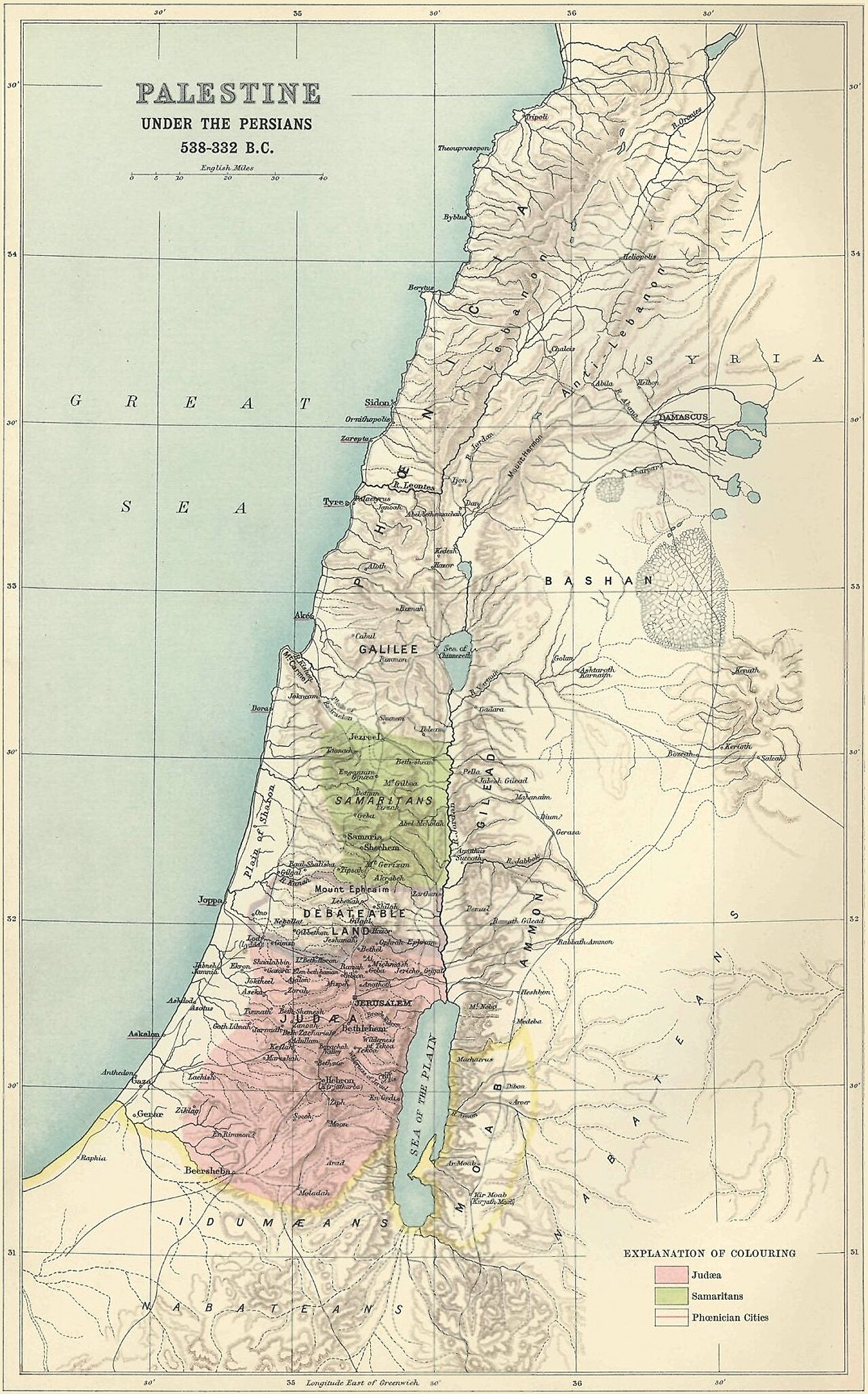 Source: Palestine under the Persians, George Adam Smith, 1915, public domain, via Wikimedia Commons.
Iconography and Visual Teaching 🖼️
The primary visual witness for this guide is the prophet himself, holding the prophetic word as one who sees the Lord’s future mercy before the rebuilt community can yet see it clearly.
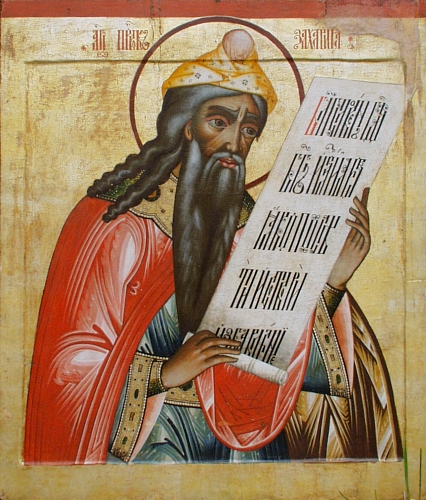 Source: Prophet Zechariah icon, Kizhi, public domain, via Wikimedia Commons.
Michelangelo’s Zechariah is included as a popular Western artwork and visual reception of the prophet, not as Orthodox iconography. It is useful only if the teacher wants to discuss how the prophet has been imagined in broader Christian art.
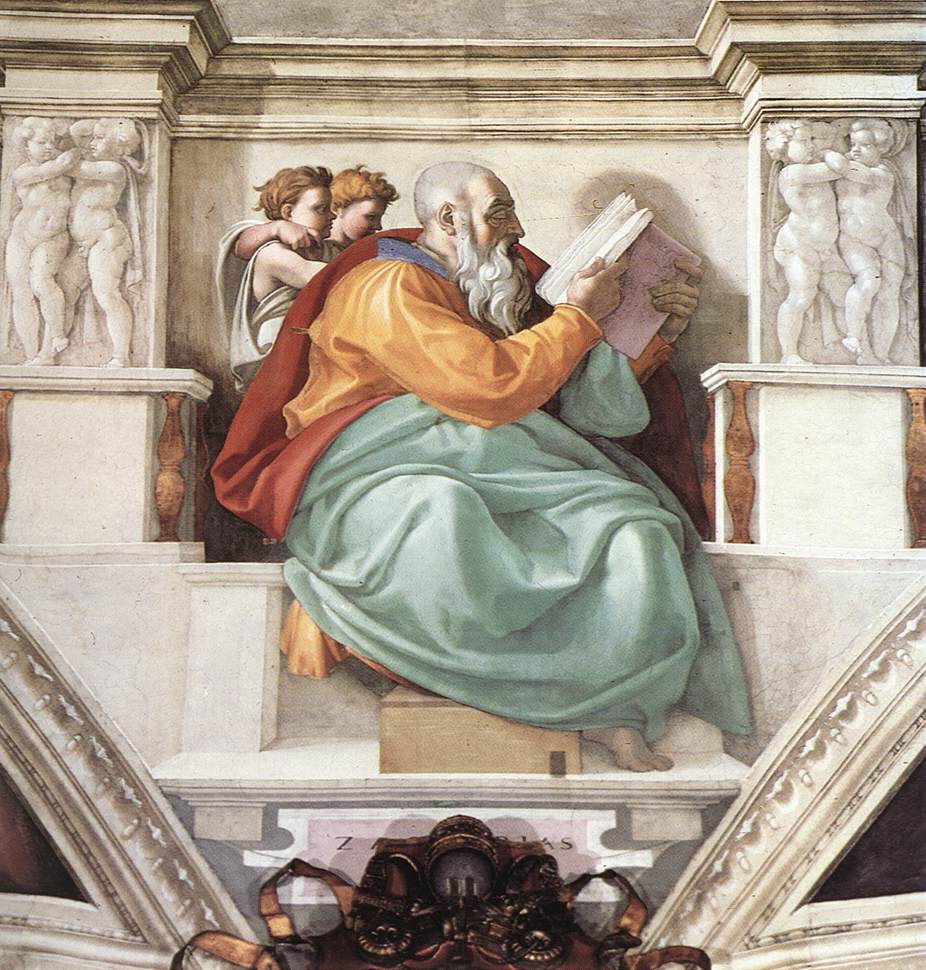 Source: Michelangelo, Prophet Zechariah, Sistine Chapel, public domain, via Wikimedia Commons.
Priesthood, Kingship, and the Branch
Zechariah repeatedly places Joshua the high priest and Zerubbabel the governor before the reader. They are real post-exilic leaders, not merely symbols, yet the book presses beyond them. Joshua is cleansed and later crowned as a sign. Zerubbabel is strengthened to finish the house. Together they prepare the reader to see Christ as Priest, King, Branch, and Builder of the true house of God.
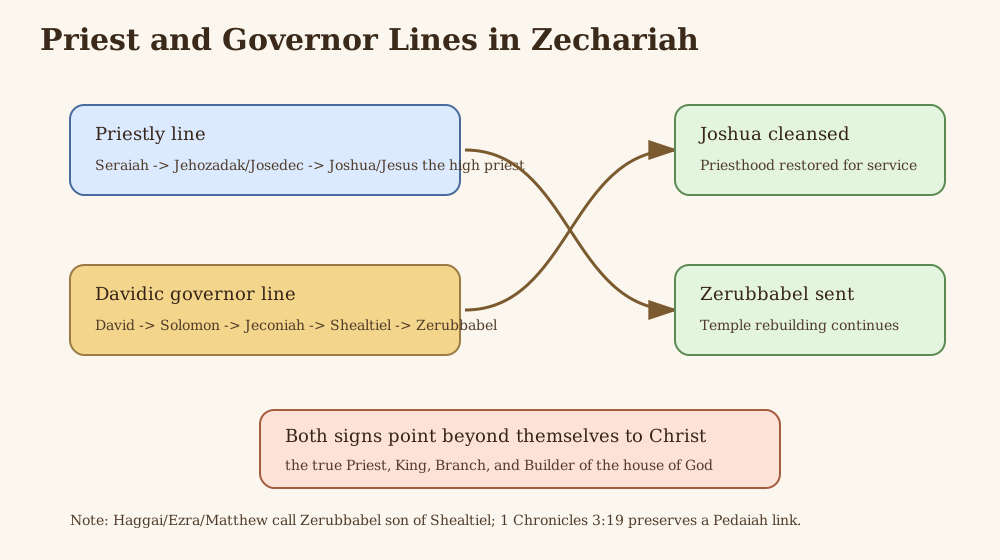 Source: Generated schematic for this guide. It is a teaching aid; Haggai, Ezra, and Matthew call Zerubbabel son of Shealtiel, while 1 Chronicles 3:19 preserves a Pedaiah link.
Movement of the Book
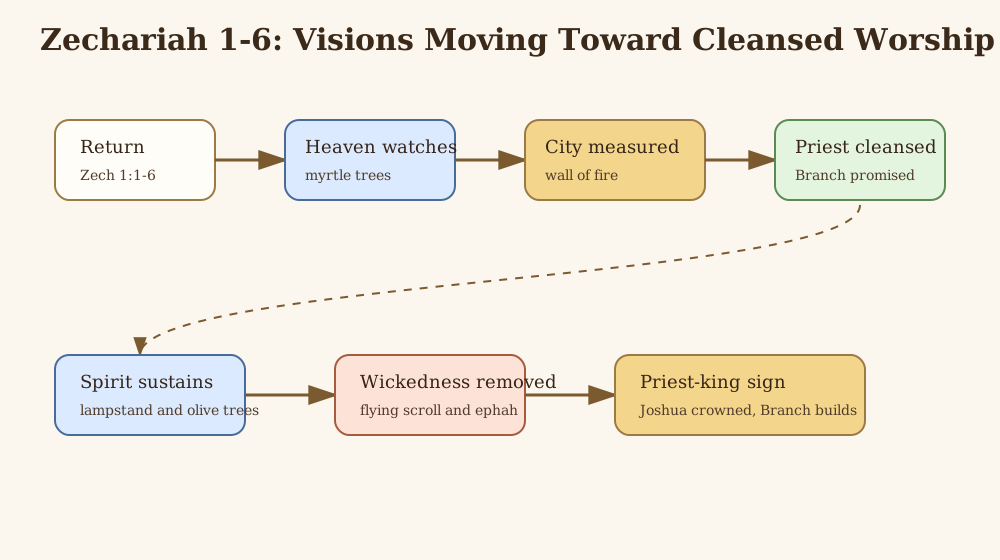 Source: Generated schematic for this guide.
- Return and vision: repentance opens the book before the night visions unfold.
- Cleansed worship: the city, priesthood, temple, and people must be restored together.
- True fasting and mercy: worship without justice is rejected, but Zion is promised restoration.
- The humble King and rejected Shepherd: the later oracles carry explicit Passion weight.
- Living waters and universal holiness: the book ends with the Lord reigning and ordinary life made holy.
The Church’s Voice in Worship ⛪
Zechariah has major Coptic Orthodox lectionary weight. Zechariah 1:1-6 appears on Monday Eve and Tuesday Eve in Holy Pascha. Zechariah 8 appears in Great Lent. Zechariah 9:9-15 appears on Lazarus Saturday, standing at the threshold of Palm Sunday. Zechariah 9:11-14 and 10:1-2 appear on Great Thursday. Zechariah 11:11-14 appears on Wednesday Ninth Hour and Good Friday First Hour. Zechariah 12-14 shape Great Thursday Eleventh Hour and Good Friday Ninth Hour readings.
This is not random placement. The Church hears Zechariah as a path from repentance into the Passion: the King comes meekly, the Shepherd is rejected, the pierced One is mourned, the fountain is opened, and the Lord reigns.
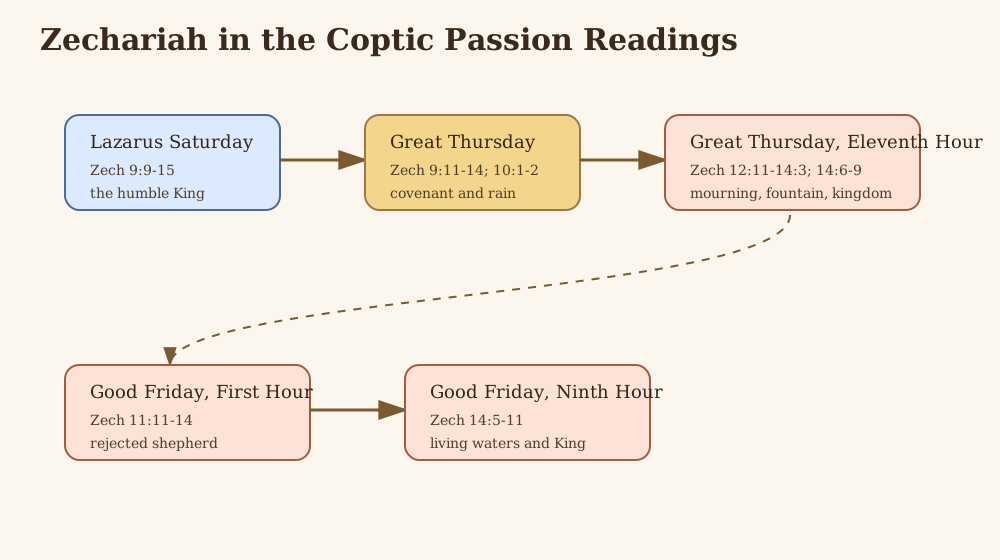 Source: Generated schematic from the verified Coptic lectionary references.
Study Guide Plan
| Guide | Focus | Revision judgment |
|---|---|---|
| Zechariah 1 | Return, watchful mercy, Pascha repentance | Revised with interleaved Scripture and Pascha placement |
| Zechariah 2 | Horns, measuring line, wall of fire, Lord dwelling in Zion | Revised with LXX source-shape awareness |
| Zechariah 3 | Joshua/Jesus the high priest, filthy garments, Branch | Revised with priestly and Christological depth |
| Zechariah 4 | Lampstand, olive trees, Spirit, small beginnings | Revised without forced Fathers section |
| Zechariah 5-6 | Wickedness removed, chariots, Joshua crowned | Kept grouped because purification leads to priest-king sign |
| Zechariah 7-8 | False fasting, mercy, restored Zion, nations seeking God | Kept grouped because the answer to fasting becomes mercy and mission |
| Zechariah 9 | Humble King, covenant blood, Lazarus Saturday | Revised with iconography and substantial Fathers |
| Zechariah 10-11 | Flock restored, false shepherd judged, thirty silver | Kept grouped only because both chapters receive full treatment |
| Zechariah 12 | Pierced One, mourning, grace | Revised with anti-supersessionist Passion guardrail |
| Zechariah 13 | Fountain, false prophecy, struck Shepherd | Revised with pastoral guardrails |
| Zechariah 14 | Living waters, Mount of Olives, universal holiness | Revised as eschatological worship, not speculation |
Sources
- Embedded Scripture in the chapter guides is from Brenton’s English Septuagint (LXX).
- Patristic anchors used across the revision include Cyril of Alexandria on John, John Chrysostom on John and First Corinthians, Justin Martyr’s Dialogue with Trypho, and Eusebius of Caesarea’s Proof of the Gospel.
- Visual sources and licenses are recorded in
Resources Used - Zechariah.mdandAudits/Zechariah Visual Assets Manifest - 2026-06-19.json.- Existing Google Docs and MP3 artifacts should be treated as refresh-needed after this Markdown revision.