


Ezekiel 35-36 joins external judgment on a hostile neighbor with the deepest promise of inner renewal for God’s people. Edom, long an enemy, sees Israel’s collapse as an opportunity to seize the land and mocks the Lord’s absence. The Lord answers by judging Edom’s claim and then speaking to the mountains of Israel: the land will be restored, but the people themselves must be cleansed from uncleanness and idolatry. God will sprinkle clean water, remove the heart of stone, give a heart of flesh, and put His Spirit within them so that they walk in His judgments. The restoration is not self-repair or mere return to territory. It is divine action that reaches the inner person for the sake of God’s holy name.
This unit carries one of the strongest new-covenant promises in the Old Testament. The original context is Israel’s profanation of the Lord’s name among the nations through idolatry and exile. God acts not because the people have earned mercy, but to sanctify His name before the watching world. Christian readers hear baptism, regeneration, and life in the Spirit here because the New Testament gathers the same pattern of water, Spirit, cleansing, and transformed obedience. The reading is disciplined: the promise first addressed a humiliated, exiled people; its fulfillment in Christ and the Church does not erase that history but brings it to its appointed end.
Geographical Significance ⛰️
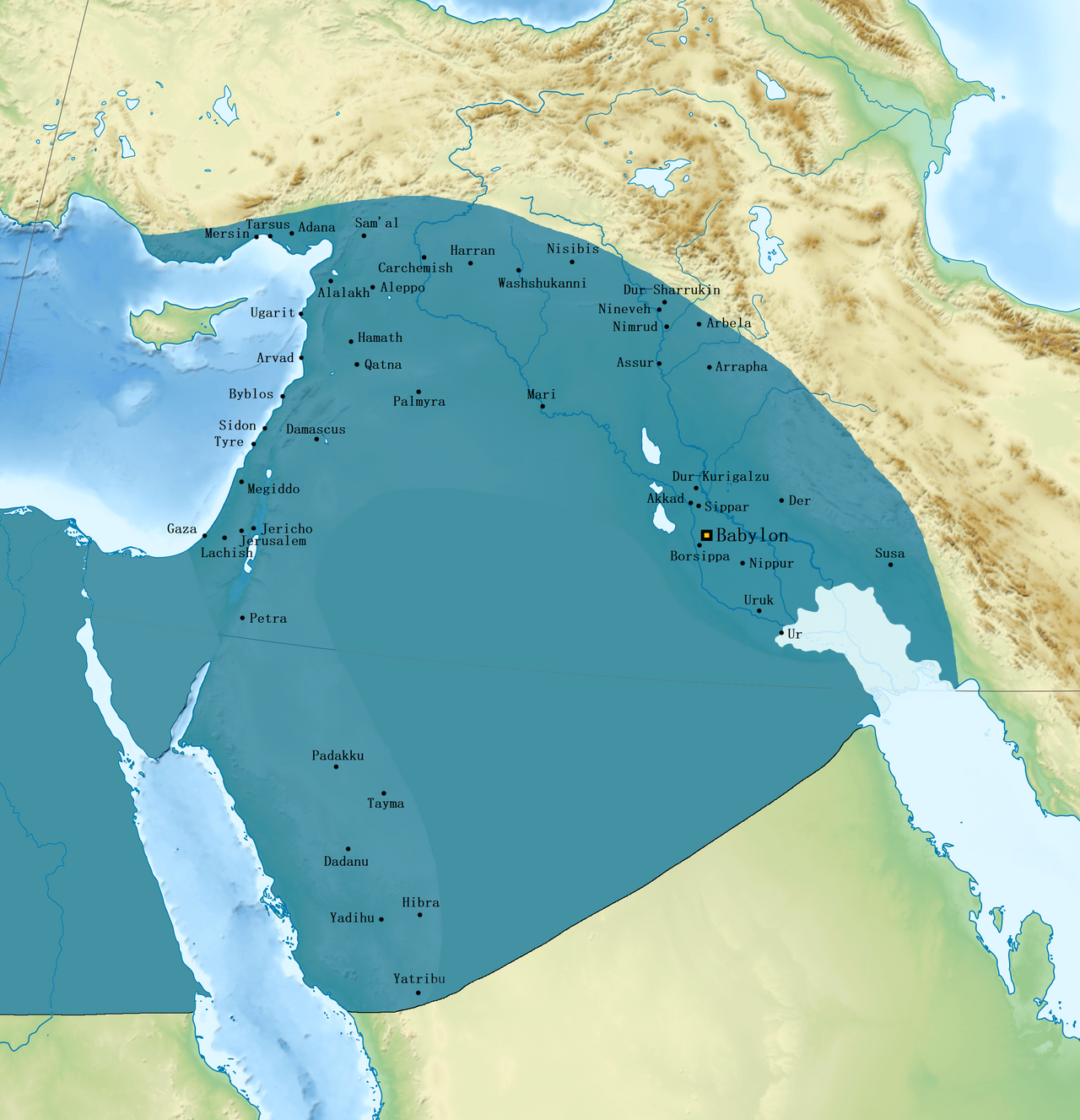 Source: BlueHypercane761, Neo-Babylonian Empire at maximum extent map, CC0 1.0, Wikimedia Commons, https://commons.wikimedia.org/wiki/File:Neo-Babylonian_Empire_at_maximum_extent_map.png
Mount Seir is the mountainous territory of Edom, south and southeast of Judah, the land of Esau’s descendants. In the prophetic memory Edom stands for brotherly enmity that turned into opportunistic violence when Israel fell. The sin is not foreign existence but the claim that Israel’s disaster left the land ownerless and available for seizure. The mountains of Israel answer Mount Seir. The land that bore reproach will be cultivated again, but the deeper wound is the people’s uncleanness. God restores both the inheritance and the heart.
The land promise must be taught in its original exilic setting first. The exiles longed for return to a concrete place after covenant judgment. The promise is never separated from holiness: the land is restored because the Lord sanctifies His name by cleansing His people. In Christian reading the inheritance opens toward the Church gathered from the nations and made holy in Christ. The literal hope is not erased; it is fulfilled in a greater key. The goal is not possession without cleansing. The goal is communion with the living God.
The Characters 👥
The Lord God is the sole actor who judges, gathers, sprinkles, cleanses, gives the new heart, puts His Spirit, and causes obedience. Repeated first-person verbs show that restoration is not the people’s achievement.
Ezekiel is commanded to speak to mountains and land as living witnesses. The prophet addresses the geography of shame and hope.
Mount Seir / Edom / Idumea embodies perpetual enmity, crafty waiting for Israel’s injustice, bloodguilt, blasphemous speech, and the claim that the two nations and countries are now theirs “whereas the Lord is there.” God hears the swelling words and judges them.
The mountains of Israel personify the land that has been devoured, mocked, and called desolate. God speaks to them before speaking again to the people.
The house of Israel is both wounded by enemies and responsible for defiling the land with idols and uncleanness. Restoration requires honesty about both.
The nations watch and will know that the Lord sanctifies His name when He restores and cleanses His people.
The Spirit is the gift that makes the new heart able to walk in God’s ordinances. The promise moves from external return to inward transformation.
Mount Seir judged for enmity and hostile claim (Ezekiel 35:1-15)
1 And the word of the Lord came to me, saying, 2 Son of man, set thy face against mount Seir, and prophesy against it, 3 and say to it, Thus saith the Lord God; Behold, I am against thee, O mount Seir, and I will stretch out my hand against thee, and will make thee a waste, and thou shalt be made desolate. 4 And I will cause desolation in thy cities, and thou shalt be desolate, and thou shalt know that I am the Lord. 5 Because thou hast been a perpetual enemy, and hast laid wait craftily for the house of Israel, with the hand of enemies with a sword, in the time of injustice, at the last: 6 Therefore, as I live, saith the Lord God, verily thou hast sinned even to blood, therefore blood shall pursue thee. 7 And I will make mount Seir a waste, and desolate, and I will destroy from off it men and cattle: 8 and I will fill thy hills and thy valleys with slain men, and in all thy plains there shall fall in thee men slain with the sword. 9 I will make thee a perpetual desolation, and thy cities shall not be inhabited any more: and thou shalt know that I am the Lord. 10 Because thou saidst, The two nations and the two countries shall be mine, and I shall inherit them; whereas the Lord is there: 11 therefore, as I live, saith the Lord, I will even deal with thee according to thine enmity, and I will be made known to thee when I shall judge thee: 12 and thou shalt know that I am the Lord. I have heard the voice of thy blasphemies, whereas thou hast said, The desert mountains of Israel are given to us for food; 13 and thou hast spoken swelling words against me with thy mouth: I have heard them. 14 Thus saith the Lord; When all the earth is rejoicing, I will make thee desert. 15 Thou shalt be desert, O mount Seir, and all Idumea; and it shall be utterly consumed: and thou shalt know that I am the Lord their God.
Edom’s sin is named with precision. Brenton preserves “perpetual enemy,” “laid wait craftily,” and “sinned even to blood.” The decisive claim appears in verse 10: “The two nations and the two countries shall be mine, and I shall inherit them; whereas the Lord is there.” Edom treats the land as abandoned property because the people have fallen. The prophetic qualification “whereas the Lord is there” answers Edom’s boast: the land is not ownerless merely because Israel has been defeated. The words about the Lord’s presence are the oracle’s correction of the claim, not Edom’s own confession. God hears the blasphemies and the swelling words. Judgment is severe because the sin is the public denial that the Lord remains faithful to His covenant even in judgment.
The original context matters. Edom descended from Esau, Jacob’s brother. The hostility is not generic foreign enmity but the betrayal of kinship when the weaker brother is down. Ezekiel refuses to let the Church read this as permission for personal revenge or ethnic contempt. Divine judgment on opportunistic hatred is not the same as human vindictiveness. The lesson is sober: it is possible to use another’s collapse as an opening for possession while speaking as if God has left the field. The Church must refuse that spirit in the heart.
The mountains of Israel restored from shame (Ezekiel 36:1-15)
1 And thou, son of man, prophesy to the mountains of Israel, and say to the mountains of Israel, Hear ye the word of the Lord: 2 Thus saith the Lord God; Because the enemy has said against you, Aha, the old waste places are become a possession for us: 3 therefore prophesy, and say, Thus saith the Lord God; Because ye have been dishonoured, and hated by those round about you, that ye might be a possession to the remainder of the nations, and ye became a by-word, and a reproach to the nations: 4 therefore, ye mountains of Israel, hear the word of the Lord; Thus saith the Lord to the mountains, and to the hills, and to the streams, and to the valleys, and to the places that have been made desolate and destroyed, and to the cities that have been deserted, and have become a spoil and a trampling to the nations that were left round about; 5 therefore thus saith the Lord; Verily in the fire of my wrath have I spoken against the rest of the nations, and against all Idumea, because they have appropriated my land to themselves for a possession with joy, disregarding the lives of the inhabitants, to destroy it by plunder: 6 therefore prophesy concerning the land of Israel, and say to the mountains, and to the hills, and to the valleys, and to the forests, Thus saith the Lord; Behold, I have spoken in my jealousy and in my wrath, because ye have borne the reproaches of the heathen: 7 therefore I will lift up my hand against the nations that are round about you; they shall bear their reproach. 8 But your grapes and your fruits, O mountains of Israel, shall my people eat; for they are hoping to come. 9 For, behold, I am toward you, and I will have respect to you, and ye shall be tilled and sown: 10 and I will multiply men upon you, even all the house of Israel to the end: and the cities shall be inhabited, and the desolate land shall be built upon. 11 And I will multiply men and cattle upon you; and I will cause you to dwell as at the beginning, and will treat you well, as in your former times: and ye shall know that I am the Lord. 12 And I will increase men upon you, even my people Israel; and they shall inherit you, and ye shall be to them for a possession; and ye shall no more be bereaved of them. 13 Thus saith the Lord God: Because they said to thee, Thou land devourest men, and hast been bereaved of thy nation; 14 therefore thou shalt no more devour men, and thou shalt no more bereave thy nation, saith the Lord God. 15 And there shall no more be heard against you the reproach of the nations, and ye shall no more bear the revilings of the peoples, saith the Lord God.
The prophet turns from the enemy’s claim to the land’s shame. The enemy said “Aha,” and the land has been devoured, mocked, and called a by-word. God speaks directly to the geography of loss: mountains, hills, streams, valleys, forests, ruined cities. The promise is concrete: grapes and fruits will be eaten, cities inhabited, the land tilled and sown, men and cattle multiplied, the reproach lifted. The land that was said to devour its people will no longer do so.
This is not a political slogan. The literal promise addressed exiles whose home had become a spectacle of judgment. At the same time, the land is restored only as part of the sanctifying of God’s name. External repair without inner cleansing would simply repeat the old cycle. The next sections move from land to name to water to heart to Spirit.
The holy name profaned among the nations (Ezekiel 36:16-23)
16 And the word of the Lord came to me, saying, 17 Son of man, the house of Israel dwelt upon their land, and defiled it by their way, and with their idols, and with their uncleannesses; and their way was before me like the uncleanness of a removed woman. 18 So I poured out my wrath upon them: 19 and I dispersed them among the nations, and utterly scattered them through the countries: I judged them according to their way and according to their sin. 20 And they went in among the nations, among which they went, and they profaned my holy name, while it was said of them, These are the people of the Lord, and they came forth out of his land. 21 But I spared them for the sake of my holy name, which the house of Israel profaned among the nations, among whom they went. 22 Therefore say to the house of Israel, Thus saith the Lord; I do not this, O house of Israel, for your sakes, but because of my holy name, which ye have profaned among the nations, among whom ye went. 23 And I will sanctify my great name, which was profaned among the nations, which ye profaned in the midst of them; and the nations shall know that I am the Lord, when I am sanctified among you before their eyes.
Israel’s own sin is now named. The people defiled the land with their way, idols, and uncleannesses. Brenton preserves the hard image “like the uncleanness of a removed woman.” This is Torah language for ritual defilement applied to covenant betrayal. It must not be turned into contempt for women or the body. The image shocks because idolatry has made the worship of the holy God unclean.
The exile produced a new profanation: the nations looked at the scattered people and said, “These are the people of the Lord, and they came forth out of his land.” The Lord’s name was dragged through the mud because His people were in exile. God therefore acts for the sake of His holy name. He will sanctify it among the nations by restoring and cleansing His people so that the nations see that the Lord is neither faithless nor indifferent to uncleanness.
Clean water, a new heart, and the Spirit within (Ezekiel 36:24-32)
24 And I will take you out from the nations, and will gather you out of all the lands, and will bring you into your own land: 25 and I will sprinkle clean water upon you, and ye shall be purged from all your uncleannesses, and from all your idols, and I will cleanse you. 26 And I will give you a new heart, and will put a new spirit in you: and I will take away the heart of stone out of your flesh, and will give you a heart of flesh. 27 And I will put my Spirit in you, and will cause you to walk in mine ordinances, and to keep my judgments, and do them. 28 And ye shall dwell upon the land which I gave to your fathers; and ye shall be to me a people, and I will be to you a God. 29 And I will save you from all your uncleannesses: and I will call for the corn, and multiply it, and will not bring famine upon you. 30 And I will multiply the fruit of the trees, and the produce of the field, that ye may not bear the reproach of famine among the nations. 31 And ye shall remember your evil ways, and your practices that were not good, and ye shall be hateful in your own sight for your transgressions and for your abominations. 32 Not for your sakes do I this, saith the Lord God, as it is known to you: be ye ashamed and confounded for your ways, O house of Israel.
This is the heart of the unit. The order is decisive. God gathers, sprinkles clean water, cleanses from uncleannesses and idols, gives a new heart, removes the heart of stone, gives a heart of flesh, puts His Spirit within, and causes the people to walk in His ordinances. The new heart is not the result of human effort. It is the gift that makes obedience possible as communion rather than coercion.
In the original context the promise addresses a people whose exile has profaned the Lord’s name. The “clean water” echoes ritual purification but reaches the inner life. The heart of stone is the inner person hardened against God, unable to respond to warning or mercy. The heart of flesh is living and responsive. The Spirit within does not make obedience automatic; He makes it possible as the life of the renewed person.
Christian reading is strong and disciplined here. John 3:5 anchors new birth in water and the Spirit; the Church has always heard Holy Baptism in these words. John 7:37-39 presents Christ giving living water as the Spirit. Acts 2 shows the Spirit descending at Pentecost. Titus 3:5 speaks of the washing of regeneration and renewal of the Holy Spirit. Romans 8 and 2 Corinthians 3 show life in the Spirit rather than according to the flesh. These are not arbitrary overlays. They gather the same movement: cleansing, new life, indwelling Spirit, and transformed obedience. The original promise to exiled Israel finds its appointed fulfillment in Christ, baptism, and the life of the Church without erasing the historical setting.
Verse 31 adds the pastoral note: the restored people will remember their evil ways and be ashamed. This shame is truthful remembrance after mercy, not self-hatred as identity. The healed person does not boast that restoration was deserved. Repentance without self-congratulation is a mark of the new heart.
The Church’s Voice in Worship ⛪
Ezekiel 36:25–29 is read in the Theophany Liturgy of the Waters, and 36:25–28 in the Great Thursday Liturgy of the Waters. These appointments join cleansing and the new heart to the Church’s water-blessing prayer. Distinctly, 36:16–23 is read at the Third Hour of the Eve of Good Friday. That earlier passage concerns the profaned name and God’s sanctifying action; it must not be mislabeled as the water-blessing selection.
Renewed land and holy flock (Ezekiel 36:33-38)
33 Thus saith the Lord God; In the day wherein I shall cleanse you from all your iniquities I will also cause the cities to be inhabited, and the waste places shall be built upon: 34 and the desolate land shall be cultivated, whereas it was desolate in the eyes of every one that passed by. 35 And they shall say, That desolate land is become like a garden of delight; and the waste and desolate and ruined cities are inhabited. 36 And the nations, as many as shall have been left round about you, shall know that I the Lord have built the ruined cities and planted the waste lands: I the Lord have spoken, and will do it. 37 Thus saith the Lord God; Yet for this will I be sought by the house of Israel, to establish them; I will multiply them even men as sheep; 38 as holy sheep, as the sheep of Jerusalem in her feasts; thus shall the desert cities be full of flocks of men: and they shall know that I am the Lord.
The land is cultivated “in the day wherein I shall cleanse you from all your iniquities.” External restoration follows inner cleansing. The desolate land becomes like a garden of delight. The nations see that the Lord has built and planted. Yet the final image is not merely abundance. God will be sought by His people, and He will multiply them “as holy sheep, as the sheep of Jerusalem in her feasts.” The restored people are a worshiping flock. This links to Ezekiel 34’s true Shepherd and prepares for the Spirit making dry bones live in chapter 37. The new heart produces a gathered, worshiping people visible to the nations.
Spiritual Fruit 🍇
-
Refuse the sin of Edom in the heart. Edom rejoiced over ruin and called another’s weakness an opportunity for possession. Ask where you are tempted to possess what belongs to someone else because they are tired, exposed, or disgraced. Repent of malicious joy before it becomes action or speech.
-
Let God name both wounds and sins. Israel was mocked by enemies, but Israel also defiled the land. A healed soul does not choose between victimhood and responsibility. Bring your own sins to confession, and bring the wounds others inflicted into prayer and safe pastoral care. Being harmed is not itself something to confess as guilt.
-
Ask for the new heart, not only better circumstances. Rebuilt cities do not save a stony heart. A changed schedule, home, job, parish, or relationship will not by itself create holiness. Pray Ezekiel 36:26 slowly: ask God to remove hardness and give a living heart.
-
Receive shame as truthful repentance, not as identity. Ezekiel 36:31 says the restored people remember their evil ways. This is not despair. It is humble memory after cleansing. Do not boast in your repentance, and do not call yourself beyond mercy.
-
Live as part of the holy flock. The chapter ends with holy sheep in Jerusalem’s feasts. The Spirit forms worshiping communion. If your spirituality makes you isolated, contemptuous, or careless toward the parish body, ask whether it is the Spirit of God or a private religious mood.
The ruined land will be planted, but the promise reaches deeper than the ground. Lord, enter the hardness that better circumstances cannot heal. Wash what we have protected, give life where we have resisted You, and gather us into worship that bears mercy toward our neighbor.
Teaching Notes
Ezekiel 35:1-15 - Mount Seir judged for enmity and hostile claim
- Ask: Where do we see the spirit of Edom in ordinary life—rejoicing over another’s fall or treating someone’s weakness as our opportunity?
- Emphasize: The sin is not foreign existence but perpetual enmity, bloodguilt, blasphemy, and the claim that the Lord is absent so the land is available.
- Watch for: Using the chapter to baptize personal revenge, ethnic contempt, or modern political triumphalism.
- Connect: The Lord is still there even when His people have fallen under judgment. Hostile claims against God’s inheritance will be answered.
Ezekiel 36:1-15 - The mountains of Israel restored from shame
- Ask: What shame or reproach still clings to places or memories in your life or parish?
- Emphasize: God restores the land as part of sanctifying His name and healing His people. External repair without inner cleansing repeats the old cycle.
- Watch for: Teaching the land promise as a simplistic modern slogan or as a replacement for inner holiness.
- Connect: The land promise prepares for the deeper promise of the new heart.
Ezekiel 36:16-23 - The holy name profaned among the nations
- Ask: How does our sin give the watching world reason to speak wrongly about God?
- Emphasize: God acts for His holy name because His name is the truth of holiness and mercy revealed to the nations. Restoration requires honesty about both wounds and sins.
- Watch for: Using the uncleanness image to shame women or bodies. Keep the focus on covenant defilement and idolatry.
- Connect: This passage is read at the Third Hour of the Eve of Good Friday. Keep that service distinct from the Eve of Great Thursday and the Great Thursday water blessing.
Ezekiel 36:24-32 - Clean water, a new heart, and the Spirit within
- Ask: What would it look like for God to give you a heart of flesh instead of a heart of stone?
- Emphasize: The order is gift before achievement. God cleanses, gives the new heart, puts His Spirit within, and then causes walking in His ordinances. Baptism and life in the Spirit are strong Christian fulfillments of this promise.
- Watch for: Presenting the new heart as mere self-improvement, emotional softness, or moral effort without grace.
- Connect: John 3:5, Titus 3:5, and the gift of the Spirit at Pentecost gather the same pattern.
Ezekiel 36:33-38 - Renewed land and holy flock
- Ask: How does the new heart produce a worshiping people rather than a private religious mood?
- Emphasize: Cleansing leads to visible restoration, holy gathering, and renewed worship. The Spirit forms a flock, not isolated individuals.
- Watch for: Separating inner spirituality from communal repair, worship, mercy, and public holiness.
- Connect: This prepares for the dry bones and one Shepherd in the next chapter.
Glossary
- Mount Seir / Edom / Idumea: The mountainous region south and southeast of Judah, descendants of Esau. In this unit it represents perpetual enmity and opportunistic claim on what belongs to God’s covenant people.
- Holy name: God’s revealed identity and truth before the nations. God sanctifies His name by showing holiness, justice, mercy, and faithfulness rather than by shielding His people from the consequences of sin.
- Heart of stone: The hardened inner person, resistant to God’s word, mercy, and correction.
- Heart of flesh: A living heart made responsive to God, capable of repentance, love, and obedience.
- New spirit / My Spirit: Ezekiel moves from inward renewal to the gift of God’s own Spirit within His people, causing them to walk in His ordinances.
- Uncleanness: In this passage, prophetic covenant language for idolatry and defiled worship. It must not be turned into contempt for women or bodies.
- New covenant: The promised life in which God cleanses, renews, and writes obedience into His people by the Spirit, fulfilled in Christ and lived in the Church.
Translation and Source Notes
Embedded Scripture is from Brenton’s English Septuagint (LXX).
The five quoted units are Ezekiel 35:1-15, Ezekiel 36:1-15, Ezekiel 36:16-23, Ezekiel 36:24-32, and Ezekiel 36:33-38. No special Brenton numbering issue affects these chapters.
The land promise is treated in its literal exilic sense first, then in Christian theological fulfillment through holiness, worship, and the gathered people of God. This guide does not use Ezekiel 36 as a modern political proof-text. It also does not erase the concrete historical hope of return, rebuilt cities, cultivated land, and restored worship.
Sources
Embedded Scripture is from Brenton’s English Septuagint (LXX).
Ezekiel 35–36; compare Genesis 36:1–9; John 3:5; 7:37–39; Titus 3:5; Romans 8. 🔗 🔗
St. Mary Coptic Orthodox Church, Ottawa, Katameros of the Holy Pascha, English edition, p. 493 (Eve of Good Friday, Third Hour, 36:16–23) and p. 428 (Great Thursday water blessing, 36:25–29). The service-book headings control the day labels; older secondary tables use inconsistent labels.
Coptic Reader, Theophany, Liturgy of the Waters, prophecy list, Ezekiel 36:24–29. This is a different appointed boundary from Great Thursday’s reading.
Coptic Synaxarium, 5 Baramouda, commemoration of the Prophet Ezekiel, for the Church’s reception of the promise in relation to baptism. 🔗
- Service witnesses: Coptic Reader, Theophany and Great Thursday Liturgies of the Waters; St. Mary Ottawa, Katameros of the Holy Pascha, English, printed p. 463 for the Third Hour of the Eve of Good Friday.