
Ezekiel speaks to people who have lost the place where they expected God to be found. Jerusalem’s temple still stands when the book opens, but the priest-prophet is already among the exiles in Babylon. There, beside the river, he sees the glory of the Lord. The book begins by unsettling despair: God can address His people beyond their ruined expectations. It also unsettles presumption: possessing a sanctuary cannot make idolatry, bloodshed, and injustice safe.
The movement of divine glory holds the book together. The Lord appears in exile, exposes the corruption of Jerusalem, departs from the defiled sanctuary, promises cleansing and renewed life, and returns to dwell among His people. Judgment is neither an embarrassment to skip nor the final word. The end is communion: the familiar Hebrew ending names the city from the Lord’s presence, while Brenton’s wording differs as explained below.
Introduction
Ezekiel’s world
Ezekiel identifies himself as a priest, the son of Buzi, among the captives beside the river Chebar or Chobar. His opening vision is dated to the fifth year of King Jehoiachin’s captivity (1:1–3). Jehoiachin’s deportation in 597 BC and Jerusalem’s destruction in 586 BC provide the historical setting for the book’s warnings and promises. Ezekiel speaks from Babylon to a fractured people: some remain in Judah, while others live in exile. His priestly concern with holiness joins worship to the treatment of neighbors, leaders, and the vulnerable.1
The message changes as Jerusalem’s fall becomes known in chapter 33. Before the catastrophe, Ezekiel confronts the expectation that judgment will never arrive. Afterward, he confronts the conviction that life can never begin again. Yet these are not sealed compartments. Promises of a new heart already appear in chapter 11, and calls to repentance continue after the fall. The book is a shaped prophetic witness, not a simple chronological diary; dated oracles sometimes appear out of sequence.
The sign-acts make the coming disaster bodily and visible: a model siege, rationed food, shaved hair, exile baggage, and the prophet’s bereavement. They require patient reading. Ezekiel’s extraordinary commissions are not instructions for readers to imitate literally or explanations for every later person’s suffering.
The book’s four movements
| Movement | Chapters | What changes |
|---|---|---|
| Glory, calling, and judgment within the covenant | 1–24 | The Lord’s presence exposes the difference between religious confidence and faithful life. Jerusalem’s fall becomes unavoidable. |
| The nations brought before the Lord | 25–32 | Neighbors and empires are judged for malicious joy, pride, violence, and false security. Judah’s disaster does not make their cruelty innocent. |
| A people restored by their Shepherd | 33–39 | The watchman’s renewed word opens into one Shepherd, cleansing, a new heart, resurrection imagery, unity, and protection from evil. |
| A holy dwelling and a healed inheritance | 40–48 | Measured space, returning glory, accountable worship, just landholding, and life-giving water culminate in the Lord dwelling among His people. |
Why these studies are grouped this way
The course uses 31 studies, organized by literary movement rather than equal chapter counts. A long study may need more than one meeting. Dividing a meeting is not the same as breaking a coherent vision into unrelated lessons.
- 1; 2–3; 4–5; 6–7; 8–11: The calling and early signs remain in their natural units. Chapters 8–11 stay together because the temple tour and the departure of glory form one vision. The guide’s internal passage divisions provide pauses without losing that movement.
- 12–13; 14–15; 16; 17; 18: Signs and false prophecy receive one study; inward idolatry, responsibility, and the useless vine receive another. The large marriage allegory in 16 stands alone, as do the royal eagle parable in 17 and the sustained argument about repentance in 18.
- 19; 20; 21–22; 23; 24: The royal lament now stands apart from the long history of rebellion. Sword and bloodguilt remain together because chapter 22 names the corruption behind chapter 21’s judgment. The second marriage allegory and the siege-bereavement turning point each receive their own attention.
- 25; 26–27; 28; 29–30; 31–32: The neighboring nations, Tyre’s fall and trading-ship lament, the ruler of Tyre and Sidon, Egypt’s broken power, and the descent of empires into death each receive a coherent study. This replaces two overloaded four-chapter surveys.
- 33; 34; 35–36; 37; 38–39: The watchman and Shepherd stand independently. Edom’s hostile claim and Israel’s restored mountains remain together; the new heart leads into dry bones and one people. Gog and Magog remain one sustained vision of evil’s defeat.
- 40–42; 43; 44; 45–46; 47; 48: The measured temple tour stays intact, but returning glory and priestly holiness are separated. Worship and the prince’s economic responsibilities remain together. The river and inheritance in 47 receive their own study, and the final distribution and city name in 48 are no longer an appendix to the river vision.
Questions that open the book
Where can the Lord be encountered when familiar supports disappear? The throne vision does not make place unimportant. It reveals that God’s freedom exceeds His people’s captivity. Later, His willingness to dwell among them makes their land and common life holy rather than disposable.
What profanes worship? Ezekiel names idols, but also extortion, bloodshed, neglected parents, exploited strangers, oppressed poor people, and predatory shepherds. Temple language must never become an excuse to discuss ceremony while avoiding injustice. Reverence and mercy belong to the same obedience.
How can responsibility and grace belong together? Chapter 18 rejects inherited fatalism and calls for turning. Chapter 36 promises the cleansing, new heart, and Spirit that make renewed obedience possible. These are not competing accounts of salvation. The person must truly repent; the life received is truly God’s gift.
Why does God act for His holy name? His name is His revealed identity among the nations. Acting for it is not protecting a reputation by concealing abuse. He exposes His people’s wrongdoing, judges it, and reveals His faithfulness by cleansing and restoring them. A church community cannot honor His name through secrecy about harm.
What does restoration restore? Not merely buildings or national confidence. The sequence includes truthful hearing, faithful shepherding, inward renewal, a reunited people, protected communion, just worship, and life flowing outward. The final vision tests whether our hope is for God’s presence or simply the return of our preferred circumstances.
Reading Ezekiel with Christ and His Church
Christian fulfillment grows from the passage’s own subject. The promise of one Davidic Shepherd in 34 and 37 opens naturally toward Christ the Good Shepherd in John 10. Clean water, a new heart, and the Spirit in 36 illuminate new birth and baptism. The dry bones first explain Israel’s shattered hope, as 37:11 explicitly says; the Church also hears in God’s victory over death the promise of the resurrection of the dead. St. Cyril of Jerusalem uses Ezekiel 37 in his catechesis on resurrection. The historical explanation and the Church’s fuller reception must both remain visible.2
The returning glory in 43 and the life-giving river in 47 stand within the same promise of divine dwelling. John 7:37–39 and Revelation 22 help Christians hear the river in relation to Christ, the Spirit, and the life of the world to come. This does not make each measurement a coded prediction. Chapters 40–48 also insist on boundaries, honest measures, protected inheritances, and leaders who cannot seize their neighbors’ land.
The prince of the temple vision cannot be equated with Christ at every detail. He makes an offering for himself in 45:22 and has sons and inheritance rules in 46:16–18. Christological reading must acknowledge those details rather than forcing the sinless Lord into every office described. Likewise, the vision’s offerings are read in the light of Christ’s once-for-all sacrifice, not as an instruction to restart animal sacrifices.
The Lord’s holiness is not permission for human cruelty. Chapters 16 and 23 use graphic covenant allegories to expose idolatry, bloodguilt, and political betrayal. They must not be used to justify domestic or sexual violence, blame victims, or shame women. Chapter 24’s exceptional prohibition of public mourning is not a general Christian command against tears. Christ Himself weeps at Lazarus’s tomb. A spiritually beneficial reading stays truthful about the text without turning its hardest images into weapons against the suffering.
The Church’s Voice in Worship ⛪
Ezekiel is commemorated in the Coptic Synaxarium on 5 Baramouda. That entry receives the shut gate of 44:1–2 in relation to the perpetual virginity of the Mother of God, and recalls the book’s promises of baptism, the new heart, and resurrection. This is specific evidence of Coptic reception, distinct from assigning an entire chapter as a lectionary reading.3
Selected attested readings show how the Church places Ezekiel within repentance, cleansing, and Pascha:
| Passage | Service placement | Spiritual connection |
|---|---|---|
| 18:19–32 | First Hour of Great Thursday | Personal repentance before the Lord who desires life rather than the sinner’s death. |
| 20:27–33; 20:39–44 | Ninth Hour of the Eve of Great Thursday; Sixth Hour of Great Thursday, respectively | Judgment of false worship and the gathering of a people who remember their ways truthfully. |
| 36:16–23 | Third Hour of the Eve of Good Friday | The profaned divine name and God’s sanctifying action. |
| 36:25–29 | Theophany Liturgy of the Waters | Cleansing and the gift of a new heart. |
| 36:25–28; 47:1–9 | Great Thursday Liturgy of the Waters | Cleansing and life-giving water in the setting of Christ’s humility and service. |
| 37:1–14 | Apocalypse Night vigil | The promise of life heard as the Church awaits the proclamation of the Resurrection. |
| 43:5–11 | First Hour of the Eve of Great Thursday | Returning glory, shame for sin, and the holiness of God’s dwelling. |
The Holy Pascha day labels here follow the service-book headings, not an inferred civil weekday. The attached study passages explain the relevant connection; the table is not a claim that every passage has an assigned service.4
Spatial aids
The throne and temple studies retain diagrams where the passage depends on movement and orientation. These are teaching schematics, not photographs, canonical icons, or proof of an exact historical reconstruction.
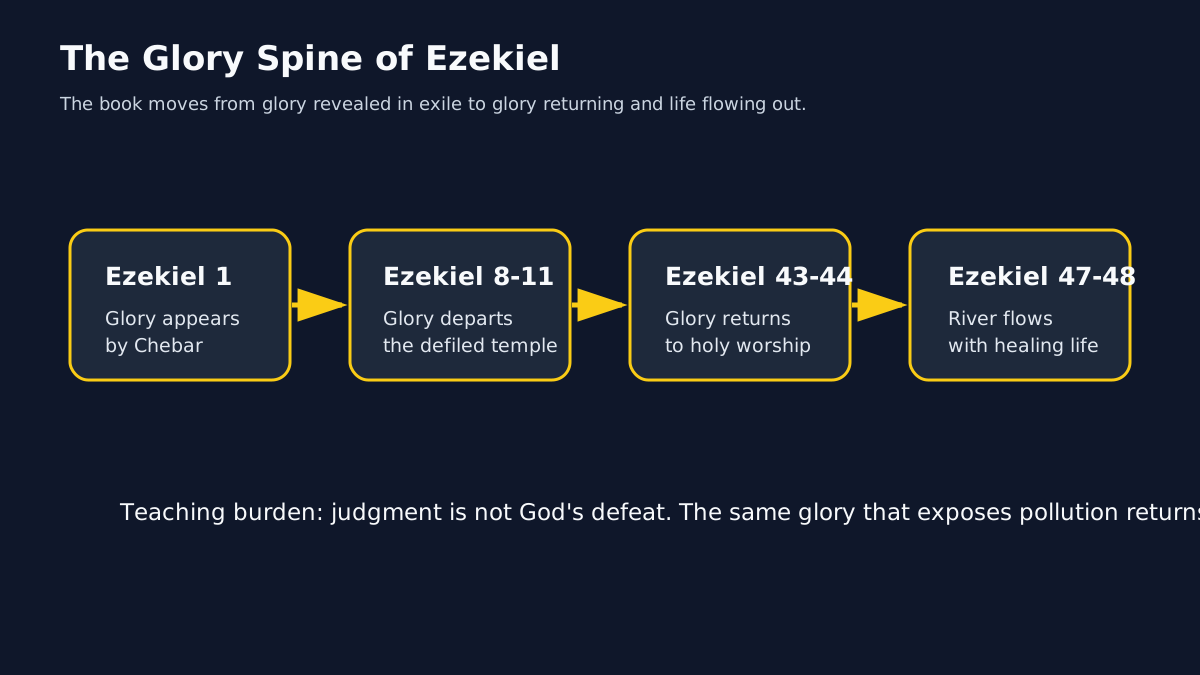
The movement of glory links the exile vision, departure from Jerusalem, and eventual return.
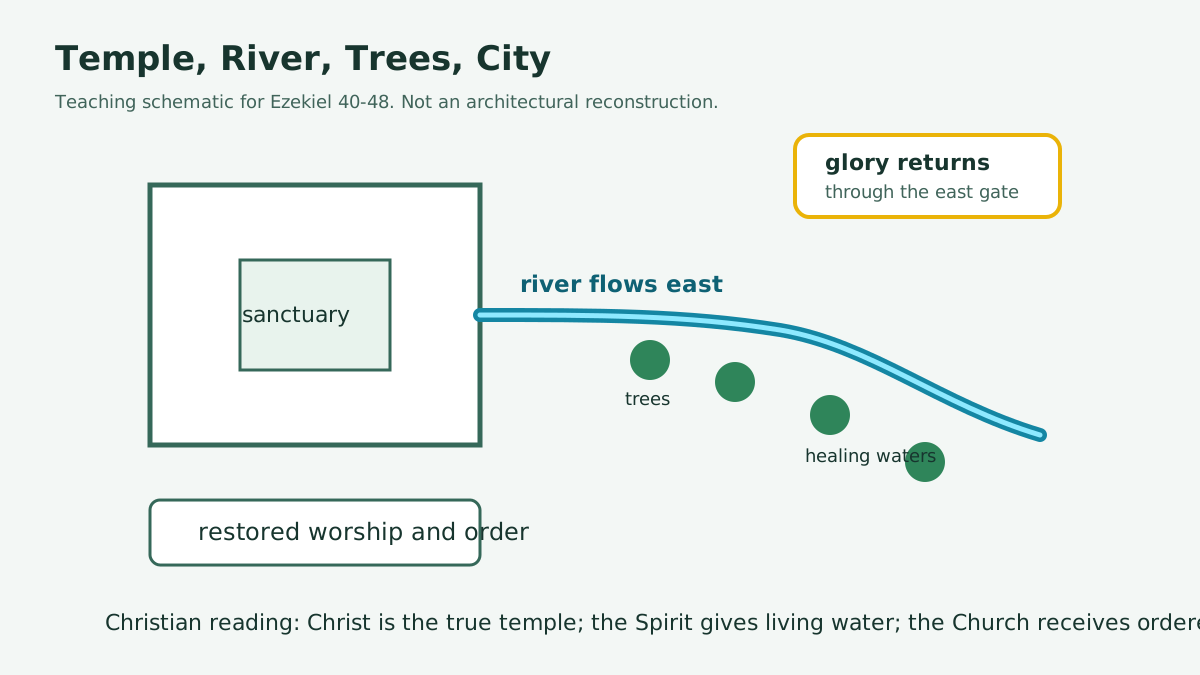
The temple-zone diagram helps readers follow approach, boundaries, and the movement from sanctuary toward life-giving water.
Beginning the study
Read the displayed Scripture before its explanation. The explanations distinguish what the passage says, what a named Father actually discusses, and the broader Christian connection. The Spiritual Fruit section gathers a few concrete responses without turning every paragraph into an exercise. Teaching Notes are kept separately so participants can read a continuous study.
Do not hurry past judgment simply to reach the new heart. Nor should judgment be allowed to swallow hope. Ezekiel teaches us to relinquish excuses and despair together: to confess what destroys communion, receive the life we cannot create, and become a people among whom the Lord’s presence is expressed in holy worship and mercy.
Translation and Reading Notes
The embedded Old Testament text in these guides follows Brenton’s English Septuagint, checked against the source text used for the series. It is not the wording of the Orthodox Study Bible. Spelling, textual variants, and chapter divisions sometimes differ from familiar Hebrew-based English Bibles. In particular, the forest-fire oracle commonly numbered 20:45–49 appears as 21:1–5 in this edition, and the remainder of chapter 21 is correspondingly shifted. Missing numbered verses in a source edition must not be filled from another translation without disclosure.
The guides discuss consequential differences where they affect interpretation, including the dates in chapter 1, the sign-act numbers in chapter 4, the Tyrian lament in 28, and the final wording of 39:29. Apparent contradictions should first prompt comparison of the editions, not silent alteration of a quotation.
Sources
Footnotes
-
Sara Wells, “Ezekiel,” Bible Odyssey, Society of Biblical Literature, 2023. Used for historical and literary context, not as the authority for the Church’s doctrinal reception. ↩
-
St. Cyril of Jerusalem, Catechetical Lecture 18.15, on the resurrection of the dead and Ezekiel’s bones vision. ↩
-
Coptic Synaxarium, 5 Baramouda: Departure of Ezekiel the Prophet. ↩
-
St. Mary Coptic Orthodox Church, Ottawa, Katameros of the Holy Pascha, English service-book text: printed pp. 335, 359, 377, 400, and 463 for the Pascha rows above; Coptic Reader service readings for Theophany and Great Thursday Liturgies of the Waters and Apocalypse Night. These are service-specific witnesses, not claims of exhaustive manuscript agreement. See the individual guides for the corresponding passage explanation. ↩