


This narration is from a previous version of the study and may include a combined recording of multiple chapters.
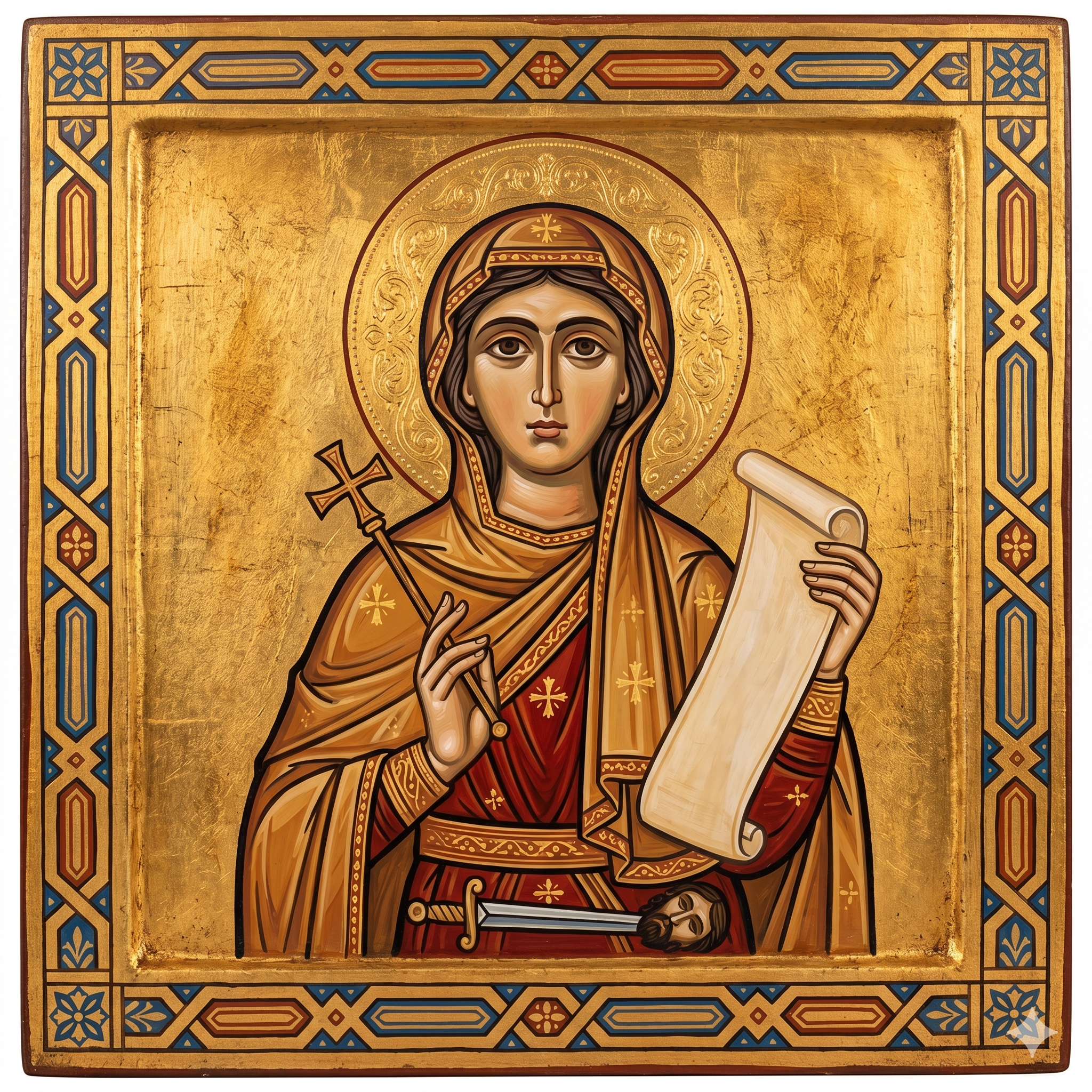
Judith 8-9 is the theological turning point of the book. Bethulia has been brought low by thirst, the people are desperate, and the leaders have sworn that if God does not help within five days they will deliver the city to the enemy. Into that moment comes Judith, a widow whose strength has been formed in fasting, mourning, watchfulness, and the fear of God.
Her rebuke is not cruelty toward exhausted people. She knows the suffering is real. Her protest is against presumption: the leaders have tried to place God’s hidden counsel inside a human deadline. Judith then falls on her face in prayer and confesses the truth that governs the whole book: God’s power does not stand in multitude, and His might is not in strong men.
The comfort of this severe rebuke is that God is not indifferent to the desperate. Judith will call Him the helper of the oppressed, the upholder of the weak, and the saviour of those without hope.
Session Orientation
Judith 7 ended with the city brought very low. Water had failed, children and adults were fainting, and Ozias tried to hold the people for five more days. He confessed that the Lord would not forsake them utterly, yet promised surrender if help did not come within those days.
Judith 8-9 answers that crisis through a woman’s disciplined life, a rebuke addressed to the governors, and a prayer for the whole people. Her waiting-woman, already entrusted with the household, carries the summons to the elders. The deliverance will depend on both women’s work, not on Judith acting without help.
The widow formed in fasting and fear of God (Judith 8:1-10)
1 Now at that time Judith heard thereof, which was the daughter of Merari, the son of Ox, the son of Joseph, the son of Oziel, the son of Elcia, the son of Eliu, the son of Chelcias, the son of Eliab, the son of Nathanael, the son of Salamiel, the son of Sarasadai, the son of Israel.
2 And Manasses was her husband, of her tribe and kindred, who died in the barley harvest. 3 For as he stood overseeing them that bound sheaves in the field, the heat came upon his head, and he fell on his bed, and died in his city of Bethulia: and they buried him with his fathers in the field between Dothaim and Balamo.
4 So Judith was a widow in her house three years and four months. 5 And she made her a tent upon the top of her house, and put on sackcloth upon her loins, and ware her widow’s apparel. 6 And she fasted all the days of her widowhood, save the eves of the sabbaths, and the sabbaths, and the eves of the new moons, and the new moons, and the feasts and solemn days of the house of Israel. 7 She was also of a goodly countenance, and very beautiful to behold: and her husband Manasses had left her gold, and silver, and menservants, and maidservants, and cattle, and lands; and she remained upon them. 8 And there was none that gave her an ill word; for she feared God greatly.
9 Now when she heard the evil words of the people against the governor, that they fainted for lack of water; for Judith had heard all the words that Ozias had spoken unto them, and that he had sworn to deliver the city unto the Assyrians after five days; 10 then she sent her waiting-woman, that had the government of all things that she had, to call Ozias and Chabris and Charmis, the ancients of the city.
Judith enters the story through genealogy, widowhood, grief, discipline, and reputation. Scripture does not introduce her first as a strategist. It first shows what kind of soul she has become. She belongs to Israel, she has suffered the death of Manasses, and she has lived three years and four months in a house marked by mourning and prayer.
Her tent on the roof is important. Judith has not fled the city, but she has made a place of separation within it. She wears sackcloth and widow’s apparel. She fasts continually, while honoring Sabbaths, new moons, feasts, and solemn days. Her discipline is ordered by Israel’s worship calendar, which makes room for both mourning and festal refreshment. For Christians, this ordered rhythm also guards fasting from contempt for joy.
The text also refuses to make holiness look like poverty only. Judith has beauty, wealth, servants, cattle, and lands. She remains over them, and her waiting-woman governs her household affairs. Yet none of these possessions master her. Her beauty is not vanity. Her wealth is not indulgence. Her position is not self-display. The key sentence is verse 8: no one speaks evil of her because she fears God greatly.
That fear of God is what makes Judith able to hear the crisis rightly. She hears the people’s bitter words and Ozias’s five-day oath. She does not respond as a detached critic. She knows the people fainted for lack of water. The problem is not that the elders noticed suffering, or that the people cried out in pain. The problem is that pain has begun to shape an oath that places God under trial.
The Church must not shame the thirsty, the sick, the grieving, or the exhausted. Judith herself is a widow who knows loss. Her speech distinguishes lament from presumption: crying to God is not the same as demanding that He meet the terms of an oath.
Do not bind the counsels of God (Judith 8:11-20)
11 And they came unto her, and she said unto them, Hear me now, O ye governors of the inhabitants of Bethulia: for your words that ye have spoken before the people this day are not right, touching this oath which ye made and pronounced between God and you, and have promised to deliver the city to our enemies, unless within these days the Lord turn to help you. 12 And now who are ye that have tempted God this day, and stand instead of God among the children of men?
13 And now try the Lord Almighty, but ye shall never know any thing. 14 For ye cannot find the depth of the heart of man, neither can ye perceive the things that he thinketh: then how can ye search out God, that hath made all these things, and know his mind, or comprehend his purpose? Nay, my brethren, provoke not the Lord our God to anger. 15 For if he will not help us within these five days, he hath power to defend us when he will, even every day, or to destroy us before our enemies.
16 Do not bind the counsels of the Lord our God: for God is not as man, that he may be threatened; neither is he as the son of man, that he should be wavering. 17 Therefore let us wait for salvation of him, and call upon him to help us, and he will hear our voice, if it please him.
18 For there arose none in our age, neither is there any now in these days, neither tribe, nor family, nor people, nor city, among us, which worship gods made with hands, as hath been aforetime. 19 For the which cause our fathers were given to the sword, and for a spoil, and had a great fall before our enemies. 20 But we know none other God, therefore we trust that he will not despise us, nor any of our nation.
Judith’s first words are directed to the governors, not to the fainting children or the desperate crowd. She names their office and therefore their responsibility. The words spoken before the people were not right because they turned the crisis into an oath between the leaders and God: unless the Lord helped within these days, the city would be delivered to the enemy.
Verse 12 is severe: the governors have presumed to stand in God’s place. The apparent challenge in verse 13 exposes the futility of testing the Almighty; it is not an instruction to continue testing Him. Verse 14 gives the reason: people who cannot fathom another human heart cannot put God’s counsel under examination.
Judith’s theology is humble before mystery. If we cannot find the depth of another human heart, how can we comprehend God’s purpose? Scripture welcomes wisdom, discernment, counsel, and memory. But there is a boundary between seeking God and trying to master Him. The soul may ask, plead, weep, and lament. God is not an unstable ruler whom we can force into an agreement.
We approach the governors’ error when we resolve, “If He does not act by Friday, I will stop obeying,” or decide to retaliate unless God gives us the outcome we demand. A cry of exhaustion is not an oath against God. Panic, depression, and the need for help are not chosen ultimatums. Seeking water, safety, treatment, and counsel belongs with prayer, not against it.
Judith does not teach passive fatalism. Waiting and calling belong together. Yet verse 15 leaves even the feared outcome, destruction before their enemies, within God’s sovereignty, and verse 17 adds “if it please him.” She does not promise that enough trust will secure the rescue they demand. She entrusts them to God while continuing to ask for help. James 4:6-10 likewise joins humility before God with drawing near to Him and resisting evil.
Judith also remembers Israel’s freedom from idols. Their fathers fell when they turned to gods made with hands, but in these days the people know no other God. That is why she trusts that He will not despise them. Her hope is not built on their military strength, their water supply, or their emotional steadiness. Her hope rests on the Lord who has preserved a people worshiping Him alone.
Leaders under trial and a hidden act of deliverance (Judith 8:21-36)
21 For if we be taken so, all Judea shall lie waste, and our sanctuary shall be spoiled; and he will require the profanation thereof at our mouth. 22 And the slaughter of our brethren, and the captivity of the country, and the desolation of our inheritance, will he turn upon our heads among the Gentiles, wheresoever we shall be in bondage; and we shall be an offence and a reproach to all them that possess us. 23 For our servitude shall not be directed to favour; but the Lord our God shall turn it to dishonour.
24 Now therefore, O brethren, let us shew an example to our brethren, because their hearts depend upon us, and the sanctuary, and the house, and the altar, rest upon us.
25 Moreover let us give thanks to the Lord our God, which trieth us, even as he did our fathers. 26 Remember what things he did to Abraham, and how he tried Isaac, and what happened to Jacob in Mesopotamia of Syria, when he kept the sheep of Laban his mother’s brother. 27 For he hath not tried us in the fire, as he did them, for the examination of their hearts, neither hath he taken vengeance on us: but the Lord doth scourge them that come near unto him, to admonish them.
28 Then said Ozias to her, All that thou hast spoken hast thou spoken with a good heart, and there is none that may gainsay thy words. 29 For this is not the first day wherein thy wisdom is manifested; but from the beginning of thy days all the people have known thy understanding, because the disposition of thine heart is good. 30 But the people were very thirsty, and compelled us to do unto them as we have spoken, and to bring an oath upon ourselves, which we will not break. 31 Therefore now pray thou for us, because thou art a godly woman, and the Lord will send us rain to fill our cisterns, and we shall faint no more.
32 Then said Judith unto them, Hear me, and I will do a thing, which shall go throughout all generations to the children of our nation. 33 Ye shall stand this night in the gate, and I will go forth with my waitingwoman: and within the days that ye have promised to deliver the city to our enemies the Lord will visit Israel by mine hand. 34 But enquire not ye of mine act: for I will not declare it unto you, till the things be finished that I do.
35 Then said Ozias and the princes unto her, Go in peace, and the Lord God be before thee, to take vengeance on our enemies. 36 So they returned from the tent, and went to their wards.
Judith widens the issue from Bethulia’s survival to the whole people of God. If the city is handed over, Judea will lie waste, the sanctuary will be spoiled, and the profanation will be required from those who failed in their trust. The leaders are not deciding only for themselves. They stand at a narrow gate on which many hearts depend.
Verse 24 names the weight of leadership: “their hearts depend upon us.” The governors’ decision concerns the sanctuary, the altar, and lives beyond their own city. Christian servants and parents also affect the people entrusted to them. They need not perform invulnerability. A leader may show faith by asking others for help, resting, and accepting correction rather than concealing exhaustion.
Judith places their trial beside the memory of Abraham, Isaac, and Jacob, but she does not make every trial identical. Verse 27 says that God has not tried them in the fire as He did the fathers, and has not taken vengeance on them. She calls their present affliction admonition for those who draw near, not proof that God has cast them off. This is her counsel to a besieged community, not a diagnosis of each person’s illness or injury. The language of scourging gives no servant permission to abuse another person in God’s name.
Ozias responds with humility and weakness together. He acknowledges Judith’s wisdom, yet still says that the oath will not be broken. He recalls how thirsty the people were and how heavily their demand pressed on the governors. He is not a cartoon coward, but a pressured leader who has accepted correction in words without withdrawing the pledge.
His request for rain is a plea for a real and urgent mercy. Judith prepares rescue by another means. She promises that the Lord will visit Israel by her hand within the same days, but she does not threaten to abandon God if He fails her timetable. Using the days that remain is different from making obedience conditional on their outcome.
Judith refuses to disclose her plan before it is accomplished. In this wartime mission secrecy protects the undertaking. The elders do not yet know the plan, but they can open the gate and keep their watch. This is not a general exemption from accountability in the Church, nor does a servant’s private intention become identical with God’s hidden counsel.
Christian readers can recognize a pattern without forcing every detail. God saves through those who lack the world’s expected instruments of power. 1 Corinthians 1:26-31 directs us to Christ crucified and excludes boasting in human strength. Judith’s hand is not the Cross, but it prepares the imagination to recognize God’s strange victory through weakness.
A widow’s prayer to the God whose power is not in multitude (Judith 9:1-14)
1 Then Judith fell upon her face, and put ashes upon her head, and uncovered the sackcloth wherewith she was clothed; and about the time that the incense of that evening was offered in Jerusalem in the house of the Lord, Judith cried with a loud voice, and said, 2 O Lord God of my father Simeon, to whom thou gavest a sword to take vengeance of the strangers, who loosened the girdle of a maid to defile her, and discovered the thigh to her shame, and polluted her virginity to her reproach; for thou saidst, It shall not be so; and yet they did so: 3 wherefore thou gavest their rulers to be slain, so that they dyed their bed in blood, being deceived, and smotest the servants with their lords, and the lords upon their thrones; 4 and hast given their wives for a prey, and their daughters to be captives, and all their spoils to be divided among thy dear children; which were moved with thy zeal, and abhorred the pollution of their blood, and called upon thee for aid: O God, O my God, hear me also a widow.
5 For thou hast wrought not only those things, but also the things which fell out before, and which ensued after; thou hast thought upon the things which are now, and which are to come. 6 Yea, what things thou didst determine were ready at hand, and said, Lo, we are here: for all thy ways are prepared, and thy judgments are in thy foreknowledge.
7 For, behold, the Assyrians are multiplied in their power; they are exalted with horse and man; they glory in the strength of their footmen; they trust in shield, and spear, and bow, and sling; and know not that thou art the Lord that breakest the battles: the Lord is thy name. 8 Throw down their strength in thy power, and bring down their force in thy wrath: for they have purposed to defile thy sanctuary and to pollute the tabernacle where thy glorious name resteth, and to cast down with sword the horn of thy altar.
9 Behold their pride, and send thy wrath upon their heads: give into mine hand, which am a widow, the power that I have conceived. 10 Smite by the deceit of my lips the servant with the prince, and the prince with the servant: break down their stateliness by the hand of a woman. 11 For thy power standeth not in multitude, nor thy might in strong men: for thou art a God of the afflicted, thou art an helper of the oppressed, an upholder of the weak, a protector of the forlorn, a saviour of them that are without hope.
12 I pray thee, I pray thee, O God of my father, and God of the inheritance of Israel, Lord of the heavens and earth, Creator of the waters, King of every creature, hear thou my prayer: 13 and make my speech and deceit to be their wound and stripe, who have purposed cruel things against thy covenant, and thy hallowed house, and against the top of Sion, and against the house of the possession of thy children.
14 And make every nation and tribe to acknowledge that thou art the God of all power and might, and that there is none other that protecteth the people of Israel but thou.
Judith does not move from rebuke to action without prayer. She falls on her face, places ashes on her head, uncovers the sackcloth, and prays at the time of the evening incense in Jerusalem. Though she is in besieged Bethulia, the narrative joins her prayer to the worship of the house of the Lord. The hidden widow on the roof is not isolated from the praying people whose sanctuary she seeks to protect.
The opening recalls the sexual violence done to Dinah in Genesis 34. The language of defilement names the violation inflicted on her, not guilt or moral impurity in her. Sexual assault does not make its victim morally impure. The guilt belongs to the assailant, not the survivor. Augustine’s discussion of women violated in captivity offers a later Christian witness to this distinction, not commentary on Judith itself.1
Judith invokes Simeon’s sword as God-given vindication. Genesis preserves a harder account: Simeon and Levi spoke deceitfully, used circumcision to disable the men of the city, and killed them while they were in pain; Jacob’s sons then plundered the city and took captives. Jacob later condemned Simeon and Levi’s cruel anger (Genesis 34:13-31; Genesis 49:5-7). Genesis does not narrate a divine command to massacre them. Judith’s prayer and Jacob’s judgment must both be heard. The wives and daughters named as spoil in verse 4 are human persons, not instruments for repairing another family’s honour. This wartime prayer cannot authorize collective punishment, abduction, sexual violence, or personal revenge. Christ teaches us to protect the violated without making the innocent expendable.
Verses 5-6 deepen the prayer. God has thought upon what is past, present, and future. His ways are prepared, and His judgments are in foreknowledge. This is the answer to the leaders’ deadline. The elders tried to fit God’s help into five days. Judith confesses that all days are already open before God. Nothing catches Him late. Nothing forces Him to improvise. His counsel is hidden from us, but it is not confused.
Judith then names the enemy’s religion of strength. The Assyrians glory in horse and man. They trust in shield, spear, bow, and sling. They do not know that the Lord breaks battles. This is the exact opposite of Holofernes’ world. He counts troops, horses, waters, supplies, fear, and desire. Judith counts the Lord.
Verse 11 is the heart of the prayer and of the session: “thy power standeth not in multitude, nor thy might in strong men.” God’s strength is not an enlarged version of human strength. He is the God of the afflicted, the helper of the oppressed, the upholder of the weak, the protector of the forlorn, and the saviour of those without hope. This does not romanticize weakness. Thirst, widowhood, siege, and oppression are not beautiful in themselves. Their comfort is that God is not embarrassed to be named with the weak. He takes their side without needing their strength.
Judith’s request for deceit is explicit, in verses 10 and 13. She asks that her lips help bring down the enemy’s rulers and servants. The narrative presents it within the rescue of a people threatened with destruction, but does not thereby give Christians a general rule that falsehood becomes holy whenever our cause seems important. The Lord Jesus is the Truth; our ordinary relationships require truthful speech rather than manipulation.
The prayer asks God to break the enemy’s proud confidence by a woman’s hand. Judith is a widow without an army, but she is neither passive nor without resources. Her purpose will be mistaken by men who admire her appearance and imagine that she serves their advantage. Their defeat exposes that presumption; it does not make every promise she will speak to them true.
The prayer ends beyond Bethulia. Judith asks that every nation and tribe acknowledge that God alone protects Israel. She has named Him Lord of heaven and earth, Creator of the waters, and King of every creature. Neither the siege’s water supply nor the world’s future belongs finally to Holofernes. The widow asks that God’s power be known, not that her own fame become the goal.
Gems from the Fathers 💎
Saint John Chrysostom, explaining Paul’s words about boasting in 1 Corinthians 1:29, says that God’s choice of the lowly both reveals His power and cures pride. This is a thematic Christian witness, not his commentary on Judith. It helps us hear her prayer without replacing military boasting with religious self-admiration: “He does all, that we may put nothing to our own account; that we may ascribe all unto God.”2
Spiritual Fruit 🍇
Bring one urgent need to God plainly, including the result for which you hope. If you have tied obedience to a date, surrender that condition without pretending the need is small. Ask someone trustworthy for the practical help you need. Waiting and calling belong together.
Use Judith 9:11 to pray for one named afflicted person. Let one title guide a concrete act: help an oppressed neighbour find support, uphold someone whose strength is failing, or stay in contact with a person who feels forgotten. Mercy calls us to stand beside those who suffer, not admire their endurance from a distance.
Lord, teach us to ask without bargaining, to act without boasting, and to receive the help You give through people we did not expect.
Teaching Notes
The widow formed in fasting and fear of God (Judith 8:1-10)
- Ask: Why do grief, fasting, household responsibility, and reputation appear before Judith’s strategy?
- Watch for: Treating the festal exceptions as a later Coptic rubric, or widowhood as a lesser human life.
Do not bind the counsels of God (Judith 8:11-20)
- Ask: How do verses 15 and 17 distinguish trust from a guarantee of the desired outcome?
- Watch for: Confusing exhausted lament or seeking practical help with the governors’ chosen oath.
Leaders under trial and a hidden act of deliverance (Judith 8:21-36)
- Ask: What does Ozias accept, and what does he still refuse to change?
- Watch for: Using verse 27 to diagnose another person’s suffering, or verse 34 to excuse unaccountable leadership.
A widow’s prayer to the God whose power is not in multitude (Judith 9:1-14)
- Ask: How do the divine titles in verse 11 shape the help we offer an afflicted person?
- Watch for: Assigning moral impurity to a survivor, overlooking the captives, or making the request for deceit a rule for daily relationships.
- Connect: Read Genesis 34:13-31 with Genesis 49:5-7 so that Judith’s invocation does not silence Jacob’s condemnation.
Sources
Embedded Scripture is from Brenton’s English Septuagint (LXX).
Genesis 34 and Genesis 49:5-7 supply the canonical context for Simeon and Dinah. James 4:6-10 and 1 Corinthians 1:26-31 illuminate the Christian applications to humility and grace.
Footnotes
-
Augustine, City of God I.16-18, especially I.18 on violence suffered without loss of purity, https://www.newadvent.org/fathers/120101.htm. This is thematic support for the safeguard, not direct exposition of Judith. ↩
-
Saint John Chrysostom, Homilies on First Corinthians 5.3, on 1 Corinthians 1:29, https://www.newadvent.org/fathers/220105.htm. ↩