


This narration is from a previous version of the study and may include a combined recording of multiple chapters.
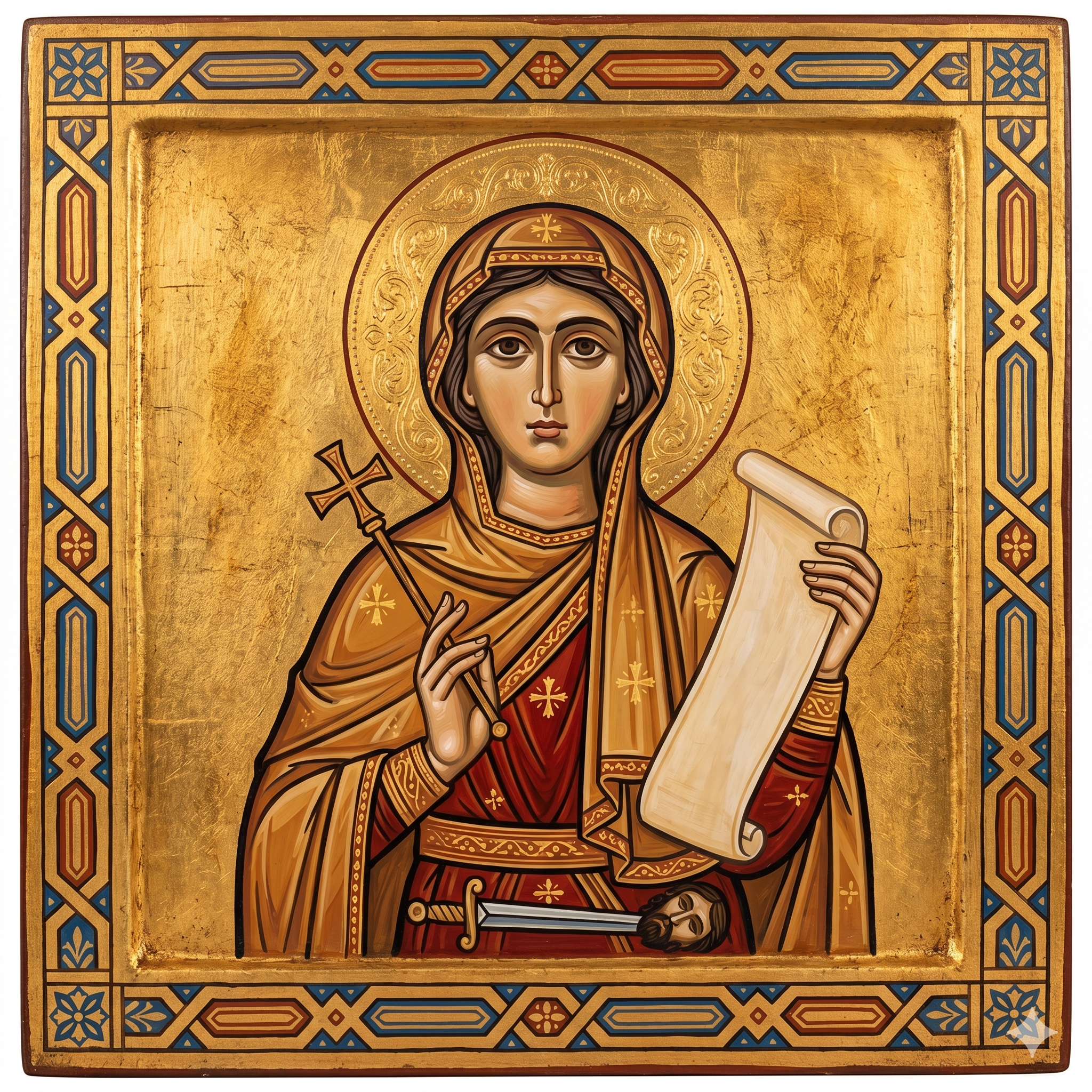
Judith 14-15 shows what happens when God makes the truth visible. Achior, the outsider who warned Holofernes about Israel’s God, hears the account of deliverance and joins Israel. The camp that terrified Bethulia discovers that its lord cannot answer. Fear changes sides, but the delivered people must learn something more than relief: how to act together, honor their helpers, and praise God without delighting in cruelty.
Context and chapter arc
Judith has returned with her maid, and Bethulia has bowed before God in thanksgiving. These chapters move from that night’s assembly to the morning disclosure, the enemy’s flight, and Israel’s procession of honor. The woman who took the greatest risk does not stand apart from the people who prayed, sheltered Achior, and now share the work and joy.
Achior sees and believes (Judith 14:1-10)
1 Then said Judith unto them, Hear me now, my brethren, and take this head, and hang it upon the highest place of your walls.
2 And so soon as the morning shall appear, and the sun shall come forth upon the earth, take ye every one his weapons, and go forth every valiant man out of the city, and set ye a captain over them, as though ye would go down into the field toward the watch of the Assyrians; but go not down. 3 Then they shall take their armour, and shall go into their camp, and raise up the captains of the army of Assur, and they shall run to the tent of Holofernes, but shall not find him: then fear shall fall upon them, and they shall flee before your face. 4 So ye, and all that inherit the coast of Israel, shall pursue them, and overthrow them as they go. 5 But before ye do these things, call me Achior the Ammonite, that he may see and know him that despised the house of Israel, and that sent him to us, as it were to his death.
6 Then they called Achior out of the house of Ozias; and when he was come, and saw the head of Holofernes in a man’s hand in the assembly of the people, he fell down on his face, and his spirit failed.
7 But when they had recovered him, he fell at Judith’s feet, and reverenced her, and said, Blessed art thou in all the tabernacle of Juda, and in all nations, which hearing thy name shall be astonished. 8 Now therefore tell me all the things that thou hast done in these days. Then Judith declared unto him in the midst of the people all that she had done, from the day that she went forth until that hour she spake unto them. 9 And when she had left off speaking, the people shouted with a loud voice, and made a joyful noise in their city.
10 And when Achior had seen all that the God of Israel had done, he believed in God greatly, and circumcised the flesh of his foreskin, and was joined unto the house of Israel unto this day.
Judith gives instructions for the coming morning: display the head of Holofernes on the wall, take weapons, and go out in ordered bands without rushing down into the plain. She expects the enemy’s officers to discover their commander’s death and flee. The city that nearly surrendered under thirst now has work to do. Her dangerous act does not cancel the community’s responsibility.
But the command is not yet the execution. Before these things happen, Achior must be called. Holofernes sent him to Bethulia as if to death after he had spoken for Israel. Now he sees Holofernes’ head in a man’s hand in the assembly. His spirit fails, and the people revive him. This bodily shock is not yet the belief narrated in verse 10.
Once recovered, Achior reverences Judith and asks what happened. His honor of her is not worship of her as God. Judith tells the whole account before the people; they make a joyful noise in the city; then the narrative records Achior’s belief, circumcision, and joining to the house of Israel. Sight, testimony, communal joy, and covenant belonging have their own places in the scene. The head will be hung on the wall the following morning, in verse 11.
Achior does more than admire a victory. He believes in Israel’s God, receives circumcision, and joins Israel concretely. The people who unbound and sheltered him before his conversion now become the people to whom he belongs. Circumcision is the Old Covenant sign actually named, not baptism. Christian readers may recognize the welcome of outsiders into God’s people through faith, while keeping that later application distinct from the event here. A convert is neither a trophy nor an exhibit proving the superiority of those who receive him.
The enemy discovers his strength is dead (Judith 14:11-19)
11 And as soon as the morning arose, they hanged the head of Holofernes upon the wall, and every man took his weapons, and they went forth by bands unto the straits of the mountain.
12 But when the Assyrians saw them, they sent to their leaders, which came to their captains and tribunes, and to every one of their rulers.
13 So they came to Holofernes’ tent, and said to him that had the charge of all his things, Waken now our lord: for the slaves have been bold to come down upon us to battle, that they may be utterly destroyed.
14 Then went in Bagoas, and knocked at the door of the tent; for he thought that he had slept with Judith. 15 But because none answered, he opened it, and went into the bedchamber, and found him cast upon the floor dead, and his head was taken from him. 16 Therefore he cried with a loud voice, with weeping, and sighing, and a mighty cry, and rent his garments.
17 After he went into the tent where Judith lodged: and when he found her not, he leaped out to the people, and cried, 18 These slaves have dealt treacherously; one woman of the Hebrews hath brought shame upon the house of king Nabuchodonosor: for, behold, Holofernes lieth upon the ground without a head. 19 When the captains of the Assyrians’ army heard these words, they rent their coats, and their minds were wonderfully troubled, and there was a cry and a very great noise throughout the camp.
Morning makes the hidden victory public. The head is on the wall, the men of Bethulia take their weapons, and they move by bands toward the mountain passes. The Assyrians see the movement and still speak with contempt. They call the Israelites “slaves” and assume their boldness will lead to destruction. The old language of arrogance remains for a few more moments, but its power is already gone.
The scene turns on discovery. The Assyrian rulers do not yet know that their center has collapsed. They still have tents, ranks, captains, tribunes, weapons, and numbers. Yet when Bagoas enters Holofernes’ tent, he finds the truth: the lord they trust cannot answer. The one whose desire was supposed to possess Judith is dead on the floor, and Judith is gone.
Bagoas assumes that Holofernes has slept with Judith. Read beside the general’s earlier desire to possess her, that assumption exposes his blindness: what he takes for fulfilled appetite has become the scene of defeat. The narrator tells us Bagoas’s thought, not an identical private fantasy in everyone in the camp. Judith has escaped the intended sexual violence. Her escape is not proof that chastity prevents assault; assault never makes its victim morally impure or diminishes the survivor’s dignity before God. The guilt belongs to the aggressor.
Fear now reverses direction. Earlier, Bethulia trembled before the camp. Now the camp is filled with weeping, torn garments, troubled minds, noise, and panic. The army had looked like one body because it had one proud head. When that head is gone, the unity breaks. This is a spiritual lesson as much as a military one: strength without truth is fragile. Power held together by fear will itself be ruled by fear when its idol falls.
Gems from the Fathers 💎
St. Ambrose, in Concerning Widows 7.41, notices Judith’s wisdom in making the victory visible. The sign raises courage in one camp and breaks it in the other. He writes: “For hanging up the head of Holofernes, a deed which the wisdom of the men had been unable to plan, she raised the courage of her countrymen, and broke down that of the enemy.”1 Ambrose directs attention to the changed courage of the people, not fascination with a severed head.
For Christians, the final victory over enemies is not hatred of human persons. Christ willingly gives His life and rises from the dead to overcome sin and death. His victory is not the general’s killing repeated on a greater scale. Judith’s story teaches us to distrust arrogant appearances; the Gospel teaches us not to make another person’s destruction our hope.
Israel rises together in the pursuit (Judith 15:1-7)
1 And when they that were in the tents heard, they were astonished at the thing that was done. 2 And fear and trembling fell upon them, so that there was no man that durst abide in the sight of his neighbour, but rushing out all together, they fled into every way of the plain, and of the hill country. 3 They also that had camped in the mountains round about Bethulia fled away. Then the children of Israel, every one that was a warrior among them, rushed out upon them.
4 Then sent Ozias to Betomasthem, and to Chobai, and Chola, and to all the coasts of Israel, such as should tell the things that were done, and that all should rush forth upon their enemies to destroy them. 5 Now when the children of Israel heard it, they all fell upon them with one consent, and slew them unto Chobai: likewise also they that came from Jerusalem, and from all the hill country, (for men had told them what things were done in the camp of their enemies,) and they that were in Galaad, and in Galilee, chased them with a great slaughter, until they were past Damascus and the borders thereof.
6 And the residue that dwelt at Bethulia, fell upon the camp of Assur, and spoiled them, and were greatly enriched. 7 And the children of Israel that returned from the slaughter had that which remained; and the villages and the cities, that were in the mountains and in the plain, gat many spoils: for the multitude was very great.
The fear that once strangled Bethulia now falls on the tents of Assur. No man dares remain in his neighbor’s sight; they rush away in every direction. The army that seemed to encircle God’s people loses its cohesion. Numbers and ranks could not give it a courage deeper than its dependence on one man.
Israel’s response is communal. The warriors of Bethulia rush out, Ozias sends word to the surrounding places, Jerusalem and the hill country hear, and Galaad and Galilee join the pursuit. Judith’s act was singular, but the victory is not private. The people must move from passive fear to obedient action. God has opened the way, and now the whole community participates in the deliverance.
This passage is also a place for pastoral caution. The text speaks in the language of Old Covenant war, slaughter, spoil, and pursuit. A Christian reading must not turn that into hatred, triumphalism, or delight in enemies being crushed. In Christ, the warfare is fulfilled as the defeat of sin, death, the devil, and the passions. The Church learns courage from this chapter, not cruelty. She learns to rise when God gives deliverance, not to feed the ego on another’s downfall.
Judith and her maid share the honor (Judith 15:8-13)
8 Then Joacim the high priest, and the ancients of the children of Israel that dwelt in Jerusalem, came to behold the good things that God had shewed to Israel, and to see Judith, and to salute her. 9 And when they came unto her, they blessed her with one accord, and said unto her, Thou art the exaltation of Israel, thou art the great glory of Israel, thou art the great rejoicing of our nation: 10 thou hast done all these things by thine hand: thou hast done much good to Israel, and God is pleased therewith: blessed be thou of the Almighty Lord for evermore. And all the people said, So be it.
11 And the people spoiled the camp the space of thirty days: and they gave unto Judith Holofernes his tent, and all his plate, and beds, and vessels, and all his stuff: and she took it, and laid it on her mule; and made ready her carts, and laid them thereon.
12 Then all the women of Israel ran together to see her, and blessed her, and made a dance among them for her: and she took branches in her hand, and gave also to the women that were with her. 13 And they put a garland of olive upon her and her maid that was with her, and she went before all the people in the dance, leading all the women: and all the men of Israel followed in their armour with garlands, and with songs in their mouths.
Joacim the high priest and the elders come from Jerusalem “to behold the good things that God had shewed to Israel.” They come to see Judith and salute her, but the good things are first God’s good things. Their blessing honors her truthfully: she has done good by her hand, and God is pleased. Holy honor is not flattery. It names the servant’s courage while blessing the Almighty Lord forever.
The spoil continues for thirty days, and Judith receives Holofernes’ tent and possessions. The luxury of the proud man becomes provision for the people he threatened. Yet the chapter does not end with inventory. Women run to see Judith, bless her, and dance with branches. She leads the women; the men follow in armor with garlands and songs in their mouths.
The maid is crowned too. The helper who carried provisions, shared the escape, and bore the head back with Judith is not erased when public honor arrives. She is still unnamed, but she is seen. The garland does not itself free her; the final chapter will record that concrete act of emancipation. Shared honor begins here by refusing to forget whose labor made the deliverance possible.
Earlier, garlands, dances, and timbrels greeted Holofernes while he destroyed the people’s freedom and enforced worship of Nabuchodonosor (Judith 3:7-8). Here similar celebration leads into praise of the true Lord. Music by itself did not prove freedom then. The difference is whom the people serve. The men still carry armor, but their mouths are filled with songs. The next chapter will give those songs their words.
Spiritual Fruit 🍇
Receive the outsider before there is a success story to tell. Bethulia sheltered Achior when he was endangered, not only when he believed. A newcomer to the parish needs patient friendship, a place beside us, and freedom from being displayed as someone else’s achievement.
Share honor with those whose work is easy to overlook. Judith’s maid stands under the garland with her. When a household or ministry gives thanks, name the person who carried the practical burden, make room for that person’s voice, and ask whether gratitude should change how responsibilities are shared.
Let courage grow without nursing revenge. After fear loosens its grip, refuse the pleasure of humiliating someone weaker. Christ’s victory frees us to protect people, repent of our own passions, and praise God without needing a human enemy to despise.
Teaching Notes
Achior sees and believes (Judith 14:1-10)
- Ask: What does Achior receive through Judith’s account and Israel’s welcome that seeing the head alone did not yet express?
- Watch for: Conflating fainting with conversion, calling circumcision baptism, or putting the morning display before this encounter.
The enemy discovers his strength is dead (Judith 14:11-19)
- Ask: What can the officers still count and command, and what can their lord no longer do?
- Watch for: Assigning Bagoas’s assumption to everyone, or making Judith’s escape a judgment against survivors of assault.
Israel rises together in the pursuit (Judith 15:1-7)
- Ask: How does the narrative make a single courageous act the beginning of communal participation?
- Watch for: Treating the pursuit and slaughter as permission for Christian cruelty, private revenge, or manipulation.
Judith and her maid share the honor (Judith 15:8-13)
- Ask: How do the shared garland and the earlier welcome of Holofernes change our reading of this procession?
- Watch for: Erasing the maid, equating honor with worship, or saying the garland already emancipates her.
Sources
Embedded Scripture is from Brenton’s English Septuagint (LXX).
Footnotes
-
St. Ambrose of Milan, Concerning Widows 7.41, Judith’s public reversal of courage. Ambrose reflects directly on the narrative, not on Achior’s conversion. ↩