


This narration is from a previous version of the study and may include a combined recording of multiple chapters.
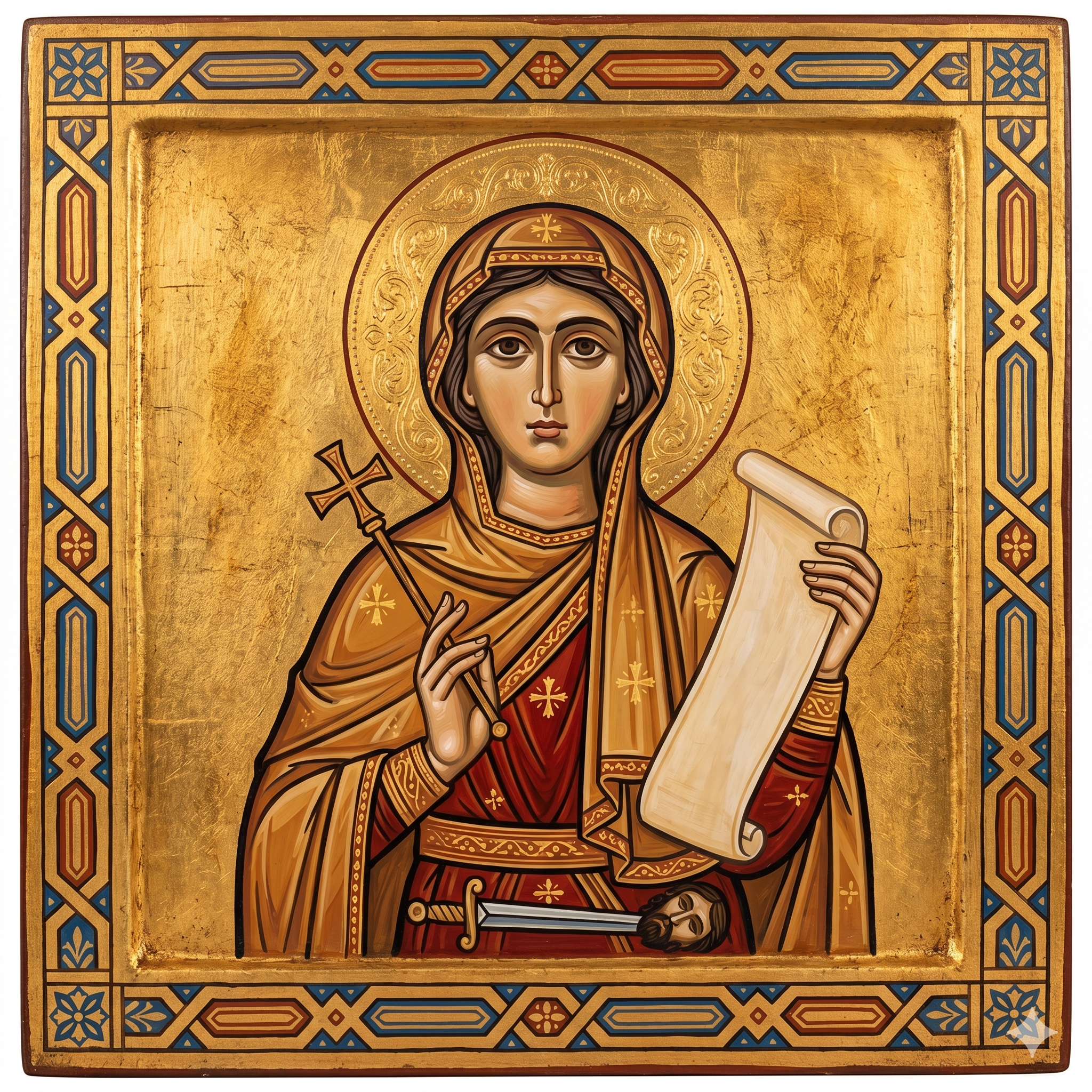
Judith is a book about siege, prayer, fasting, holy courage, and the collapse of arrogant power before the God who saves through weakness. Its heroine is not a warrior queen or a romantic figure. She is a widow formed in mourning, fasting, and the fear of God, who prays and acts for her people when the governors of Bethulia have placed a deadline on divine help.
Judith is received in the Coptic Orthodox Old Testament. Its ancient Christian reception is not erased by its absence from many common NKJV editions, which follow the Protestant Old Testament list. The first task is to understand that difference calmly, then to read the book with attention to the people God delivers.
Spiritually, Judith presses a hard lesson: the faithful do not overcome pride by becoming proud, and they do not answer terror by worshiping strength. They overcome by repentance, prayer, discernment, chastity, and trust that God can overthrow the strong by the hand of the weak.
Why Judith Is in Orthodox Bibles
Judith is not a modern Orthodox addition. It belongs to the deuterocanonical Old Testament received by the Coptic Orthodox Church. “Deuterocanonical” means “second canon”, not second-rate inspiration; here the term names books received in the Church’s Old Testament but absent from most Protestant Old Testaments.
A contemporary Coptic witness is Fr. Moses Samaan’s diocesan article, “The Deuterocanonical Books”, published in 2012. It lists Judith and objects to using “Apocrypha” to dismiss such books as writings rejected by the Church.1 This is a witness to modern Coptic reception, not a substitute for examining ancient sources.
The Church’s Greek Old Testament tradition preserved Judith. “Septuagint” first names the Greek translation of the Pentateuch, the five books of Moses; Christian usage often extends it to the broader Greek Old Testament. That inheritance should not be imagined as one fixed complete canon translated at a single moment.
The African Code, canon 24 (Greek xxvii), lists Tobit and Judith among the canonical Scriptures to be read in church.2 The transmitted collection preserves North African conciliar reception; it is not an untouched transcript simply dated 397. Its inclusion of Judith is nevertheless plain. Ancient classifications were not identical: in Festal Letter 39.7, St. Athanasius places Judith among books appointed for those newly joining the Church and seeking instruction, distinguishing them both from his canonical enumeration and from heretical apocrypha.3 This is an ancient distinction, not a present baptismal reading assignment.
Why Common NKJV Bibles Usually Omit Judith
Many common NKJV editions print the Protestant canon and therefore do not include Judith. That is a matter of the edition’s contents, not proof that the ancient Church had no use for the book.
Older English Bible history also deserves care. The original 1611 King James Bible printed Judith in its Apocrypha section.4 Many later Protestant editions do not include that section. An absent book in one Bible edition does not settle the history of its reception.
Jerome illustrates the complexity. In his Preface to Kings, he enumerates twenty-two Old Testament books and explicitly places Judith outside that canon.5 Yet in his distinct Preface to Judith, he commends the widow as a model of chastity for women and men and explains why he translated her story.6 Neither his preference nor a modern publishing convention exhausts the Church’s reception.
An Orthodox servant can therefore answer without mockery: that NKJV edition follows a different Old Testament boundary; the Coptic Church receives Judith within her scriptural inheritance. We can state our reception clearly without pretending that every ancient list was identical.
Translation and Textual History
This study uses Brenton’s English translation of the Greek Septuagint. Judith also survives in a Latin tradition that differs meaningfully from the Greek; a reader comparing editions should not assume identical wording or verse divisions.
In his Preface to Judith, Jerome reports translating sense for sense from a Chaldean text and working through considerable variation among copies.6 Jerome’s account explains why the Greek and Latin forms should not be treated as interchangeable. He also reports Nicene recognition of Judith. This does not establish a surviving Nicene canon decree listing biblical books.
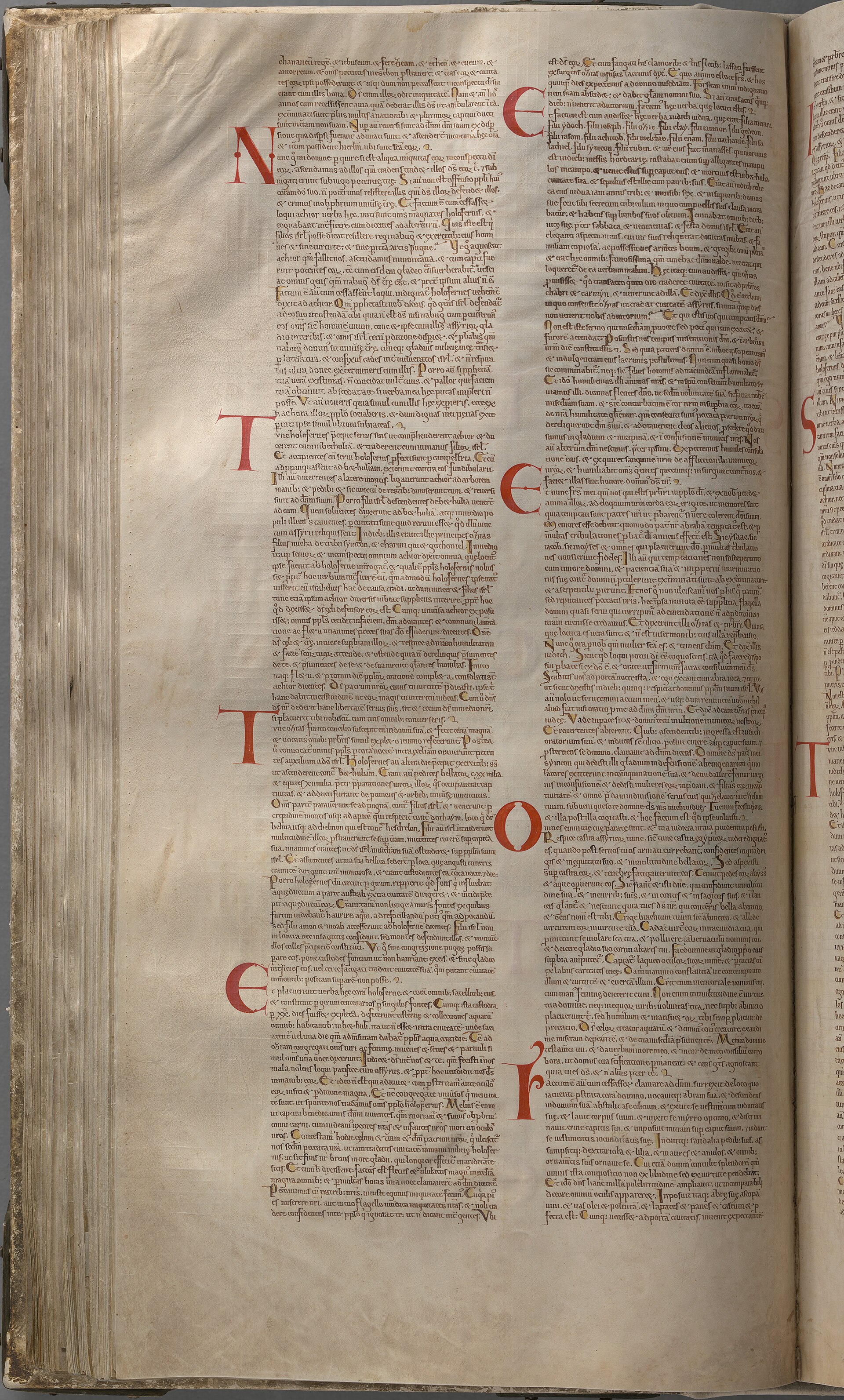 Source: Codex Gigas page 216, Wikimedia Commons, public domain, PD-Art / PD-old-100.
The Codex Gigas is a medieval Latin manuscript witness to Judith’s Christian transmission. It is not an Orthodox manuscript or the source of the Church’s canonical authority.
Historical and Scriptural Context
Judith presents a difficult historical frame. Nabuchodonosor rules from Nineveh as king of the Assyrians, while Judea is described as recently returned from captivity, with its sanctuary restored (Judith 1:1; Judith 4:3). These details resist a simple modern campaign chronology. Historical names, settings, and the identification of Bethulia have received different explanations; a particular reconstruction should not be presented as settled authorial intention.
The uncertainty does not erase what the narrative makes clear. Imperial pride demands submission; a whole people faces siege; prayer accompanies practical preparation; and deliverance comes through a widow whom worldly power has not learned to understand. We can follow that argument without pretending that we possess a certain campaign map.
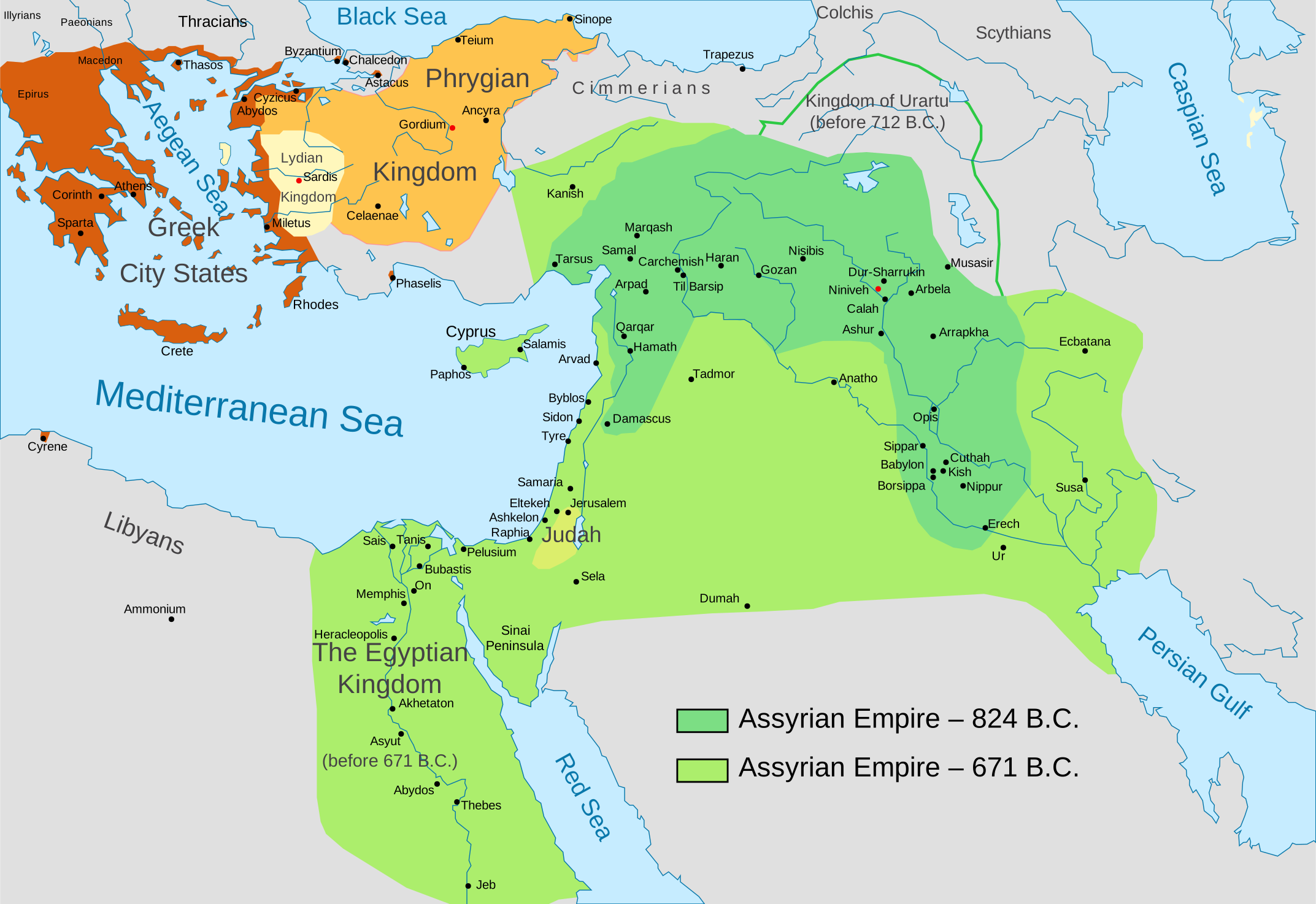 Source: Map of the Assyrian Empire, Wikimedia Commons, public domain.
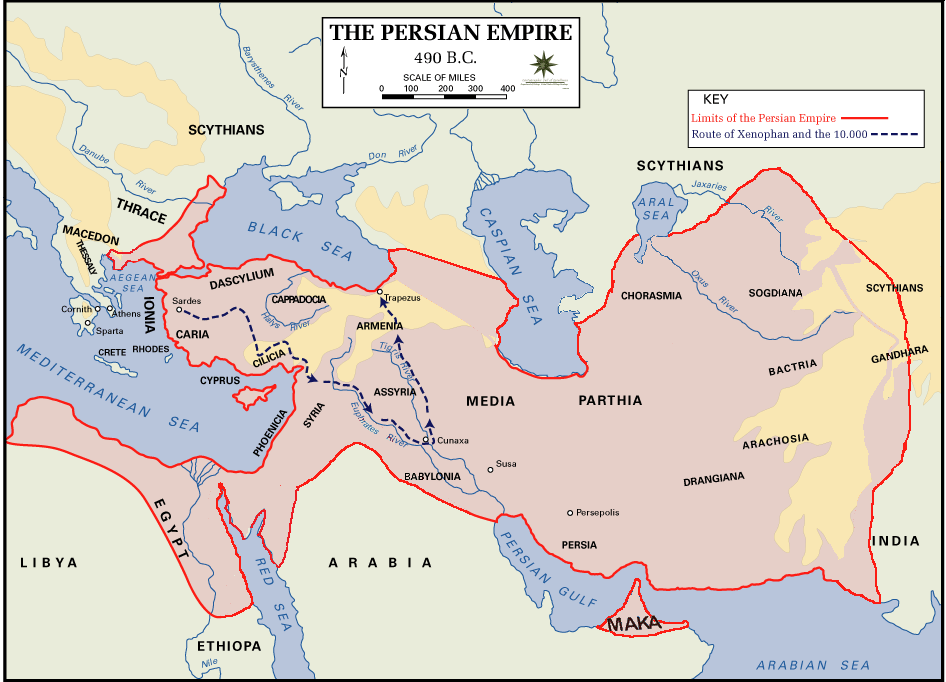 Source: Department of History, United States Military Academy, Wikimedia Commons, public domain.
These maps orient the world of empires. They do not establish a certain route for Holofernes or settle the book’s historical questions.
The Characters 👥
Judith
Judith’s name means “Jewess”. Her faithfulness also makes her a representative figure within the story of her people. She is a widow, but not weak in soul. Her strength has been formed in fasting, mourning, self-control, and the fear of God. Prayer does not begin for her only when the crisis becomes public.
Holofernes
Holofernes is the general of imperial violence. He has armies, authority, threat, and appetite. He is defeated not because Bethulia becomes stronger than him in worldly terms, but because arrogance is spiritually blind. His downfall is not only military. It is the collapse of a man ruled by the passions: pride that cannot bear insult, lust that turns beauty into an object, and drunken confidence that makes him spiritually deaf. The enemy is undone by his own disordered desires before Judith ever strikes.
Achior
Achior the Ammonite gives a remarkable witness to Israel’s history. He tells Holofernes that Israel cannot be defeated if they remain faithful to God, but can fall when they sin. He is rejected by the enemy and sent to Bethulia. His role prepares one of the book’s strongest movements: an outsider becomes a witness to the God of Israel.
Ozias and the elders of Bethulia
The elders are not villains, but they are spiritually pressured. Their mistake is to place a deadline on God: if help does not come within five days, they will surrender. Judith rebukes this. The lesson is not that leaders should ignore suffering. The lesson is that desperation can become presumption when it tries to bind God’s counsel.
The people of Bethulia
The whole community matters: men, women, children, elders, and servants. Their fasting and prayer are not background details. The book does not present Judith as a lone hero detached from the praying people. Deliverance comes through one woman, but it is born inside the prayer of a besieged community.
Light from the Word 🕯️
1. The proud king turns wounded pride into war
Judith opens with imperial power, huge cities, walls, armies, and a ruler who cannot bear insult. The refusal of the western peoples becomes the occasion for vengeance. The spiritual diagnosis is pride: power that cannot tolerate being dismissed becomes violent.
This is the first warning for adult spiritual formation. Pride always interprets resistance as humiliation. A proud person does not simply disagree. He must punish the person who did not honor him enough. In Judith, that sickness is scaled up into empire.
2. The besieged people begin with prayer and fasting (Judith 4:9-13)
- Then every man of Israel cried to God with great fervency, and with great vehemency did they humble their souls:
- both they, and their wives, and their children, and their cattle, and every stranger and hireling, and their servants bought with money, put sackcloth upon their loins.
- Thus every man and woman, and the little children, and the inhabitants of Jerusalem, fell before the temple, and cast ashes upon their heads, and spread out their sackcloth before the face of the Lord: also they put sackcloth about the altar,
- and cried to the God of Israel all with one consent earnestly, that he would not give their children for a prey, and their wives for a spoil, and the cities of their inheritance to destruction, and the sanctuary to profanation and reproach, and for the nations to rejoice at.
- So God heard their prayers, and looked upon their afflictions: for the people fasted many days in all Judea and Jerusalem before the sanctuary of the Lord Almighty.
The first weapon in Judith is not Judith’s sword. It is the people’s repentance. They humble their souls, put on sackcloth, fall before the temple, and cry out that the sanctuary not be profaned. This is why the book must not be reduced to a story of clever violence. Before Judith acts, the people pray.
For Orthodox readers, fasting is not merely self-improvement. Here the body joins the soul’s cry for deliverance. Sackcloth and ashes give visible form to dependence on God; the people also guard the passes and gather provisions. Prayer does not excuse neglect of those who need protection.
3. Achior teaches the covenant logic
Achior explains that Israel’s safety is tied to faithfulness: if they sin they become vulnerable, but an enemy should fear to attack a faithful people. The striking witness comes from an outsider. This is not a rule that suffering proves unfaithfulness. Judith later insists that her generation has not turned to handmade gods (Judith 8:18-20). The thirsty people are under real attack; their pain is not evidence that they deserve it.
This prepares a Christian reading. The Church should never assume that truth belongs only to insiders in a shallow social sense. Sometimes an outsider sees the spiritual pattern more clearly than the powerful. Achior’s witness rebukes Holofernes because pride cannot understand covenant.
4. Judith rebukes the temptation to put God on a deadline (Judith 8:11-16)
- And they came unto her, and she said unto them, Hear me now, O ye governors of the inhabitants of Bethulia: for your words that ye have spoken before the people this day are not right, touching this oath which ye made and pronounced between God and you, and have promised to deliver the city to our enemies, unless within these days the Lord turn to help you.
- And now who are ye that have tempted God this day, and stand instead of God among the children of men?
- And now try the Lord Almighty, but ye shall never know any thing.
- For ye cannot find the depth of the heart of man, neither can ye perceive the things that he thinketh: then how can ye search out God, that hath made all these things, and know his mind, or comprehend his purpose? Nay, my brethren, provoke not the Lord our God to anger.
- For if he will not help us within these five days, he hath power to defend us when he will, even every day, or to destroy us before our enemies.
- Do not bind the counsels of the Lord our God: for God is not as man, that he may be threatened; neither is he as the son of man, that he should be wavering.
This is one of the book’s deepest spiritual moments. Judith does not rebuke the elders for caring about the people’s suffering. She rebukes them for turning suffering into a test imposed on God. Their oath sounds practical: five days, then surrender. Judith sees the hidden sin: they have placed themselves in the position of measuring God’s counsel.
The application is sharp when we say, “If God has not acted by this date, I will stop trusting Him.” Judith refuses that bargain. Her trust is not a promise that the five days must end happily, and it does not forbid urgent lament, seeking water, or practical help. She rebukes the governors’ oath, not the suffering bodies of their people.
5. Judith’s prayer names God’s way of saving (Judith 9:11-14)
- For thy power standeth not in multitude, nor thy might in strong men: for thou art a God of the afflicted, thou art an helper of the oppressed, an upholder of the weak, a protector of the forlorn, a saviour of them that are without hope.
- I pray thee, I pray thee, O God of my father, and God of the inheritance of Israel, Lord of the heavens and earth, Creator of the waters, King of every creature, hear thou my prayer:
- and make my speech and deceit to be their wound and stripe, who have purposed cruel things against thy covenant, and thy hallowed house, and against the top of Sion, and against the house of the possession of thy children.
- And make every nation and tribe to acknowledge that thou art the God of all power and might, and that there is none other that protecteth the people of Israel but thou.
Verse 11 is the theological heart of Judith. God’s power does not stand in multitude. His might does not depend on strong men. He is helper of the oppressed, upholder of the weak, protector of the forlorn, and savior of those without hope.
The request for deceit in verse 13 is explicit. Judith asks that her speech wound those who planned cruelty against God’s covenant and sanctuary. This wartime narrative under the Old Covenant is not permission for everyday manipulation or private violence. Christians receive it in the light of Christ, whose freely given life and Resurrection overcome sin and death; His saving work is not another beheading.
6. The strong man falls and God’s servant is blessed (Judith 13:18-20)
Judith enters the camp, prays, and acts. Holofernes’ desire to possess her and his drunkenness expose the blindness of appetite. She escapes his intended sexual violence, but her escape must never become an accusation against those who are assaulted. Sexual assault does not make its victim morally impure or diminish the victim’s dignity before God. The guilt belongs to the aggressor, not the survivor.
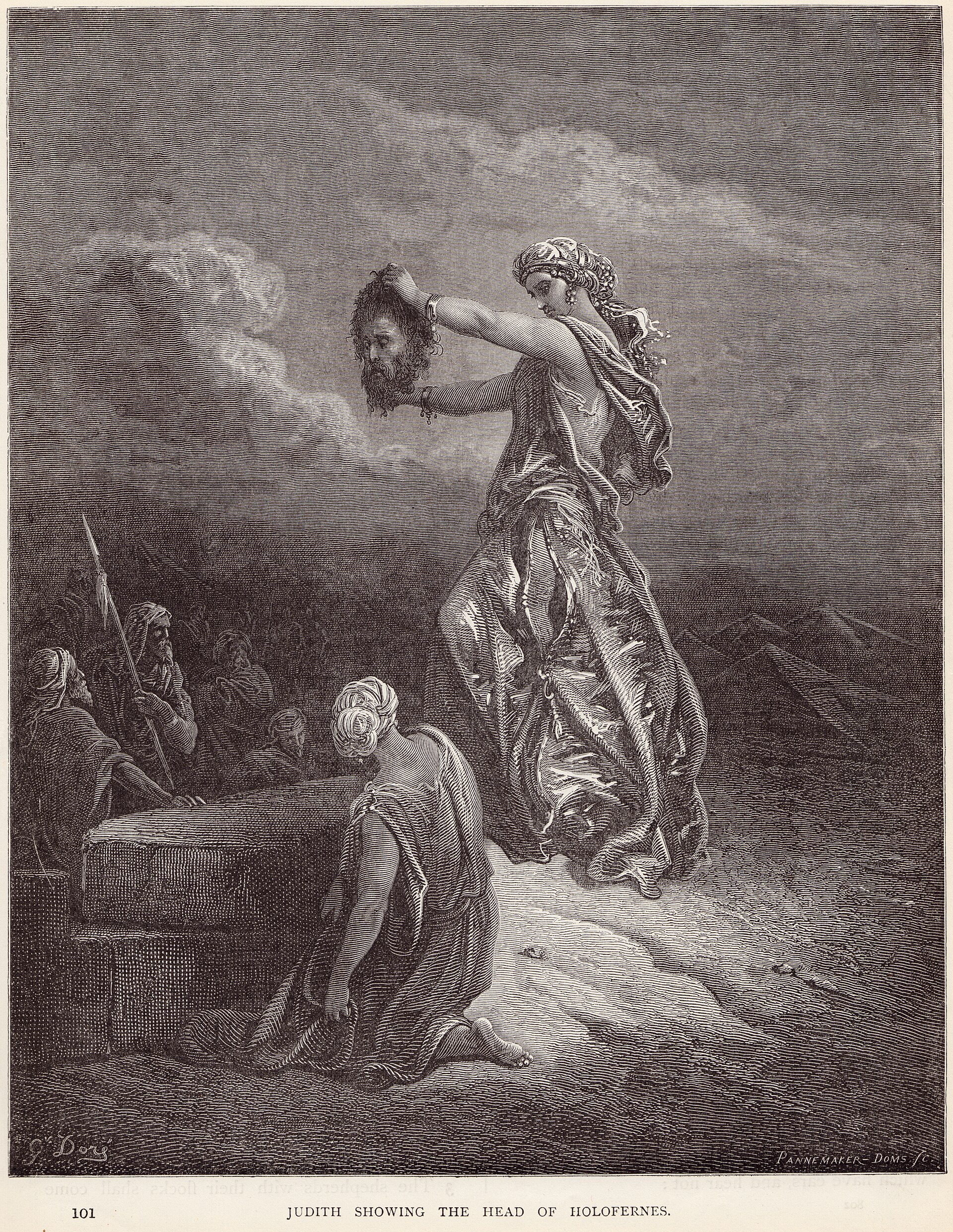 Source: Gustave Dore, The Holy Bible, Judith XIV, Wikimedia Commons, public domain.
This is a Western Bible illustration, not an Orthodox icon. The narrative turning point calls for sober attention to rescue, not fascination with gore or revenge.
- Then said Ozias unto her, O daughter, blessed art thou of the most high God above all the women upon the earth; and blessed be the Lord God, which hath created the heavens and the earth, which hath directed thee to the cutting off of the head of the chief of our enemies.
- For this thy confidence shall not depart from the heart of men, which remember the power of God for ever.
- And God turn these things to thee for a perpetual praise, to visit thee in good things, because thou hast not spared thy life for the affliction of our nation, but hast revenged our ruin, walking a straight way before our God. And all the people said, So be it, so be it.
Ozias blesses Judith and blesses the Lord who created heaven and earth. Truthful human honor does not steal divine glory. Christian readers can also hear a biblical resonance with Elizabeth’s blessing of Mary (Luke 1:42), while the overthrow of proud power recalls the Magnificat (Luke 1:51-53). These comparisons concern God’s work through the lowly; they do not identify Judith with the Theotokos or make her wartime act the Incarnation. Salvation is fulfilled in Mary’s Son through His Cross and Resurrection.
7. The victory becomes song and a faithful life (Judith 16:13-16)
- I will sing unto my God a new song: O Lord, thou art great and glorious, wonderful in strength, and invincible.
- Let all creatures serve thee: for thou spakest, and they were made: thou didst send forth thy spirit, and it created them, and there is none that can resist thy voice.
- For the mountains shall be moved from their foundations with the waters, the rocks shall melt as wax at thy presence: yet thou art merciful to them that fear thee.
- For all sacrifice is too little for a sweet savour unto thee, and all the fat is not sufficient for thy burnt offering: but he that feareth the Lord is great at all times.
The song turns from battlefield reversal to the Creator. Creation serves Him; mountains melt before Him; no offering can match His greatness. The song also warns of lasting judgment (Judith 16:17). Then the narrative continues: Jerusalem worship, gifts to God, Judith’s return home, the freeing of her maid, provision for the nearest kin of both her husband and herself, her death, and Israel’s mourning. Peace lasts through her lifetime and for a long time afterward, not as an unconditional promise for every generation. The final chapter gives thanksgiving the length of a life.
The Church’s Voice in Worship ⛪
In the Palm Sunday procession, Station 2 of the Holy Virgin St. Mary includes Luke 1:39-56: Elizabeth’s blessing, Mary’s praise, and God’s mercy toward those who fear Him.7 Hearing those actual Gospel words can deepen the comparison above. This is a reading from Luke, not an appointment of Judith, nor evidence that the beheading and the Incarnation are the same event.
Gems from the Fathers 💎
In First Clement 55, St. Clement of Rome remembers the blessed Judith going into danger out of love for her besieged country and people. He says that the Lord delivered Holofernes into a woman’s hands.8 His example directs attention to love willing to risk itself for others, not permission to imitate every wartime act.
Glossary
- Achior: The Ammonite who warns Holofernes about Israel’s God, is sheltered in Bethulia, and later joins Israel.
- Bethulia: The besieged city guarding an approach toward Judea; its exact historical identification is uncertain.
- Deuterocanonical: Literally “second canon”; a term for books received in Orthodox and Catholic Old Testaments but absent from most Protestant Old Testaments.
- Septuagintal tradition: The Greek Old Testament tradition, not one complete collection translated at a single moment.
- Typology: Reading scriptural persons, events, and patterns in the light of their fulfillment in Christ, without erasing what the earlier narrative actually says.
Spiritual Fruit 🍇
-
Cry urgently without making trust conditional. When a prayer becomes a deadline, return to Judith’s refusal to bind God’s counsel. Seek the help and safety you need; neither bodily exhaustion nor honest lament is unbelief.
-
Let fasting make room for another person. The community prays before Judith acts. Join your prayer to one concrete act of care for someone who is frightened or worn down, rather than measuring that person’s faith by composure.
-
Reject the aggressor’s way of seeing. Holofernes turns beauty into an object to possess. Practice chastity as reverence for persons, never as a claim that disciplined people cannot be harmed or that survivors are to blame.
-
Remember the God of the afflicted. Return to Judith 9:11 when numbers, influence, or confidence appear to decide everything. Ask not only for courage but for the willingness to stand beside someone without power.
-
Give thanksgiving a life afterward. Judith’s song is followed by worship, freedom for her maid, care for kin, and ordinary faithfulness. Name one responsibility you can now resume gratefully, without making God’s mercy a trophy of your own importance.
Teaching Notes
Canon and reception
- Ask: How can we explain the difference between Bible editions without denying the evidence of ancient diversity?
- Watch for: Mockery of other Christians or treating one Father’s list as the whole history of reception.
- Show: The Codex Gigas page is a Latin manuscript witness, not the source of Orthodox canonical authority.
The book’s narrative movement
- Ask: What changes when we read Judith’s courage within the prayer of the whole people and the long life after victory?
- Watch for: Blaming the thirsty, excusing manipulation, making assault a stain on the survivor, or treating judgment as permission for revenge.
- Show: The maps orient the imperial world; the Dore illustration marks a narrative turning point without making violence the lesson.
Sources
Embedded Scripture is from Brenton’s English Septuagint (LXX).
Primary and reception sources
Historical orientation
- Hugh Pope, “Book of Judith”, Catholic Encyclopedia (1913), on textual differences and historical difficulties. Its proposed historical solutions are not treated as settled conclusions.
- Encyclopaedia Britannica, “Book of Judith”, for an account of differing historical hypotheses, not ecclesial authority.
Further reading
- David A. deSilva, Introducing the Apocrypha.
- Carey A. Moore, Judith, Anchor Bible 40.
- Lawrence M. Wills, Judith, Hermeneia.
Image sources
- Codex Gigas page 216, Judith, Wikimedia Commons, public domain.
- Map of the Assyrian Empire, Wikimedia Commons, public domain.
- Persian Empire, 490 BC, Department of History, United States Military Academy, Wikimedia Commons, public domain.
- Gustave Dore, The Holy Bible, Judith XIV, Wikimedia Commons, public domain; Western Bible illustration.
Footnotes
-
Fr. Moses Samaan, “The Deuterocanonical Books”, Coptic Orthodox Diocese of Los Angeles, July 19, 2012; archived July 14, 2026. Used here for contemporary Coptic reception. ↩
-
Canons of the African Church, African Code, canon 24 (Greek xxvii), canonical Scripture list. ↩
-
St. Athanasius of Alexandria, Festal Letter 39.7, books for instruction distinguished from the canonical list and heretical apocrypha. ↩
-
Judith in the original 1611 King James Bible, reproduction. ↩
-
Jerome, Preface to Kings (Prologus Galeatus), Hebrew enumeration and paragraph placing Judith outside his canon. ↩
-
Jerome, Preface to Judith, translation by Andrew S. Jacobs, complete preface, including translation method and commendation of Judith. ↩ ↩2
-
Fr. Jacob Nadian, Rites and Readings of Palm Sunday, Procession and General Funeral, Station 2, The Holy Virgin St. Mary, pp.126–127. ↩
-
St. Clement of Rome, First Epistle to the Corinthians 55, Judith’s loving venture for her besieged people. ↩