


This narration is from a previous version of the study and may include a combined recording of multiple chapters.
A people can receive God’s gifts and forget the Giver. Hosea enters that failure of memory: grain and wine credited to Baal, safety sought from empires, sacrifices offered without mercy. His accusations are painful because the relationship is real. The Lord is not exposing strangers. He is calling home the people He has loved.
Hosea is not mainly a book about an angry prophet. It is a book about covenant love wounded by betrayal, judgment that dismantles false refuges, and mercy that makes return possible. Read before the Crucified Bridegroom, its severity becomes a summons to stop defending our idols and receive the life they cannot give. Yet the book must first be heard in its own world: Israel’s worship, rulers, fields, households, and fear of Assyria.
Embedded Scripture is from Brenton’s English Septuagint (LXX). New Testament passages are cited by reference rather than quoted in full.
A voice within real history (Hosea 1:1)
- The word of the Lord which came to Osee the son of Beeri, in the days of Ozias, and Joatham, and Achaz, and Ezekias, kings of Juda, and in the days of Jeroboam son of Joas, king of Israel.
The opening anchors the prophecy in the eighth century BC. Brenton’s “Osee” is Hosea; “Ozias,” “Joatham,” “Achaz,” and “Ezekias” are Uzziah, Jotham, Ahaz, and Hezekiah. The Jeroboam named here is Jeroboam II of the northern kingdom, not the first Jeroboam who ruled after the division of the kingdoms. Hosea’s heading names kings in both kingdoms, although the northern kingdom of Israel is the principal object of his warnings.
The distinction between the kingdoms matters. Israel is the northern kingdom, with Samaria as its capital. Judah, Brenton’s “Juda,” is the southern kingdom, with Jerusalem and the Davidic royal house. Ephraim, the name of a major northern tribe, frequently stands for the northern people as a whole. These names are not three interchangeable labels for the same political territory.
The book speaks into the apparent strength of Jeroboam II’s age and the instability that followed it. Its warnings expose the fragility beneath national confidence: priests entangle the people, rulers grasp for security, and the nation turns between Egypt and Assyria instead of returning to God (Hosea 5:1; Hosea 5:13; Hosea 7:11). Assyria is not simply another idol in a list. It is the imperial power from which Israel seeks help and under whose pressure the northern kingdom will fall.
Hosea belongs to the Twelve Prophets, often called the Minor Prophets because their books are relatively short, not because their witness is less important. Here sin appears not only as a broken command but as betrayed love, forgotten deliverance, and the refusal to know God. The political and religious disorders belong together: a people who no longer trust the Lord begin to ask rulers, prosperity, and ritual to do what only He can do.
Kingdom context and visual orientation
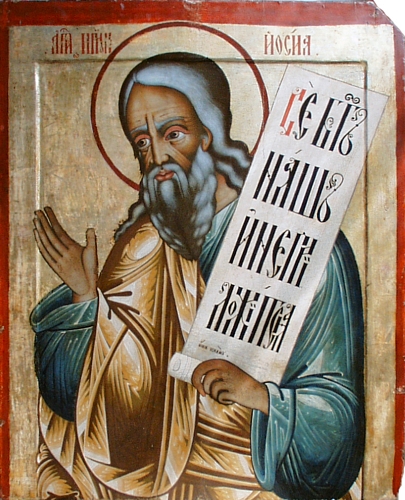 Source: Russian icon of the Prophet Hosea, early eighteenth century, from the iconostasis of the Transfiguration Church at Kizhi; Wikimedia Commons, public domain.
The icon places Hosea among the Church’s prophetic witnesses. He does not stand above the word he brings. The prophet, too, is a man addressed by God. This is a fitting posture for reading a book that removes the listener’s comfortable position as a judge of other people.
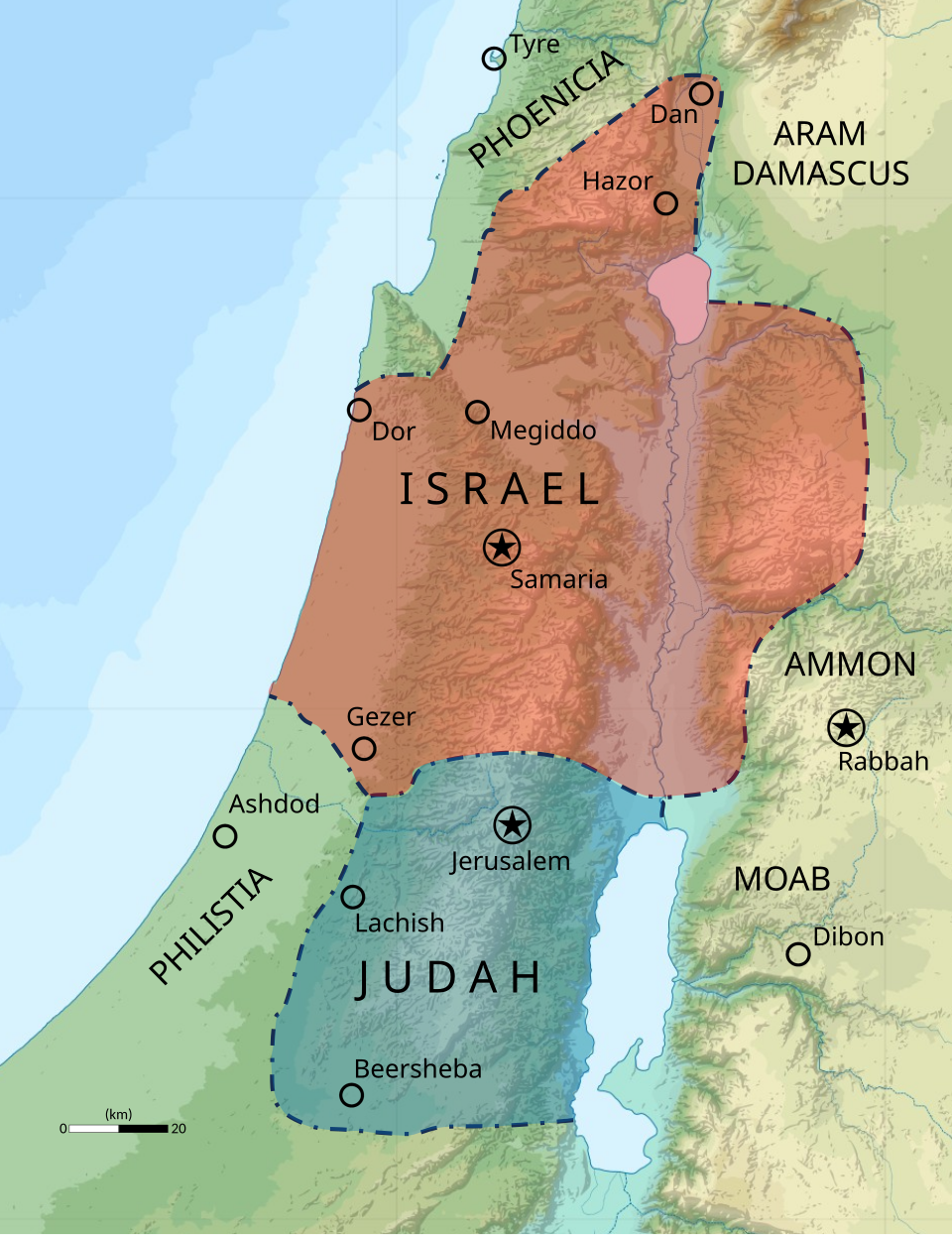 Source: Tobias Schäfer 87, Kingdoms of Israel and Judah in the eighth century BCE, CC BY 4.0.
The map distinguishes the two kingdoms and their neighbors. It helps explain why the names of places and powers are theological as well as geographical: Israel’s routes toward Egypt and Assyria become routes along which fear seeks a substitute for faithfulness.
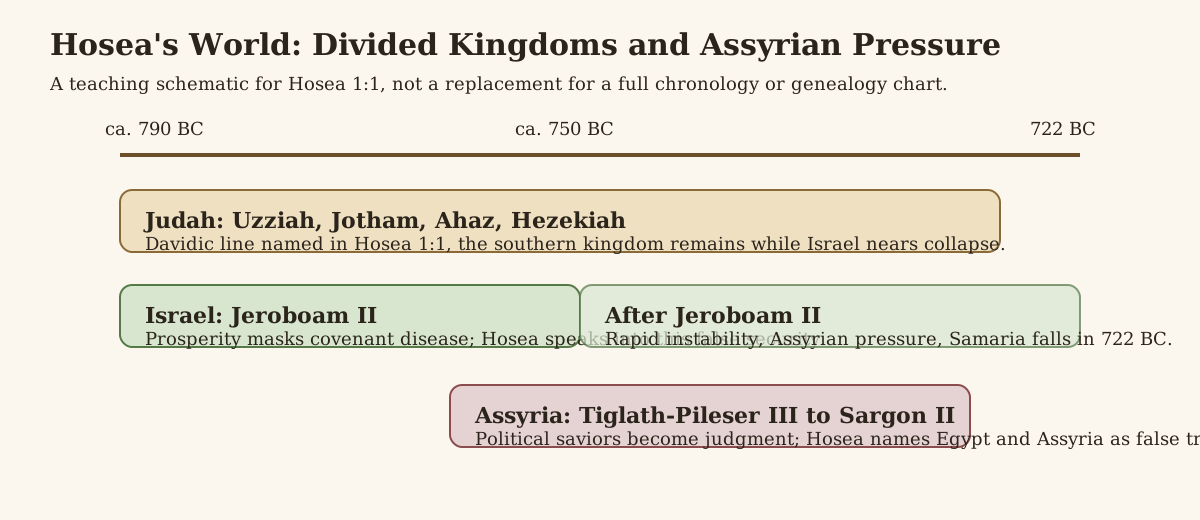 Source: schematic of Hosea’s divided-kingdom setting, based on Hosea 1:1 and the royal history. Dates and bars provide broad orientation rather than exact reign-by-reign scale.
The timeline sets the southern succession beside Jeroboam II and the northern instability after him. It is not a family tree or a complete chronology. Its point is to make visible the distance between Israel’s confidence and the approaching loss of the security it took for granted.
The movement of the book
Hosea is not arranged as a smooth chronological narrative. After the household signs of the opening chapters, accusations, memories, appeals, and promises return in changing combinations. A sudden turn from judgment to tenderness is not necessarily a change of subject. The same covenant has been broken; the same Lord continues to address His people.
| Study | What to listen for |
|---|---|
| Hosea 1 - The Names of a Broken Covenant | Hosea’s household exposes Israel’s broken covenant through names of judgment, while the Lord distinguishes His saving mercy from the strength of armies. |
| Hosea 2 - Gifts Restored and the Covenant Renewed | The Lord exposes Israel’s false account of His gifts, interrupts the pursuit of idols, and promises a faithful covenant in which the estranged again acknowledge Him as their God. |
| Hosea 3 - Costly Love and the Return to the King | Hosea’s costly act of love becomes a sign of Israel’s long deprivation and promised return to the Lord and David their king, read in Christ without erasing the demands of faithfulness. |
| Hosea 4 - No Knowledge of God | Hosea exposes the rejection of God’s knowledge in public injustice, corrupt priesthood, and false worship, calling His people to truthful communion and mercy. |
| Hosea 5 - Until They Seek My Face | Priests and rulers become a snare, sacrifice cannot replace return, and Assyria cannot heal the wound that leads Israel to seek the Lord’s face. |
| Hosea 6 - On the Third Day He Will Raise Us Up | Israel is called to return to the Lord who heals and raises, but fleeting mercy and violent worship expose the difference between hopeful words and enduring repentance. |
| Hosea 7 - A Cake Not Turned | Hosea exposes desire left ungoverned, strength quietly wasted, and distress that never becomes wholehearted return to God. |
| Hosea 8 - Blighted Seed and the Forgotten Maker | Israel claims to know God while manufacturing its own security; Brenton pictures the resulting harvest as blighted seed and a people forgetting their Maker. |
| Hosea 9 - Grapes in the Wilderness | God remembers Israel as grapes found in the wilderness, while false worship turns delight into estrangement and leaves the people facing exile and devastating loss. |
| Hosea 10 - Sow for Righteousness | Abundant fruit feeds false worship until the altars fall; the Lord calls Israel instead to righteousness, life, knowledge, and persevering seeking. |
| Hosea 11 - Out of Egypt I Called My Son | The Lord remembers the child He carried, confronts Israel’s refusal to return, and promises a homecoming that Christians read in the light of the faithful Son. |
| Hosea 12 - Wrestling, Memory, and Mercy | Hosea recalls Jacob’s wrestling and Israel’s deliverance to expose false strength, dishonest wealth, and the refusal of prophetic care. |
| Hosea 13 - The Forgotten Shepherd and the Ransom from Death | Israel’s fullness becomes forgetfulness, false saviors fail, and the Lord’s promise of ransom from death opens toward the apostolic proclamation of Christ’s victory. |
| Hosea 14 - Return, O Israel | Hosea’s final call leads from the horror of ruin to truthful return, the fruit of repentant lips, and the life God restores through His faithful love. |
The marriage image is central, but it is not the book’s only image of divine love. God is also the father who remembers carrying Ephraim on His arm, the healer to whom the sick must return, and the source of the dew and fruitfulness the land cannot manufacture. Read these images together. No single human relationship can contain the fullness of God’s faithfulness.
Knowing God rather than keeping appearances (Hosea 6:6)
- For I will have mercy rather than sacrifice, and the knowledge of God rather than whole-burnt-offerings.
“The knowledge of God” is one of Hosea’s governing phrases. It is not mere information, but neither is it a private feeling beyond truth and obedience. Hosea 4 names the absence of knowledge beside lying, killing, theft, and adultery. To know the Lord is to recognize His claim upon life: worship that receives His word, mercy that reaches a neighbor, and faithfulness that remains when fear or appetite presses against it.
The contrast with sacrifice does not make worship disposable. It exposes the attempt to make an offering substitute for returning to the God who receives it. A person can know religious words and still resist God. A community can preserve forms of worship while refusing the mercy those forms should nourish. Christ’s use of Hosea 6:6 in Matthew brings this failure close: the saying confronts contempt for sinners and the condemnation of the guiltless, not merely someone else’s defective ritual.
Judgment in Hosea includes the loss of gifts falsely credited to other gods. The wound is more than an accounting mistake. The beloved has treated the Giver as unnecessary. Yet the aim of return is more than getting prosperity back. It is restored communion with the Lord Himself.
Hosea in the New Testament
The New Testament does not receive Hosea in only one way. Some passages are explicitly quoted, others are closely echoed, and still others illuminate the Church’s Paschal reading without being identified by an apostle as a particular prediction. These distinctions let us see the connections without forcing every resemblance into a direct citation.
The Hosea references below use the conventional numbering familiar in New Testament cross-references. Where needed, the corresponding Brenton reference is given separately.
| Hosea passage | New Testament reception | What the connection shows |
|---|---|---|
| Hosea 6:6 | Explicit quotation in Matthew 9:13 and Matthew 12:7. | Jesus directs the hearer toward mercy: His table fellowship calls sinners to repentance, and His defense of the disciples exposes the condemnation of the guiltless. |
| Hosea 11:1 | Fulfillment citation in Matthew 2:15. | Matthew receives Israel’s exodus history in the life of Christ, the Son called from Egypt. This is not a claim that Hosea’s original recollection had no historical reference to Israel. Brenton’s wording differs from Matthew’s quotation; the chapter study considers that difference. |
| Hosea 2:23 and Hosea 1:10; Brenton Hosea 2:25 and Hosea 2:1 | Named quotations in Romans 9:25–26. | Paul places Hosea’s reversal of exclusion within the calling of a people from Jews and Gentiles. Belonging is God’s merciful gift, not a possession that makes repentance unnecessary. |
| Hosea 2:23, recalling the judgment names in Hosea 1; Brenton Hosea 2:25 | Close reuse of Hosea’s people-and-mercy language in 1 Peter 2:10. | Those who had not received mercy now belong to God and are called to proclaim His praises. Restoration has a vocation as well as a consolation. |
| Hosea 10:8 | Quoted in Luke 23:30; echoed in Revelation 6:16. | The appeal to mountains and hills becomes language of dreadful judgment. Hosea’s reception includes warning as well as promises of healing. |
| Hosea 13:14 | Reworked in the resurrection proclamation of 1 Corinthians 15:55. | Paul’s taunt against death belongs to Christ’s victory and the promised resurrection of the dead. Its force must be read within that argument, not detached as an optimistic slogan. |
| Hosea 14:2; Brenton Hosea 14:3 | A close Septuagint echo in Hebrews 13:15. | The “fruit of our lips” becomes a sacrifice of praise offered through Christ. Hosea’s return to God includes truthful prayer, not merely silent regret. |
Hosea 6:2 also has a natural place in Christian meditation on the third-day Resurrection. It should not, however, be described as an explicit quotation in 1 Corinthians 15:4: Paul says that Christ rose according to the Scriptures without naming Hosea there. The immediate voice in Hosea is plural, a people hoping to rise and live before God. In the Church’s reading, that hope opens toward the risen Christ and the life His people receive in Him.
An early Christian witness to the inclusion of the nations is Eusebius of Caesarea. In Proof of the Gospel II.3 he directly quotes Hosea 2:23 while arguing that the nations share in God’s promises.1 This is a historical witness to Christian reception; the apostolic uses themselves are those of Romans and 1 Peter above. None gives the reader permission to despise Israel. The Church receives Israel’s Scriptures with thanksgiving and hears their warnings against presumption as warnings to herself.
The Church’s Voice in Worship ⛪
The Coptic Church reads Hosea 5:13–6:3 at Wednesday of Holy Pascha, First Hour. The Coptic Reader witness confirms this placement. It joins the failure of Assyrian help to the call to return, healing, and rising on the third day. The selection crosses a chapter boundary: the plea in chapter 6 answers the wound exposed at the end of chapter 5.
The following map distinguishes that confirmed reading from other Katameros listings. It is an orientation to Hosea’s Holy Week use, not a claim that every listed label is the universally current appointment in every service book.
| Day and hour | Hosea selection | How to understand the witness |
|---|---|---|
| Wednesday, First Hour | Hosea 5:13–6:3 | Confirmed in Coptic Reader. False help gives way to return and hope of healing. |
| Tuesday, First Hour | Hosea 4:1–8 | Listed in the Katameros day-and-hour source; not Coptic Reader-confirmed. The reading exposes the loss of truth, mercy, and knowledge of God. |
| Tuesday Eve, Sixth Hour; overlapping Monday Eve listing | Hosea 4:15–5:7 | The Tuesday Eve listing gives one continuous range. The Monday Eve listing divides the corresponding material into Hosea 4:15–19 and Hosea 5:1–7. These are overlapping source listings, not evidence for two independently confirmed current appointments. |
| Tuesday Eve, Ninth Hour; overlapping Monday Eve listing | Hosea 10:12–11:2 | The Tuesday Eve listing gives the continuous range; Monday Eve divides it into Hosea 10:12–15 and Hosea 11:1–2. The same caution about day labels and confirmation applies. |
| Good Friday, Ninth Hour | A selection from Hosea 2 | Present in the Katameros listing, but the precise excerpt boundaries and their correspondence to Brenton’s verse divisions remain uncertain. Consult the service book for the appointed text. |
A further selection, Hosea 9:14–10:2 at Wednesday Eve, Ninth Hour, is preserved in the St. Mary Ottawa printed Holy Pascha witness. It is a historical printed witness, not a confirmed current Coptic Reader appointment. Its presence should not be used to erase the distinctions in the table.
The spiritual force of the confirmed Wednesday reading is searching. Approaching the Passion, the worshipper hears that the power sought as a rescuer cannot heal the wound. The invitation is not to feel briefly chastened but to return to the Lord. The third-day promise is heard beside the Cross and Resurrection; the remainder of Hosea 6 warns how easily our response can vanish like morning cloud. The reading draws us into that examination before the Crucified and risen Lord.
How to read Hosea without harm
Hosea’s marriage sign is a unique prophetic sign, not pastoral advice for abused or betrayed spouses. The book must never be used to tell the wounded to remain in danger, to excuse betrayal, or to flatten the need for truth, repentance, safety, healing, and discernment. The sign reveals God’s costly covenant love. It does not erase human harm. Forgiveness does not require concealing abuse, abandoning protection, or restoring trust without truthful change.
The same care is needed with judgment. Hosea’s prophetic interpretation of Israel’s covenant history does not authorize us to diagnose another person’s illness, bereavement, infertility, or trauma as punishment. Severe images must not become weapons against people already suffering. Nor should the reader romanticize destruction because the book also speaks of healing. The losses are real; mercy does not make them unreal.
Read first for the particular accusation and promise. Who is speaking? What gift has been forgotten? What false help is being sought? Then let the text reach your own life without transferring a wrongdoer’s guilt to the person harmed. The Church reads Hosea not to congratulate herself for being unlike ancient Israel, but to learn repentance from the Scriptures she has received.
Finally, read toward Christ without making every detail an independent prediction. The New Testament connections above provide firm paths. The wider imagery of bridegroom, healing, return, and restored fruitfulness belongs within that scriptural whole. Christ’s Cross reveals the cost of His saving love; it never licenses human cruelty in the name of love.
Reference terms and name forms
- “LXX” / “Septuagint”: the ancient Greek scriptural tradition. Brenton’s English translation supplies the embedded Old Testament readings in these studies.
- “Osee” / “Hosea”: two English forms of the prophet’s name; Brenton uses “Osee” in the text.
- “Ozias,” “Joatham,” “Achaz,” “Ezekias”: Brenton’s forms of Uzziah, Jotham, Ahaz, and Hezekiah, the kings of Judah named in Hosea 1:1. “Joas” is Joash, the father of Jeroboam II.
- “Juda” / “Judah”: the southern kingdom. “Israel” in Hosea frequently means the northern kingdom; context can also recall the covenant people more broadly.
- “Ephraim”: a northern tribe whose name often stands for the northern kingdom.
- “Assur” / “Assyria”: the imperial power sought as a protector. “Assur” is the form used in Brenton’s closing renunciation of false help.
- “Baal” / “Baalim”: the name and plural form associated with the rival worship Hosea condemns. The gifts of the Lord must not be credited to these supposed providers.
- “Jezrael” / “Jezreel”: Brenton’s and the more familiar English forms of a place-name that is also the name of Hosea’s first child. Its associations with bloodshed, judgment, and renewed sowing develop across the opening chapters.
- “Unpitied” and “Not my people”: the children’s judgment names in Brenton. Their reversal into mercy and belonging is central to the New Testament’s reception of Hosea.
- “Covenant”: the relationship God establishes with His people, carrying promises, gifts, and the call to faithfulness. Its breach is personal without being merely private.
- “Holy Pascha”: the Church’s Holy Week observance of the Lord’s saving Passion and Resurrection. The reading map preserves its witnesses’ day-and-hour labels rather than treating every source as identical.
A note on verse numbers: Hosea’s chapter and verse divisions are not identical in all editions. For example, the promise commonly cited as Hosea 2:23 appears at Hosea 2:25 in the Brenton division used in these studies; the prayer commonly cited as Hosea 14:2 appears at Brenton Hosea 14:3. Compare the words as well as the numbers, especially near the boundaries of chapters 1–2 and 13–14. A service book’s printed reference should not be silently transferred to a different edition.
Spiritual Fruit 🍇
Name the gift before naming the idol. Hosea exposes the heart’s false accounting. Food, affection, skill, money, and opportunities for service can be received with thanksgiving or treated as proof that we no longer need the Giver. Choose one ordinary gift and thank God for it without turning the prayer into a request for more.
Let repentance become a truthful action. A moving prayer is not yet durable faithfulness. Where the text has named a real fault, take a proportionate step: confess it, stop a deceit, return what is owed, or seek help for a habit you cannot honestly call harmless. If another person has injured you, their repentance is not your task to perform for them.
Receive mercy as more than a reprieve. The end of Hosea does not merely announce that punishment has stopped. God restores life and fruitfulness:
- I will restore their dwellings, I will love them truly: for he has turned away my wrath from him.
This is Brenton’s Hosea 14:5. The Lord calls the penitent beyond the endless effort to manage guilt and back into communion with Him. Return is possible because His mercy comes before our recovery is complete. We bring the truth of the wound; we do not manufacture the dew that makes the land live.
Teaching Notes
The book’s setting and movement
- Ask: why does Hosea place forgotten gifts and false political help within the same account of unfaithfulness?
- Emphasize: the northern kingdom is the principal historical setting; Ephraim often names it, while Judah is the southern kingdom.
- Watch for: treating the book as an unbroken story, reducing its love imagery to marriage alone, or making every judgment a description of an individual’s suffering.
- Show: use the map to distinguish the kingdoms and the timeline for broad political orientation, not exact reign lengths.
New Testament reception and Holy Pascha
- Ask: how do Christ’s uses of Hosea 6:6 challenge the way we judge another person’s need for mercy?
- Emphasize: Wednesday First Hour includes the complete movement from Hosea 5:13 to Hosea 6:3. Reading only chapter 6 loses the failure of false help that precedes the call to return.
- Watch for: calling every echo an explicit quotation, claiming Paul names Hosea in 1 Corinthians 15:4, or counting overlapping Monday Eve and Tuesday Eve listings as independently established appointments.
- Connect: keep Hosea’s original address to Israel, its apostolic reception in Christ, and the service’s Paschal setting distinct but related.
Pastoral discernment
- Ask: what would returning to God look like beyond a brief feeling of remorse?
- Emphasize: knowledge of God takes visible shape in worship, truth, mercy, and durable faithfulness.
- Watch for: using the marriage sign to pressure a victim, treating protection as unforgiveness, or making a harmed person responsible for someone else’s conversion.
Sources
Brenton, The Septuagint Version of the Old Testament, Hosea. Embedded Scripture follows Brenton’s wording and the verse divisions used in these studies. Public reading pages include Hosea 2 and Hosea 14; some electronic presentations use familiar English verse labels alongside the Septuagint text.
The New Testament passages identified in the reception table, with links to the corresponding studies. Explicit quotations, close echoes, and broader Christian readings are distinguished rather than treated as a single kind of evidence.
Eusebius of Caesarea, Proof of the Gospel, Book II, chapter 3, trans. W. J. Ferrar, for his direct quotation of Hosea 2:23 in an argument about the nations sharing God’s promises.
Coptic Holy Pascha reading witnesses: Coptic Reader, Wednesday First Hour, Hosea 5:13–6:3; the Katameros day-and-hour listings distinguished in the reading map; and the St. Mary Ottawa printed Holy Pascha witness, used only for the separately identified historical selection.
Prophet Hosea icon, Kizhi iconostasis, Russian Orthodox tradition, public domain.
Kingdoms of Israel and Judah, Tobias Schäfer 87, CC BY 4.0. The accompanying royal timeline is a schematic rather than a complete critical chronology.
Footnotes
-
Eusebius of Caesarea, Proof of the Gospel II.3, trans. W. J. Ferrar, in the discussion of the nations becoming God’s people: direct text. ↩