


This narration is from a previous version of the study and may include a combined recording of multiple chapters.
The Greek account opens with Mardochæus (Mordecai) receiving a dream before Artaxerxes (Ahasuerus) displays his throne. A people will prepare to die, cry to God, and see a little fountain become a river. Then the scene turns to a palace whose gold cannot conceal its anger or steady its judgment. The dream tells us that the palace’s account of power is incomplete.
Chapters 1-2 bring Esther into that court and leave Mordecai keeping watch. Their faithfulness is still largely hidden: a woman remains obedient to God while her people are unnamed; a kinsman returns daily to learn what has become of her; a warning is written in the royal records. The great public crisis lies ahead. Already there are persons to protect, commandments to keep, and truths to tell.
Historical and Scriptural Context
Susa is the royal setting of this session, among Jews whose family memory reaches back to the Babylonian captivity. The characters live far from Jerusalem and close to imperial command. Palace appointments, provincial orders, women’s apartments, and written records shape what they can do. These circumstances give obedience its particular cost: the faithful cannot simply arrange a safer world before beginning to serve God.
The shorter Hebrew Esther leaves God’s name unspoken. Greek Esther opens with prayer in the dream and later names Esther’s fear of God within chapter 2 itself. The Overview’s account of the Greek narrative follows those divine references through the whole book. Here the difference matters at once: the story gives the reader a knowledge of God’s purpose that the royal household does not possess.
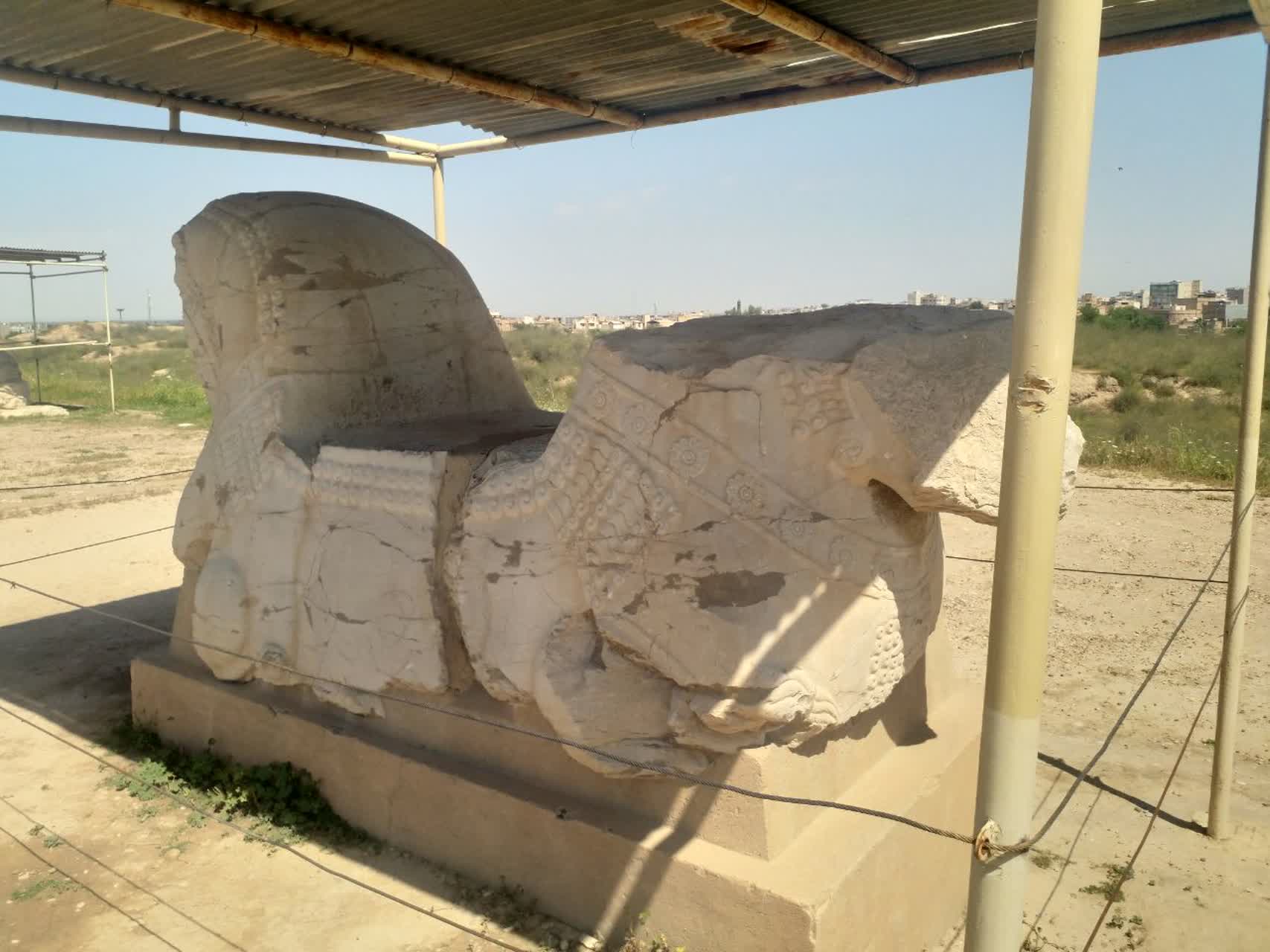 Source: Palace of Darius in Susa, CC0, Wikimedia Commons. Modern site photograph, not a reconstruction of Esther’s exact throne room.
Mordecai’s Dream and the Hidden War (Esther 1:1)
Before the reading: Addition A stands within Brenton’s 1:1, before the familiar royal opening found in NKJV. It includes both the dream and an account of the chamberlains’ plot; it also says Mordecai received gifts and that Aman (Haman) sought to harm him because of the chamberlains. The later telling in 2:21-23 and the statement in 6:3 that nothing had been done for Mordecai leave a genuine tension, discussed below; the Overview’s numbering crosswalk locates Addition A in other Bibles.
1 [In the second year of the reign of Artaxerxes the great king, on the first day of Nisan, Mardochæus the son of Jairus, the son of Semeias, the son of Cisæus, of the tribe of Benjamin, a Jew dwelling in the city Susa, a great man, serving in the king’s palace, saw a vision. Now he was of the captivity which Nabuchodonosor king of Babylon had carried captive from Jerusalem, with Jechonias the king of Judea. And this was his dream: Behold, voices and a noise, thunders and earthquake, tumult upon the earth. And, behold, two great serpents came forth, both ready for conflict, and there came from them a great voice, and by their voice every nation was prepared for battle, even to fight against the nation of the just. And, behold, a day of darkness and blackness, tribulation and anguish, affliction and great tumult upon the earth. And all the righteous nation was troubled, fearing their own afflictions; and they prepared to die, and cried to God: and from their cry there came as it were a great river from a little fountain, even much water. And light and the sun arose, and the lowly were exalted, and devoured the honourable. And Mardochæus who had seen this vision and what God designed to do, having awoke, kept it in his heart, and desired by all means to interpret it, even till night. And Mardochæus rested quiet in the palace with Gabatha and Tharrha the king’s two chamberlains, eunuchs who guarded the palace. And he heard their reasonings and searched out their plans, and learnt that they were preparing to lay hands on king Artaxerxes: and he informed the king concerning them. And the king examined the two chamberlains, and they confessed, and were executed. And the king wrote these things for a memorial; also Mardochæus wrote concerning these matters. And the king commanded Mardochæus to attend in the palace, and gave him gifts for this service. And Aman the son of Amadathes the Bugæan was honourable in the sight of the king, and he endeavoured to hurt Mardochæus and his people, because of the two chamberlains of the king.] And it came to pass after these things in the days of Artaxerxes, (this Artaxerxes ruled over a hundred and twenty-seven provinces from India),
The dream looks beyond Mordecai’s private future to a threatened people. Nations prepare for battle, darkness gathers, and the righteous expect death. Their decisive act is a cry to God. The river rises from that cry, so that the first image of deliverance is neither a weapon nor a throne, but water coming from a small source.
The ending of the book will identify the river as Esther and the two serpents as Mordecai and Haman. Israel will be named as the nation that cried to God and was delivered. That later interpretation keeps the dream from becoming an open invitation to invent meanings for every image. It also makes the opening a promise whose answer must be heard in Addition F, in Esther 9-10. The prayer and its answer belong to one story.
Mordecai wakes wanting to understand. Keeping the dream in his heart does not excuse him from attending to danger in the palace: he listens, investigates, and reports the conspiracy. Faith receives what it cannot yet explain while still doing what responsibility makes plain. A parent who cannot see a child’s future can still remain attentive today. A servant who cannot solve a parish’s troubles can still speak truthfully about a danger that has become known.
Addition A also gives the coming conflict an earlier cause. Haman’s hostility is already attached to the chamberlains’ affair, before the refusal to bow in chapter 3. His resentment reaches beyond Mordecai to Mordecai’s people. A personal grievance is beginning to seek a larger victim; Esther 3-4 will show it taking official form. The opening does not explain Haman’s precise connection with the conspirators, and that connection should remain unspecified.
For a Christian reader, the passage offers hope without promising the end of every trial on our preferred timetable. God’s final victory is revealed in Christ’s willing Passion and Resurrection; the dream’s local rescue has its own place within that larger hope. Mordecai must still live through what he has seen only in signs. Receiving a promise can deepen patience before it explains the path.
The Empire Performs Its Wealth (Esther 1:2-8)
2 in those days, when king Artaxerxes was on the throne in the city of Susa, 3 in the third year of his reign, he made a feast to his friends, and the other nations, and to the nobles of the Persians and Medes, and the chief of the satraps.
4 And after this, after he had shewn to them the wealth of his kingdom, and the abundant glory of his wealth during a hundred and eighty days, 5 when, I say, the days of the marriage feast were completed, the king made a banquet to the nations who were present in the city six days, in the court of the king’s house, 6 which was adorned with hangings of fine linen and flax on cords of fine linen and purple, fastened to golden and silver studs, on pillars of Parian marble and stone: there were golden and silver couches on a pavement of emerald stone, and of pearl, and of Parian stone, and open-worked coverings variously flowered, having roses worked round about; 7 gold and silver cups, and a small cup of carbuncle set out of the value of thirty thousand talents, abundant and sweet wine, which the king himself drank. 8 And this banquet was not according to the appointed law; but so the king would have it: and he charged the stewards to perform his will and that of the company.
The palace introduces itself through things that can be shown: the wealth of the kingdom, costly fabrics, precious stones, couches, cups, and wine. The long display makes splendor a public argument. The king appears to possess so much that his will ought to seem unquestionable.
Verse 8 reveals the governing principle beneath the furnishings. The banquet follows what the king wants, and the stewards are charged to fulfill his will and that of the company. In the next scene, another person’s refusal will reveal how fragile this arrangement is. A court that can supply abundance cannot necessarily endure an unwelcome word.
There is a smaller version of that palace in the heart that needs constant admiration. A home can become a display of success while those who live in it are afraid to speak. A ministry can gather titles and resources while correction is treated as disloyalty. The feast asks us to separate what is impressive from what is good. Wealth becomes spiritually dangerous when it trains us to excuse the will of the person who possesses it.
The dream has given the reader another measure. The little fountain will become a river, while this wealth will prove unable to keep the king from anger or the kingdom from danger. What God can do through dependence is greater than what a ruler can display through possession.
Law Serving Wounded Pride (Esther 1:9-22)
Before the reading: Astin is Brenton’s name for Vashti. Her refusal and the advisers’ response belong to the narrative; the passage does not disclose her inward motive, and no imagined motive is needed to see what the decree does.
9 Also Astin the queen made a banquet for the women in the palace where king Artaxerxes dwelt.
10 Now on the seventh day the king, being merry, told Aman, and Bazan, and Tharrha, and Barazi, and Zatholtha, and Abataza, and Tharaba, the seven chamberlains, servants of king Artaxerxes, 11 to bring in the queen to him, to enthrone her, and crown her with the diadem, and to shew her to the princes, and her beauty to the nations: for she was beautiful. 12 But queen Astin hearkened not to him to come with the chamberlains: so the king was grieved and angered.
13 And he said to his friends, Thus has Astin spoken: pronounce therefore upon this case law and judgment. 14 So Arkesæus, and Sarsathæus, and Malisear, the princes of the Persians and Medes, who were near the king, who sat chief in rank by the king, drew near to him, 15 and reported to him according to the laws how it was proper to do to queen Astin, because she had not done the things commanded of the king by the chamberlains.
16 And Muchæus said to the king and to the princes, Queen Astin has not wronged the king only, but also all the king’s rulers and princes: 17 for he has told them the words of the queen, and how she disobeyed the king. As then, said he, she refused to obey king Artaxerxes, 18 so this day shall the other ladies of the chiefs of the Persians and Medes, having heard what she said to the king, dare in the same way to dishonour their husbands. 19 If then it seem good to the king, let him make a royal decree, and let it be written according to the laws of the Medes and Persians, and let him not alter it: and let not the queen come in to him any more; and let the king give her royalty to a woman better than she. 20 And let the law of the king which he shall have made, be widely proclaimed, in his kingdom: and so shall all the women give honour to their husbands, from the poor even to the rich.
21 And the saying pleased the king and the princes; and the king did as Muchæus had said, 22 and sent into all his kingdom through the several provinces, according to their language, in order that men might be feared in their own houses.
The king wants Astin brought before the princes and nations because she is beautiful. Her appearance is to confirm his grandeur. When she refuses, he turns immediately to friends who will pronounce law and judgment. The personal wound acquires the language of public necessity.
Muchæus then enlarges the offense. One queen’s refusal becomes an injury to every ruler, a threat from every wife, and finally a reason to legislate fear throughout the households of the empire. The conclusion is revealing: the letters are sent so that men might be feared in their own houses. The court has made the ruler’s difficulty with one person into a rule for everyone.
That pattern prepares for Haman’s later accusation. Resentment becomes more dangerous when it stops admitting that it is personal and claims to defend order itself. Before a death decree appears, chapter 1 has shown how easily a court can make sweeping policy out of an injured ego.
This is a searching passage for anyone who exercises authority. Anger can recruit respectable words to defend itself: standards, loyalty, peace, respect. Those words may name real goods, but here they are used to secure a frightened person’s control. Christian authority has to bear correction without making others pay for the leader’s embarrassment. In a household, the first act of repentance may be to withdraw an angry demand and hear the person whom the demand silenced.
The Search That Commodifies Women (Esther 2:1-4)
1 And after this the king’s anger was pacified, and he no more mentioned Astin, bearing in mind what she had said, and how he had condemned her. 2 Then the servants of the king said, Let there be sought for the king chaste and beautiful young virgins. 3 And let the king appoint local governors in all the provinces of his kingdom, and let them select fair and chaste young damsels and bring them to the city Susa, into the women’s apartment, and let them be consigned to the king’s chamberlain, the keeper of the women; and let things for purification and other attendance be given to them. 4 And let the woman who shall please the king be queen instead of Astin. And the thing pleased the king; and he did so.
The advisers’ solution is to gather new women. The verbs expose the arrangement: appoint governors, select, bring, consign. The provinces supply candidates, and a keeper receives them. The young women appear in the plan according to what will please the king.
God’s providence within the court is not His approval of coercion. Esther’s experience cannot be used to sanctify abuse, demand submission to exploitation, or tell an unsafe person to remain without help. The palace is not a romance that becomes righteous because deliverance will eventually come through it.
The text nevertheless gives hope to those whose circumstances have been shaped by other people’s decisions. An unjust system cannot make a person invisible to God. What has been done to Esther will not be the final measure of who she is or what her life can become. The next scene turns from the king’s plan to the orphan’s care, and from the provincial command to the kinsman who keeps returning.
Esther’s Vulnerability and Mordecai’s Watch (Esther 2:5-11)
Before the reading: Hebrew Esther 2:7, followed by NKJV, says Mordecai took Esther as his own daughter; Brenton’s Greek says “he brought her up for a wife for himself”. The Greek thus envisages her as a prospective wife, rather than simply giving the Hebrew adoption wording; it also names her father Aminadab, where the Hebrew has Abihail. These readings differ, and the Greek does not narrate a marriage between them; Gai (Hegai) is the keeper of the women in the following verses.
5 Now there was a Jew in the city Susa, and his name was Mardochæus, the son of Jairus, the son of Semeias, the son of Cisæus, of the tribe of Benjamin; 6 who had been brought a prisoner from Jerusalem, which Nabuchodonosor king of Babylon had carried into captivity. 7 And he had a foster-child, daughter of Aminadab his father’s brother, and her name was Esther; and when her parents were dead, he brought her up for a wife for himself: and the damsel was beautiful.
8 And because the king’s ordinance was published, many damsels were gathered to the city Susa under the hand of Gai; and Esther was brought to Gai the keeper of the women. 9 And the damsel pleased him, and she found favour in his sight; and he hasted to give her the things for purification, and her portion, and the seven maidens appointed her out of the palace: and he treated her and her maidens well in the women’s apartment. 10 But Esther discovered not her family nor her kindred: for Mardochæus had charged her not to tell.
11 But Mardochæus used to walk every day by the women’s court, to see what would become of Esther.
The family history sets orphanhood within exile. Esther’s parents are dead, and Mordecai’s lineage is remembered through captivity and Benjamin. Before Esther is described as a queen, she is described as someone who has needed care. Royal beauty does not cancel that vulnerability.
The royal order brings her under Gai’s charge, where she receives favorable treatment and attendants. Those benefits matter to a person with little control over her situation. Yet the most quietly persistent care comes in verse 11: Mordecai walks every day by the women’s court to discover what will become of her. His concern continues after she has passed beyond his household.
There is love in that repeated attention. Mordecai cannot reverse the ordinance, but he refuses to stop asking after Esther. His care has no public ceremony; it has a daily route. Many acts of service have this shape: keeping contact with someone isolated, following up after a difficult disclosure, noticing when a young person has become unusually silent. Attention protects when goodwill alone would forget.
Such watchfulness needs humility. Its purpose is the other person’s good, not possession of their choices. A parent, a servant, or a deacon serving the Lord can be faithful without becoming indispensable. Mordecai’s daily presence gives love a practical task while leaving the future in hands greater than his own.
Hidden Obedience in the Palace (Esther 2:12-20)
Before the reading: At 2:16, the Greek dates Esther’s entry to the twelfth month, Adar; Hebrew Esther and NKJV give the tenth month, Tebeth. At 2:20, the Greek explicitly names the fear of God and obedience to His commandments, language absent from the Hebrew verse. The latter is one of the divine references inside the shared narrative, not part of a separately lettered addition.
12 Now this was the time for a virgin to go in to the king, when she should have fulfilled twelve months; for so are the days of purification fulfilled, six months while they are anointing themselves with oil of myrrh, and six months with spices and women’s purifications. 13 And then the damsel goes in to the king; and the officer to whomsoever he shall give the command, will bring her to come in with him from the women’s apartment to the king’s chamber. 14 She enters in the evening, and in the morning she departs to the second women’s apartment, where Gai the king’s chamberlain is keeper of the women: and she goes not in to the king again, unless she should be called by name.
15 And when the time was fulfilled for Esther the daughter of Aminadab the brother of Mardochæus’ father to go in to the king, she neglected nothing which the chamberlain, the women’s keeper, commanded; for Esther found grace in the sight of all that looked upon her. 16 So Esther went in to king Artaxerxes in the twelfth month, which is Adar, in the seventh year of his reign. 17 And the king loved Esther, and she found favour beyond all the other virgins: and he put on her the queen’s crown. 18 And the king made a banquet for all his friends and great men for seven days, and he highly celebrated the marriage of Esther; and he made a release to those who were under his dominion. 19 But Mardochæus served in the palace. 20 Now Esther had not discovered her kindred; for so Mardochæus commanded her, to fear God, and perform his commandments, as when she was with him: and Esther changed not her manner of life.
The year’s preparation directs the reader’s attention to the body: oils, spices, purification, an evening entrance, and a morning departure to another apartment. The king’s summons determines whether a woman will be called again. The unequal relation is visible in the procedure itself.
Then Esther is given the crown, and the king makes a feast and grants a release. Favor has consequences for her circumstances, but verse 20 tells us something more important about her allegiance. Mordecai’s command is to fear God and keep His commandments; Esther’s manner of life remains unchanged. At the moment when royal approval could seem to define her, the Greek text names another Lord.
The contrast is precise. Esther’s clothes, address, attendants, and public position have changed. The obedience formed before her promotion is to endure beneath those changes. In ordinary life, a new role often brings a subtler pressure than open hostility: one is praised until one begins to need the praise. A person can keep the outward appearance of faith while allowing approval to decide which commandments are negotiable. Esther 2:20 directs the examination inward, beneath the new crown.
Her concealed ancestry also has a limit within the story. Chapter 4 will bring an hour when silence cannot protect her people, and chapter 7 will require her to name them before the king. For now, discretion accompanies obedience; later, obedience will require disclosure. Fear of God is the continuing measure, not secrecy as a permanent rule. Faithfulness learns when to wait and when waiting has become refusal.
The Gate, the Record, and Unseen Providence (Esther 2:21-23)
Before the reading: The Greek has already told of a chamberlains’ conspiracy in Addition A, where Mordecai informs the king directly and receives gifts. Here Esther conveys his warning, while 6:3 will say that nothing has been done for him. These overlapping tellings preserve details that do not fully agree; neither this passage nor Addition A supplies an explicit reconciliation.
21 And two chamberlains of the king, the chiefs of the body-guard, were grieved, because Mardochæus was promoted; and they sought to kill king Artaxerxes. 22 And the matter was discovered to Mardochæus, and he made it known to Esther, and she declared to the king the matter of the conspiracy. 23 And the king examined the two chamberlains, and hanged them: and the king gave orders to make a note for a memorial in the royal records of the good offices of Mardochæus, as a commendation.
Mordecai discovers the danger, Esther reports it, and the king orders the service entered in the records. Truth moves through particular people before it becomes an official memorial. Neither Mordecai’s care for Esther nor Esther’s place in the court is detached from the other. Their responsibilities meet in a warning that preserves life.
The repeated conspiracy account is sometimes called a doublet, meaning two tellings of substantially the same event. It is possible to read the Greek book as retaining overlapping accounts without treating every detail as a second, separate plot. The gifts in Addition A and the absence of reward in 6:3 remain a tension within the combined narrative. A distinction between earlier gifts and later public honor might be proposed, but the text does not state it. Its spiritual force does not require us to present that proposal as fact.
Within the sequence running from 2:23 to chapter 6, the record becomes the means of a later public reversal. The decisive discovery will come when the Greek expressly says the Lord removed sleep from the king. The lesson is therefore more exact than a promise that every good deed will eventually receive visible recognition: God can bring a recorded truth into use beyond the moment when the person who told it could foresee its purpose. The tension and the remembered service return in Esther 5-7.
For now, there is a warning to give. Hidden providence does not excuse silence about a known danger, any more than the dream excuses Mordecai from investigation. Nor does responsible action require control of all its results. We can speak accurately, seek another person’s protection, and entrust the use of our service to God. Much anxiety in service comes from trying to carry the task and the whole future in the same hands.
The Church’s Voice in Worship ⛪
This passage has no established place in the Coptic Orthodox lectionary.
Its particular contribution to prayer is the joining of inward remembrance and outward watchfulness. Mordecai keeps the dream in his heart and still attends to danger. Esther lives within a household that can see her beauty but cannot see the fear of God named in 2:20. Prayer carries such hidden allegiance into the hours in which no one is applauding it.
A rule of prayer bears fruit when it helps us return to the next duty with a truthful heart. Here that duty may be to keep a commandment under pressure, to ask after a vulnerable person, or to report what endangers someone else. This is a thematic connection to the Church’s life of prayer and watchfulness, not a claim that these chapters are appointed for a Coptic service.
Spiritual Fruit 🍇
-
Examine what dazzles you. The palace has an abundance of costly things but little capacity to receive refusal. When status makes you excuse someone’s cruelty, return to the difference between splendor and goodness. Receive correction yourself without making your position the answer.
-
Give care a daily form. Mordecai’s concern becomes a repeated walk. Choose one concrete follow-up for someone who is vulnerable: a call, a visit, a practical offer, or a careful report to a person able to help. Let the person’s safety and dignity, rather than your wish to be needed, govern the act.
-
Keep one obedience unchanged. Esther’s circumstances change while her fear of God remains. Name the commandment that pressure is making you negotiate. Keep it in a particular place today: refuse the dishonest statement, stop the cruel joke, protect the entrusted confidence, or return to prayer before sleep.
-
Serve without demanding control of the record. Mordecai gives the warning that is his to give. Offer accurate service without turning it into a claim upon the future. When resentment grows because no one has noticed, entrust the need for recognition to Christ and keep the good of the person served before you.
The court is still powerful at the close of these chapters. The decree has not yet been written, and the river has not yet been recognized. Mordecai keeps watch; Esther keeps the fear of God beneath the crown. There is room to begin there: with an obedience that is small enough to do today and real enough to offer to the Lord.
Teaching Notes
Mordecai’s Dream and the Hidden War
- Ask: Why does the cry to God come before the river in the dream?
- Connect: Read the interpretation in Addition F at the end of the series. Keep its named identifications in view rather than encouraging speculative dream interpretation.
- Watch for: Addition A already links Haman’s grievance with the chamberlains. Do not invent a relationship between Haman and the conspirators.
The Empire Performs Its Wealth
- Ask: What does the king’s abundance fail to give him when Astin refuses?
- Emphasize: Compare the displayed wealth with the small fountain in the dream.
- Show: Use the Susa site photograph to locate the scene, not to make the palace an attractive model of courtship.
Law Serving Wounded Pride
- Ask: How does one king’s embarrassment become a law for every household?
- Emphasize: Follow the advisers’ reasoning; Astin’s unstated motive need not be invented or made into a slogan.
- Watch for: Keep discussion sober rather than comic. The description of royal behavior is not a command for Christian marriage.
The Search That Commodifies Women
- Ask: Which verbs disclose who has power over the gathered women?
- Connect: Let the next scene’s personal care answer the impersonality of the royal search.
- Watch for: Anyone recalling coercion may need a private conversation and safeguarding help rather than a public discussion of personal experience.
Esther’s Vulnerability and Mordecai’s Watch
- Ask: What distinguishes protective attention from control?
- Emphasize: State the daughter/prospective-wife difference at 2:7 plainly. The text does not develop a marriage between Mordecai and Esther.
- Connect: Identify one appropriate act of follow-up for someone who has become isolated.
Hidden Obedience in the Palace
- Ask: What remains unchanged beneath Esther’s new circumstances?
- Emphasize: Keep the twelfth/tenth month difference separate from the Greek’s explicit reference to God in 2:20.
- Connect: Invite one concrete example of obedience under pressure, without requiring a personal disclosure.
The Gate, the Record, and Unseen Providence
- Ask: What details differ between Addition A, 2:21-23, and 6:3?
- Emphasize: Separate textual observation from a proposed reconciliation. Do not say simply that Mordecai had never been rewarded.
- Connect: Continue the question in Esther 5-7, where the Lord’s action and the record come together. Saint John Chrysostom’s direct use of the remembered service belongs there.
- Watch for: Entrusting the outcome to God does not mean withholding a known danger or refusing appropriate safeguarding help.
Sources
Embedded Scripture is from Brenton’s English Septuagint (LXX).
- Brenton, complete Greek Esther, Addition A within 1:1; chapters 1-2; 6:1-3; and Addition F within 10:3. The embedded readings preserve Brenton’s wording and the chapter-and-verse arrangement used in this series.
- NKJV, Esther 2, especially verses 7, 15-16, and 20, for the Hebrew comparison. The name Hadassah appears in this Hebrew witness, not in the Greek reading.
- Greek and English Esther 1 and Esther 2, Elpenor, for comparison of the Greek wording. Elpenor describes its English as Brenton modified; its displayed subverse labels should not be substituted for another edition’s numbering.
- Wikimedia Commons, Palace of Darius in Susa, the existing site photograph, not a reconstruction of Esther’s exact room.
- Ancient Christian witnesses are treated where their actual subjects arise: Saint Clement of Rome on Esther’s fasting and peril in the Esther 3-4 study, and Saint John Chrysostom on Mordecai’s remembered service in Esther 5-7. Neither is repeated here as commentary on chapters 1-2.