


This narration is from a previous version of the study and may include a combined recording of multiple chapters.
Sirach brings wisdom into the rooms where we actually live. A father grows frail. A friend repeats a confidence. Someone waits for help while we decide whether we have time. A table offers more than we need, and an injury offers more resentment than we can carry. Ben Sira teaches us to meet these ordinary hours before God. The book begins with wisdom from the Lord and ends with an invitation to receive her yoke. Between those two gifts, the whole of life can become an offering.
Why Read Sirach?
If your usual Bible is an NKJV edition without Sirach, its absence may be puzzling. Most familiar NKJV editions follow the Protestant canon, the collection of books recognized as Scripture in those traditions. The Coptic Orthodox Church receives Sirach among the deuterocanonical books of the Old Testament. The difference concerns the canon and the contents of an edition, rather than the age or quality of its English. It is possible to find modern English Bibles that include these books.
Sirach was preserved in the wider Greek biblical tradition and has a long life in Christian teaching and worship. The North African canonical list preserved in the African Code includes the “five books of Solomon,” a traditional grouping that encompasses Ecclesiasticus, another name for Sirach. Ancient Christian judgments were not uniform. Jerome valued the Hebrew canon differently and distinguished Sirach’s use for ecclesial instruction from books he regarded as canonical for establishing doctrine. His judgment should neither be hidden nor mistaken for the Coptic Church’s reception.1
For the reader, the best reason to begin is the book itself. Sirach examines spiritual evasions with remarkable precision: trusting God’s mercy while postponing repentance, giving a gift with a humiliating word, seeking influence while calling it friendship, appearing devout while withholding a worker’s wages. It also knows joy, faithful friendship, the beauty of creation, the dignity of skilled work, and the mercy of God. Its severity serves a hopeful purpose: the heart can become whole.
A Jerusalem Teacher, an Egyptian Translation
Ben Sira was a Jewish teacher in Jerusalem, writing in Hebrew around 180 BC. His grandson translated the work into Greek in Egypt. The prologue’s reference to the thirty-eighth year under Euergetes is usually understood as 132 BC, during Ptolemy VIII’s reign. Egypt belongs to the book’s actual transmission, a particularly meaningful connection for Coptic readers, without implying that the ancient translator was a Christian.2
The grandson asks for attentive and generous reading. Translation requires care because words do not pass from one language to another without difficulty. His candor teaches a kind of humility: reverence for Scripture can coexist with exact attention to its history. Portions of the Hebrew survive in manuscripts from the Cairo Genizah, Qumran, and Masada. These witnesses help us understand a book received by the Church through its Greek tradition; they do not make that received text disposable.2
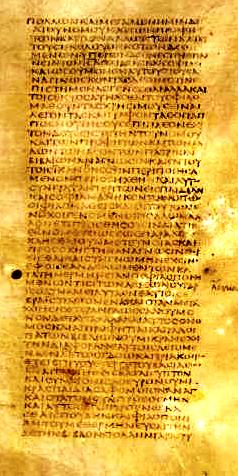 Codex Sinaiticus, Sirach prologue. Manuscript image, public domain, Wikimedia Commons.
Ben Sira’s characteristic voice is that of a teacher who has listened long. He gathers the Law, the prophets, inherited wisdom, and the evidence of daily life. The poor, the mourner, the physician, the craftsman, the child, and the priest all belong within his field of vision. Wisdom cannot be kept in a private corner of the mind.
Wisdom Comes from the Lord (Sirach 1:1-4, 6, 20)
1 All wisdom cometh from the Lord, and is with him for ever. 2 Who can number the sand of the sea, and the drops of rain, and the days of eternity? 3 Who can find out the height of heaven, and the breadth of the earth, and the deep, and wisdom? 4 Wisdom hath been created before all things, and the understanding of prudence from everlasting. 6 To whom hath the root of wisdom been revealed? or who hath known her wise counsels? 20 The root of wisdom is to fear the Lord, and the branches thereof are long life.
The opening questions place the reader before what cannot be mastered: sea, rain, eternity, heaven, and the deep. Wisdom belongs first to God. The practical instructions that follow rest on that confession. We cannot use wisdom well while treating ourselves as its source.
Verse 6 asks about wisdom’s root; verse 20 answers. Fear of the Lord means reverence, teachability, obedience, and trust before the living God. Sirach joins this fear to gladness, peace, and rejoicing. A scrupulous reader need not hear a command to become more anxious. The heart becomes steadier as it learns whose world this is and whose mercy sustains it.
Gems from the Fathers 💎
St. Athanasius directly uses Sirach 1:9-10 in Discourse II Against the Arians, §79. He distinguishes the wisdom impressed upon creation from the eternal Wisdom who creates. His explanation protects a Christian reading of Sirach’s language about wisdom being created: “For the wisdom in the world is not creative, but is that which is created in the works”.3
That distinction matters spiritually as well as doctrinally. The order and goodness we receive are gifts. The Son of God is the uncreated Giver, not one more gift within the universe. In Christ, whom St. Paul calls the Wisdom of God in 1 Corinthians 1:24, the giver of wisdom draws near to teach and save us.
The Furnace and the Waiting Person (Sirach 2:1-5; 4:8-10)
1 My son, if thou come to serve the Lord God, prepare thy soul for temptation. 2 Set thy heart aright, and constantly endure, and make not haste in time of trouble. 3 Cleave unto him, and depart not away, that thou mayest be increased at thy last end. 4 Whatsoever is brought upon thee take cheerfully, and be patient when thou art changed to a low estate. 5 For gold is tried in the fire, and acceptable men in the furnace of adversity.
The first warning to the servant is mercifully plain: serving God does not remove trial. Gold is tried because it is precious. Yet the metaphor must never turn another person’s pain into something we explain away. Suffering can be terrible, and seeking protection, medical help, or relief is compatible with faith. Sirach’s command is to cleave to the Lord within trouble, rather than judge His goodness by the speed of our escape.
The next test is what happens when another person’s trouble reaches us.
8 Let it not grieve thee to bow down thine ear to the poor, and give him a friendly answer with meekness. 9 Deliver him that suffereth wrong from the hand of the oppressor; and be not fainthearted when thou sittest in judgment. 10 Be as a father unto the fatherless, and instead of a husband unto their mother: so shalt thou be as the son of the most High, and he shall love thee more than thy mother doth.
Mercy includes the way we answer. The poor person needs bread, but also an ear that does not make him feel like an interruption. The promise about becoming a son of the Most High finds a close Gospel parallel in Luke 6:35-36: the children of the Father become merciful. The spiritual life cannot mature while the person in need remains beneath our attention.
St. Cyprian directly cites Sirach 3:30 in On Works and Alms, §2, as he joins repentance to active mercy. His account begins from Christ’s saving work and the cleansing of baptism. Almsgiving is the repentant life becoming visible in the hand, never a fee paid to purchase God’s forgiveness.4
Sirach in the Words of Christ and the Apostles
Reading Sirach makes familiar Gospel teaching sound newly distinct. These are echoes and parallels, not claims that every resemblance proves a quotation or direct literary dependence.
- Forgiveness before prayer. Sirach 28:2 joins forgiveness of a neighbor to seeking pardon for oneself. Compare the Lord’s Prayer and Christ’s explanation in Matthew 6, and the unforgiving servant in Matthew 18:21-35. We cannot cherish vengeance and sincerely ask to live by mercy.
- The yoke and the rest. Sirach 51:23-27 calls the unlearned to draw near, accept wisdom’s yoke, and find rest. Matthew 11:28-30 gives the invitation its personal center: rest is found with Christ Himself. The closing study of Sirach develops the comparison fully.
- Proud thrones brought low. Sirach 10:14 stands close to the Magnificat in Luke 1:52. God’s judgment overturns the measures by which we assign importance.
- The rich man’s unfinished sentence. Sirach 11:18-19 pictures a man who thinks he can finally rest upon his possessions, unaware of the time remaining. Christ’s parable of the rich fool exposes the same fragile security.
- Holy Wednesday’s terrible sorrow. Sirach 23:14 speaks of regretting one’s birth. Matthew 26:24 uses a comparable expression in Christ’s warning about betrayal. The Church’s reading of Sirach 23 on Holy Wednesday makes the resonance especially sober; despair is answered by returning to the mercy of the One betrayed.
- Hands lifted in blessing. Simon blesses the congregation in Sirach 50:20. The risen Lord lifts His hands over His disciples in Luke 24:50-53. Temple blessing opens, in Christian contemplation, toward the living High Priest.
Sirach’s teaching on the mouth also belongs beside James 3:1-12. Speech is the place where a hidden heart becomes audible. The comparison is fruitful because both books stay concrete: a word can injure, disclose, guide, bless, or betray.
Wisdom Dwells Among Her People (Sirach 24:8, 19, 21)
8 So the Creator of all things gave me a commandment, and he that made me caused my tabernacle to rest, and said, Let thy dwelling be in Jacob, and thine inheritance in Israel. 19 Come unto me, all ye that be desirous of me, and fill yourselves with my fruits. 21 They that eat me shall yet be hungry, and they that drink me shall yet be thirsty.
Wisdom’s dwelling is among God’s people. Her feast does not send readers away satisfied with their own intelligence; it awakens a desire that keeps returning to the giver. Sirach 24:21 and John 6:35 make a revealing contrast. Here eating wisdom leads to further hunger; in the Gospel, Christ promises the bread of life that answers hunger. Christian reading honors the poem’s first setting in Israel while recognizing the fullness of God’s gift in the incarnate Word.
The same life includes the body and the world. Sirach 38 receives medicine without abandoning prayer. Sirach 42-43 receives creation as a reason to praise. In Coptic Midnight Praise, the Third Hoos, a section of the praise service, is the Song of the Three Holy Youths; the Fourth gathers Psalms 148-150. Sun, moon, waters, and living creatures are summoned to bless the Lord. This is a thematic kinship with Sirach, not a claim that its creation hymn is itself a Hoos.5
Holy memory gives wisdom a human face. The packaged Coptic Synaxarium commemorates Moses on Tout 8, Aaron on Baramouda 1, and the patriarchs Abraham, Isaac, and Jacob on Mesra 28. Sirach 44-49’s praise of the righteous belongs naturally beside these memories. Amshir 8 keeps “The Feast of Presenting the Lord Christ to the Temple” and “The Departure of St. Simeon the Elder”. Those commemorations illuminate Sirach 50’s temple setting by comparison; Sirach 50 is not appointed there in the reading evidence used for this study.6
The Church’s Voice in Worship ⛪
Great Lent and Holy Week
Holy Wednesday gives this book its clearest documented Pascha setting. The Third Hour includes Sirach 22:7-18 with Exodus 13:17-22 and Luke 22:1-6. The Sixth Hour includes Sirach 23:7-14 with Exodus 14:13-15:1 and John 12:1-8. These two Sirach appointments are Coptic Reader-confirmed in the reading collection used here. Judas’s bargain and Mary’s costly love stand beside wisdom’s warnings about folly, speech, and the divided heart. That is a spiritual resonance of the readings together, not a claim to know the historical reason for their selection.6
The Coptic Katameros also lists Sirach among Great Lent’s weekday prophecies. The rows below retain the Church’s listed ranges. Their evidence is a working Katameros source, distinct from the two Reader-confirmed Pascha appointments.
| Great Lent | Reading | Evidence |
|---|---|---|
| Friday, third week | Sirach 2:1-23 | Working Katameros source |
| Friday, third week | Sirach 3:1-4 | Working Katameros source |
| Tuesday, fourth week | Sirach 8:1-22 | Working Katameros source |
| Tuesday, fourth week | Sirach 10:1-25 | Working Katameros source |
| Wednesday, sixth week | Sirach 10:1-33 | Working Katameros source |
| Thursday, sixth week | Sirach 11:1-10 | Working Katameros source |
| Tuesday, seventh week | Sirach 5:1-15 | Working Katameros source |
| Holy Week | Reading | Evidence |
|---|---|---|
| Tuesday, Sixth Hour | Sirach 4:20-5:2 | Working source, not Reader-confirmed |
| Wednesday, Third Hour | Sirach 22:7-18 | Coptic Reader-confirmed |
| Wednesday, Sixth Hour | Sirach 23:7-14 | Coptic Reader-confirmed |
| Great Thursday, Third Hour | Sirach 24:1-11 | Working source, not Reader-confirmed |
| Monday, First Hour; Tuesday, Third Hour | Sirach 1:1-14 | Historical printed witness only |
| Monday, Eleventh Hour | Sirach 1:18-27 | Historical printed witness only |
| Great Thursday, Sixth Hour | Sirach 23:7-14 | Historical printed witness only |
Four listed ranges need care when reading Brenton: chapter 2 ends at verse 18, chapter 8 at 19, and chapter 10 at 31; chapter 22 has no numbered verses 7-8. The appointment labels are retained, while the guides explain the available Brenton text. A service reference and a translation’s verse labels need not have identical boundaries.
These readings bring wisdom into repentance. Preparation for trial, honor within the family, humility before God, and restraint of the tongue become matters of worship rather than private improvement. Pascha then places our divided hearts before Christ’s undivided love.
How This Study Moves Through the Book
The series contains 46 studies, with short chapters usually treated individually. A few linked passages remain together so that their argument is heard whole. Brenton 6:2a-4 remains at the opening of Sirach 6, with an explicit link from the double-tongue warning in Sirach 5; Sirach 28 begins at 27:30. The creation hymn remains intact, and the severe household warnings of chapters 25-26 are read beside the praise of faithful marriage.
Spiritual Fruit 🍇
Receive wisdom before trying to display it
Sirach’s first question is where wisdom comes from. Begin reading with that question still open in your own life. The urge to explain, correct, or become useful can outrun the willingness to listen. Before each study, set aside the device that most easily divides your attention. Read a short passage twice, and ask God for one obedient response before looking for an insight to share. Wisdom becomes yours as it becomes a life received from Him.
Let mercy change the speed of your response
“Make not the needy eyes to wait long” reaches beyond money. Someone may be waiting for an answer, an appointment, an apology, or a few minutes without distraction. Choose one delayed act of care and complete it this week. Give the person room to speak without turning the encounter into a lesson. Sirach’s meek answer can be a small participation in the Father’s mercy, especially when the need arrives at an inconvenient hour.
Prepare for trial without rehearsing despair
Sirach 2 prepares the soul by directing it toward God’s mercy. Preparation is different from imagining every possible disaster. Keep one line of the chapter with your daily prayer, and name the real trial before you, whether delay, illness, dryness, or humiliation. Ask for patience and seek appropriate help. You do not have to call suffering good in order to trust that Christ is with you within it.
Give the whole week back to God
The book’s concerns do not separate cleanly into religious and ordinary life. Work, meals, conversation, money, bodies, creation, and memory all belong before the Lord. At the end of the week, recall one gift received in each of three places: your household, your work, and your worship. Give thanks for them, then choose one habit that will help you receive them more truthfully. Gratitude trains the heart to recognize gifts before it tries to possess them.
The Church reads Sirach so that the baptized become a eucharistic people: receiving wisdom from God, practicing mercy in the body, and returning every gift in thanksgiving.
Teaching Notes
Allow about 50-60 minutes for this introduction, with the roadmap available for later reference rather than read aloud in full.
Canon and the translator, 10 minutes
- Ask which Bible edition readers normally use and explain the difference in contents without disparaging its translation.
- Say slowly: “The difference concerns canon and edition.” “Reverence and careful reading belong together.”
- Keep Jerome’s narrower judgment distinct from the Church’s reception; do not present ancient Christian evidence as unanimous.
Wisdom Comes from the Lord (Sirach 1:1-4, 6, 20)
Allow 5 minutes.
- Read Sirach 1:6 and 1:20 together. Let the chapter answer its own question about wisdom’s root.
- Say slowly: “The heart becomes steadier as it learns whose world this is.” “The Son is the uncreated Giver.”
The Furnace and the Waiting Person (Sirach 2:1-5; 4:8-10)
Allow 10 minutes.
- Ask what changes when the person in need receives a meek answer as well as material help.
- Say slowly: “Gold is tried because it is precious.” “Mercy includes the way we answer.”
- Protect those in pain from the suggestion that suffering proves either divine rejection or personal fault.
Wisdom Dwells Among Her People (Sirach 24:8, 19, 21)
Allow 15 minutes, including the Gospel echoes and worship tables.
- Choose two parallels rather than racing through all six. The yoke and the rich fool make a strong contrast between receiving life and securing it for oneself.
- Say slowly: “Rest is found with Christ Himself.” “Pascha places our divided hearts before His undivided love.”
- Keep the three evidence tiers distinct. Neither a historical witness nor a thematic connection establishes a current reading.
Beginning the series, 10-20 minutes
- Invite readers to name one concrete practice, without requiring public disclosure of painful family histories or personal sins.
- Say slowly: “Receive wisdom before trying to display it.” “Give the whole week back to God.”
- The manuscript image can show how the prologue belongs to the book’s transmission; it is a historical witness, not an icon.
Sources
Primary sources
Embedded Scripture is from Brenton’s English Septuagint (LXX): Sirach 1:1-4, 6, 20; 2:1-5; 4:8-10; 24:8, 19, 21. For the opening line, Brenton’s presentation joins the translator’s prologue to verse 1; this study separates them for clarity.
About verse numbers in Brenton. Numeric gaps are retained rather than filled from another translation. Chapter 6 has no verse 1 and begins at 2a-b. Lettered subdivisions include the prologue and opening sentence under 1:1-1h, 6:2a-b, and 30:13a-b. Chapters 30-36 also differ in order: Brenton follows the Greek manuscript order, so his chapter numbers differ here. Titles and headings in this series use familiar chapter numbers, with exact Brenton coordinates beside affected quotations.
Familiar chapter or passage Brenton location 30:1-24; 30:25 30:1-24; 33:12 31; 32 34; 35 33 36:1-16 and 30:25-40, with different divisions and a parallel opening 34; 35 31; 32 36:1-11 33:1-11 36:12-17; 36:18-26 36:17-22; 36:23-31 The individual studies give the detailed mapping where verse divisions differ. Brenton’s numbering also lacks these numeric slots: 1:5, 7, 21; 3:19, 25; 10:21; 11:15-16; 13:14; 16:15-16; 17:5, 9, 16, 18, 21; 18:3; 19:18-19, 21; 22:7-8; 24:18, 24; 25:12; 26:19-27. These are statements about this edition’s printed sequence, not a claim that every other textual witness lacks the words.
- St. Athanasius, Discourse II Against the Arians, §79, NPNF II/4, text.
- St. Cyprian, On Works and Alms, §2, ANF 5, text.
- Jerome, Prologue to the Books of Solomon, translated by Kevin P. Edgecomb, text.
- African Code, canonical list traditionally associated with Hippo and Carthage, Latin and English witness. The transmitted compilation includes later material; its witness should not be reduced to a verbatim standalone decree of 397.
- Coptic Katameros, Pascha appointments, and Synaxarium as represented in @andraws/lectionary-data 1.3.3. Working sources, Reader-confirmed appointments, and historical printed witnesses are distinguished above.
Secondary academic sources
- Gary A. Rendsburg and Jacob Binstein, Introduction to The Book of Ben Sira, on authorship, translation, and the Hebrew manuscripts. This is a scholarly manuscript resource, not a verse-by-verse commentary.
Coptic Orthodox and pastoral sources
- H.G. Abba Hedra, Praises Explained, on the Third and Fourth Hoos of Coptic Psalmody.
- For further reading in Arabic: Fr. Tadros Yacoub Malaty, Sirach, introduction and chapter commentary. This is a genuine Sirach volume; the linked online edition is organized by chapter rather than stable printed page numbers. No verse-specific teaching in this introduction is attributed to it.
Web pages and non-academic sources
New Advent and Tertullian.org provide the patristic texts linked above; the ancient works, rather than the hosts’ editorial commentary, are cited.
Bible Researcher hosts the African Code text and notes on its transmission.
Codex Sinaiticus prologue image, Wikimedia Commons, public domain.
Footnotes
-
African Code, canonical list and transmission note, Latin and English; Jerome, Prologue to the Books of Solomon, Edgecomb translation. Jerome is a witness to ancient reception and debate, not an assertion of unanimity. ↩
-
Gary A. Rendsburg and Jacob Binstein, Introduction to The Book of Ben Sira, sections on composition, Greek translation, and manuscript recovery. ↩ ↩2
-
St. Athanasius, Discourse II Against the Arians, §79, NPNF, Second Series, vol. 4, translated by John Henry Newman and Archibald Robertson, text. ↩
-
St. Cyprian, On Works and Alms, §2, ANF 5, translated by Robert Ernest Wallis, text. ↩
-
H.G. Abba Hedra, Praises Explained, explanations of the Third and Fourth Hoos. ↩
-
@andraws/lectionary-data 1.3.3, Sirach appointments and Synaxarium entries for Tout 8, Baramouda 1, Mesra 28, and Amshir 8. The two Holy Wednesday appointments retain Coptic Reader confirmation; other evidence tiers are not promoted to that status. ↩ ↩2