


Nahum is not Scripture giving permission to hate enemies. It is Scripture teaching that God sees violence, does not forget the crushed, and will not let predatory power last forever. Its consolation is severe because the suffering it addresses is severe.
Why Nahum Is Consolation
The prophet’s name is traditionally connected with comfort or consolation. That matters for the whole book. Nahum is not a detached prediction about Assyria. It is comfort spoken to people who had watched empire behave as if it were permanent.
Comfort in Nahum is not sentimentality. It comes from the truth that God is patient without being passive, merciful without being morally indifferent, and righteous without being cruel. The book gives the afflicted permission to believe that God saw what happened.
Jonah and Nahum: Mercy Received, Mercy Despised
Jonah and Nahum belong together in the reader’s memory. Jonah shows Nineveh receiving mercy through repentance. Nahum shows Nineveh hardened again under imperial violence.
Together they protect the reader from two errors. Jonah forbids despair over the possibility of repentance. Nahum forbids the false mercy that pretends God must ignore the victims of violence. The God who spared repentant Nineveh is the same God who judges Nineveh when its cruelty becomes settled, public, and predatory.
Tobit also gives a light canonical backdrop: righteous Jews living under Assyrian domination bury the dead, pray, and practice mercy while surrounded by danger. Nahum speaks into that kind of world, where faithfulness continues under violent power.
Historical and Geographical Significance ⛰️
Nahum is set against the shadow of the Neo-Assyrian Empire. Nineveh is not merely a city on the Tigris. In the book it becomes the symbolic center of an empire that devoured nations, humiliated captives, and trusted its own splendor.
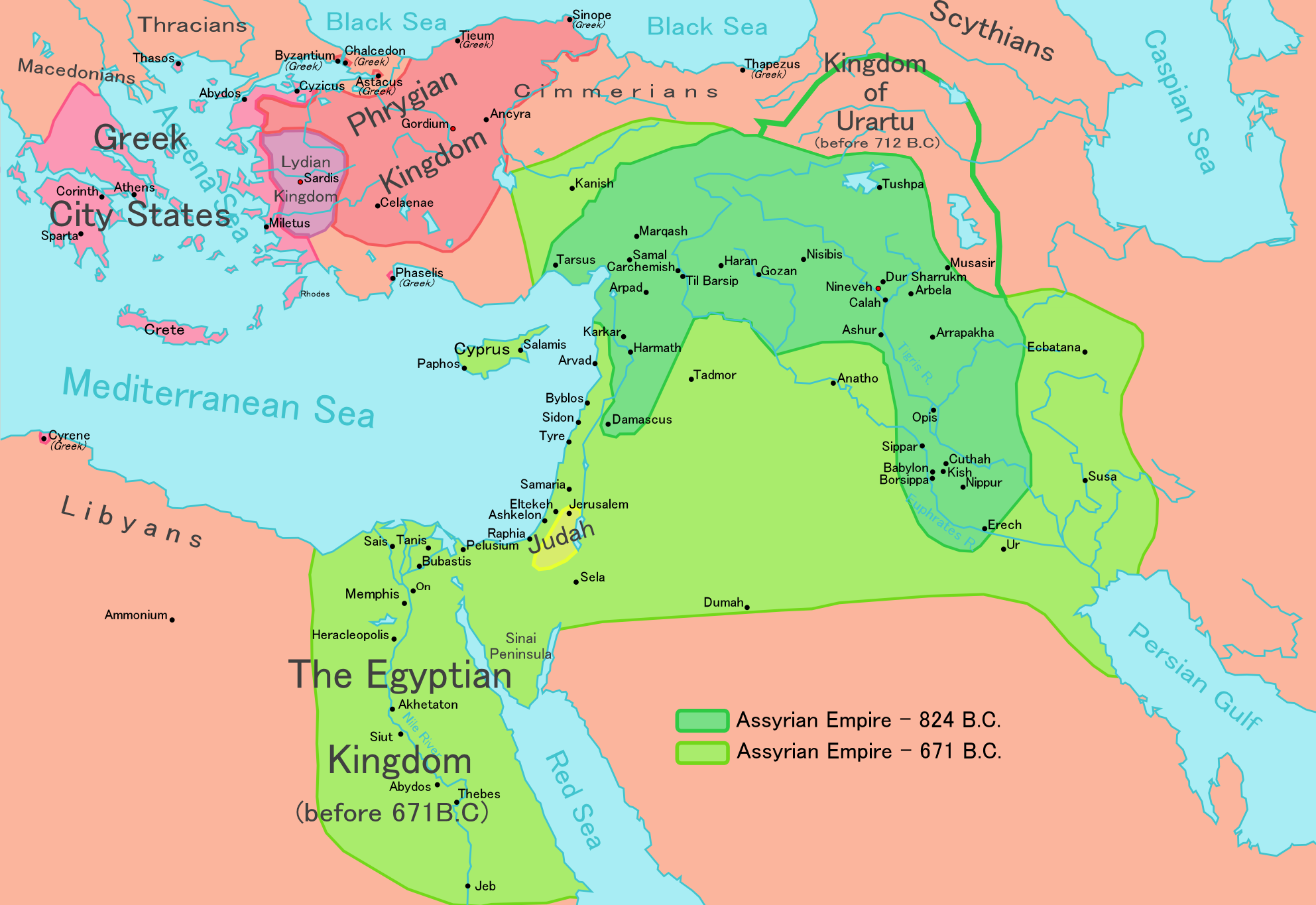 Source: Neo-Assyrian map 824-671 BC, CC BY-SA 3.0, Nigyou, via Wikimedia Commons. This is a broad imperial-context map, not a precise 612 BC siege map.
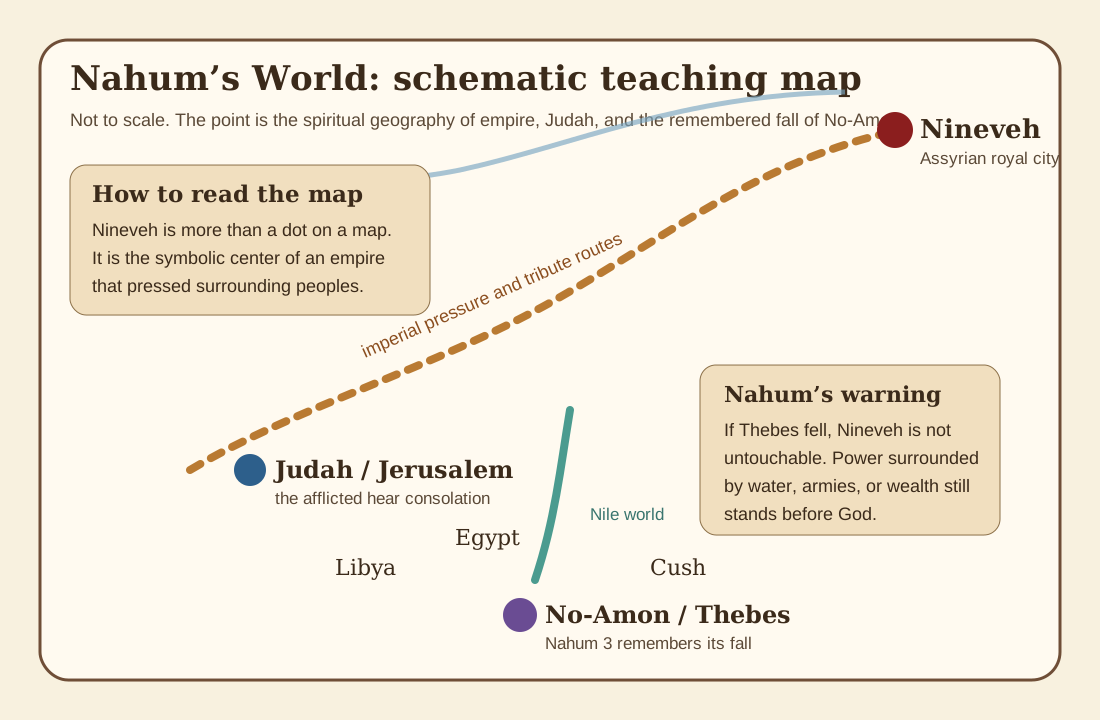 Source: Project-local schematic map for Nahum, created as a teaching aid. It is not to scale.
Nahum 3 mentions No-Amon, usually identified with Thebes in Egypt. The point is simple and devastating: if a mighty city surrounded by waters and supported by allies could fall, Nineveh is not untouchable.
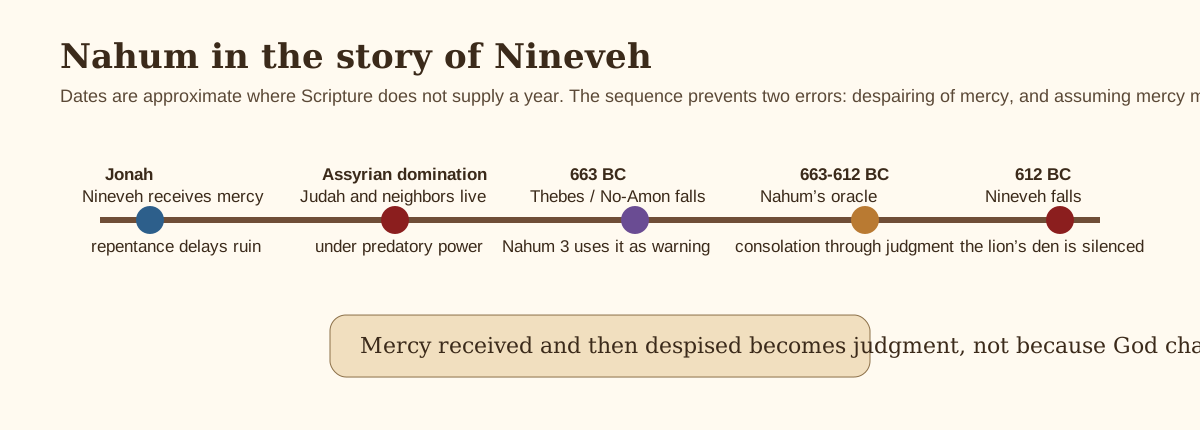 Source: Project-local schematic timeline for Nahum. Dates are approximate where Scripture does not supply a year.
How the Book Moves
| Section | Burden | Spiritual movement |
|---|---|---|
| Nahum 1 | The Lord is jealous, longsuffering, powerful, and good to those who revere Him. | Learn to distinguish God’s patience from absence. |
| Nahum 2 | Nineveh’s military speed, wealth, gates, and lion imagery collapse. | Do not envy violent power or trust propaganda. |
| Nahum 3 | The bloody city is exposed, compared with fallen No-Amon, and left without healing. | Repent before ruin, and never rejoice in judgment with cruelty. |
Read Nahum first as comfort for the oppressed, second as warning to the violent, and third as self-examination for every soul that has learned to trust power more than God.
Iconography and Visual Teaching 🖼️
The icon of the Prophet Nahum teaches the Church’s reception of him as a prophetic witness. It is not a historical portrait and should not be used to reconstruct his appearance. The scroll in prophetic iconography reminds the reader that the prophet stands under the word of God before he speaks to nations.
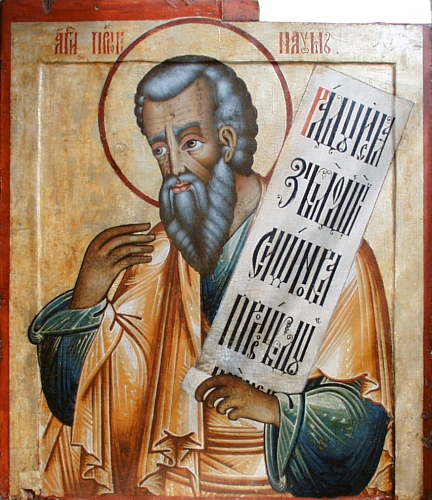 Source: Nahum-prophet.jpg, public domain, anonymous Russian icon painter before 1917, via Wikimedia Commons.
The book identifies Nahum as the Elkoshite but gives no family genealogy. The timeline and maps place his message within the world of Assyria and Judah.
Two further visuals help the reading experience: Assyrian lion propaganda for Nahum 2 and later imaginative artwork of Nineveh’s fall for Nahum 3. These are not icons. They are visual aids that help readers see the world Nahum is judging.
The Church’s Voice in Worship ⛪
The St. Mary Ottawa Holy Pascha book (2018) appoints Nahum 1:2-8 for Hosanna Sunday, Eleventh Hour, alongside Isaiah 48:12-22 and Matthew 20:20-28. This pairing opens a path into the whole book: the Lord whose power makes creation tremble is revealed in Christ, who teaches greatness through service and gives His life for many. Nahum’s warning against predatory power must be heard in the presence of that King.
How to Read Nahum Safely
Nahum must not be read as permission for personal vengeance, ethnic hatred, political triumphalism, or delight in destruction. Divine judgment is not human resentment writ large. God judges without panic, ignorance, passion, or cruelty.
The reader’s task is repentance and refuge, not self-appointment as judge. The spiritual question is not first, “Who is Nineveh today?” It is, “Where has Nineveh entered me, my family, my ministry, my community, or any power I participate in?”
Sources
- Embedded Scripture in the chapter guides is from Brenton’s English Septuagint (LXX).
- St. Mary Ottawa, Holy Pascha (Lent 1734 A.M., 2018 A.D.), Hosanna Sunday, Eleventh Hour, pp. 64-69: Isaiah 48:12-22; Nahum 1:2-8; Matthew 20:20-28. This is an identified printed witness, not a claim about every current parish usage.
- Visual sources and licenses are recorded in Resources Used - Nahum and Audits/nahum-visual-manifest-2026-06-19.json.