


Hosea 7-8 names unstable conversion with unforgettable images: a half-baked cake, a silly dove, a bow that turns aside, wind sown until it becomes a whirlwind. The people call to God with their mouths, but their trust runs to kings, treaties, Egypt, Assyria, altars, and idols. This is repentance without return.
Historical and Scriptural Context
These chapters reflect a nation trying to survive by management rather than repentance. Israel looks for security through political arrangements and religious activity. Hosea sees that both can become idols when they replace trust in the Lord.
Assyria is no longer background. It is the pressure shaping decisions. Hosea does not deny political danger, but he refuses to let danger become an excuse for unbelief.
The Church’s Voice in Worship ⛪
No exact Coptic lectionary placement for Hosea 7-8 was confirmed. The chapters still fit the ascetical logic of Lent and Holy Week: they expose shallow conversion, divided loyalty, and worship that continues while the heart remains unturned.
Scripture Reading: Hosea chapters 7-8
1: When I have healed Israel, then shall the iniquity of Ephraim be revealed, and the wickedness of Samaria; for they have wrought falsehood: and a thief shall come in to him, even a robber spoiling in his way; 2: that they may concert together as men singing in their heart: I remember all their wickedness: now have their own counsels compassed them about; they came before my face. 3: They gladdened kings with their wickedness, and princes with their lies. 4: They are all adulterers, as an oven glowing with flame for hot-baking, on account of the kneading of the dough, until it is leavened. 5: In the days of our kings, the princes began to be inflamed with wine: he stretched out his hand with pestilent fellows. 6: Wherefore their hearts are inflamed as an oven, while they rage all the night: Ephraim is satisfied with sleep; the morning is come; he is burnt up as a flame of fire. 7: They are all heated like an oven, and have devoured their judges: all their kings are fallen; there was not among them one that called on me. 8: Ephraim is mixed among his people; Ephraim became a cake not turned. 9: Strangers devoured his strength, and he knew it not; and grey hairs came upon him, and he knew it not. 10: And the pride of Israel shall be brought down before his face: yet they have not returned to the Lord their God, neither have they diligently sought him for all this. 11: And Ephraim was as a silly dove, not having a heart: he called to Egypt, and they went to the Assyrians. 12: Whenever they shall go, I will cast my net upon them; I will bring them down as the birds of the sky, I will chasten them with the rumour of their coming affliction. 13: Woe to them! for they have started aside from me: they are cowards; for they have sinned against me: yet I redeemed them, but they spoke falsehoods against me. 14: And their hearts did not cry to me, but they howled on their beds: they pined for oil and wine. 15: They were instructed by me, and I strengthened their arms; and they devised evils against me. 16: They turned aside to that which is not, they became as a bent bow: their princes shall fall by the sword, by reason of the unbridled state of their tongue: this is their setting at nought in the land of Egypt.
1: He shall come into their midst as the land, as an eagle against the house of the Lord, because they have transgressed my covenant, and have sinned against my law. 2: They shall soon cry out to me, saying, O God, we know thee. 3: For Israel has turned away from good things; they have pursued an enemy. 4: They have made kings for themselves, but not by me: they have ruled, but they did not make it known to me: of their silver and their gold they have made images to themselves, that they might be destroyed. 5: Cast off thy calf, O Samaria; mine anger is kindled against them: how long will they be unable to purge themselves in Israel? 6: Whereas the workman made it, and it is not God; wherefore thy calf, Samaria, was a deceiver: 7: for they sowed blighted seed, and their destruction shall await them, a sheaf of corn that avails not to make meal; and even if it should produce it, strangers shall devour it. 8: Israel is swallowed up: now is he become among the nations as a worthless vessel. 9: For they have gone up to the Assyrians: Ephraim has been strengthened against himself; they loved gifts. 10: Therefore shall they be delivered to the nations: now I will receive them, and they shall cease a little to anoint a king and princes. 11: Because Ephraim has multiplied altars, his beloved altars are become sins to him. 12: I will write down a multitude of commands for him; but his statutes are accounted strange things, even the beloved altars. 13: For if they should offer a sacrifice, and eat flesh, the Lord will not accept them: now will he remember their iniquities, and will take vengeance on their sins: they have returned to Egypt, and they shall eat unclean things among the Assyrians. 14: And Israel has forgotten him that made him, and they have built fanes, and Juda has multiplied walled cities: but I will send fire on his cities, and it shall devour their foundations.
Light from the Word 🕯️
The half-baked cake is a mercifully humiliating image. One side has felt heat; the other remains raw. That is the soul that has been touched by conviction but not converted through obedience. It has religious language, moments of emotion, and perhaps fear of consequences, but not full return.
The silly dove moves without discernment. Egypt and Assyria become symbols of false refuge. The modern reader may not court ancient empires, but the heart still flies the same way: to control, money, status, online anger, distraction, or even ministry activity used as self-protection.
They sow the wind, and reap the whirlwind
is not arbitrary punishment. It is spiritual agriculture. A life planted in false trust eventually produces the storm hidden inside the seed.
Christological and Liturgical Reading
Christ is the undivided Son. He does not turn aside like a faulty bow. He does not seek Egypt or Assyria as savior. In the wilderness, in Gethsemane, and before Pilate, He entrusts Himself wholly to the Father. Hosea’s diagnosis of divided trust is healed only in union with Christ’s faithful obedience.
Iconography and Visual Teaching 🖼️
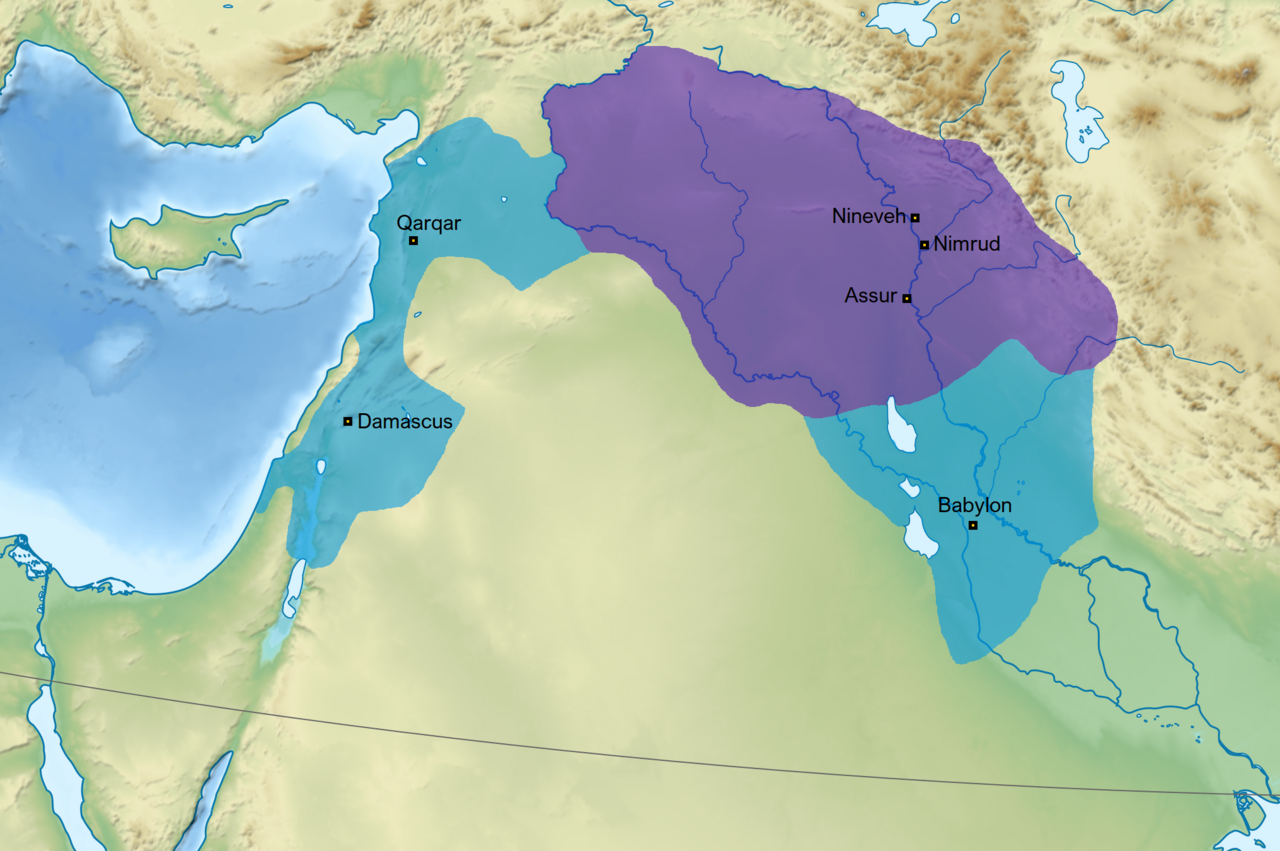 Source: Ichthyovenator with Sémhur base map,
 Tiglath-Pileser map
, CC BY-SA 4.0, Wikimedia Commons. https://commons.wikimedia.org/wiki/File:Tiglath-Pileser_map.png
This map is a teaching aid for the political pressure behind Hosea’s warnings. It should not turn the lesson into geopolitics. Its value is spiritual: fear made Assyria look like a savior, but fear-driven trust became part of Israel’s judgment.
Spiritual Fruit 🍇
First, ask what part of your life is half-baked: warmed by conviction but still untouched by obedience.
Second, name your Egypt and Assyria. Where do you flee when prayer feels too slow?
Third, take sowing seriously. Small habits of false trust become weather systems in the soul.
Teaching Notes
- The Assyrian map should be shown briefly, then brought back to the heart’s false refuges.
- Avoid reducing the passage to political commentary.
- Ask listeners to name one practical act of undivided return.
Discussion Questions
- What does half-baked repentance look like in ordinary parish life?
- What false refuge do I treat as more reliable than prayer?
- What wind am I sowing now that could become a whirlwind later?
- How does Christ’s faithful obedience heal divided trust?
Closing Meditation
The soul does not become whole by being warmed on one side. The Lord asks for the hidden, uncooked places too. He is not content with partial heat because He desires full communion.
Sources
Primary sources
Scripture: Hosea in Brenton, The Septuagint Version of the Old Testament, public domain English LXX.
New Testament cross-references are brief NKJV references only.
Secondary academic sources
- John Goldingay, Hosea-Micah, used for historical and literary orientation, not as theological authority.
- Standard critical introductions to the Twelve Prophets used for date, setting, and divided-kingdom background.
Coptic Orthodox / pastoral sources
- Fr. Tadros Yacoub Malaty, patristic commentary on Hosea, used as Coptic Orthodox pastoral orientation where relevant.
- Pope Shenouda III, pastoral teaching on repentance, purity, prayer, and return to God, used only for broad spiritual framing.
- Fr. Bishoy Kamel, pastoral witness on repentance, prayer, service, and love for God, used cautiously as spiritual framing.
Web pages and non-academic sources cited
- CCEL and Tertullian Project links are used as public access points for patristic texts where cited.
- St. Mary Ottawa Holy Pascha Katameros PDF and prior project source notes preserve the Hosea Pascha placement findings; this pass did not find matching Hosea rows in the local lectionary CSV.
- Tiglath-Pileser III map, CC BY-SA 4.0. https://commons.wikimedia.org/wiki/File:Tiglath-Pileser_map.png
Source and Translation Notes
- Full embedded Old Testament Scripture text is from Brenton’s English Septuagint.
- Brief New Testament references are NKJV references only.
- LXX and source-shape comments are included only where the wording materially affects interpretation.
- Coptic lectionary claims are stated only where preserved from prior source-backed Hosea/Pascha research; no new Hosea rows were found in the local lectionary CSV during this revision pass.