


Habakkuk is a small book with a large spiritual burden. It does not silence anguish, and it does not explain suffering cheaply. It shows a prophet bringing injustice before God, standing watch when the answer is hard, and finally learning to rejoice in the Lord before any visible rescue appears.
Habakkuk’s movement in one book (Habakkuk 1:1; 2:4; 3:17-19)
The burden which the prophet Ambacum saw.
If he should draw back, my soul has no pleasure in him: but the just shall live by my faith.
For though the fig-tree shall bear no fruit, and there shall be no produce on the vines; the labour of the olive shall fail, and the fields shall produce no food: the sheep have failed from the pasture, and there are no oxen at the cribs; yet I will exult in the Lord, I will joy in God my Saviour.
The Lord God is my strength, and he will perfectly strengthen my feet; he mounts me upon high places, that I may conquer by his song.
These three passages carry the whole book. First, prophecy is a burden: Habakkuk bears the weight of a word from God before he understands it. Second, faith is not a feeling of certainty. It is steadfast life before God while judgment is delayed and pride seems strong. Third, the end of the book is not an argument but a prayer-song. Habakkuk’s final answer is worship.
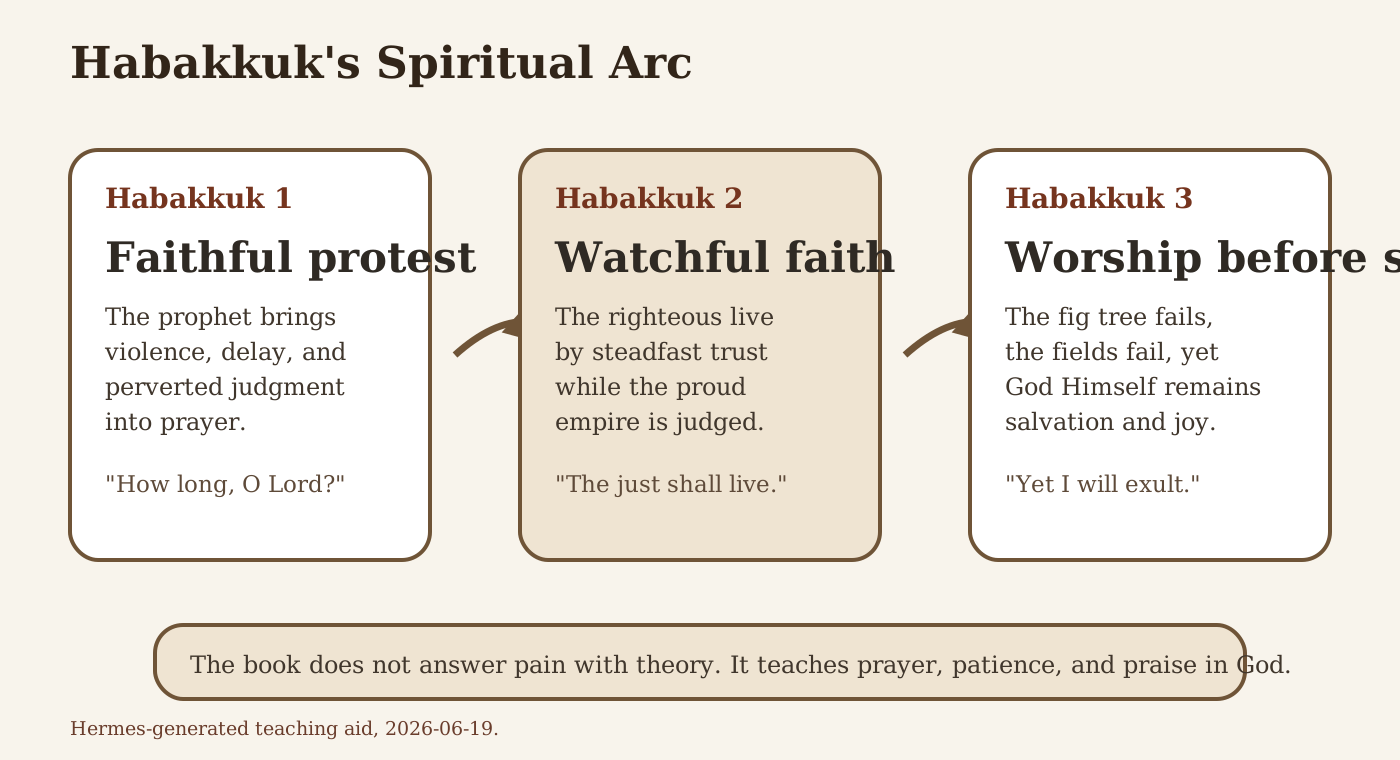 Source: Hermes-generated teaching aid, 2026-06-19.
Historical and Scriptural Context
Habakkuk stands near the end of Judah’s kingdom, when Assyria was collapsing, Egypt was pressing into the region, and Babylon, also called the Chaldeans, was rising. The prophet sees violence and perverted judgment inside Judah, then hears that God will raise up the Chaldeans as judgment. That answer is more troubling than the question.
The book belongs beside Jeremiah, Daniel, Kings, and the early exile story. Jeremiah warns Judah from inside the crisis. Daniel later witnesses from inside Babylon. Habakkuk stands at the painful threshold and asks how the Holy God can govern a world where the wicked seem to swallow the righteous.
Geographical Significance ⛰️
Judah is small in Habakkuk’s world. Babylon is rising in the east. Egypt remains a regional power to the southwest. The prophet’s crisis is not abstract. His people live between empires, and the coming judgment will arrive through real armies, roads, cities, and political pressure.
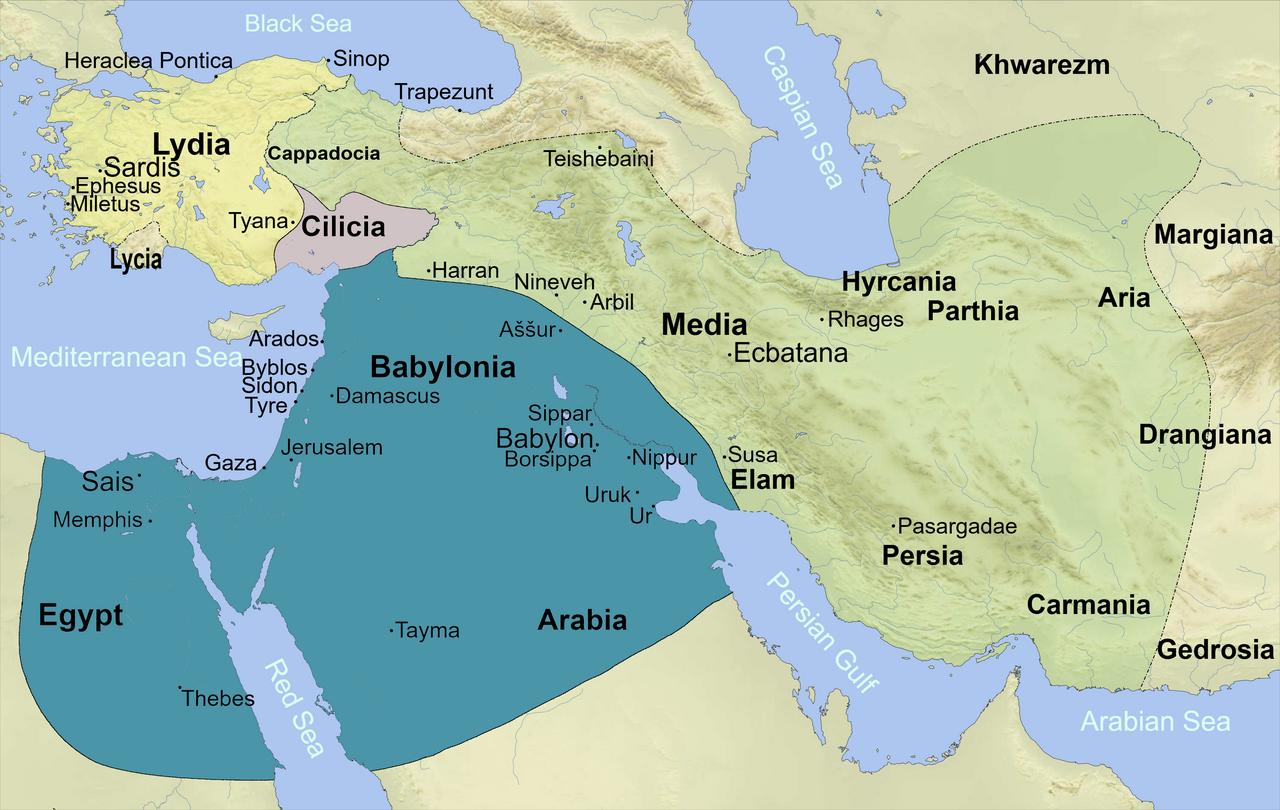 Source: Wikimedia Commons, BlueHypercane761, Neo-Babylonian Empire with neighboring powers, CC0. This map shows the Neo-Babylonian world near later greatest extent, so it is an orientation aid rather than an exact map of Habakkuk’s first moment.
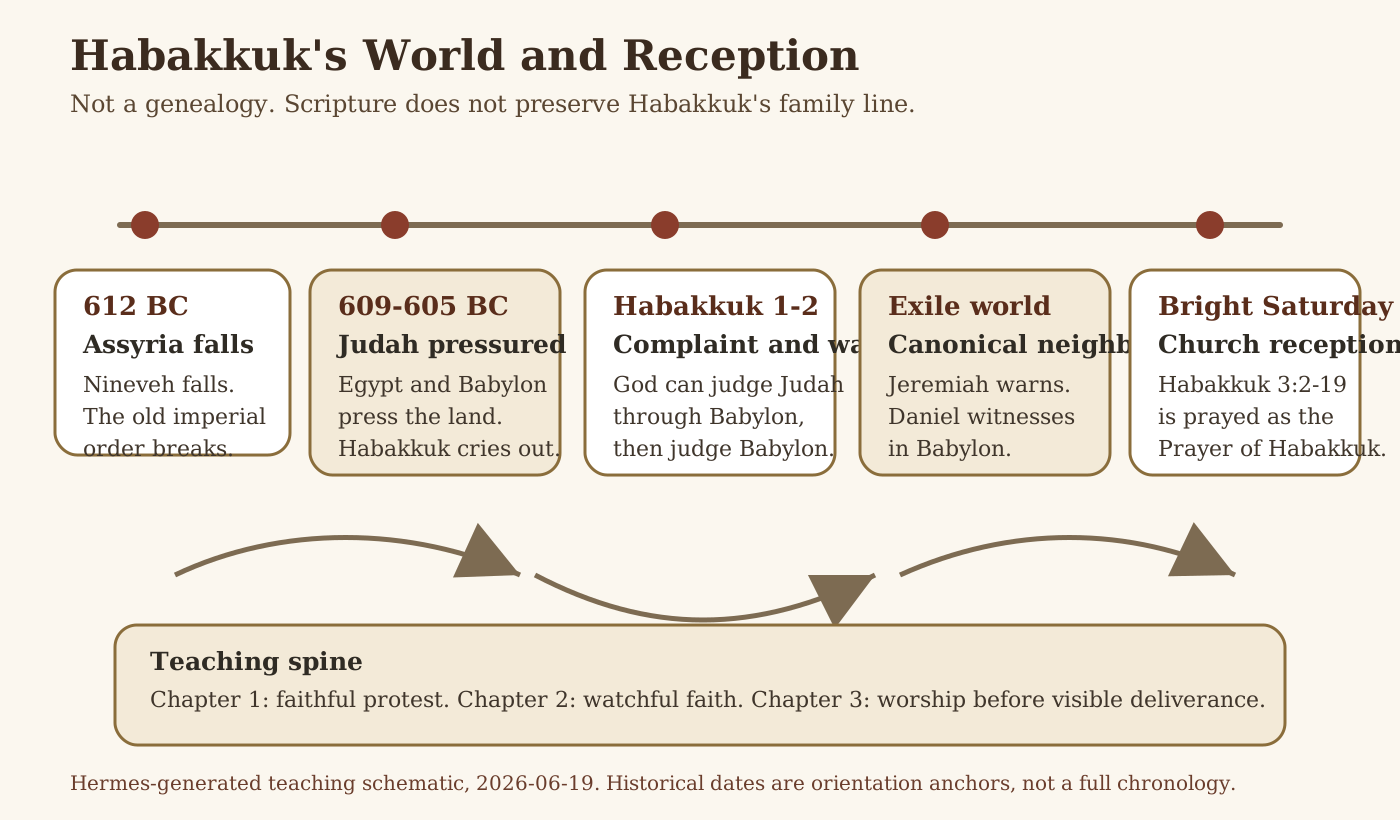 Source: Hermes-generated historical and liturgical teaching schematic, 2026-06-19.
The Characters 👥
Habakkuk is not a detached analyst. He is a prophet who prays his question. His complaint is faithful because he brings it to the Lord instead of walking away from Him.
Judah is the covenant people, yet violence and injustice have corrupted judgment. The problem is not only foreign oppression. The wound is already inside the people of God.
The Chaldeans / Babylonians are the rising imperial power. They are not righteous simply because God uses them. They become an instrument of judgment, and then they themselves are judged.
The proud appear strong because they enlarge desire like death and build by blood. Habakkuk exposes pride as a spiritual appetite that can never be satisfied.
The righteous live by faithfulness. They wait, watch, and cling to God while the visible world looks unresolved.
Iconography and Visual Teaching 🖼️
An Orthodox icon of Habakkuk presents him as a prophet, not as a political commentator. His authority is not in strategy or empire, but in the word he bears before God.
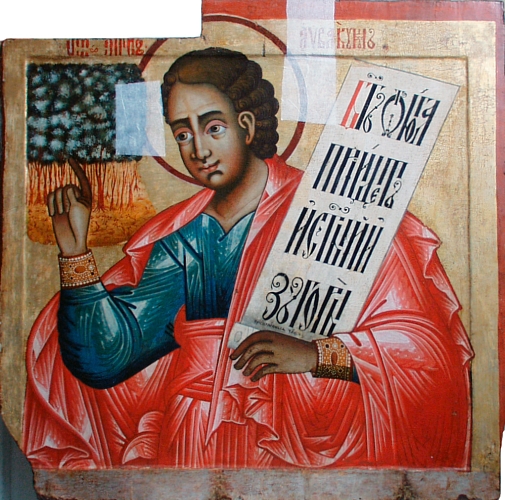 Source: Wikimedia Commons, public-domain Russian icon of Prophet Habakkuk, first quarter of the 18th century, from the iconostasis of Transfiguration Church, Kizhi monastery, Karelia, north Russia.
There are also well-known Western artworks of Habakkuk, especially Bernini’s Habakkuk and the Angel and Donatello’s Zuccone, often identified with Prophet Habakkuk. Bernini’s scene belongs to the Greek Daniel / Bel and the Dragon tradition, where Habakkuk brings food to Daniel. That tradition is part of the Orthodox-received Greek Daniel story, but it is not the main subject of Habakkuk’s three-chapter prophecy. For this book, the primary visual identity should remain Habakkuk the prophet, his world between empires, and the Church’s prayer of Habakkuk on Bright Saturday.
No reliable genealogy of Habakkuk is preserved in Scripture. A timeline or reception chart is more honest and more useful than a fabricated family tree.
The Church’s Voice in Worship ⛪
The Bright Saturday service-order index lists Habakkuk 3:2-19 in Midnight Praises as the Prayer of Habakkuk. In the Church’s Paschal reading, this is spiritually powerful: Habakkuk’s trembling theophany is heard after the Cross and before the visible dawn of Pascha, when Christ’s victory is real even while the world still looks like a tomb.
This is why Habakkuk belongs in the Church’s prayer. He teaches us to wait in faith, to tremble rightly before judgment, and to rejoice in God before visible supports return.
Spiritual Fruit 🍇
Habakkuk gives permission for honest prayer, but not for despair. The prophet does not pretend that evil is small. He does not call Babylon good. He does not receive a timetable that makes everything easy. He learns to stand before God until complaint becomes watchfulness, and watchfulness becomes worship.
For the Christian reader, this is deeply Paschal. Christ enters the worst silence, the silence of the tomb, and turns it into the place of victory. Habakkuk’s final joy is not joy in circumstances. It is joy in God Himself.
Teaching Notes
Habakkuk’s movement in one book (Habakkuk 1:1; 2:4; 3:17-19)
- Ask: Where do you see the movement from protest to waiting to worship in the book?
- Emphasize: Faithful questions are brought to God, not away from God.
- Watch for: Do not turn Habakkuk into shallow optimism. The book faces real injustice and real judgment.
- Connect: Link Habakkuk 3 to Bright Saturday, where the Church waits in the light of Christ’s hidden victory.
- Show: Use the theological arc chart first, then the map and reception chart to orient the historical setting.
Sources
- Embedded Scripture is from Brenton’s English Septuagint (LXX). Brief New Testament references are cited by reference.
- Bright Saturday service-order index,
@andraws/lectionary-data1.3.5: lists Habakkuk 3:2-19 in Midnight Praises as the Prayer of Habakkuk. This is a local service-order witness, not an independently checked typicon or Coptic Reader text.- Visual assets: Wikimedia Commons public-domain icon of Prophet Habakkuk; Wikimedia Commons CC0 Neo-Babylonian orientation map; Hermes-generated teaching charts.