
Jonah’s Fast in 2027 is Monday, February 22, through Wednesday, February 24. Jonah’s Feast follows on Thursday, February 25. Also called the Fast of Nineveh, it is a three-day Coptic Orthodox fast of repentance before Great Lent. The normal food discipline excludes meat, poultry, dairy, eggs, and fish, with the period of abstinence arranged under pastoral guidance.12
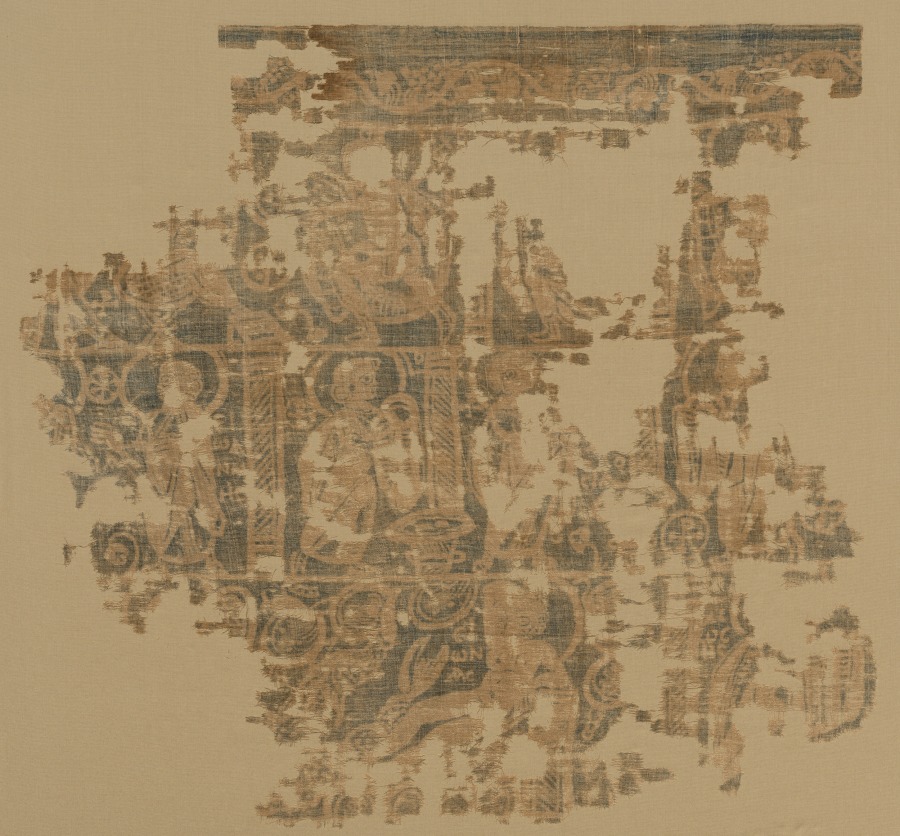 Source: Resist-Dyed Hanging with Biblical Scenes, The Cleveland Museum of Art, CC0.
But the fast’s most searching question is not what to put on the table. Jonah receives mercy, Nineveh receives mercy, and Jonah then struggles to accept that God has shown mercy to people he wanted condemned. These three days invite us to seek forgiveness and to stop resenting the forgiveness of others.
For the year’s other dates, see the Coptic Orthodox fasting calendar. For the longer season beginning March 8, see Great Lent 2027. This guide concentrates on Jonah’s distinctive biblical and spiritual work.
When is the fast, and how do the dates fit?
The 2027 observance runs as follows:
- Monday, February 22: first day of the Fast of Nineveh.
- Tuesday, February 23: second day.
- Wednesday, February 24: third day.
- Thursday, February 25: Jonah’s Feast, after the three-day fast.
Its Monday falls two weeks before the beginning of Great Lent, which is Monday, March 8, in 2027. Jonah’s Fast is therefore not the opening three days of Lent and is not a continuous fast running from February into Easter.1
Consult your parish for Liturgy times and your personal fasting rule.
For study alongside the appointed readings, see Matthew 12:38-50: the sign of Jonah. The last day’s Gospel crosses a chapter boundary; read the studies on the feeding in Matthew 15 and the sign in Matthew 16 together.
Why do Copts keep the Fast of Nineveh?
Jonah is sent to Nineveh, a great city outside Israel. He initially flees, is swallowed by a great fish, prays from its belly, and receives his commission again. When he finally preaches, the city believes God and responds with fasting and repentance.
The fast holds together Jonah’s deliverance, Nineveh’s repentance, and Christ’s victory over death. A pastoral Q&A from the Coptic Orthodox Diocese of the Southern United States recounts a connection between the fast and the Syriac tradition.3 The biblical story, however, should not be forced into a later calendar explanation. Jonah 3 describes the Ninevites’ fast but does not explicitly say that their citywide fasting lasted three days. Jonah’s three days and nights in the fish are stated in Jonah 1:17.
In Jonah 3:8-10, repentance reaches the city’s conduct. People are to turn from their evil ways and from violence. God sees their changed action. Sackcloth and hunger are not payment that obliges Him to save them; they express a return to the God whose compassion they dare to seek.
That makes this a fast for a whole community, not simply a private challenge. A household can simplify its meals together while also changing the tone of its speech. A parish can pray for mercy while making room for people it has neglected. The city’s repentance presses the question: what must actually change among us?
The sign of Jonah is Christ, not a spiritual trick
In Matthew 12:38-41, some scribes and Pharisees ask Jesus for a sign. He answers with the sign of Jonah: as Jonah was three days and three nights in the fish, so the Son of Man will be in the heart of the earth. He then says that the Ninevites repented at Jonah’s preaching, while One greater than Jonah is present.
The comparison has two movements. Jonah’s deliverance points toward Christ’s burial and Resurrection. Nineveh’s repentance also exposes the danger of standing before God’s greater revelation while refusing to turn. We must not admire the typology and avoid the repentance.
Christ is not another reluctant prophet. Jonah flees his commission; Christ freely accomplishes the Father’s saving will. Jonah emerges from a creature that held him; the risen Lord breaks death’s dominion. The resemblance serves the greater mystery without making every detail identical.
Nor do three days of dietary discipline guarantee a requested miracle. We fast in trust, not to control God. If an illness persists, a reconciliation takes time, or prayer feels dry, the fast has not thereby failed. Its first invitation is to receive Christ and let His mercy reorder our lives.
What do Coptic Christians eat during Jonah’s Fast?
The usual discipline is plant-based food, without fish or other animal foods. The Church also distinguishes the food eaten after abstinence from a period without food and drink. These are related practices, not interchangeable definitions of fasting.2
A simple approach is enough: beans, lentils, vegetables, grains, fruit, and suitable plant-based meals. There is no need to turn a short fast into a shopping project built around expensive substitutes. Keep nourishment adequate, and let simplicity leave something available for another person.
Do not copy Nineveh’s royal decree as an individual medical prescription. Children, pregnant or nursing people, those with diabetes or an eating-disorder history, and anyone taking medication need appropriate adaptation. Discuss spiritual discipline with your priest and medical requirements with a qualified clinician. Do not stop needed medicine or fluids because of an online article.
Likewise, do not assume every adult must maintain the same abstinence endpoint. The diocesan explanation explicitly places the duration under the father of confession’s guidance, with health and spiritual condition considered.2 A safely adapted fast can still include prayer, restraint of speech, generosity, and honest confession.
For the wider purpose of the discipline, read Why do Coptic Orthodox Christians fast?.
Appointed church readings are not the home plan
Among the Liturgy Gospel appointments for these three days are:
- Monday: Matthew 12:35-45, including the sign of Jonah and the call to a changed life.
- Tuesday: Luke 11:29-36, including Jonah, Nineveh, and the light by which we see.
- Wednesday: Matthew 15:32-16:4, moving from Christ’s compassionate feeding of the crowd to the demand for a sign.4
These are selected Gospel appointments, not a complete daily reading list. There are other readings and distinct Matins selections. Use the parish’s appointed text for worship; the plan below is an additional, suggested household practice, not a replacement lectionary.
A three-day home reading and prayer plan
For a closer look at the passages below, see the chapter-by-chapter Jonah studies.
Begin each day with the Lord’s Prayer, read slowly, and close with one specific petition. With children, keep God’s mercy toward both prophet and city central.
Monday, February 22: Pray from the depths
Suggested home reading: Jonah 1-2, especially 2:1-9.
Jonah prays before he is back on dry land. He remembers the Lord in a place where he cannot rescue himself. The fish is not simply punishment; in the story it is also the appointed means by which his life is preserved.
Name what you are fleeing: an honest conversation, confession of a recurring sin, or a responsibility you keep postponing. Pray: “Lord Jesus Christ, receive me in my distress and teach me to return to You.” Make one practical arrangement that supports returning, such as requesting a confession appointment.
Tuesday, February 23: Let repentance become action
Suggested home reading: Jonah 3 and Matthew 12:38-41.
Notice what God sees in Jonah 3:10: people turn from their evil way. St. John Chrysostom reads this as a warning against fasting without a change of life. Alongside fasting he urges “the abstaining from all evil.”5
Choose a repair that corresponds to an actual wrong. Return what is owed, stop sharing a cruel story, acknowledge deception, or take a first safe step toward reconciliation. Where abuse is involved, repentance does not require abandoning necessary protection or pretending trust has already been restored.
Pray: “Merciful Lord, let my fasting become truthful repentance, not a way to hide from it.”
Wednesday, February 24: Receive mercy for your neighbor
Suggested home reading: Jonah 4, then return to Jonah 2:9.
The book does not end when Nineveh repents. Jonah is angry precisely because God is gracious. The plant reveals the prophet’s disproportion: he mourns the loss of his shade while resisting compassion for a vast city and its creatures.
Ask whose recovery you would secretly resent. Pray for that person’s genuine conversion and good, not their humiliation. This does not make evil harmless or require unsafe contact. It asks whether you can desire salvation without demanding that God first satisfy your grievance.
Close: “Lord, enlarge my heart to rejoice in the mercy by which I also live.” Give quietly to someone in need, without making the gift a verdict on their worthiness.
What should remain after Thursday?
Jonah’s Feast is not permission to forget what the fast uncovered. Keep one practice: the apology begun, the corrected habit, or the prayer for a difficult person. Prepare for Great Lent without treating these three days as either a substitute for it or a test you have already failed.
The sign of Jonah leads to the crucified and risen Christ. He does not invite us merely to become successful fasters. He receives those who return, frees them from death, and teaches them to welcome the mercy that reaches farther than their own boundaries.
Footnotes
-
The 2027 lectionary places the three fast-day services on February 22–24; its February 25 entry identifies Jonah’s Feast. See the Great Lent guide for March 8. ↩ ↩2
-
Coptic Orthodox Diocese of the Southern United States, Lecture VIII: On Fasting, introduction and question 2, adapted from Pope Shenouda III’s Comparative Theology: diocesan PDF. It identifies Jonah’s Fast as three days without fish and places personal abstinence under pastoral guidance. ↩ ↩2 ↩3
-
Southern Diocese, fasting explanation, “The Fast of Nineveh”. The page explicitly labels its extended historical overview as reproduced material. Its Syriac connection is used here as a received pastoral account, not as a primary-source demonstration of an exact origin date or patriarchal decree. ↩
-
Coptic Reader services, retained bilingual selections from February 2-4, 2026, with recurring seasonal placement including 2027. Monday Liturgy: Matthew 12:35-45; Tuesday: Luke 11:29-36; Wednesday: Matthew 15:32-16:4. Individual services have no supplied stable public deep URL. ↩
-
St. John Chrysostom, Homilies on Second Corinthians, Homily IV, concluding exhortation on Jonah 3:10. NPNF, First Series, vol. 12, Talbot W. Chambers, revised Oxford translation. ↩