


This narration is from a previous version of the study and may include a combined recording of multiple chapters.
The prophet who needed rescue now carries God’s warning to a city in need of mercy. Nineveh believes, fasts, and turns from evil. The question is not whether fasting matters, but whether the life being humbled before God will actually change. The chapter ends with a spared city, an answer that will uncover what still needs healing in Jonah.
The Word Comes a Second Time (Jonah 3:1-4)
1 And the word of the Lord came to Jonas the second time, saying, 2 Rise, go to Nineve, the great city, and preach in it according to the former preaching which I spoke to thee of. 3 And Jonas arose, and went to Nineve, as the Lord had spoken. Now Nineve was an exceeding great city, of about three days’ journey. 4 And Jonas began to enter into the city about a day’s journey, and he proclaimed, and said, Yet three days, and Nineve shall be overthrown.
The mercy of God appears first in the phrase “the second time.” Jonah is not discarded after failure. God recommissions him. The prophet who ran away now receives the command to rise, go, and preach. Mercy does not make his calling unnecessary; it makes renewed obedience possible. Nor is Jonah free to substitute a message more agreeable to himself. He must preach what God has given him.
Nineveh is called great again. Its greatness is not moral greatness: its wickedness has already come before God. Yet God sends warning before destruction. Judgment preached before it falls becomes an invitation to turn. The city is addressed as capable of hearing, not dismissed as beyond mercy.
Brenton’s LXX reads “Yet three days, and Nineve shall be overthrown.” The NKJV and other Hebrew-based English editions read forty days. The LXX wording heightens urgency, but it is not the basis of Christ’s tomb sign. That sign concerns Jonah’s three days in the whale, explained in Jonah 2.
St. John Chrysostom also reads a three-day warning in his fifth Homily on the Statues. He sees its urgency as serving repentance, not as evidence that Nineveh is beyond hope.1 The threat is grave enough to wake the city; the time allowed is time in which to turn.
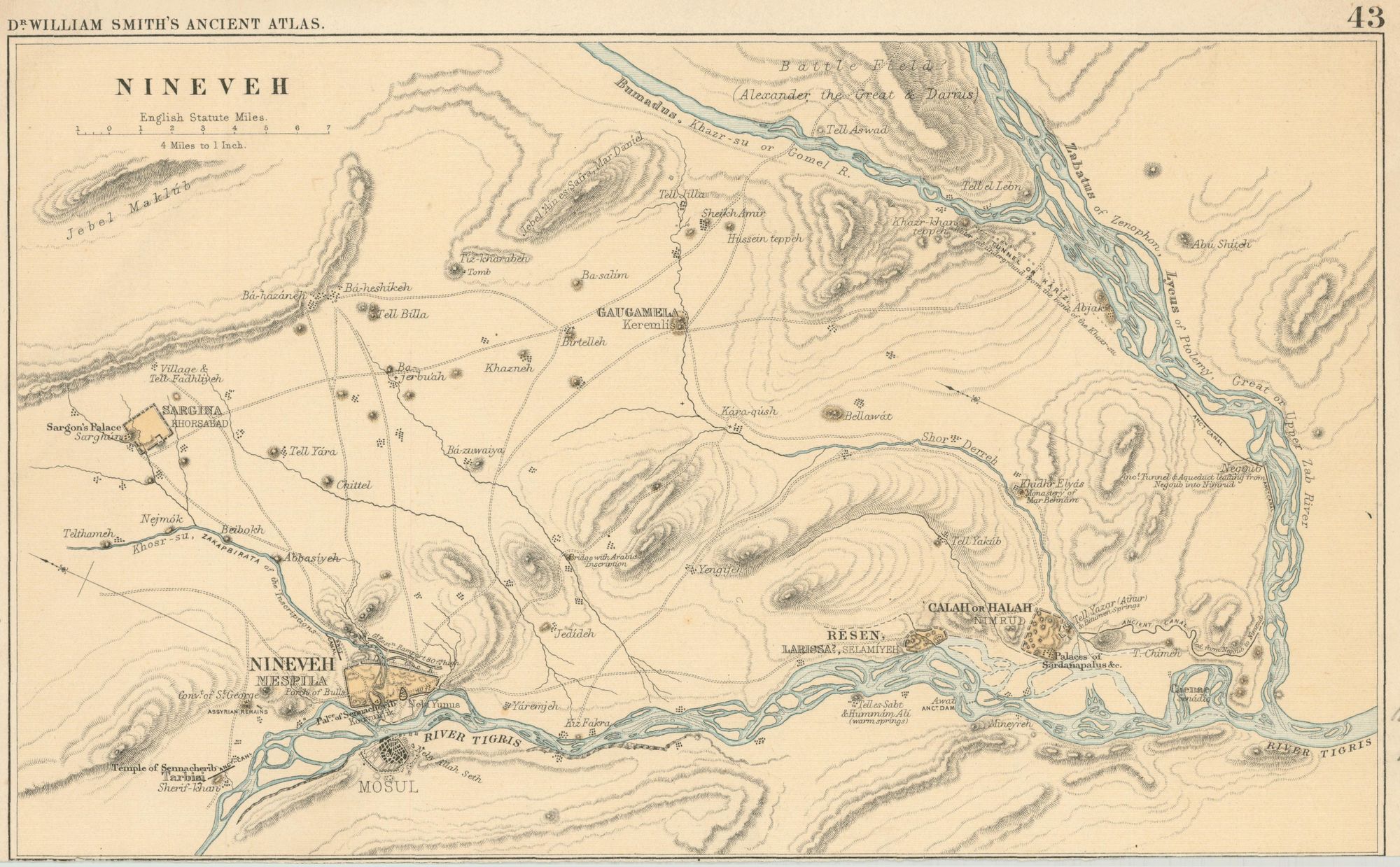 Source: Wikimedia Commons, Smith Ancient Atlas, public domain, https://commons.wikimedia.org/wiki/File:Smith_Ancient_Atlas_Nineveh.jpg
Nineveh Fasts and Turns from Evil (Jonah 3:5-10)
5 And the men of Nineve believed God, and proclaimed a fast, and put on sackcloths, from the greatest of them to the least of them. 6 And the word reached the king of Nineve, and he arose from off his throne, and took off his raiment from him, and put on sackcloth, and sat on ashes.
7 And proclamation was made, and it was commanded in Nineve by the king and by his great men, saying, Let not men, or cattle, or oxen, or sheep, taste any thing, nor feed, nor drink water. 8 So men and cattle were clothed with sackcloths, and cried earnestly to God; and they turned every one from their evil way, and from the iniquity that was in their hands, saying, 9 Who knows if God will repent, and turn from his fierce anger, and so we shall not perish?
10 And God saw their works, that they turned from their evil ways; and God repented of the evil which he had said he would do to them; and he did it not.
The people believe God before the king issues his decree. Repentance spreads from the greatest to the least, then reaches the throne. The king rises from it only to sit in ashes, taking off the robe that marks his rank. Neither ruler nor subject can stand before God’s word on the strength of position. The city does not only change its mood; it changes its way.
Even the animals enter the city’s mourning. Chrysostom compares their sackcloth to the signs of grief placed on animals in a funeral procession: creatures that would share the city’s destruction are drawn into its appeal for pity.2 Remember them when God ends the book by naming the cattle too (Jonah 4:11). Their lives matter within the city He spares. The decree’s refusal of water describes this extraordinary crisis; it is not a rule for Christian fasting. Do not use it to prescribe dehydration or to force severe abstinence on children, dependents, or animals. Christian fasting needs pastoral guidance and care for health.
The plea “Who knows?” is neither despair nor a technique for making God yield. Nineveh does not claim that its fast entitles it to survival. The people turn because their way is evil, while entrusting the outcome to God. Chrysostom marvels that they repent without a stated guarantee in Jonah’s announcement.3 Hope acts before it can possess the result; presumption demands mercy while keeping the sin.
Verse 10 specifies the works God sees: they turned from their evil ways. These are not payments that buy a change in His attitude. They are the actual abandonment of the evil His warning opposed. Verse 8 makes that turning concrete in the iniquity in their hands. The hands that took, injured, or oppressed must stop doing so. Sackcloth cannot excuse the continuation of injustice.
When Scripture says “God repented,” it describes God’s dealings with changed people in human terms. God does not discover a moral error in Himself or become good after being cruel. His holy opposition to evil and His mercy are unchanged; Nineveh’s relation to His judgment changes as the city turns. The “evil” He does not bring is the threatened calamity, not a sinful act God had intended to commit. Jeremiah 18:7-8 gives the principle: when a nation turns from its sins, the Lord withholds the destruction He announced. A warning that brings repentance has achieved its merciful purpose, not failed as prophecy.4
Christ uses Nineveh as a witness against unbelief. In Matthew 12:41 and Luke 11:32, its people rise in judgment because they repented at Jonah’s preaching, while One greater than Jonah is present in Christ. This is a summons to those who hear Him, including us, not permission to despise another people. If Nineveh responded to a reluctant prophet, how much more should we respond to the crucified and risen Lord.
Gems from the Fathers 💎
St. John Chrysostom reads the spared city as the fruit of God’s warning. The announcement exposed the danger so that the people could turn: “The sentence threatening death, brought forth life!”4 God did not need to destroy the repentant city to prove that His word was serious.
In Homilies on Second Corinthians 4.6, Chrysostom warns against repentance that stops at outward hardship while greed, anger, and slander continue. He praises fasting, sackcloth, and ashes, but insists that Nineveh’s healing included a changed life. He explicitly guards against an anti-fasting reading: “I say not this to overturn fasting”.5 Abstinence should help us leave evil, not become a substitute for leaving it.
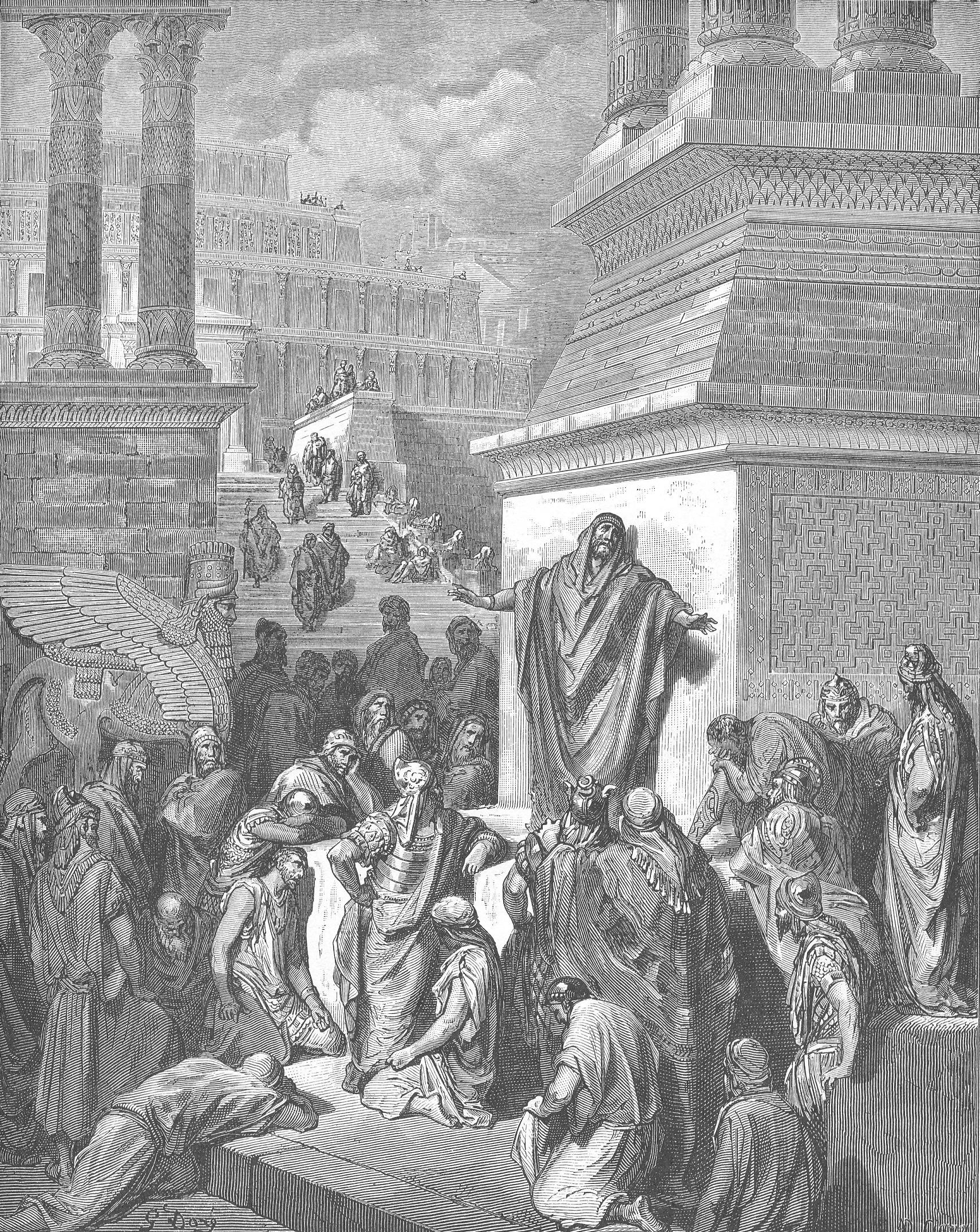 Source: Wikimedia Commons, Gustave Dore, public domain, https://commons.wikimedia.org/wiki/File:Dore_jonah.jpg
The Church’s Voice in Worship ⛪
At Matins on Tuesday of the Fast of Nineveh, the Church hears of the barren fig tree granted further time to bear fruit (Luke 13:6-9). Read beside Jonah’s renewed commission, this is mercy that makes a changed life possible, not permission to postpone it. At the Liturgy, Acts 17:30-34 calls everyone to repentance before the risen Christ’s judgment, and Luke 11:29-36 sets Nineveh’s response before those who hear One greater than Jonah. Wednesday’s Gospel, Matthew 15:32-16:4, returns to the sign of Jonah.6 Having heard Christ, what fruit will our repentance bear?
Spiritual Fruit 🍇
Let your fast reach your hands and your speech. If you have harmed someone, stop the harm; where possible, return what you took, correct the false report, or ask forgiveness without demanding that trust be restored at once. The point is not to earn mercy by a sufficient performance. It is to stop protecting the evil from which God is calling you back.
The second word to Jonah also gives hope to the servant who has failed. Return to the obedience you know, rather than waiting until failure feels far away. Nineveh begins with the warning it has received. We who have heard Christ need not wait for a more impressive sign before doing the next faithful thing.
Lord, let my fasting become a truthful turning toward You. Give me hope without bargaining, and teach me to rejoice when Your mercy reaches someone I had written off.
Teaching Notes
The Word Comes a Second Time (Jonah 3:1-4)
- Ask: How does the second call show both mercy to Jonah and the seriousness of his task?
- Watch for: Using the three days of Jonah 3:4 as the basis of Christ’s tomb sign. The Gospel points to Jonah’s time in the whale.
- Show: Use the Nineveh map above to locate the city, without treating the map as proof of an exact three-day walking route.
Nineveh Fasts and Turns from Evil (Jonah 3:5-10)
- Ask: Which words show that Nineveh’s repentance is more than public mourning?
- Watch for: Treating “God repented” as a change in His goodness, treating works as a price for mercy, or turning the decree into a prescription for unsafe fasting.
- Show: Use Dore’s image above as Western biblical illustration, not as an Orthodox icon.
Sources
Embedded Scripture is from Brenton’s English Septuagint (LXX).
Primary biblical anchors: Jonah 3; Jonah 4:11; Jeremiah 18:7-8; Matthew 12:41; Luke 11:32.
Footnotes
-
St. John Chrysostom, Homilies on the Statues 5.15, NPNF1 9: https://www.newadvent.org/fathers/190105.htm. ↩
-
St. John Chrysostom, Homilies on the Statues 3.9, NPNF1 9: https://www.newadvent.org/fathers/190103.htm. ↩
-
St. John Chrysostom, Homilies on the Statues 5.17, NPNF1 9: https://www.newadvent.org/fathers/190105.htm. ↩
-
St. John Chrysostom, Homilies on the Statues 5.16, including his appeal to Jeremiah 18:7-8, NPNF1 9: https://www.newadvent.org/fathers/190105.htm. ↩ ↩2
-
St. John Chrysostom, Homilies on Second Corinthians 4.6, NPNF1 12: https://www.newadvent.org/fathers/220204.htm. ↩
-
Coptic lectionary, Tuesday of the Fast of Nineveh, Matins and Liturgy; Wednesday of the Fast of Nineveh, Liturgy. The readings described here are recorded for 2026-2028 in the CopticChurch.net daily readings. ↩