
Coptic Orthodox and Roman Catholic Christians confess the Holy Trinity, Jesus Christ as truly God and truly human, and a sacramental life centered on the Eucharist. They are nevertheless distinct Churches, not in full communion. A central difference concerns the authority of the Bishop of Rome: Catholic teaching gives him universal primacy and, under defined conditions, infallibility. The Coptic Orthodox Church does not receive those claims.12
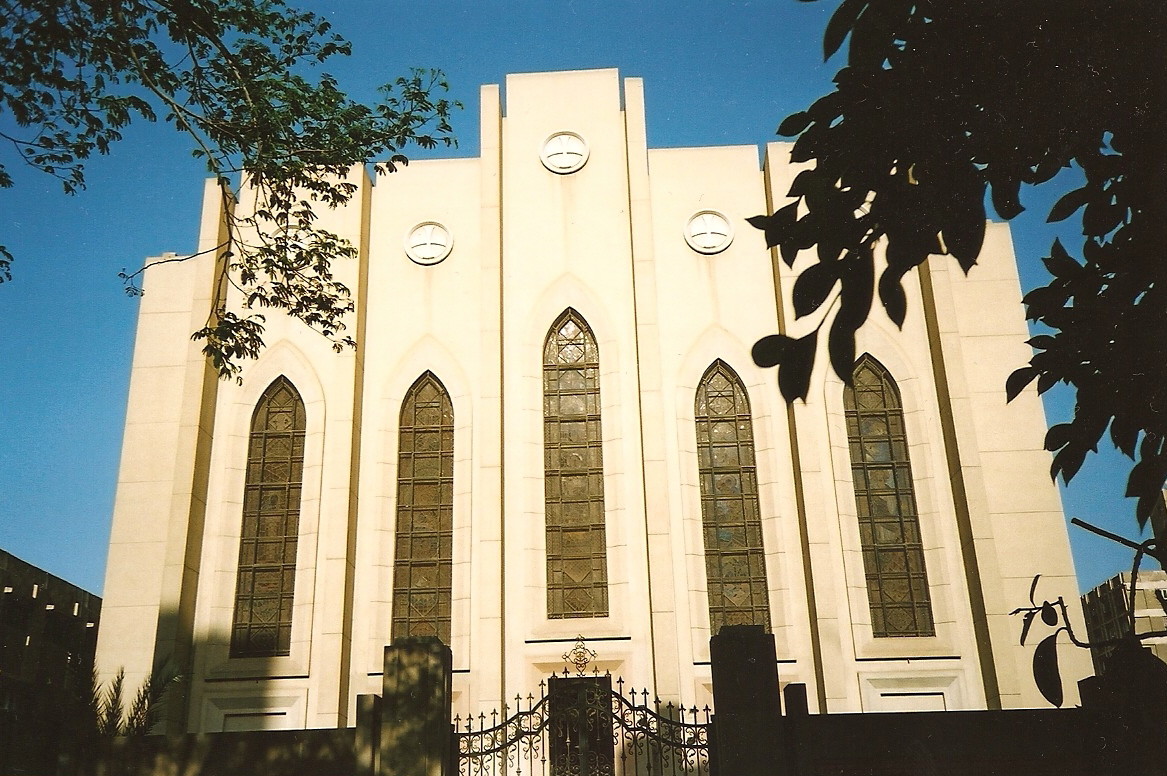 Source: Cathedral of Our Lady of Egypt, Hierarchicus2, CC BY-SA 3.0.
The comparison is not “Egyptian Catholics versus European Catholics.” Understanding the difference requires looking beyond familiar ceremonies to how each Church understands apostolic faith, authority, and communion.
First, distinguish three names
Coptic Orthodox identifies the Church of Alexandria within the Oriental Orthodox family. Its pope is the Pope of Alexandria, not the Bishop of Rome. It is not a Catholic jurisdiction with a distinctive style of worship.
Coptic Catholic identifies an Eastern Catholic Church in communion with Rome. Its Egyptian and Alexandrian liturgical inheritance does not make it Coptic Orthodox. The two Churches have distinct hierarchies and ecclesial affiliations.3
Latin Catholic identifies the largest Church within the Catholic communion. The Roman rite belongs to this Latin tradition. In everyday English, “Roman Catholic” often refers to the Catholic Church generally, but not every Catholic is Latin or celebrates the Roman rite. Catholic teaching explicitly recognizes Alexandrian or Coptic, Byzantine, Syriac, and other liturgical traditions alongside Latin rites.4
These distinctions matter because a Coptic Catholic service may look more like a Coptic Orthodox service than a familiar Latin parish Mass. Resemblance in ritual does not by itself establish which Church a parish belongs to. Communion is not determined by language, incense, or the shape of a vestment.
What do the Churches genuinely share?
The common ground is substantial. The 1973 declaration signed by Pope Shenouda III and Pope Paul VI confessed the Trinity, the complete divinity and humanity of Jesus Christ, and seven sacraments: Baptism, Confirmation or Chrismation, Eucharist, Penance, Anointing of the Sick, Matrimony, and Holy Orders.1
It also affirmed the honor given to the Virgin Mary as Theotokos, the God-bearer, and ever Virgin, the intercession of the saints, the veneration of their relics, and hope in Christ’s return. Neither Church worships Mary as a goddess. Neither regards the Eucharist as merely a reminder of an absent Savior.
The guide to Coptic Orthodox beliefs explains this sacramental life from within the Coptic tradition. Prayer, fasting, repentance, and mercy belong to life in Christ, not to a rival method of saving ourselves without Him.
Recognizing this shared inheritance does not settle every disagreement. It does prevent us from teaching by caricature. A Catholic neighbor is not well described as someone who believes whatever the pope happens to say; a Coptic neighbor is not well described as someone who rejects Christ’s humanity.
Christology: what the two popes confessed in 1973
The historic separation is associated with the Council of Chalcedon in 451. Rome receives Chalcedon; the Coptic Orthodox Church does not. Coptic teaching preserves the Cyrillian confession of the one incarnate nature of God the Word. Catholic teaching receives the confession of one and the same Christ in two natures.15
These formulas must not become slogans that cancel the other side’s actual teaching. Coptic Orthodoxy does not teach that Christ’s humanity disappeared into His divinity. Catholic teaching does not mean two persons or two sons.
In their declaration of May 10, 1973, the two popes confessed Christ as “perfect God with respect to His divinity, perfect man with respect to His humanity.” They affirmed that all the properties of His divinity and humanity remain preserved in a real, inseparable union.1
This agreement addresses the saving truth proclaimed in John 1:14: the Word truly becomes flesh. The eternal Son assumes our humanity, including a rational human soul. He is not merely wearing a human appearance. His human life, suffering, death, and Resurrection belong to the one Lord who comes to redeem us.
Yet the declaration itself acknowledged continuing divisions and established a joint commission to address them. Agreement about the Christ whom we confess did not automatically resolve every question about the Church, councils, or later doctrinal definitions. It was a major step toward communion, not an announcement that communion had already been restored.
Two popes, different claims about primacy
Both Churches have bishops, councils, ordained ministry, and authoritative teaching. The difference is not “Catholics have authority; Copts have none.” Nor is the Coptic pope merely an honorary figure.
The Coptic pope exercises real pastoral and ecclesiastical authority within his Church and presides over its Holy Synod. The Synod’s published account of its May 2026 session describes bishops discussing recommendations and agreeing on their final wording. Authority is exercised within this episcopal and synodal life.6
Catholic teaching makes a further claim about the Bishop of Rome as successor of Saint Peter. The Catechism of the Catholic Church, paragraph 882, ascribes to him full, supreme, and universal power over the whole Church. Paragraph 891 teaches that he enjoys infallibility when, as supreme pastor and teacher of all the faithful, he definitively proclaims a doctrine of faith or morals.2
Infallibility does not mean that a pope cannot sin, make a poor decision, or be wrong about an ordinary factual matter. Catholics also teach the authority of bishops and councils, not a Church in which only one man matters. A faithful comparison should state these qualifications before explaining the disagreement.
The Coptic Orthodox Church does not accept that Roman universal jurisdiction or the defined Roman doctrine of papal infallibility. Its own use of the title pope does not imply that its patriarch claims an equivalent office over all Christians. The Pope of Alexandria guide explores the title and the responsibility it carries.
This is a doctrinal question, not simply a preference for centralized or decentralized administration. It concerns how Christ preserves and governs His Church, how councils are received, and how the apostolic faith is authoritatively confessed. Other theological differences must also be addressed in dialogue; confessing seven sacraments does not mean the Coptic Orthodox Church receives every later Catholic definition.
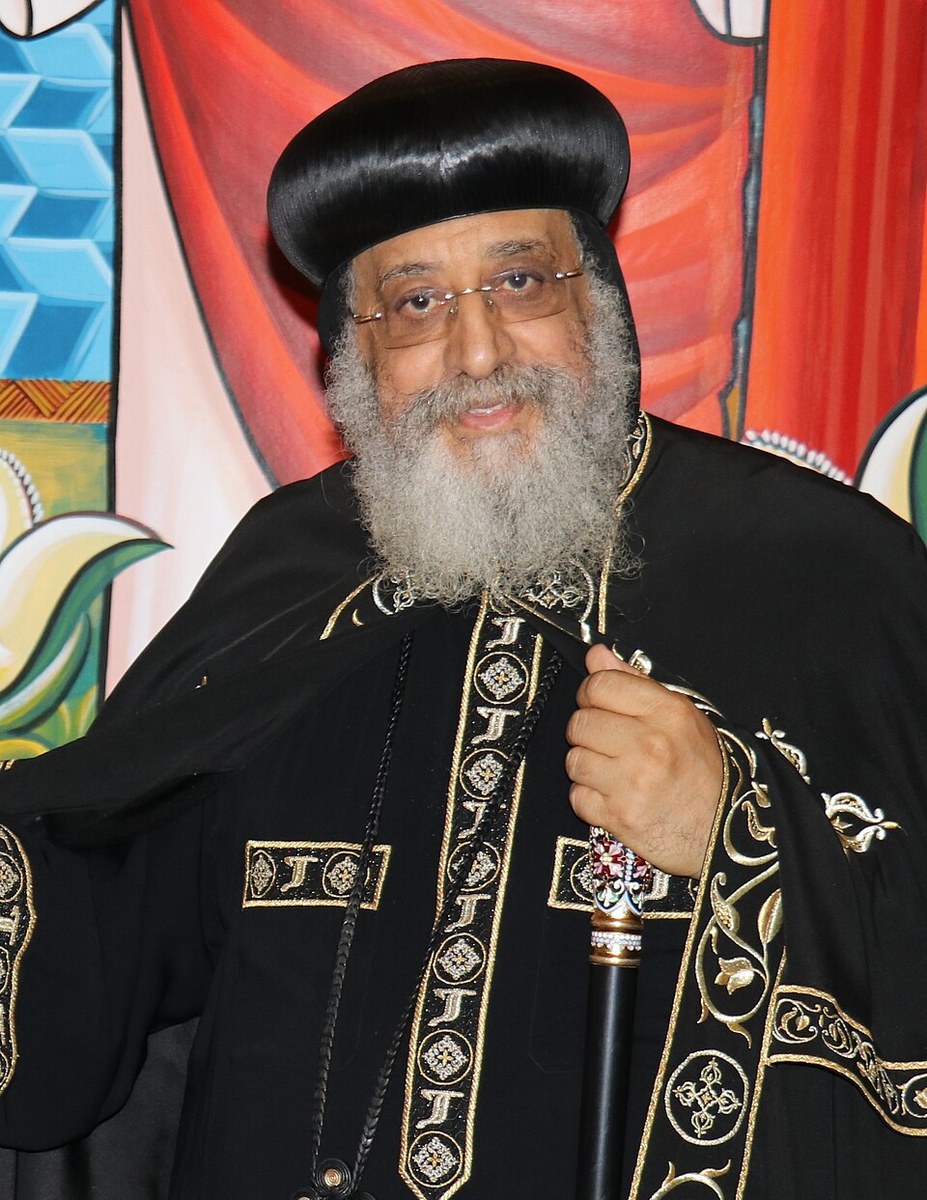 Source: Pope Tawadros II of Alexandria, 2019, OSCE Parliamentary Assembly, CC BY-SA 2.0; cropped in the source file and resized for the web.
Does worship explain the difference?
Worship reveals a Church’s faith, but no single visible contrast explains the whole separation. A comparison between a Coptic parish and a Latin Catholic parish is not a comparison between every Orthodox and every Catholic practice.
The Coptic Divine Liturgy follows the Alexandrian inheritance, with its characteristic chants, prayers, and extended congregational participation. Latin Catholic worship follows its own received liturgical forms. Eastern Catholic Churches preserve other traditions, including the Coptic rite.4
It is therefore misleading to make the entire distinction about instruments, the length of a service, or whether a particular priest is married. Some differences concern rites or disciplines rather than universal doctrinal opposition. If you are visiting, begin with the Coptic Divine Liturgy guide, not a checklist for judging which congregation looks more ancient.
Communion, baptism, and marriage need careful answers
A Catholic visitor is welcome to attend a Coptic Orthodox service, but attendance is not permission to receive the Eucharist. Catholic permissions in particular circumstances do not override Coptic sacramental discipline. Ask the Coptic priest before the service; see who can receive Communion in a Coptic Orthodox church.
Baptism requires particular care. In their 2017 common declaration, Pope Francis and Pope Tawadros II stated that they would “seek sincerely not to repeat the baptism” administered in either Church when someone wished to join the other.7 Those words must not be erased by an old blanket claim that every Catholic must always be baptized again. The declaration states the two popes’ commitment; it does not set out a procedure for every case. If you are seeking reception, ask the priest how the responsible bishop’s guidance applies to you.
Marriage across ecclesial boundaries likewise involves Church requirements and pastoral oversight. Do not assume it is either universally impossible or automatically permitted because both people are baptized Christians. Speak with the clergy before fixing plans. For someone discerning entry into the Church, how to become Coptic Orthodox offers a starting point rather than a substitute for that relationship.
Charity without pretending that reunion is complete
The Coptic Holy Synod decided in May 2026 to resume theological dialogue with the Catholic Church.6 That is grounds for prayerful hope, not evidence that all outstanding questions have been answered.
Christ prays for His disciples’ unity in John 17:20-23. Paul joins the confession of one Lord, one faith, and one baptism to humility and patience in Ephesians 4:1-6. Saint John Chrysostom, preaching on Hebrews, points to Christ’s command to love one another as the mark by which His disciples are known.8
For a Coptic Christian, fidelity means living the faith received in the Church, not making a Catholic relative feel despised. For a Catholic exploring Coptic Orthodoxy, understanding begins with listening to what the Church actually confesses. Truthful disagreement can coexist with gratitude, friendship, and shared works of mercy. The Lord we confess must never become an excuse for contempt.
Footnotes
-
Pope Paul VI and Pope Shenouda III, Common Declaration, May 10, 1973, paragraphs on Christology, sacraments, the saints, continuing divisions, and the joint commission. ↩ ↩2 ↩3 ↩4
-
Coptic Orthodox Bible Study, Who Is the Coptic Pope?, “One title, different churches,” including its sources for the distinct patriarchates. ↩
-
Catechism of the Catholic Church, paragraphs 1200-1206, especially 1203 on the Latin and Eastern liturgical traditions. ↩ ↩2
-
Council of Chalcedon, Definition of Faith, final doctrinal paragraph; translated by Henry Percival, Nicene and Post-Nicene Fathers, second series, volume 14. Cited for the council’s wording, not as an authority received by the Coptic Orthodox Church. ↩
-
Coptic Orthodox Church, Holy Synod session, May 22, 2026, introduction on synodal deliberations and statement point five on resuming Catholic dialogue. ↩ ↩2
-
Pope Francis and Pope Tawadros II, Common Declaration, Cairo, April 28, 2017, paragraph 11. The baptismal undertaking is quoted as written, not as a claim of uniform local implementation. ↩
-
Saint John Chrysostom, Homilies on Hebrews, Homily III, concluding exhortation, on John 13:34-35 and 17:21, Nicene and Post-Nicene Fathers, first series, volume 14 (1889). ↩