


This narration is from a previous version of the study and may include a combined recording of multiple chapters.
Ecclesiastes is not a book of despair. It is a book that refuses to let the soul live by illusions. It exposes the emptiness of labor, pleasure, wealth, reputation, and even human wisdom when they are treated as final goods. Its wound is also its medicine: by showing that life “under the sun” cannot satisfy the heart, it trains the reader to fear God, keep His commandments, and seek the good that does not vanish.
The book is especially important after Proverbs. Proverbs teaches the moral order of wisdom. Ecclesiastes prevents us from turning that order into a simplistic formula. Together they teach a mature Orthodox wisdom: live faithfully, receive correction, do good, enjoy God’s gifts with thanksgiving, but do not worship the gifts, because death, judgment, and eternity reveal what every earthly project really is.
Historical and Scriptural Context
Ecclesiastes belongs to the Wisdom books of the Old Testament, alongside Job, Proverbs, Wisdom, Sirach, and the Song of Songs. Proverbs trains the heart in wise obedience; Job refuses shallow explanations of suffering; Ecclesiastes examines the instability of life when viewed only “under the sun.”
The book’s speaker is called the Preacher, Teacher, or Qoheleth. The opening verse in Brenton’s Septuagint reads:
- The words of the Preacher, the son of David, king of Israel in Jerusalem.
- Vanity of vanities, said the Preacher, vanity of vanities; all is vanity.
- What advantage is there to a man in all his labour that he takes under the sun?
This gives the book its spiritual frame. A royal voice with access to wisdom, wealth, pleasure, architecture, administration, reputation, and learning asks whether any of these can bear the weight of eternity. The answer is severe: not if they are kept within the horizon of “under the sun.”
Where Ecclesiastes Falls in the Old Testament
In the Hebrew Bible, Ecclesiastes is part of the Writings, the Ketuvim, and is counted among the Five Scrolls, the Megillot. In the Greek and Christian Old Testament order, it appears among the Wisdom books, usually after Proverbs and before the Song of Songs. That placement matters spiritually. Ecclesiastes is not a denial of wisdom. It is wisdom’s purification.
The sequence is instructive:
- Job asks whether God can be trusted when the righteous suffer and explanations collapse.
- Psalms teaches the soul to pray every human condition before God.
- Proverbs trains the heart in the fear of the Lord, discipline, speech, desire, justice, and teachability.
- Ecclesiastes asks what remains when wisdom, pleasure, labor, and possession are tested against death and judgment.
- Song of Songs lifts the purified desire of the soul toward love and communion.
This is why Ecclesiastes should not be read as a strange interruption. It is a necessary stage in spiritual maturity. The immature heart says, “If I do the right things, life should feel secure.” Ecclesiastes answers, “Even the right things are vapor if they are treated as God.”
Author, Voice, and Date
The Church has traditionally associated Ecclesiastes with Solomon, the son of David, king in Jerusalem. The book itself speaks in a Solomonic royal voice: wisdom beyond others, great works, wealth, pleasures, servants, gardens, music, and public instruction. First Kings 3-4 gives the biblical memory of Solomon’s extraordinary wisdom; Ecclesiastes reads like wisdom tested by experience and brought to judgment.
Modern scholars often distinguish between the book’s Solomonic voice and its final literary form. They point to the book’s Hebrew style, vocabulary, and reflective character as signs that the text may have reached its final form later than Solomon’s lifetime, often placed in the post-exilic or Persian/Hellenistic period. For Orthodox reading, that question should be handled honestly but calmly. The canonical book gives us the inspired voice of the Preacher, “son of David, king in Jerusalem.” Whether one emphasizes direct Solomonic authorship or Solomonic literary persona, the Church receives the book as Scripture and hears in it the Spirit’s judgment on false security.
The royal voice matters because the speaker tests abundance from within. In the book’s account, he acquires the things people chase and discovers their limits. The search fails even with a king’s resources behind it.
Title and Translation History
The Hebrew title is commonly connected with Qoheleth, a term related to gathering or assembly. It can mean the one who addresses the assembly, hence Teacher or Preacher. The Greek Septuagint title is Ekklesiastes, from a word related to assembly, ekklesia. The English title Ecclesiastes comes through the Greek and Latin tradition.
This translation history is spiritually fitting. The book is not private pessimism. It is a sermon to the gathered people. It speaks to the assembly because every generation needs to be corrected in the same place: we keep trying to make vapor hold eternal weight.
Embedded Scripture is from Brenton’s English Septuagint (LXX). Brief comparisons with the NKJV show where readers using a Hebrew-based English Bible will encounter different wording or numbering. The New Testament connections are Christian readings of the book in the light of Christ, not claims that the Preacher already states the Gospel in its fullness.
Important translation terms:
- Vanity: Hebrew hevel evokes breath or vapor; the Septuagint’s mataiotēs expresses futility or frustration. The word can name the shortness of life, the failure of lasting gain, and the painful mismatch between goodness and what happens to people. It does not mean creation is evil. Idolatry deepens this frustration by demanding permanence from passing things.
- Under the sun: The ordinary sphere of mortal life, where people work, suffer, receive gifts, and die. It is not automatically a name for unbelief: the Preacher also receives God’s gifts here. The spiritual danger is treating this visible horizon as the measure of everything.
- Preacher / Teacher: The voice that addresses the assembly and forces the listener to judge what is truly profitable.
Iconography and Visual Teaching 🖼️
Ecclesiastes teaches by stripping away spectacle. The king, the map, and the schematic below offer three ways into its question: where can a mortal person find a good that endures?
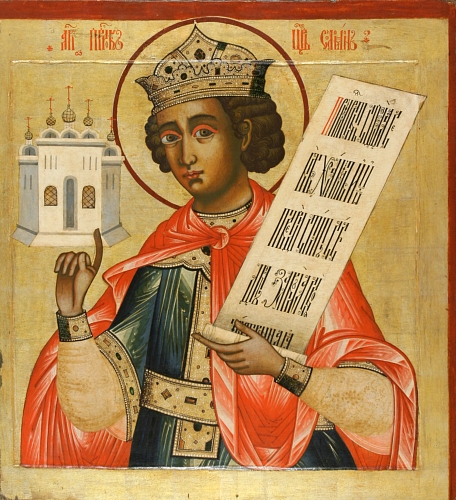
Source: King Solomon, 18th-century Russian icon, Kizhi Monastery iconostasis. Public domain.
The crowned king recalls the book’s Solomonic voice. Royal splendor sets the question before us: what can a person possess and still fail to find?

Source: George F. Cram, Map of Solomon’s kingdom and Phoenicia. Public domain.
This later historical Bible map locates the traditional setting around Jerusalem, Israel, and Phoenicia. Its borders are an illustrative reconstruction, not archaeological proof.
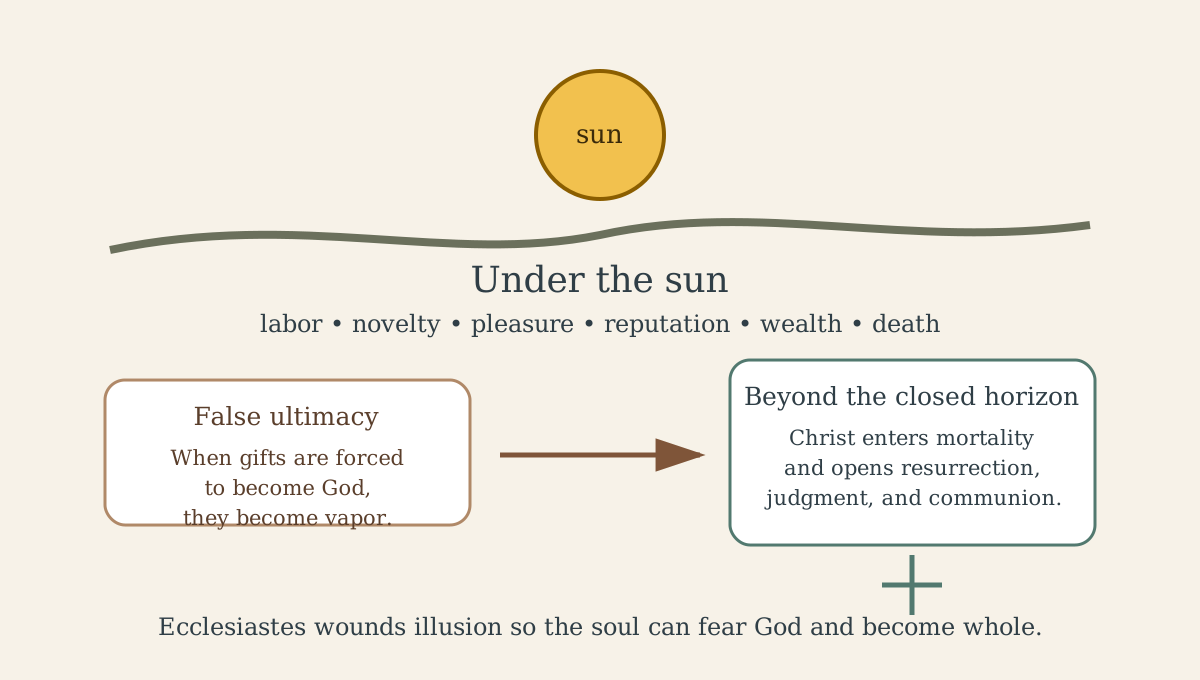
Source: Generated schematic, Hermes, June 20, 2026.
The diagram traces a Christian reading from the limits of mortal life toward resurrection hope. Christ enters our mortality and opens communion with God beyond death.
How to Read Ecclesiastes as Orthodox Christians
Ecclesiastes speaks truthfully about a good creation that we cannot secure against loss. Its severity is not nihilism. God gives joy, wisdom has real worth, and obedience matters. Yet even a righteous life meets injustice and death. The book’s grief must never be reduced to a diagnosis of the sufferer’s idolatry. It teaches both the limits of our condition and the deeper sorrow of asking created gifts to become God.
The second guardrail is Christological. Ecclesiastes asks what profit remains under the sun when death comes to all. Christ enters that world. He assumes mortal life, labor, weariness, grief, injustice, silence before accusers, and death itself. Then by His Resurrection He opens what Ecclesiastes could only long for: life beyond the closed circle of birth and death. Ecclesiastes prepares the soul to understand why the Resurrection is not a religious decoration. It is the answer to the tyranny of vanity.
The third guardrail is ascetical. Ecclesiastes does not merely discuss ideas. It diagnoses the passions. The soul chases pleasure, calls it joy, and becomes empty. It gathers wealth, calls it security, and becomes afraid. It gains knowledge, calls it mastery, and becomes sorrowful. It works, builds, accumulates, and names the whole project identity, but death exposes the illusion. This book therefore belongs deeply to repentance.
Structure of the Book
The twelve studies follow the book’s argument, keeping the royal experiment together across chapters 1 and 2 and the meditation on wealth together across chapters 5 and 6.
- Ecclesiastes 1:1-11: The opening poem names vanity, ceaseless labor, and the longing to be remembered.
- Ecclesiastes 1:12-2:26: The king tests wisdom, pleasure, and achievement, until the gift of God opens a different way to live.
- Ecclesiastes 3: Times and seasons teach the limits of control. The heart longs to comprehend the whole, yet must learn to receive its present portion.
- Ecclesiastes 4: The tears of the oppressed lead into envy, loneliness, and the mercy of companionship.
- Ecclesiastes 5:1-7: Reverence begins with listening. NKJV 5:1-7 corresponds to Brenton 4:17-5:6; the same verses are counted from different starting points.
- Ecclesiastes 5:8-6:12: Wealth cannot guarantee rest, enjoyment, or a remembered name. NKJV 5:8-20 corresponds to Brenton 5:7-19; chapter 6 resumes the same numbering in both editions.
- Ecclesiastes 7: Mourning, correction, and patience teach a wisdom that self-righteousness cannot give.
- Ecclesiastes 8: Wisdom faces authority, delayed judgment, and hidden providence. The opening question about the wise man is printed unnumbered at the end of chapter 7 in Brenton; the consulted Greek text and NKJV place it at 8:1.
- Ecclesiastes 9: The certainty of death makes the questions of present joy and forgotten wisdom more urgent.
- Ecclesiastes 10: Small folly spreads through leadership, work, and speech. Wisdom must govern ordinary conduct.
- Ecclesiastes 11: Uncertainty need not imprison the generous heart. Sow, give, and receive youth in the remembrance of judgment.
- Ecclesiastes 12: Remember the Creator before strength fades. The book gathers its searching into reverence, obedience, and the judgment of God.
The Major Spiritual Themes
Vanity as false ultimacy
Ecclesiastes does not despise creation. It despises idolatry. The created world is good, but it is not self-sufficient. When the soul asks work, pleasure, possessions, beauty, reputation, or knowledge to do what only God can do, those gifts become vapor in the hand.
St Paul carries this same ache into hope. In Romans 8:20 he uses mataiotēs, the Greek word repeated in Ecclesiastes, when he says creation was subjected to futility in hope. Creation groans, yet awaits freedom from corruption; our own bodies await redemption (Romans 8:18-25). The Gospel does not ask us to deny the Preacher’s sorrow. It tells us why sorrow need not be the last word.1
This matters for repentance. Vanity is not only luxury. It can be ministry reputation, family control, career identity, theological cleverness, money anxiety, endless productivity, or the need to be remembered. Ecclesiastes asks: what am I demanding from created things that only God can give?
Time and mortality
Ecclesiastes 3 is one of the most recognized passages in Scripture:
- To all things there is a time, and a season for every matter under heaven.
- A time of birth, and a time to die; a time to plant, and a time to pluck up what has been planted;
- a time to kill, and a time to heal; a time to pull down, and a time to build up;
- a time to weep, and a time to laugh; a time to lament, and a time to dance;
- a time to throw stones, and a time to gather stones together; a time to embrace, and a time to abstain from embracing;
- a time to seek, and a time to lose; a time to keep, and a time to cast away;
- a time to rend, and a time to sew; a time to be silent, and a time to speak;
- a time to love, and a time to hate; a time of war, and a time of peace.
The point is not passive fatalism. The point is humility before providence. We do not master time. We receive time, answer within time, repent in time, and will be judged for what we did with time. The Church’s worship trains this same consciousness: hours, fasts, feasts, seasons, commemorations, Pascha, and the remembrance of death all teach that time belongs to God.
Joy as gift, not escape
Ecclesiastes repeatedly tells the reader to receive simple goods: bread, wine, work, companionship, light, and one’s portion. This is not hedonism. It is eucharistic sobriety. The soul that cannot make earthly gifts eternal can still receive them thankfully from God.
The difference is worship. If I grasp bread as ultimate comfort, it becomes vanity. If I receive bread with thanksgiving, it becomes mercy. If I use work to justify my existence, it becomes slavery. If I offer work before God, it becomes obedience.
Fr Tadros Yacoub Malaty, commenting on 2:1-3, distinguishes the search for amusement from the healing of the heart: “Inner joy is one thing and laughter is another.”2 A person can keep the room cheerful while remaining inwardly afraid or empty. Ecclesiastes gives us permission to stop performing happiness and to seek joy that can survive a quiet room, unfinished work, or a day without praise.
The fear of God
The book’s final word is not “everything is meaningless.” It is this:
- Hear the end of the matter, the sum: Fear God, and keep his commandments: for this is the whole man.
- For God will bring every work into judgment, with everything that has been overlooked, whether it be good, or whether it be evil.
This is one of the strongest anthropological statements in Wisdom Literature. “This is the whole man.” The human person is not made whole by pleasure, achievement, control, wealth, or reputation. Man becomes whole in reverent obedience before God. Judgment is not an afterthought; it is the revelation of truth.
Gems from the Fathers 💎
St Gregory Thaumaturgus: lift the eye of the soul
St Gregory Thaumaturgus begins his Metaphrase on Ecclesiastes by addressing Solomon’s words to the whole Church. His concern is the captivity of desire: people spend their strength acquiring things that cannot remain, while the soul loses the habit of looking toward heaven. He describes them as living “in servitude all the while to what is transient, and undesirous of considering aught heavenly with the noble eye of the soul.”3
The difficulty is not that we have bodies, work, houses, food, or seasons. It is that we ask these things to give us a life they do not possess in themselves. Gregory’s image turns the book’s severity toward healing. The eye can be raised again. Work can become service, food can become thanksgiving, and desire can learn to seek the Giver through His gifts.
St Dionysius of Alexandria: give labor an enduring goal
The Commentary on the Beginning of Ecclesiastes, preserved under the name of St Dionysius of Alexandria, gives a sharply practical reading of 1:3. A man may grow rich through toil, yet his possessions cannot add a cubit to his natural stature or restore his sight. Acquisition has limits that acquisition itself cannot cure. The commentary concludes: “Therefore we ought to direct our toils to a goal beyond the sun: for thither, too, do the exertions of the virtues reach.”4
St Dionysius, known as Dionysius the Great, was the fourteenth Pope of Alexandria. This Alexandrian witness helps us hear the book as a summons to faithful labor. The parent caring for a child, the worker refusing dishonesty, and the person serving someone who cannot repay are doing things whose worth is not measured by what can be accumulated. Love offered to God has a different destination from possessions gathered for the self.
The surviving commentary reaches only into chapter 3. Its reading of eating and drinking in 2:24-25 points toward the spiritual table, and its reading of the times in chapter 3 joins Adam’s death to the resurrection through the new Adam. These interpretations receive fuller attention beside their verses.
St Gregory of Nyssa: the Shepherd gathers the scattered
St Gregory of Nyssa hears Christ in the title Ecclesiastes, the one who gathers an assembly. In Homily 1 he calls Christ the true Ecclesiastes, gathering those scattered by deception. In Homily 2, on 1:15, the image becomes the Shepherd carrying the lost sheep home: Christ restores what vanity has scattered. Gregory writes, “He who assumed our weakness showed us a way out of evil through the infirmities of his human nature.”5
This changes how the book’s searching is heard. Its reader is someone whom Christ has come to seek, not someone left alone to make himself whole. Commenting on the search for good in 2:3, Gregory identifies the abiding good with the work of faith in Christ. His later protest against buying and selling human beings, in Homily 4 on 2:7, gives that faith a sharp moral edge: a person made in God’s image cannot be reduced to a possession. The study of the king’s experiment develops these two insights beside the text.
The Egyptian desert: wisdom must become discernment
The Egyptian abbas whose teaching St John Cassian records give the book an ascetical companion. In Conferences 2.4, Abba Moses teaches that earnest effort needs discernment, the grace of judging what leads toward God. Zeal alone can drive a person into exhaustion or pride. He calls discretion “the mother of all virtues, as well as their guardian and regulator.”6
That counsel helps us read Ecclesiastes without turning its severity into another form of self-reliance. We need to discern when to speak and when to be silent, when to keep and when to give away, when grief needs patience and when pleasure has become an escape. The point is a heart made teachable before God. Abba Isaac’s teaching on prayer and Abba Joseph’s teaching on friendship will bring this Egyptian wisdom into the later studies.
The Church’s Voice in Worship ⛪
Ecclesiastes is not appointed in the Coptic readings indexed by this site’s lectionary data.
Its connection with worship here is thematic. Fasting loosens appetite’s claim to govern us; almsgiving opens the hand that possessions have closed; confession brings hidden works into the light. The hours of prayer teach us to offer time rather than merely spend it. Funeral and memorial prayer place our grief before the God who remembers those whom the world has forgotten.
These practices give the book’s questions a place in daily life. We can stand before God with our unfinished work, our losses, and our longing to be remembered. Worship teaches us to receive a life we could never manufacture for ourselves.
Glossary
Ecclesiastes: The Greek-derived title of the book, connected with the assembly and the one addressing it.
Qoheleth: The Hebrew title/name often rendered Preacher or Teacher, related to gathering or assembly.
Vanity / hevel: Breath, vapor, mist, transience, frustration, and instability. Not proof that creation is evil.
Under the sun: The earthly sphere of mortal life, including work, suffering, and gifts received from God. The danger is treating this horizon as the measure of everything.
Wisdom Literature: Biblical books that train the soul in the fear of God, discernment, suffering, prayer, moral order, and the limits of human understanding.
Septuagint / LXX: The ancient Greek Old Testament deeply used in Orthodox tradition.
Fear of God: Reverent obedience, awe, humility, repentance, and truthful life before divine judgment.
Nous: The spiritual intellect or eye of the heart, which must be purified to perceive God rightly.
Spiritual Fruit 🍇
Ecclesiastes teaches the soul to stop lying. Much spiritual sickness begins when we ask a created thing to save us and then pretend not to notice when it fails. The book names the failure. Work cannot save. Pleasure cannot save. Wealth cannot save. Human praise cannot save. Control cannot save. Even wisdom, if it remains only human analysis, increases sorrow.
But Ecclesiastes does not leave the reader in emptiness. It clears the idols from the altar so the fear of God can return. Once God is feared, the same world looks different. Bread is no longer a god; it is a gift. Work is no longer a savior; it is obedience. Time is no longer an enemy to be conquered; it is a field for repentance. Death is no longer a fact to suppress; it is a teacher that sends the heart toward judgment and mercy.
The book also protects the reader from shallow religion. It refuses easy slogans. It knows that the righteous suffer, fools rise to power, the poor are oppressed, and the wise are forgotten. Ecclesiastes does not solve those tensions by pretending they are not real. It carries them to the final word: God will bring every work into judgment. Judgment means hidden things will not remain hidden. Injustice will not have the last word. Forgotten faithfulness is not forgotten by God.
For the Christian, Ecclesiastes becomes luminous in Christ. The Lord Jesus enters the world of vanity without becoming vain. He works with human hands. He grows tired. He weeps. He is rejected by rulers, betrayed by a friend, stripped of possessions, and numbered with the dead. He descends all the way into the condition Ecclesiastes mourns. Then He rises, and the phrase “under the sun” is broken open by the light of the Resurrection.
Begin with one ordinary gift that you have stopped receiving: a meal eaten distractedly, a person whose presence you take for granted, or work whose worth you measure only by recognition. Give thanks for it before asking it to become something else. Then place one anxious claim to control before God, and answer the day with one act of obedience or mercy. The book’s final command takes flesh in such small, truthful choices.
The final call is simple and severe: fear God and keep His commandments. This is not legalism. It is wholeness. The scattered self becomes whole when it returns to the Creator. The restless heart becomes truthful when it stops bargaining with vapor and begins to live before God.
Teaching Notes
- Show: Use the Solomon icon, Cram map, and under-the-sun schematic sparingly at the start of the series. Explain that visuals are servants of the text, not decorations or replacements for the book’s austere witness.
- Series burden: Ecclesiastes is the purification of wisdom. It exposes false ultimates so the soul can live before God without illusion.
- Where to linger: Ecclesiastes 1:2-3, 2:1-11, 3:1-11, 5:1-7, 7:2-4, 12:1-14.
- Where to be careful: Do not teach the book as despair, depression, cynicism, or anti-creation pessimism. The book is severe because it is truthful, not because it is hopeless.
- Key phrase: Passing gifts cannot become God. Ecclesiastes names both the frustration of demanding this from them and the painful limits of mortal life, including the suffering of the righteous.
- Pastoral warning: Some hearers may be grieving, exhausted, unemployed, aging, depressed, or carrying family burdens. Do not weaponize Ecclesiastes against the suffering. Let the book name their pain truthfully, then lead them toward Christ, not toward resignation.
Sources
Ecclesiastes, Brenton’s English Septuagint: 1:1-3; 3:1-8; 12:13-14. The session studies provide the complete text in sequence.
Biblical connections: 1 Kings 3-4; Matthew 6:19-34; Luke 12:13-21; Romans 8:18-25; 1 Corinthians 1:24; 1 Corinthians 3:19; Hebrews 4:15.
St Gregory Thaumaturgus, A Metaphrase of the Book of Ecclesiastes, chapter 1, translated by S. D. F. Salmond, Ante-Nicene Fathers 6. Text.
St Dionysius of Alexandria, Commentary on the Beginning of Ecclesiastes, chapters 1-3, preserved among the Exegetical Fragments, translated by S. D. F. Salmond, Ante-Nicene Fathers 6. Text.
St Gregory of Nyssa, Homilies on Ecclesiastes, Homily 1 (J.280), Homily 2 (J.305 and J.314), Homily 4 (J.336-337), Richard McCambly translation. Complete text.
St John Cassian, Conferences 2.4, Abba Moses on discretion, translated by C. S. Gibson, Nicene and Post-Nicene Fathers, second series, volume 11. Text.
Fr Tadros Yacoub Malaty, Ecclesiastes, chapter 2, “Pursuit after Pleasure Is Vain,” PDF p. 13 (chapter-local p. 2). Hosted edition.
Coptic reading assignments: the site’s lectionary index. Worship connections above are thematic, not appointed readings of Ecclesiastes.
Footnotes
-
Greek ματαιότης (mataiotēs), Ecclesiastes’ recurring term and Romans 8:20. See Thayer’s Greek Lexicon, entry 3153, sense c, and Romans 8:18-25. ↩
-
Fr Tadros Yacoub Malaty, Ecclesiastes, chapter 2, “Pursuit after Pleasure Is Vain,” PDF p. 13, chapter-local p. 2. Hosted edition. ↩
-
St Gregory Thaumaturgus, A Metaphrase of the Book of Ecclesiastes, chapter 1, S. D. F. Salmond translation, ANF 6. Primary text. ↩
-
St Dionysius of Alexandria, Commentary on the Beginning of Ecclesiastes, chapter 1 on 1:3, S. D. F. Salmond translation, ANF 6. Primary text. The commentary is transmitted under his name; its attribution has been questioned. ↩
-
St Gregory of Nyssa, Homilies on Ecclesiastes, Homily 1 (J.280) and Homily 2 (J.305-306, on 1:15); the quotation is from Homily 2, Richard McCambly translation. The work’s J. markers identify pages in the cited Greek edition, not pagination in the modern Litteral volume. Complete translation. For the good that abides, Homily 2 (J.314) on 2:3; for human dignity, Homily 4 (J.336-337) on 2:7. ↩
-
St John Cassian, Conferences 2.4, Abba Moses, C. S. Gibson translation, NPNF, second series, volume 11. Primary text. ↩