


Zephaniah is a short book with a severe beginning and a radiant end. The Lord searches Jerusalem, exposes mixed worship and practical atheism, humbles the proud nations, purifies the lips of the peoples, and finally rejoices over Zion because He Himself is in her midst.
Historical and Scriptural Setting
Zephaniah speaks “in the days of Josias son of Amon, king of Juda” (Zephaniah 1:1). That places the book in the late kingdom of Judah, during the period associated with King Josiah’s reforms, when Assyrian power was weakening but Judah was still spiritually compromised. The setting matters because Zephaniah is not preaching to people who have never heard of the Lord. He is confronting a covenant people who have learned to mix the Lord’s name with idolatry, political fear, money, and complacency.
The prophet’s name appears in Brenton’s Septuagint as Sophonias. The book also gives an unusually long genealogy: Chusi, Godolias, Amorias, and Ezekias. Many readers have connected Ezekias with King Hezekiah, but the text itself does not prove the identification. It is best used as a careful teaching possibility, not as a certainty.
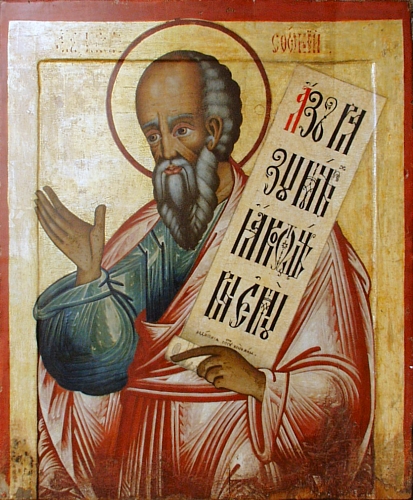 Source: Wikimedia Commons, Prophet Zephaniah, old Russian Orthodox icon, Kizhi Monastery iconostasis, Public domain. 🔗
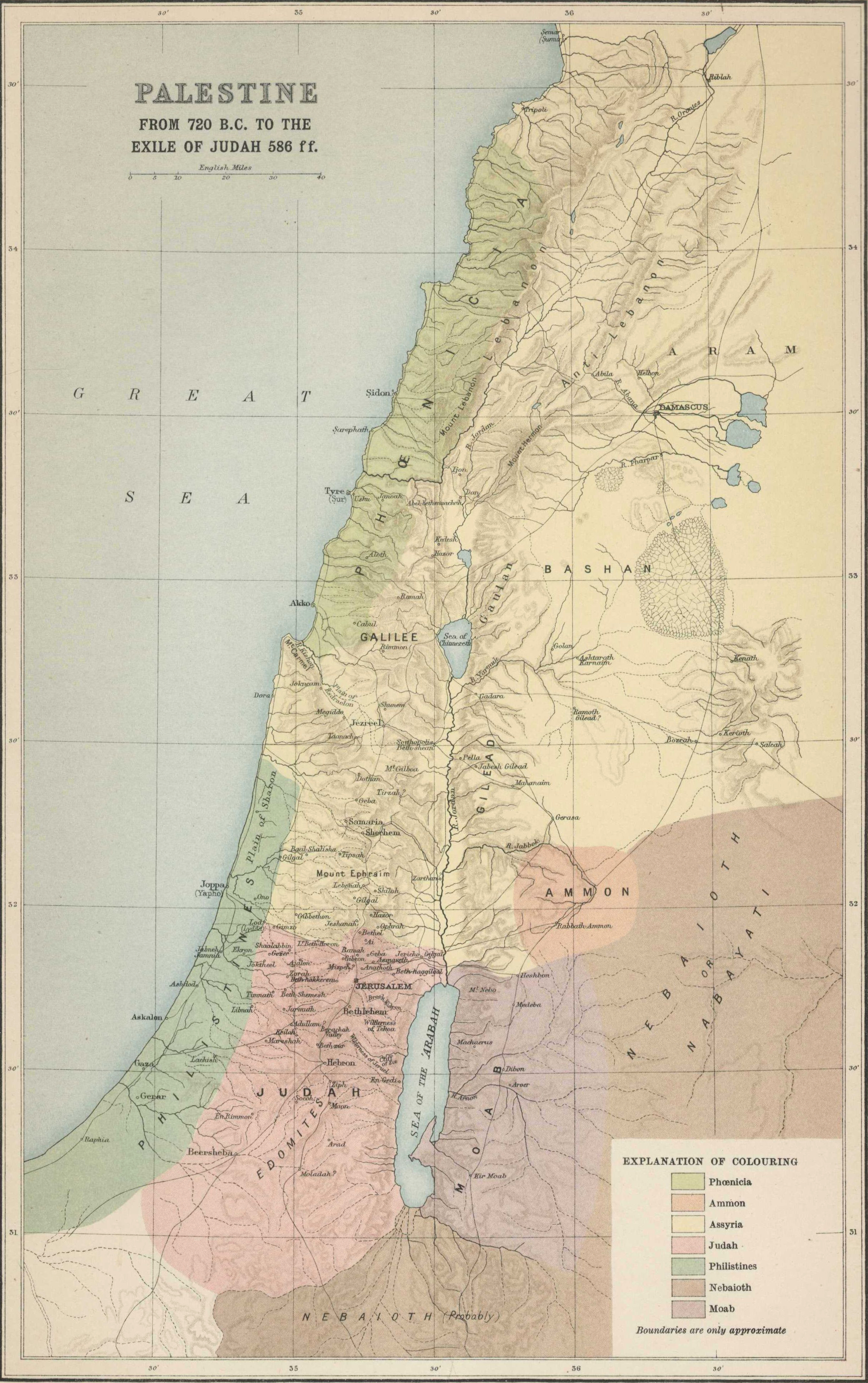 Source: George Adam Smith, Palestine from 720 BC to the exile of Judah, 1915, Public domain. 🔗
Genealogy and Setting Visual
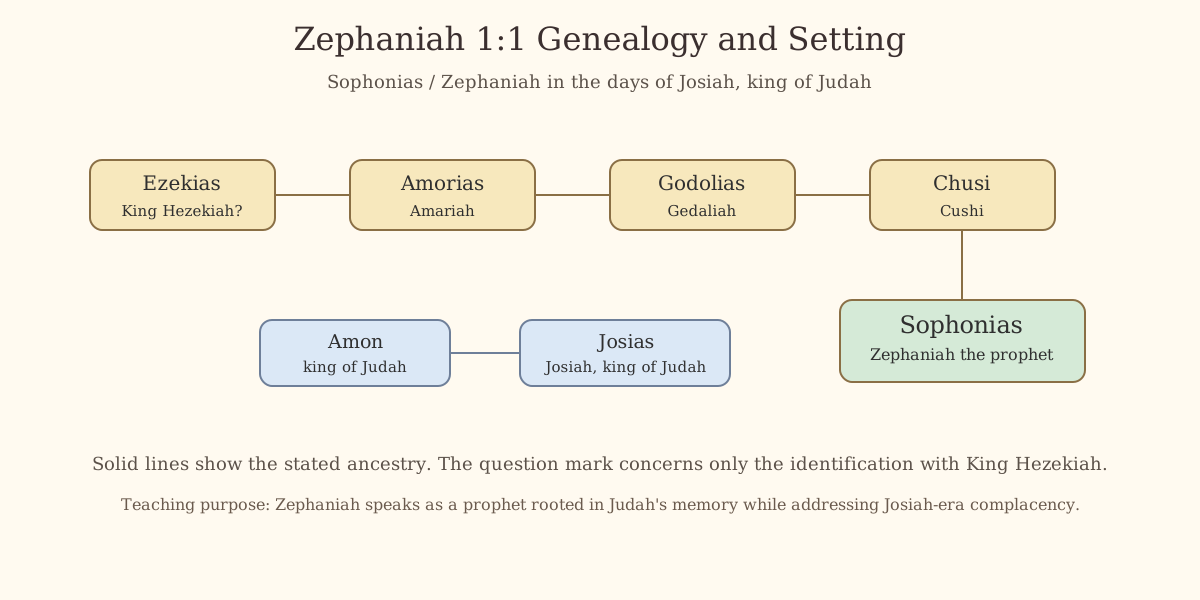 Source: Local teaching schematic created from Zephaniah 1:1. The ancestry is explicit; the label marks the uncertain identification of Ezekias with King Hezekiah.
Zephaniah stands within Judah’s memory at a moment when reform is possible but not automatic. A godly king does not remove the need for personal repentance.
The Spiritual Movement of the Book
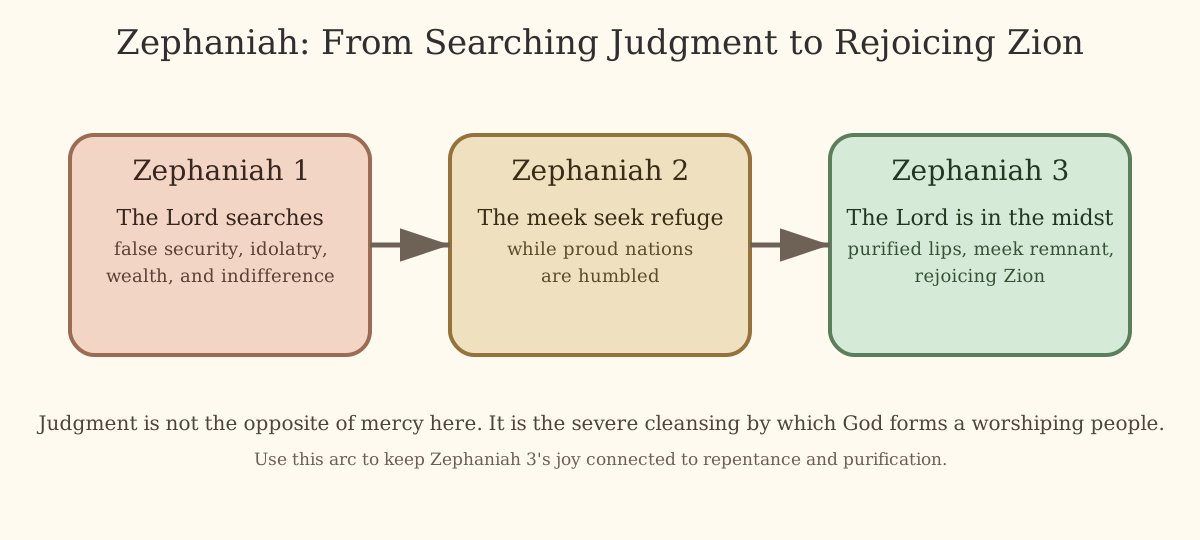 Source: Local teaching schematic created for this Zephaniah study.
Zephaniah has a simple but demanding movement:
- Zephaniah 1: The Lord searches false security. Judgment begins with Judah and Jerusalem. The Lord exposes idolatry, religious compromise, indifference, and the fantasy that wealth can save.
- Zephaniah 2: The meek seek refuge. The call to seek the Lord is surrounded by oracles against proud nations. The point is not ethnic contempt. It is that pride, violence, taunting, and self-security cannot survive before God.
- Zephaniah 3: The Lord dwells in the midst of a purified remnant. The corrupt city becomes a humbled people with purified lips. The outcast is gathered, and Zion rejoices because the King is in her midst.
Judgment is not the opposite of mercy in Zephaniah. It is the severe cleansing by which God destroys false refuge and makes room for a worshiping people.
How to Read Zephaniah as Orthodox Christians
Read Zephaniah as a call to repentance before joy. The book does not let the reader jump straight to the rejoicing daughter of Zion without passing through the Lord’s searching candle. It warns the baptized soul against practical atheism, the inner voice that says God will neither do good nor evil. It also warns against turning judgment into anger at other people. The nations are judged for pride so that the Lord alone may be worshiped.
The book’s final hope is deeply ecclesial. Zion is a city, a people, and a prophetic image of the Church gathered around the Lord. When Zephaniah says, “The Lord, the King of Israel, is in the midst of thee,” the Christian reader hears the mystery of God dwelling with His people, fulfilled in Christ and tasted in the worshiping life of the Church.
The Church’s Voice in Worship ⛪
The St. Mary Ottawa Holy Pascha book (2018) appoints three Zephaniah prophecies:
- Zephaniah 1:2-12: Monday Eve, First Hour.
- Zephaniah 1:14-2:2: Monday Eve, Third Hour.
- Zephaniah 3:11-20: Hosanna Sunday, Ninth Hour.
The Katameros cycle also lists Zephaniah 3:14-20 for Lazarus Saturday, without specifying an hour.
These readings bring warning and joy to the threshold of Holy Week. The soul that welcomes Zion’s King must also let Him search its false security. Zephaniah teaches us to approach the Passion with repentance and hope together.
Early Christian Readings
Cyril of Jerusalem hears Zephaniah’s call to rise at dawn as an invitation to expect Christ’s Resurrection. Eusebius of Caesarea reads 2:11 as a witness to Christ’s appearing and the overthrow of idols, and 3:9 with the following verses as a promise of believing Jews and people from the nations gathered together. These readings lead from humbled pride to shared worship.
Study Guide Plan
| Chapter | Focus | Teaching burden |
|---|---|---|
| 1 | The Day of the Lord against false security | God searches the soul, exposes mixed worship, and destroys the illusion that He is absent or inactive. |
| 2 | Seek the Lord while the nations are humbled | The meek seek refuge in the Lord, while proud powers learn that their gods and security cannot save. |
| 3 | The Lord in the midst of rejoicing Zion | The corrupt city is purified into a meek remnant, and the Lord gathers the rejected into joy. |
Sources
- Embedded Scripture is from Brenton’s English Septuagint (LXX).
- Worship witnesses: St. Mary Ottawa, Holy Pascha, Lent 1734 A.M./2018 A.D., for the three Pascha readings (historical printed witness); Katameros cycle, Lazarus Saturday, for 3:14-20 (working local source, hour unspecified). Neither establishes an unqualified claim of current parish practice.
- Cyril of Jerusalem, Catechetical Lecture 14.6. 🔗
- Eusebius of Caesarea, Proof of the Gospel II.2, section 16; II.3, section 52, trans. W. J. Ferrar. Early Christian historical witness; section 52 occurs within a polemic about Jewish unbelief, not a commentary confined to speech. 🔗
- Visual source details and licensing are recorded in
Assets/zephaniah-visual-manifest.jsonandResources Used - Zephaniah.md.