
In four-chapter English Bibles these verses correspond to Malachi 4:1-6, but Brenton places Moses after Elijah and the turning of hearts. The book’s final movement answers the temptation to call faithfulness useless. The day that exposes wickedness also brings healing. Before it comes, God sends a prophet to restore, not merely to announce disaster; at the end He calls His people to remember the word already entrusted to them.
Malachi 3:19-21 - The burning day and the healing Sun
19 For, behold, a day comes burning as an oven, and it shall consume them; and all the aliens, and all that do wickedly, shall be stubble: and the day that is coming shall set them on fire, saith the Lord Almighty, and there shall not be left of them root or branch. 20 But to you that fear my name shall the Sun of righteousness arise, and healing shall be in his wings: and ye shall go forth, and bound as young calves let loose from bonds. 21 And ye shall trample the wicked; for they shall be ashes underneath your feet in the day which I appoint, saith the Lord Almighty.
The same Day is oven and sunrise. The God who remembers His servants does not forget the wrong done to them. Neither root nor branch remains of the wickedness that seemed so firmly established. The image denies evil a lasting future; it is not permission for the faithful to appoint themselves executioners. The day is the Lord’s, and the judgment is His.
Brenton says “aliens,” not “the proud.” The Greek here is ἀλλογενεῖς (allogeneis); the Hebrew has zedim, “the proud,” as in the NKJV. The Greek warning recalls the “strangers” pronounced blessed in Malachi 3:15, but it must not be turned into a verdict on ethnicity. In his direct commentary, St. Cyril of Alexandria understands this alienation in terms of rejecting God and estrangement from the people gathered through faith in Christ. He immediately adds that people mingled with believers are not protected from judgment if they practice wickedness. Birth outside Israel does not condemn, and a place inside the congregation does not excuse. Malachi 3:5 has already placed the foreigner’s claim to justice under God’s own protection.12
For those who fear His name, the Sun of Righteousness rises with healing in His wings. The calves loosed from bonds are not a quiet metaphor. Salvation skips. The redeemed come out like animals let out of a stall, because holiness arriving is joy, not grim endurance. The threat of verse 19 makes this freedom more, not less, precious: what has injured and enslaved the people will not go on forever.
To speak of the same holiness as painful to resistance and healing to faith can be a useful pastoral image. It is not a complete definition of the last judgment, nor a reason to reduce the warning to a change in our feelings. Cyril takes the judgment seriously while describing the saints’ freedom from temptation, tribulation, and the warfare of evil. His explanation of trampling stresses that hostile resistance has ended. The saints receive peace, not a license to delight in another person’s pain.1
Fr. Tadros Malaty likewise holds the physician and the judge together. In his chapter 4, the Sun comes to scatter the soul’s darkness, and healing bears fruit in a life able to serve. He reads the conquest of verse 3 spiritually as Christ’s victory over the devil. That application helps direct our struggle against evil rather than against a hated neighbor; it does not cancel the passage’s warning about human wrongdoing.3
Language insight: “Sun”, “righteousness”, and “wings”
The Greek ἥλιος δικαιοσύνης (hēlios dikaiosynēs) means “Sun of righteousness,” corresponding to Hebrew shemesh tsedaqah. Righteousness here is not an agreeable mood: God’s right judgment is also the saving light for which His servants wait. The Church does not worship the created sun. She confesses Christ, who gives light rather than needing to receive it.
Hebrew kanaf, “wing,” can also name the edge of a garment. That permits a preacher to hear a resonance with the woman who touches Christ’s garment and is healed (Matthew 9:20-22); it does not prove that Malachi is predicting that detail. Nor must the wings be flattened into rays alone. Cyril’s direct Malachi commentary hears the shelter of the eagle in Deuteronomy 32:11: Christ heals and protects His people, giving them light now and the fullness of life in the age to come. The image is generous enough to hold radiance and shelter without becoming a lexical proof of either alone.41
Gems from the Fathers 💎: The Light who does not borrow light
St. Cyril of Alexandria also uses the Sun of Righteousness in his Commentary on John, while explaining why the Son is true Light by nature and creatures are light by participation. We need illumination; the Only-Begotten gives what we cannot generate. Cyril writes:
Other then than we and the creature in regard to identity of essence is the Only-Begotten, being Very Light and able to lighten things that need light.5
This is not a distant doctrinal distinction. The one who needs light need not pretend to possess it already. We come to Christ because He can give it. In his Malachi commentary Cyril develops the promise across both advents: the incarnate Word reveals the Father now; at His glorious appearing the partial knowledge of this life gives way to fuller illumination, and the saints are freed from corruption and the exhausting contest with the passions.1
Malachi 3:22-23 - Elijah and the restoration of hearts
22 And, behold, I will send to you Elias the Thesbite, before the great and glorious day of the Lord comes; 23 who shall turn again the heart of the father to the son, and the heart of a man to his neighbour, lest I come and smite the earth grievously.
The warning is preceded by a gift: “I will send.” God does not merely wait to catch the earth unready. He sends a witness before the Day, so that estranged hearts may turn. John the Baptist comes in Elijah’s spirit and power (Luke 1:17), calling the people to repentance before Christ’s first appearing. John is not Elijah reincarnated. His identity is his own; the likeness lies in the prophetic work entrusted to him.
The promise reaches into the house and across the street: father to son, a man to his neighbor. Brenton’s second clause is broader than the familiar Hebrew wording about children and fathers. A restored community needs more than the absence of open conflict. It needs hearts no longer rehearsing the case against one another. Cyril sees Elijah’s promised work as an act of divine patience, drawing divided people toward unity in faith and a changed life before the Judge arrives.1
That restoration must never be used to compel a victim to return to an abusive home or to resume unsafe contact. Forgiveness is not denial of an injury, and reconciliation requires truth and safety; a threatened person may need protective distance and outside help. The prophet summons the heart away from hatred, not the vulnerable away from protection. Nor is a parent’s claim to obedience a substitute for the parent’s repentance.
Language insight: “restore” and “smite the earth grievously”
At Brenton 3:23, corresponding to Hebrew 3:24 and NKJV 4:6, the Greek verb is ἀποκαταστήσει (apokatastēsei), “shall restore.” The same form occurs in Matthew 17:11, when Christ speaks of Elijah restoring all things. The Hebrew uses a form of shuv, the verb of turning or returning. Restoration here therefore has a direction: hearts are turned toward the people from whom they have become estranged, within the return to God. The shared Greek verb does not by itself establish a doctrine that every person will finally be saved; its stated object here is the restoration of hearts.6
Brenton’s “smite the earth grievously” renders a Greek clause ending in ἄρδην (ardēn), “utterly.” That clause has no noun meaning “curse.” The Hebrew passage ends with herem, the ban or destruction, reflected in the NKJV’s “curse.” Both witnesses retain a severe warning, but they do not express it in identical words. The invitation to turn is urgent because judgment is real, not because the teacher has been licensed to threaten people into submission.2
Gems from the Fathers 💎: A forerunner before each advent
St. John Chrysostom, explaining Matthew 17:10-13, distinguishes John’s ministry before the first advent from Elijah’s witness before the second. Christ calls John Elijah because of their shared ministry, not because they are the same person. Chrysostom writes:
For as the one shall be forerunner of the second advent, so was the other too of the first.7
He then connects Christ’s promise to restore all things with Malachi’s turning of hearts. Cyril of Alexandria’s direct commentary makes the same expectation an expression of mercy: a herald comes ahead of the Judge to encourage conversion. The Church can therefore await Elijah’s witness without turning prophecy into a timetable or an invitation to identify contemporary enemies. The point is preparation for Christ, not privileged access to a secret calendar.1
Malachi 3:24 - Remember Moses and recognize Christ
24 Remember the law of my servant Moses, accordingly as I charged him with it in Choreb for all Israel, even the commandments and ordinances.
Brenton does not end by adding a new commandment to distract us from Christ. It calls Israel back to the word God has already given. Choreb is Horeb, the mountain associated with the giving of the Law. Remembering is more than retaining a name or reciting a rule: it is allowing God’s instruction to judge the life one is actually living.
Cyril explains the final appeal through God’s promise of a prophet like Moses (Deuteronomy 18:15-18). The preaching of Christ is not an alien novelty tacked onto Israel’s history. Moses himself points toward Him; Christ tells His hearers that believing Moses would lead them to believe Him (John 5:46). To remember Moses rightly is therefore not to retreat from the Gospel, but to recognize the One toward whom the Law bears witness.1
Moses and Elijah stand with Christ at the Transfiguration (Matthew 17:1-8). The Law and the prophetic witness do not compete with the Son: they converge upon Him, and the disciples are commanded to hear Him. Malachi’s final names prepare us to recognize that unity. The mountain in the Gospel is not identified there as Sinai; the connection is the meeting of these witnesses in Christ, not an assertion that the two mountains are one place.
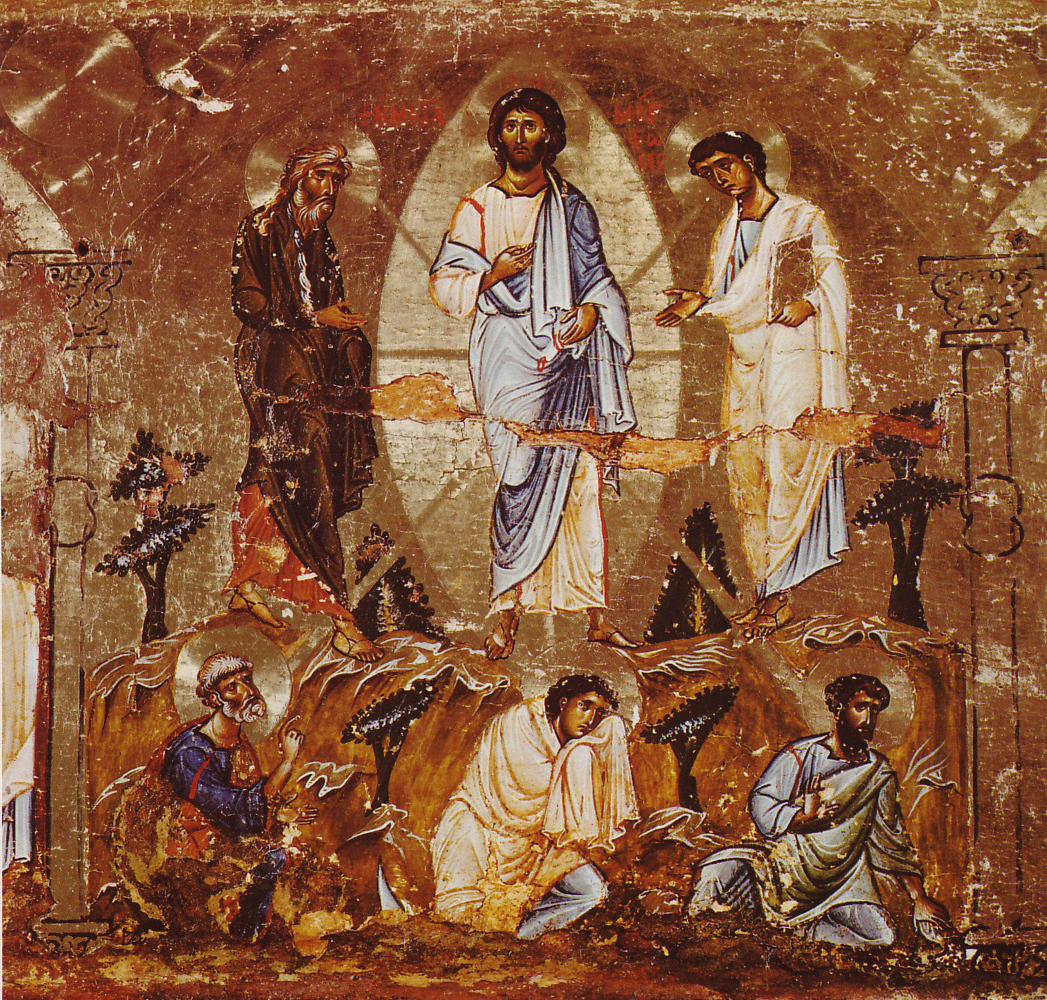 Source: Anonymous Byzantine icon, Saint Catherine’s Monastery, Sinai, twelfth century; public-domain work and reproduction in the United States, via Wikimedia Commons.
How the final verses line up
The Hebrew text has three chapters; the NKJV has four. They keep these final six verses in the same sequence, though not in the same wording as Brenton. Brenton’s printed witness places Elijah and the turning of hearts before the command to remember Moses. The difference is therefore not merely a chapter number.2
| Content | Hebrew | NKJV | Brenton |
|---|---|---|---|
| Day burning like an oven | 3:19 | 4:1 | 3:19 |
| Sun of Righteousness and healing | 3:20 | 4:2 | 3:20 |
| The wicked as ashes | 3:21 | 4:3 | 3:21 |
| Elijah sent before the Day | 3:23 | 4:5 | 3:22 |
| Hearts restored, lest the blow fall | 3:24 | 4:6 | 3:23 |
| Remember the Law of Moses | 3:22 | 4:4 | 3:24 |
The Hebrew and NKJV end with the threatened destruction; Brenton retains that warning but ends with Moses’ commandments and ordinances. This statement concerns the order in Brenton, not a claim that every Septuagint edition or modern rearrangement prints the same ending. The Bohairic text is Septuagint-based, but even Coptic editions can differ in their chapter labels: a published Bohairic transcription labels this ending chapter 4 while placing Moses last.8 Modern Arabic Smith–Van Dyck and NKJV editions also have four chapters. The order and wording of the verses, not the chapter count alone, tell a reader where a particular edition stands.
Malachi ends the Twelve. In the NKJV it also concludes the Old Testament, but it does not conclude the Hebrew Bible as a whole: the Writings follow the Prophets, and the common Jewish ordering ends with Chronicles. The Gospel does not erase the Law or turn this warning against a different people. It brings us to Christ, in whom Moses and the prophets are heard together.
Spiritual Fruit 🍇
Wait for the Sun, not for a softer religion. Ask Christ to rise on the particular night you are actually in: cynicism, withheld mercy, the tired duty that has become resentment. Name it honestly in prayer, and receive His help through confession and the Church’s sacramental life. Seeking light is already an admission that you cannot manufacture the dawn.
Let the turning reach the house. Choose one truthful act that interrupts inherited hostility: listen without rehearsing an answer, acknowledge a wrong without adding a countercharge, or seek wise help where the injury is deep. If contact is unsafe, keep the boundary and pray without pretending that restoration requires renewed exposure to harm.
Leave the ashes to the Lord. When you imagine the humiliation of someone who has harmed you, turn the desire for revenge into a request for justice, protection, and that person’s repentance. The promise is that evil will not rule forever, not that hatred will finally be blessed.
Remember Moses by hearing Christ. Return to one command you already understand but have postponed: truthful speech, mercy, fidelity, or justice toward a neighbor. Keep it today without bargaining for visible success. The calves are released from bonds; obedience to the healing Lord is meant to become freedom, not another way of keeping score.
Teaching Notes
Malachi 3:19-21 - The burning day and the healing Sun
- Ask: What is exposed when the apparent success of wrongdoing becomes stubble?
- Emphasize: Judgment and healing belong to the one Lord; Cyril distinguishes the Son’s natural light from our received illumination.
- Watch for: No ethnic exclusion, personal vengeance, or reduction of judgment to subjective feelings.
- Connect: The calves’ freedom gives the paragraph its joy; Malaty’s spiritual conquest directs the struggle against evil rather than a hated neighbor.
Malachi 3:22-23 - Elijah and the restoration of hearts
- Ask: What does the sending of a prophet before judgment reveal about God’s patience?
- Emphasize: John comes in Elijah’s spirit and power; Chrysostom distinguishes the forerunners of the two advents.
- Watch for: Restoration does not demand unsafe contact, and the Greek verb does not by itself prove universal salvation.
- Connect: Matthew 17:11 uses the same verb, “shall restore”; Brenton’s second clause reaches from family to neighbor.
Malachi 3:24 - Remember Moses and recognize Christ
- Ask: How can knowing a command become a way to avoid keeping it?
- Emphasize: Moses points toward Christ; Brenton’s closing arrangement keeps the warning but ends by recalling God’s instruction.
- Watch for: Three chapters do not prove one universal printed ending. Malachi ends the Twelve, not the Hebrew Bible as a whole.
- Connect: At the Transfiguration, Moses and Elijah bear witness to Christ, whom the disciples must hear.
- Show: The Sinai icon places Christ in light above the apostles, with Moses and Elijah beside Him. Sinai identifies the icon’s monastery, not the Gospel mountain.
Sources
Embedded Scripture is from Brenton’s English Septuagint (LXX).
Patristic interpretation
Coptic pastoral commentary
Text and language
The Transfiguration image and its attribution are given beside the icon.
Footnotes
-
St. Cyril of Alexandria, Commentary on the Twelve Prophets, vol. 3, trans. Robert C. Hill, Fathers of the Church 124 (2012), commentary on Malachi 4: pp. 338-339 (religious estrangement and judgment), 340-342 (Sun, healing, freedom), 342-344 (Elijah, restoration, Moses); paraphrased. Text, beginning at p. 338. ↩ ↩2 ↩3 ↩4 ↩5 ↩6 ↩7
-
Brenton’s Malachi 3:19-24; compare the Hebrew chapter and the Greek ending, whose electronic labels have been adapted to four chapters. The Hebrew and NKJV comparison concerns the sequence represented in Malachi 3:19-24 and Malachi 4:1-6 respectively, not identity of translation wording. ↩ ↩2 ↩3
-
Fr. Tadros Y. Malaty, The Book of Malachi (2006), chapter 4, §2, “Shining of the Sun of Righteousness,” and §3, “The Sun of Righteousness, the Grantor of Conquest”; paraphrased. Text. ↩
-
Hebrew kanaf, Brown–Driver–Briggs, s.v. כָּנָף; the sheltering-eagle interpretation is Cyril’s commentary on Malachi, p. 341, cited above. ↩
-
St. Cyril of Alexandria, Commentary on John, Book I, chapter VIII, on John 1:9, 1874 English translation, pp. 77-78; text. ↩
-
Greek ἀποκαταστήσει in the Malachi ending cited above and Matthew 17:11. The former is Brenton 3:23, Hebrew 3:24, and NKJV 4:6; it must not be confused with Hebrew 3:23, the announcement of Elijah. ↩
-
St. John Chrysostom, Homilies on Matthew, Homily LVII, §1, NPNF, First Series, vol. 10, on Matthew 17:10-13; text. ↩
-
Bohairic Malachi transcription, chapter heading ⲕⲉⲫ ⲇ̅ and the final Moses paragraph. Its electronic verse labels retain Moses’ number 4 after the Elijah passage; the chapter label and the order must be distinguished. ↩