


Proverbs 25-26 moves through royal humility, well-ordered speech, measured sweetness, mercy toward enemies, the madness of fools, the excuses of the sluggard, and the hidden violence of gossip. These chapters are a school of discernment. Wisdom learns when to speak and when to be silent, when to answer a fool and when not to answer, how to feed an enemy without surrendering judgment, and how to guard the spirit like a city with walls. In Christ, who answers evil without becoming evil, self-control becomes freedom for love.
Historical and Scriptural Context
Proverbs 25 opens a new section in the book: “These are the miscellaneous instructions of Solomon, which the friends of Ezekias king of Judea copied out.” This means the sayings are still Solomonic in origin, but they come to us through later royal preservation under Hezekiah. The material has a more public and courtly tone in places, yet it never loses its concern for the ordinary moral life of speech, appetite, friendship, work, and discipline.
Scripturally, these chapters stand close to several New Testament lines of reception. Christ teaches humility before hosts and rulers, and warns against self-exaltation. St. Paul directly receives Proverbs 25:21-22 in Romans 12:20 when he commands Christians to feed their enemies. St. James develops the moral seriousness of the tongue, and Christ Himself shows the wisdom of answering or refusing to answer according to what the moment requires. Proverbs 25-26 therefore belongs naturally to Orthodox teaching on meekness, discernment, spiritual warfare through speech, and the guarding of the heart.
Visual Teaching Aid 🖼️
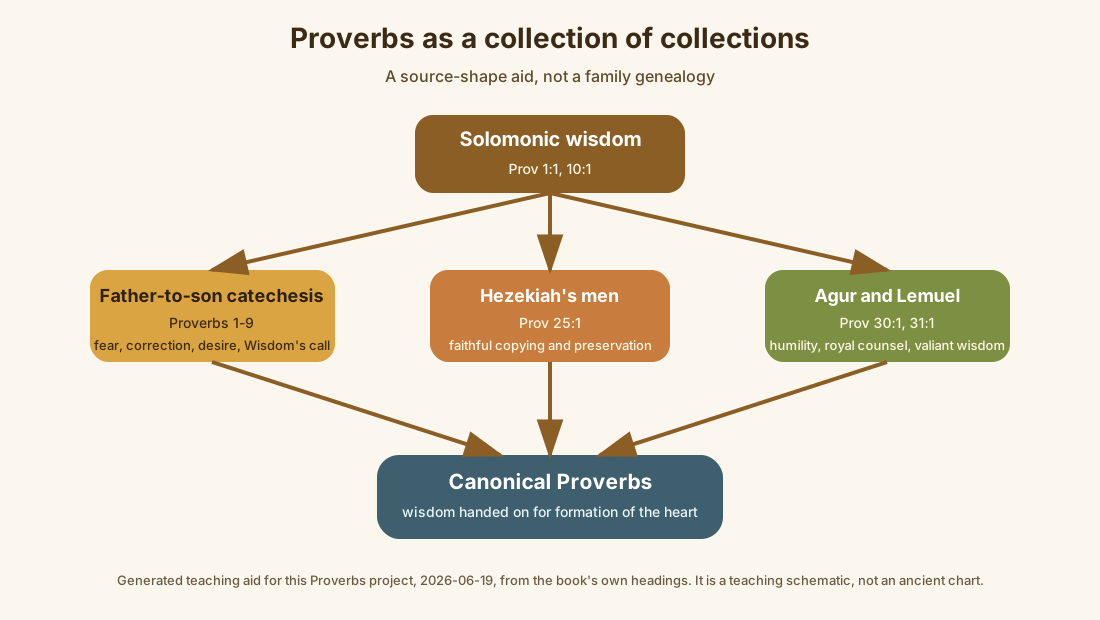
Source: Generated teaching aid for this Proverbs project, 2026-06-19, based on Proverbs 1:1, 10:1, 25:1, 30:1, and 31:1. This is a collection and transmission aid, not a genealogy tree.
Proverbs 25:1 is the best place in the guide set to use this aid. The heading teaches faithful preservation: Solomon’s instruction is copied out under Hezekiah’s men so a later generation can still be formed. The visual should clarify source-shape and tradition, not imply that Proverbs descends through a family tree.
Geographical Significance ⛰️
No named landscape governs these chapters, but the images are vivid and social: the king’s court, the friend’s house, the rooftop corner, the far country, the city without walls, the road where the sluggard imagines lions, and the public assembly where deceit is finally exposed. Proverbs 25-26 teaches through spaces where self-command or lack of self-command becomes visible.
The Characters 👥
- The king: A figure of authority before whom pride, flattery, and righteous administration are tested.
- The wise speaker and faithful messenger: Persons whose words fit the moment and whose fidelity gives life.
- The enemy: The one whose hunger and thirst test whether justice in us has become revenge.
- The fool: One who cannot carry honor, instruction, or speech rightly, and who often mistakes noise for wisdom.
- The sluggard: One whose imagination supplies excuses, whose body avoids effort, and whose self-estimate remains absurdly high.
- The whisperer, railing person, and concealed hater: Figures of speech turned destructive, whether by gossip, provocation, jesting cruelty, or smooth deception.
- The righteous man: One who must not collapse before the ungodly or surrender the guarded life of the heart.
🕯️ Light from the Word
Proverbs 25:1-10 - Hidden matters, royal humility, and quarrels that turn to death
1 These are the miscellaneous instructions of Solomon, which the friends of Ezekias king of Judea copied out.
2 The glory of God conceals a matter: but the glory of a king honours business. 3 Heaven is high, and earth is deep, and a king’s heart is unsearchable. 4 Beat the drossy silver, and it shall be made entirely pure. 5 Slay the ungodly from before the king, and his throne shall prosper in righteousness.
6 Be not boastful in the presence of the king, and remain not in the places of princes; 7 for it is better for thee that it should be said, Come up to me, than that one should humble thee in the presence of the prince; speak of that which thine eyes have seen.
8 Get not suddenly into a quarrel, lest thou repent at last. 9 Whenever thy friend shall reproach thee, retreat backward, despise him not; 10 lest thy friend continue to reproach thee, so thy quarrel and enmity shall not depart, but shall be to thee like death. Favour and friendship set a man free, which do thou keep for thyself, lest thou be made liable to reproach; but take heed to thy ways peaceably.
The Hezekian heading matters more than a historical footnote. Wisdom is not only spoken once. It is preserved, copied, tested, and handed on. The friends of Hezekiah are doing the work of faithful memory: rescuing Solomon’s instruction from neglect so that a later generation can still be formed by it. That belongs naturally to Orthodox life. Tradition is not stale repetition. It is living stewardship of words that still judge and heal the heart.
Verse 2 draws the theological center of the opening unit. “The glory of God conceals a matter” does not mean God is evasive. It means divine mystery is not conquered by curiosity. The king’s glory is to investigate business because human office must render judgment in visible affairs. God’s glory is deeper. He gives enough light for obedience, but He is never reduced to material for control. St. Gregory of Nyssa’s Life of Moses gives the right spiritual instinct here: the soul’s ascent into God grows through reverence before mystery, not through possession of God as an object. Proverbs therefore begins this royal section by humbling both the ruler and the reader.
Verses 4-5 bind purification to rule. Dross must be beaten from silver before beauty appears. Wicked counsel must be removed from before the king before the throne prospers in righteousness. This is not a license for cruelty. It is a warning that authority rots when corrupt influences are protected near its center. The same pattern governs the inner kingdom of the heart. If vanity, resentment, lust, or ambition sit beside the throne, outward discipline will not make the soul righteous.
Verses 6-7 strike at religious and social self-installation. It is better to be summoned upward than to push into a place and be publicly humbled. Christ receives this wisdom directly in Luke 14. The point is not etiquette. It is the death of the self that needs to be seen. A teacher, deacon, parent, leader, or friend can all climb into a role inwardly before God has actually placed him there.
Verses 8-10 move from royal presence to quarrel. “Get not suddenly into a quarrel” is a precise warning against the adrenaline of being right. Brenton’s ending is unusually strong: quarrel and enmity can become “like death.” This is exactly why St. John Cassian calls discretion “the mother of all virtues, as well as their guardian and regulator” (Conference 2.4). Without discretion, even a true observation can become a death-bearing contest.
St. John Chrysostom supplies the Christian manner for this section: “we ought not to upbraid nor trample upon them, but to admonish; not to revile, but to advise; not to assail with pride, but to correct with tenderness” (Homily XXIII on Matthew). Proverbs condemns rash quarrel. Chrysostom shows what wise correction looks like when truth has been purified from pride.
Christ is the true King who does not seize glory in the fallen way. He receives humiliation without losing truth. He knows what to answer and when to remain silent. In Him, humility is not social technique. It is royal holiness.
Proverbs 25:11-20 - Wise words, measured sweetness, and the wounds of falsehood
11 As a golden apple in a necklace of sardius, so is it to speak a wise word. 12 In an ear-ring of gold a precious sardius is also set; so is a wise word to an obedient ear. 13 As a fall of snow in the time of harvest is good against heat, so a faithful messenger refreshes those that send him; for he helps the souls of his employers.
14 As winds and clouds and rains are most evident objects, so is he that boasts of a false gift. 15 In long-suffering is prosperity to kings, and a soft tongue breaks the bones. 16 Having found honey, eat only what is enough, lest haply thou be filled, and vomit it up. 17 Enter sparingly into thy friend’s house, lest he be satiated with thy company, and hate thee. 18 As a club, and a dagger, and a pointed arrow, so also is a man who bears false witness against his friend. 19 The way of the wicked and the foot of the transgressor shall perish in an evil day.
20 As vinegar is bad for a sore, so trouble befalling the body afflicts the heart. As a moth in a garment, and a worm in wood, so the grief of a man hurts the heart.
This unit is about fittingness. The images are deliberately beautiful at first: a golden apple, sardius, a refreshing fall of snow in harvest. Proverbs is teaching that speech has a moral shape and an aesthetic shape. A true word can still be ugly if it is badly timed, badly placed, or offered to an ear that refuses obedience. A wise word is not only accurate. It is fitted.
Verses 11-12 join the word and the listener. The wise word is beautiful “to an obedient ear.” That means receptivity is part of wisdom. Many people want wise words as decoration, ammunition, or confirmation. Proverbs wants an ear that can be instructed. The same sentence that heals a teachable soul may harden a proud one.
Verse 13 praises the faithful messenger because fidelity refreshes souls. Brenton says he “helps the souls of his employers.” This is more than efficient communication. A trustworthy messenger cools heat because he does not distort the word, insert himself into the message, or turn another person’s business into his own stage. In church life, family life, and ministry, this is a major spiritual discipline: carry the word faithfully, and do not make yourself the center of what you were entrusted to carry.
Verse 14 exposes the false gift. Clouds gather, wind promises rain, and nothing descends. False generosity is spiritually cruel because it awakens hope without intending mercy. It is the social form of vanity. St. Basil’s teaching on withheld goods sharpens the point: what we hold back from the needy is not morally neutral surplus. Empty promise and withheld help both train the heart away from mercy.
Verse 15 is one of Scripture’s great sayings on spiritual speech: “a soft tongue breaks the bones.” That is not softness as cowardice. It is meek strength. St. John Chrysostom’s counsel fits exactly: correction should be given “not to revile, but to advise; not to assail with pride, but to correct with tenderness” (Homily XXIII on Matthew). Hard bones can sometimes be moved only by a tongue that refused rage.
Verses 16-17 teach proportion through honey and friendship. Honey is good, but excess makes sweetness disgusting. A friend’s house is good, but unmeasured presence can turn nearness into burden. Proverbs is not making relationships cold. It is teaching chastity of presence. Even love must learn measure so that the other person is not consumed by our need to be near, needed, affirmed, or entertained.
Verse 18 then turns speech into weaponry. False witness is not harmless talk. It is club, dagger, and arrow. St. John Chrysostom says, “It is for this that you have speech, that you may correct your neighbor” (Homily XVIII on Ephesians). When the tongue abandons truth, it does not become neutral. It becomes armed.
Verse 20 closes the unit by moving from words to interior grief. Vinegar on a sore, moth in a garment, worm in wood: sorrow can eat inwardly. The teacher should not rush past this image. Proverbs knows that words and wounds do not vanish when the conversation ends. Christ speaks every word fittingly. He is sweet without indulgence, truthful without cruelty, and present without intrusion. In Him, speech becomes medicine rather than acid on an open sore.
Proverbs 25:21-28 - Feeding enemies, guarded walls, and the government of the heart
21 If thine enemy hunger, feed him; if he thirst, give him drink; 22 for so doing thou shalt heap coals of fire upon his head, and the Lord shall reward thee with good. 23 The north wind raises clouds; so an impudent face provokes the tongue. 24 It is better to dwell on a corner of the roof, than with a railing woman in an open house. 25 As cold water is agreeable to a thirsting soul, so is a good message from a land far off. 26 As if one should stop a well, and corrupt a spring of water, so is it unseemly for a righteous man to fall before an ungodly man. 27 It is not good to eat much honey; but it is right to honour venerable sayings. 28 As a city whose walls are broken down, and which is unfortified, so is a man who does anything without counsel.
Verses 21-22 are among the boldest moral commands in Proverbs: feed the enemy. This is not sentimentality. It is a refusal to let hatred become the soul’s government. St. Paul receives the verses directly in Romans 12:20, placing them inside the command to overcome evil with good. St. John Cassian’s warning explains why this matters inwardly: “The ways of those who preserve the recollection of wrongs are towards death” (Institutes 8.15). Feeding the enemy is one way the soul refuses to preserve the wrong as its inner treasure.
The “coals of fire” are not permission to perform kindness as disguised revenge. The point is not, “be nice so God can burn him later.” Mercy becomes a burning witness. It may soften the enemy into repentance, or it may expose the hardness that refuses mercy. Either way, the merciful person is rewarded because he refused to become an image of the injury.
Verse 23 is easy to miss. The north wind raises clouds, and an impudent face provokes the tongue. Some faces invite speech before any words are spoken. Proverbs is teaching that contempt has a liturgy: posture, face, tone, and glance can all summon conflict. The spiritual life therefore requires repentance not only for what the mouth says, but for what the face has already preached.
Verse 24 needs the same pastoral care earlier hard household sayings required. Proverbs is not teaching contempt for women. It is condemning the railing, contentious spirit that can turn shared life into exile. The same spiritual truth applies to men and women alike. A house becomes uninhabitable when speech is weaponized. A roof corner becomes preferable when the home has become a theater of accusation.
Verse 25 turns the tone. A good message from afar is like cold water to a thirsty soul. Hope and truth can refresh without flattery. That image belongs not only to ordinary friendship but to the Gospel itself, the glad message brought into a dry land.
Verse 26 warns that when the righteous collapse before the ungodly, the spring is corrupted. Brenton’s image is concrete: stopping a well and corrupting a spring. Private surrender has public consequence. If a righteous person yields truth, courage, or self-command before evil pressure, others lose water with him. This is not a call to swagger. It is a call to guard the spring.
Verse 27 balances the honey image with honor for venerable sayings. The soul must learn what to consume sparingly and what to honor deeply. Sweetness can become excess, but wisdom handed down through the saints deserves reverence.
Verse 28 closes the chapter with the governing image: a city without walls. Self-control is not ornamental. It is defensive architecture. A heart without counsel, measure, and inward guard will be entered easily by lust, anger, vanity, fear, and human approval.
Christ feeds His enemies from the Cross by praying for them. He keeps the walls of holiness intact without becoming hard. He is the well that cannot be corrupted and the city that stands.
Proverbs 26:1-12 - Honor misplaced, discerning the fool, and the shame of repeated sin
1 As dew in harvest, and as rain in summer, so honour is not seemly for a fool. 2 As birds and sparrows fly, so a curse shall not come upon any one without a cause. 3 As a whip for a horse, and a goad for an ass, so is a rod for a simple nation. 4 Answer not a fool according to his folly, lest thou become like him. 5 Yet answer a fool according to his folly, lest he seem wise in his own conceit. 6 He that sends a message by a foolish messenger procures for himself a reproach from his own ways. 7 As well take away the motion of the legs, as transgression from the mouth of fools. 8 He that binds up a stone in a sling, is like one that gives glory to a fool. 9 Thorns grow in the hand of a drunkard, and servitude in the hand of fools. 10 All the flesh of fools endures much hardship; for their fury is brought to nought. 11 As when a dog goes to his own vomit, and becomes abominable, so is a fool who returns in his wickedness to his own sin. [There is a shame that brings sin: and there is a shame that is glory and grace.] 12 I have seen a man who seemed to himself to be wise; but a fool had more hope than he.
Proverbs 26 begins by insisting that folly cannot carry honor rightly. To honor a fool is to put rain into summer or dew into harvest. It disorders the season. Recognition given without moral weight teaches a community to admire what should have been corrected. The problem is not that the fool lacks status. The problem is that honor becomes dangerous when it is placed on a person who cannot bear it humbly.
Verse 2 should be read carefully. A curse “shall not come upon any one without a cause.” Proverbs is not saying every suffering person secretly deserves his pain. Job forbids that shallow reading. The point is that words of curse are not magic over the righteous. Empty malice does not finally rule a soul under God’s protection.
Verses 4-5 are famous because they appear contradictory. They are not. They are a school of discernment. Sometimes answering a fool on his own terms drags the wise person down into the same theater. Sometimes silence lets folly masquerade as insight. Wisdom knows the difference. St. John Cassian again helps here: discretion is “the mother of all virtues, as well as their guardian and regulator” (Conference 2.4). The answer is not a formula. It is discernment of what the moment requires.
Verses 6-10 show what happens when folly is trusted with movement, speech, honor, proverbs, and power. A foolish messenger brings reproach back on the sender. A proverb in a fool’s mouth is like motion taken from legs: the form is present, but the life of the thing is disabled. A thorn in the hand of a drunkard is especially vivid. The drunkard may not even understand how badly he wounds himself and others. So also the fool can carry a saying, a title, or a responsibility without the sobriety to use it.
Verse 11 gives the chapter’s strongest image. Returning to sin is like the dog returning to its vomit. Scripture is intentionally disgusting here because repeated sin after warning is spiritually disgusting. St. Peter receives this exact proverb in 2 Peter 2:22 to warn against returning to corruption after knowing the way of righteousness. Yet the bracketed Brenton line keeps the moral field from simplification: “There is a shame that brings sin: and there is a shame that is glory and grace.” Not every shame is destructive. False shame hides from God and returns to sin. Repentant shame tells the truth and becomes the beginning of grace. St. Augustine’s prayer, “Give what You command, and command what You will” (Confessions 10.29), belongs here because only grace can turn shame into repentance rather than despair.
Verse 12 ends with the most dangerous figure of all, the person who seems wise to himself. Ordinary foolishness still has some hope because it may yet be corrected. Self-conceit seals the door from the inside.
Christ answers fools when truth demands it, and refuses their terms when answering would only deepen the lie. He alone can teach the Church the difference.
Proverbs 26:13-16 - The lion in the road and the self-deception of sloth
13 A sluggard when sent on a journey says, There is a lion in the ways, and there are murderers in the streets.
14 As a door turns on the hinge, so does a sluggard on his bed. 15 A sluggard having hid his hand in his bosom, will not be able to bring it up to his mouth. 16 A sluggard seems to himself wiser than one who most satisfactorily brings back a message.
Sloth is rarely honest. It invents danger, dramatizes inconvenience, and dresses avoidance in the language of prudence. The lion in the road is not always a lie outright. It is the imagination of fear weaponized against obedience. Proverbs is exposing a spiritual reflex: the unwilling heart often finds a reason that sounds responsible.
The door on the hinge is one of Proverbs’ saddest images. The sluggard moves, but goes nowhere. Energy is spent, excuses are spoken, body and mind turn, and still no journey begins. Verse 15 deepens the shame: even the hand raised for nourishment becomes too heavy to complete. Sloth eventually attacks even the acts that would keep a person alive.
Verse 16 exposes the final sickness. The sluggard seems to himself wiser than the one who actually brought back a message well. This is why acedia is more than laziness. It becomes a false wisdom. It can critique, delay, analyze, and explain while another person obeys and returns with fruit. St. John Cassian’s treatment of acedia in the Institutes belongs here because he understands it as a deep weariness of the heart, not a small personality defect.
St. Ephrem’s Lenten prayer names the same enemy with spiritual accuracy: “take from me the spirit of sloth, despair, lust of power, and idle talk.” The placement of sloth beside despair, domination, and idle talk is spiritually exact. Sloth refuses loving effort, then often compensates with control or empty speech.
Christ enters the road the sluggard fears. He walks into suffering, obedience, and sacrifice without excuse. He heals sloth not by shaming the weary, but by summoning the heart back into faithful motion.
Proverbs 26:17-28 - Meddling, cruel jesting, gossip, and concealed hatred
17 As he that lays hold of a dog’s tail, so is he that makes himself the champion of another’s cause. 18 As those who need correction put forth fair words to men, and he that first falls in with the proposal will be overthrown; 19 so are all that lay wait for their own friends, and when they are discovered, say, I did it in jest. 20 With much wood fire increases; but where there is not a double-minded man, strife ceases. 21 A hearth for coals, and wood for fire; and a railing man for the tumult of strife. 22 The words of cunning knaves are soft; but they smite even to the inmost parts of the bowels.
23 Silver dishonestly given is to be considered as a potsherd: smooth lips cover a grievous heart. 24 A weeping enemy promises all things with his lips, but in his heart he contrives deceit. 25 Though thine enemy intreat thee with a loud voice, consent not: for there are seven abominations in his heart. 26 He that hides enmity frames deceit: but being easily discerned, exposes his own sins in the public assemblies. 27 He that digs a pit for his neighbour shall fall into it: and he that rolls a stone, rolls it upon himself. 28 A lying tongue hates the truth; and an unguarded mouth causes tumults.
This final unit exposes the social violence of unruled speech. The images are not random. The meddler grabs a dog’s tail and calls it involvement. The cruel friend wounds and then hides behind the coward’s phrase: “I did it in jest.” The double-minded person feeds strife like wood feeds fire. The whisperer’s words are soft, but they travel inward and strike “to the inmost parts of the bowels.”
Verse 17 is a needed warning for people who confuse interference with courage. Not every quarrel belongs to me. Not every cause becomes holier because I have entered it. Grabbing the dog’s tail may feel active, but it usually creates a wound that did not need to exist. Discretion asks whether my involvement heals, clarifies, and protects, or merely gives my ego a righteous costume.
Verse 19 is especially current. Proverbs knows the cruelty that dresses itself up as humor. A cutting word, humiliating exposure, or manipulative remark may be dismissed as joking, but the wound remains. Wisdom therefore judges not only literal accusation, but the spirit that hides malice beneath playfulness.
Verses 20-22 show how conflict grows. Remove the wood, and the fire weakens. Remove the double-minded person, and strife settles. A railing man does not simply join tumult. He supplies it. St. John Chrysostom’s warning remains exact: “Whet not his tongue, but cleanse his soul” (Homily XXI on Ephesians). The real issue is not verbal technique, but the condition of the heart generating the words.
Verses 23-25 uncover the silvered potsherd, smooth lips over a grievous heart. A potsherd plated with silver still breaks like clay. So also polished speech can cover a heart that intends harm. A weeping enemy may promise all things while contriving deceit. Proverbs is not training paranoia. It is training sobriety. Some tenderness is false. Some emotion is strategic. Wisdom listens beneath the surface.
Verse 26 is a severe mercy: hidden enmity eventually exposes itself in the assembly. Secret hatred is never as hidden as it thinks. God allows concealed malice to become visible so that the community is not endlessly governed by masks.
Verses 27-28 end with moral recoil. The pit-digger falls into his own pit. The rolling stone returns upon the one who rolled it. The lying tongue does not merely miss truth. It hates truth. An unguarded mouth causes tumults because speech without inward rule multiplies disorder outwardly.
Christ never wounds in jest, never feeds strife for pleasure, never covers hatred with smooth lips. He is transparent truth. In Him, speech is purified into blessing, correction, and peace.
The Church’s Voice in Worship 📖
No exact source-backed Coptic lectionary occurrence currently surfaced for Proverbs 25 or Proverbs 26. This guide should therefore not assign either chapter to a specific feast, Great Lent day, or Pascha hour.
The chapters still stand very close to Orthodox worship and ascetic life. Proverbs 25 belongs beside repentance of speech, humility before honor, and mercy toward enemies. Proverbs 26 belongs beside confession, because it exposes repeated sin, sloth, self-conceit, gossip, and concealed hatred. Together they read naturally during Great Lent, when the Church trains the tongue, restrains appetite, breaks the habits of self-justifying anger, and teaches the soul to feed enemies rather than its grudges.
Their imagery also resonates with preparation for the Mysteries. A city without walls, a lying tongue, a false gift, and a heart that returns to its own vomit are not conditions for careless communion. The Church prepares the soul through truth, self-command, reconciliation, and watchfulness.
Iconography Connection 🖼️
A fitting iconographic connection is Christ before Pilate. Proverbs 25 begins with kings, public presence, and the danger of boastful speech. In the icon and Gospel scene, Christ stands before earthly authority without vanity, panic, or manipulation. He is meek, truthful, and utterly free.
A second strong connection is the Crucifixion. Proverbs 25 commands mercy toward enemies, and Proverbs 26 condemns concealed hatred and destructive speech. The Crucified Lord answers both chapters by feeding His enemies with forgiveness and refusing to return evil for evil.
Spiritual Fruit 🍇
- Let humility govern how you seek visibility. Do not climb for honor. Let yourself be placed.
- Measure sweetness. Whether in speech, appetite, presence, or praise, excess can spoil even a good thing.
- Feed the enemy before bitterness feeds on you. Mercy is one of the ways the soul keeps its walls standing.
- Do not romanticize the fool or excuse the sluggard inside yourself. Repeated sin, clever evasion, and self-conceit are deadly when treated as personality style.
- Take gossip and jesting cruelty seriously. The tongue can strike deeply without ever raising its voice.
- Ask where your walls are down. A city without walls is a heart without counsel, restraint, or prayerful guard.
Teaching Notes
Teaching focus 1
- Key phrase: Better to be called upward than to climb upward in vanity.
- Emphasize: Wisdom before rulers is humility joined to truthful seriousness.
- Avoid: Treating quarrel as courage or self-promotion as confidence.
Teaching focus 2
- Key phrase: Even sweetness becomes ugly when appetite loses measure.
- Emphasize: Fitting speech is truthful, timely, and restrained.
- Avoid: Treating gentle speech as weakness or false witness as a minor social flaw.
Teaching focus 3
- Key phrase: Mercy to an enemy is one way the soul refuses to be governed by injury.
- Emphasize: Self-control is defensive architecture for the heart.
- Avoid: Reading “coals of fire” as spiritualized revenge, or verse 24 as contempt for women.
Teaching focus 4
- Key phrase: Proverbs 26 is not contradiction. It is a school of discernment.
- Emphasize: The worst folly is self-conceit that no longer feels its need for correction.
- Avoid: Treating verses 4-5 as a slogan detached from prayer, timing, and discernment.
Teaching focus 5
- Key phrase: Sloth often wears the mask of prudence.
- Emphasize: The door on the hinge moves, but never begins the journey.
- Avoid: Mocking the weary. The real target is excuse-loving acedia, not honest human weakness.
Teaching focus 6
- Key phrase: Some cruelty hides behind the coward’s phrase, “I did it in jest.”
- Emphasize: Strife usually has suppliers, not only victims.
- Avoid: Treating gossip, humor, or meddling as trivial because no physical blow was struck.
Teaching Notes
- Timing: 55 to 70 minutes.
- Show: Use the collection/transmission tree at Proverbs 25:1 to explain Hezekiah’s men as faithful preservation, not a genealogy or authorship confusion.
- Where to linger: Proverbs 25:2, 25:15, 25:21-22, 25:28, 26:4-5, 26:11-16, 26:20-28.
- Where to compress: Some of the courtly and messenger sayings in Proverbs 25:1-14 can move a little faster if the group needs more time on enemies, fools, and gossip.
- Key phrases to say slowly: “A soft tongue breaks the bones.” “Feed the enemy before bitterness feeds on you.” “Proverbs 26 is not contradiction. It is a school of discernment.” “The door on the hinge moves, but never begins the journey.” “Some cruelty hides behind the coward’s phrase, ‘I did it in jest.’”
- Pastoral warnings: Do not use Proverbs 25:24 as a weapon against women; the target is the contentious spirit, not womanhood. Do not teach enemy-feeding as permissiveness toward abuse or the abandonment of prudent boundaries. Do not use Proverbs 26 to mock the weak; the chapter condemns obstinate folly, acedia, and deceit, not honest human limitation.
- This passage has no established place in the Coptic Orthodox lectionary.
Glossary
- Discretion: Spiritual discernment, the tested ability to judge rightly in changing situations.
- Acedia: Slothful spiritual resistance to loving effort, often disguised as weariness, fear, or futility.
- False gift: The appearance of generosity without the reality of self-giving.
- Coals of fire: A biblical image of mercy that burns the conscience and exposes or softens enmity.
- City without walls: A picture of the unguarded soul, open to invasion because self-command and counsel have collapsed.
Translation and Source Notes
- Embedded Old Testament Scripture uses Brenton’s English Septuagint.
- The Brenton extraction used here for Proverbs 25 and Proverbs 26 preserves 28 verses in each chapter, with no missing verse numbers in the current source.
- Proverbs 26:11 in the Brenton source used here includes a bracketed additional line after the image of the dog returning to its vomit. The guide preserves that line in the Scripture block rather than silently dropping it.
- Brenton source-shape note: The Brenton source used here includes expansions and different verse/chapter boundaries in the later sections of Proverbs (especially after Proverbs 24:22 and for the material corresponding to Proverbs 30 and 31). The full mapping is documented in the Resources Used - Proverbs note. Readers comparing this guide to Hebrew-based English Bibles should be aware that the Brenton source does not always align with familiar chapter and verse numbering in these ranges. This is why some verse numbers familiar from other translations may not appear in the embedded Scripture blocks in this guide.
Sources
Primary sources
- Proverbs 25-26, Brenton Septuagint.
- Luke 14:7-11, on being called upward rather than exalting oneself.
- Romans 12:17-21, especially the apostolic reception of Proverbs 25:21-22.
- 2 Peter 2:20-22, especially the apostolic reception of Proverbs 26:11.
- James 3:1-18, on the tongue, strife, and wisdom from above.
- Matthew 5:38-48, on enemies and the refusal of retaliation.
- St. Gregory of Nyssa, The Life of Moses.
- St. John Cassian, Conference 2.4.
- St. John Cassian, Institutes 8.15 and Book 10.
- St. John Chrysostom, Homily XXIII on Matthew.
- St. John Chrysostom, Homily XVIII on Ephesians.
- St. John Chrysostom, Homily XXI on Ephesians.
- St. Basil the Great, Homily 6, I Will Tear Down My Barns.
- St. Augustine, Confessions 10.29.
- St. Ephrem the Syrian, Lenten prayer.
Secondary academic sources
- Ancient Christian Commentary on Scripture: Proverbs, Ecclesiastes, Song of Solomon.
- Michael V. Fox, Proverbs 10-31, Anchor Yale Bible.
- Bruce K. Waltke, The Book of Proverbs, NICOT, used critically.
Coptic Orthodox / pastoral sources
- Fr Tadros Yacoub Malaty, pastoral commentary on Proverbs.
- Orthodox Study Bible notes on Proverbs.
- Pope Shenouda III, pastoral teaching on the tongue, humility, self-examination, and repentance where relevant.
Web pages and non-academic sources cited
- New Advent Fathers and CCEL as public-domain access points for Cassian, Chrysostom, Gregory of Nyssa, Basil, and Augustine.